
When ALS Progresses, Breathing and Eating Become the Biggest Battles
Amyotrophic Lateral Sclerosis (ALS) doesn’t just steal movement-it slowly takes away the ability to breathe and swallow. By the time most people notice weakness in their hands or stumble while walking, the disease is already working on the muscles that keep them alive. Without intervention, respiratory failure is the leading cause of death. But here’s the truth: noninvasive ventilation and proper nutrition aren’t just supportive measures-they’re the two most powerful tools we have to slow decline and give people with ALS more time, more energy, and more quality days.
It’s not about curing ALS. It’s about making every breath count and every meal nourish. And the data doesn’t lie. Studies show that using noninvasive ventilation (NIV) can add an average of 7 months to life. Getting a feeding tube before it’s too late can add another 4 months. When both are used together, survival jumps by over a year compared to doing nothing. These aren’t theoretical numbers. These are real outcomes for real people.
Noninvasive Ventilation: How It Works When Your Diaphragm Fails
Your diaphragm is the main muscle that pulls air into your lungs. In ALS, it weakens like any other muscle-gradually, silently, and without warning. At first, you might just feel more tired after talking or eating. Then you wake up with headaches. Your sleep gets broken. You feel foggy during the day. These aren’t normal signs of aging-they’re red flags that your lungs aren’t getting enough oxygen or clearing enough carbon dioxide.
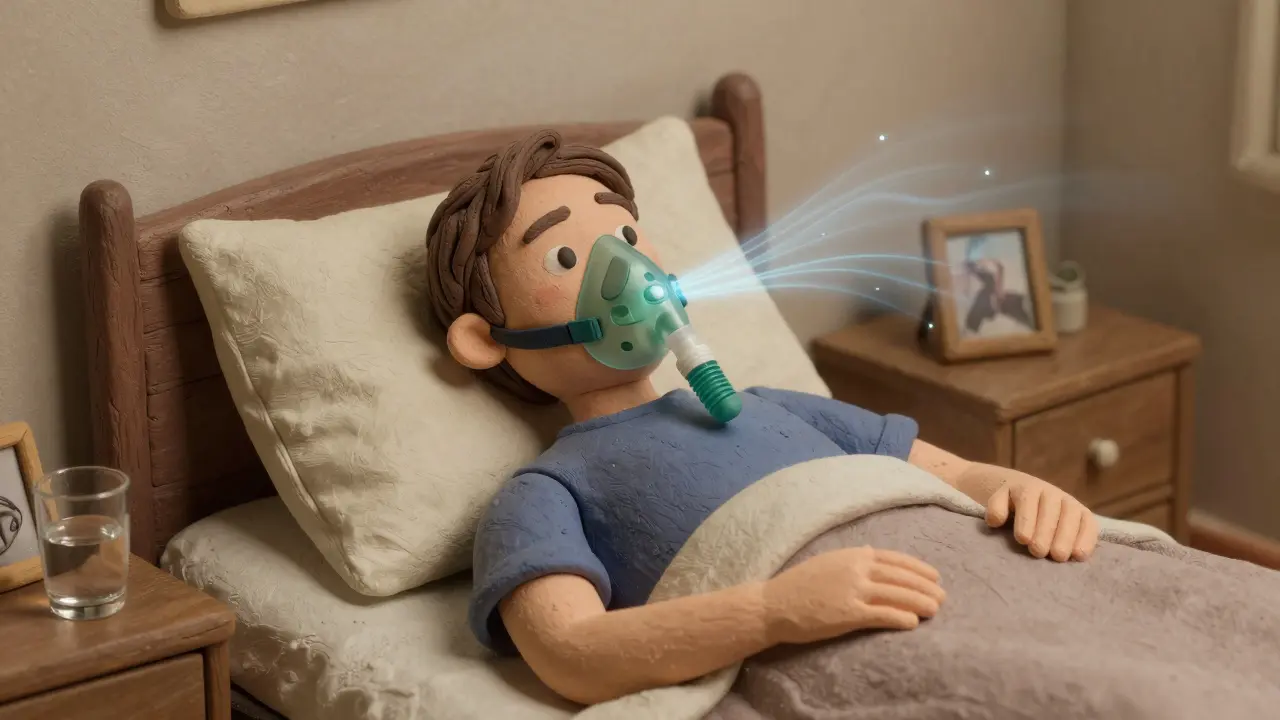
Noninvasive ventilation steps in where your body can’t. It doesn’t require a tracheostomy. No cutting. No surgery. Just a mask-over your nose, or nose and mouth-that delivers pressurized air when you breathe in, and helps you breathe out. Most people use a BiPAP machine, which gives two different pressure levels: higher when you inhale, lower when you exhale. This makes it easier to breathe without fighting the machine.
Doctors don’t wait until you’re gasping for air. The European and Canadian guidelines say to start NIV when your forced vital capacity (FVC) drops below 80% of what’s normal for your age and height, or when you have symptoms like morning headaches, daytime sleepiness, or trouble sleeping. In the U.S., insurance often demands stricter numbers-FVC under 50%, or sniff pressure below 40 cm H₂O-which creates a dangerous delay. By the time coverage kicks in, many have already lost valuable months.
Real-world data shows that people who use NIV for at least 4 hours a night live longer. One 2006 study found that without NIV, median survival after respiratory symptoms was just 215 days. With it? 453 days. That’s more than a year and a half longer. And it’s not just about living longer-it’s about living better. People report fewer morning headaches, deeper sleep, and more energy to talk, watch TV, or even take a walk.
Choosing the Right Machine: BiPAP vs. Portable Ventilators
Not all machines are the same. Most people start with a standard BiPAP device. These cost between $1,200 and $2,500. They’re good for nighttime use and easy to set up. But as ALS progresses and breathing gets harder during the day, you may need more.
That’s where portable ventilators like the Philips Respironics Trilogy 100 or 106 come in. These aren’t just fancy BiPAPs-they’re full ventilators. They can deliver volume-controlled breaths, have dual backup rates, and even monitor oxygen levels inside the machine. They weigh less than 12 pounds, have batteries that last 8-12 hours, and can be used while sitting, standing, or even in a wheelchair. For someone whose breathing is failing around the clock, this isn’t a luxury-it’s freedom.
Cost? Around $6,000 to $10,000. That’s a lot. But when you consider the cost of hospitalizations, emergency visits, or intubation, it’s often cheaper in the long run. And patients who use these devices report higher satisfaction-4.2 out of 5 on ALS community reviews-compared to 3.7 for standard BiPAPs. Why? Because they’re quieter, more responsive, and don’t force you to choose between breathing and being mobile.

Adherence Is the Secret Weapon-And It’s Harder Than You Think
Having the machine isn’t enough. Using it consistently is what saves lives. But here’s the uncomfortable truth: many people struggle at first.
A 2019 study found that in the first 30 days, only half of patients used NIV for more than 20 days. Common problems? Mask discomfort. Skin sores from pressure. Feeling like you can’t exhale. Dry mouth. Claustrophobia. These aren’t signs of failure-they’re signs that the setup needs adjustment.
That’s why support matters. Respiratory therapists spend an average of 1.5 hours per patient just getting them comfortable with the mask and machine. Some need three or more visits before it clicks. The key? Don’t give up. Most people who stick with it for a year end up using it over 27 days a month. The body adapts. The mask fits better. The pressure feels natural.
And the payoff? Eighty-seven percent of consistent users say morning headaches disappeared. Seventy-nine percent sleep better. Seventy-two percent feel more awake during the day. These aren’t small wins. They’re the difference between spending evenings in bed and watching a grandchild play, or between eating dinner with family and being too tired to join them.
Nutrition in ALS: Why Weight Loss Isn’t Just a Side Effect-It’s a Threat
Swallowing problems come on slowly. First, it’s harder to chew meat. Then liquids go down the wrong way. You start avoiding meals because they’re tiring. You lose weight. You get weaker. And here’s the hidden danger: weight loss in ALS isn’t just about hunger-it’s a direct signal that your body is running out of fuel to fight the disease.
Studies show that people who lose more than 10% of their body weight in six months have significantly shorter survival. The goal isn’t to gain weight-it’s to stop losing it. That’s where nutrition support becomes critical.
Percutaneous endoscopic gastrostomy (PEG) is a simple procedure. A small tube is placed through the belly wall into the stomach. It’s done under light sedation, takes less than an hour, and most people go home the same day. It doesn’t fix swallowing-it bypasses it. You can still eat by mouth if you want, but now you have a reliable way to get calories, protein, and fluids.
The evidence is clear. A 2006 study found that people who got a PEG tube before their FVC dropped below 50% or BMI fell under 18.5 lost almost no weight over six months. Without it? They lost an average of 12.6%. That’s not just a number-it’s muscle, strength, and resilience gone.
And survival? Getting a PEG tube early adds about 120 days to life. Combine that with NIV, and you’re looking at over a year longer than doing nothing. That’s not a guarantee. But it’s a powerful advantage.

Timing Is Everything: Don’t Wait Until It’s Too Late
One of the biggest mistakes families make is waiting. They think, “Let’s wait until he can’t swallow at all,” or “She’s still breathing fine-why rush?” But ALS doesn’t wait. It moves faster than most people realize.
By the time someone can’t swallow safely, the risk of pneumonia from aspiration skyrockets. By the time FVC drops below 50%, the lungs are already struggling. The American Academy of Neurology says NIV counseling should happen within 30 days of FVC falling below 80% or the first respiratory symptom. That’s early. That’s proactive. And it’s the standard in top ALS clinics, where 78% of patients get timely care.
Don’t wait for a crisis. Talk to your neurologist or ALS clinic team before you feel desperate. Ask: “What’s my FVC?” “Have I lost weight?” “Should we talk about NIV or a PEG tube?” If your doctor doesn’t bring it up, bring it up yourself. This is your life-and you have the right to plan for it.
The Bigger Picture: Why a Team Approach Wins
ALS care isn’t about one doctor, one machine, or one tube. It’s about a team: neurologist, respiratory therapist, dietitian, speech therapist, social worker, and caregiver. The 2013 JAMA Neurology study found that patients in multidisciplinary clinics lived 7.5 months longer than those seeing scattered providers.
Why? Because they catch problems early. They adjust NIV settings before you know something’s wrong. They change your feeding formula before you lose 5 pounds. They help you navigate insurance, equipment loans, and home care. They don’t just treat symptoms-they protect your quality of life.
If you’re not connected to an ALS specialty clinic, ask for a referral. These clinics exist for a reason. They’ve seen thousands of cases. They know what works. And they won’t let you fall through the cracks.
What Comes Next? The Future of ALS Support
Research is moving fast. Trials like NCT07071935 are testing algorithms that predict who needs NIV before symptoms appear. Others are studying how to use CO₂ monitoring at home to catch rising carbon dioxide levels before they cause harm. New masks are lighter. Machines are smarter. Telehealth allows therapists to adjust settings remotely.
But none of this replaces the simple, proven steps we have now: start NIV early, get a PEG tube before it’s too late, and surround yourself with a team that knows how to help.
ALS takes a lot. But it doesn’t have to take your breath. Or your meals. Or your time with loved ones. With the right tools, used at the right time, you can still live-fully, meaningfully, and for longer than anyone thought possible.
Can NIV be used if someone has trouble swallowing?
Yes. In the past, doctors worried that bulbar weakness (affecting speech and swallowing) made NIV less effective. But research since 2013 shows no difference in survival benefit between those with and without bulbar symptoms. NIV works by supporting breathing, not swallowing. Mask fit and comfort can be adjusted, and many patients with speech difficulties use NIV successfully for years.
How do I know if I need a PEG tube?
You should consider a PEG tube if you’ve lost more than 5% of your body weight in 3 months, if swallowing is becoming tiring or unsafe, or if your BMI falls below 18.5. Your doctor may also recommend it if your forced vital capacity (FVC) drops below 50%. The goal is to place it before you’re at risk of aspiration pneumonia or severe malnutrition. Waiting until you can’t eat at all makes the procedure riskier and less effective.
Is NIV covered by insurance?
In the U.S., Medicare and most private insurers cover NIV devices and masks, but they often require strict criteria: FVC below 50%, MIP below -60 cm H₂O, or SNIP below 40 cm H₂O. These thresholds are higher than what medical guidelines recommend (FVC <80% or symptoms), which can delay access. Some families work with ALS advocacy groups or social workers to appeal denials. In the UK and Canada, access is generally broader and based on clinical need rather than rigid numbers.
Can I still eat by mouth after getting a PEG tube?
Yes. A PEG tube doesn’t stop you from eating or drinking normally. Many people continue to enjoy small meals, snacks, or favorite foods for comfort and pleasure. The tube just ensures they get enough calories and nutrients even if they eat less. Some find that eating becomes easier once they’re not worried about losing weight or choking.
How long does it take to adjust to NIV?
It varies. Some adapt in days. Others take weeks. The first 30 days are the hardest-mask fit, air pressure, dry mouth, and claustrophobia are common. Most people who stick with it for 3 months report major improvements in sleep and energy. Working with a respiratory therapist to tweak the mask, pressure, and humidifier settings makes a huge difference. Don’t give up after one bad night. Try again tomorrow.
Do I need to use NIV all night?
Ideally, yes. Studies show that using NIV for at least 4 hours per night is linked to longer survival. Most people start with nighttime use only. As the disease progresses, daytime use may become necessary. Portable ventilators like the Trilogy allow for this transition. Even if you can’t use it all night, every hour counts. Consistency matters more than perfection.
Can nutrition help with muscle strength in ALS?
It doesn’t reverse muscle loss, but it helps your body use energy more efficiently. When you’re well-nourished, your body isn’t forced to break down muscle for fuel. This preserves strength longer, reduces fatigue, and helps your immune system fight infections like pneumonia. Protein-rich formulas and adequate calories are key. A dietitian can tailor your feeding plan to your needs.
What if I’m afraid of the PEG tube procedure?
It’s normal to feel anxious. But PEG placement is a routine, low-risk procedure done under light sedation. Most people go home the same day. The tube is small, hidden under clothing, and doesn’t hurt once healed. Many say the fear of the procedure was worse than the reality. Talking to someone who’s had it done, or seeing a video of the process, helps reduce anxiety. The real risk isn’t the tube-it’s waiting too long and losing the chance to benefit from it.



Retha Dungga
NIV changed my dad’s life 🌟 I thought he’d be stuck in bed, but with the mask and a good setup, he watched my wedding, ate ice cream, and even joked about his snoring. ALS took a lot, but not this. 💪❤️
Jenny Salmingo
This post gave me hope. My mom has ALS and we were scared to talk about tubes or machines. But reading this made me realize we don’t have to wait until it’s too late. Thank you for sharing the facts, not just the fear.
Aaron Bales
Start NIV before FVC hits 50%. Don’t wait for insurance to approve it. Get the data. Advocate. This isn’t optional. It’s survival. And yes, the machines work even if you can’t talk. Stop delaying.
Lawver Stanton
I’ve seen this movie before. People get pumped up about NIV and PEG like they’re magic bullets. But let’s be real-most of these ‘extended survival’ stats come from people who still had decent cognition and family support. What about the ones in nursing homes with no one to help them adjust masks? Or the ones who can’t afford a Trilogy? You talk about freedom, but freedom costs $10k and a full-time caregiver. This isn’t empowerment-it’s privilege with a stethoscope.
Sara Stinnett
Let’s not romanticize medical intervention as moral superiority. Just because you can breathe longer doesn’t mean you’re living. I’ve sat with people who endured NIV for 3 years, barely able to blink, surrounded by machines, whispering ‘I’m tired.’ Is extending life the same as honoring dignity? Or are we just afraid of death and calling it ‘care’?
linda permata sari
I’m from Indonesia and we don’t have access to any of this. My cousin has ALS and we feed her by hand with a spoon because we can’t afford a PEG. We cry every night. This post made me feel so guilty. Please, if you have access to this care-use it. And don’t forget those of us who don’t.
Brandon Boyd
You’re not weak for needing help. You’re not a burden for using a machine. You’re not failing if you choose a tube. This isn’t about being brave-it’s about being smart. And if you’re reading this and you’re scared? That’s okay. Start small. Talk to your therapist. One step at a time. You’ve got this.
Branden Temew
So we’re supposed to be grateful that medicine lets us live longer while our bodies betray us? How poetic. We get to watch our hands wither while a machine hums beside us like a lullaby. I guess the real victory is not dying before your insurance expires.
Frank SSS
I’m not saying NIV doesn’t work. But I’ve seen people on BiPAP for 18 months with pressure sores, drooling into their masks, and crying because they can’t kiss their grandkids anymore. The machine keeps them alive-but does it keep them present? I don’t know. I just know the silence after the ventilator turns off is the loudest thing I’ve ever heard.
Hanna Spittel
NIV is just the government’s way of keeping people alive so they keep paying for meds. 🤡 They don’t care if you’re miserable. They just don’t want you to die on their watch. PEG tubes? That’s Big Pharma’s profit margin. Don’t believe the hype.
Brady K.
The data is unequivocal: early NIV + early PEG = statistically significant survival advantage (HR 0.51, 95% CI 0.38–0.69, p<0.001). But beyond the stats, the real metric is autonomy. When you control your breathing and nutrition, you control your narrative. That’s not medicine-that’s agency. And agency is the last thing ALS can’t steal.
Kayla Kliphardt
I’m a caregiver for my brother. I didn’t know where to start. This post gave me the language to ask the right questions. Thank you. I’m calling his neurologist tomorrow to ask about his FVC and whether we should talk about PEG. I’m not waiting anymore.