
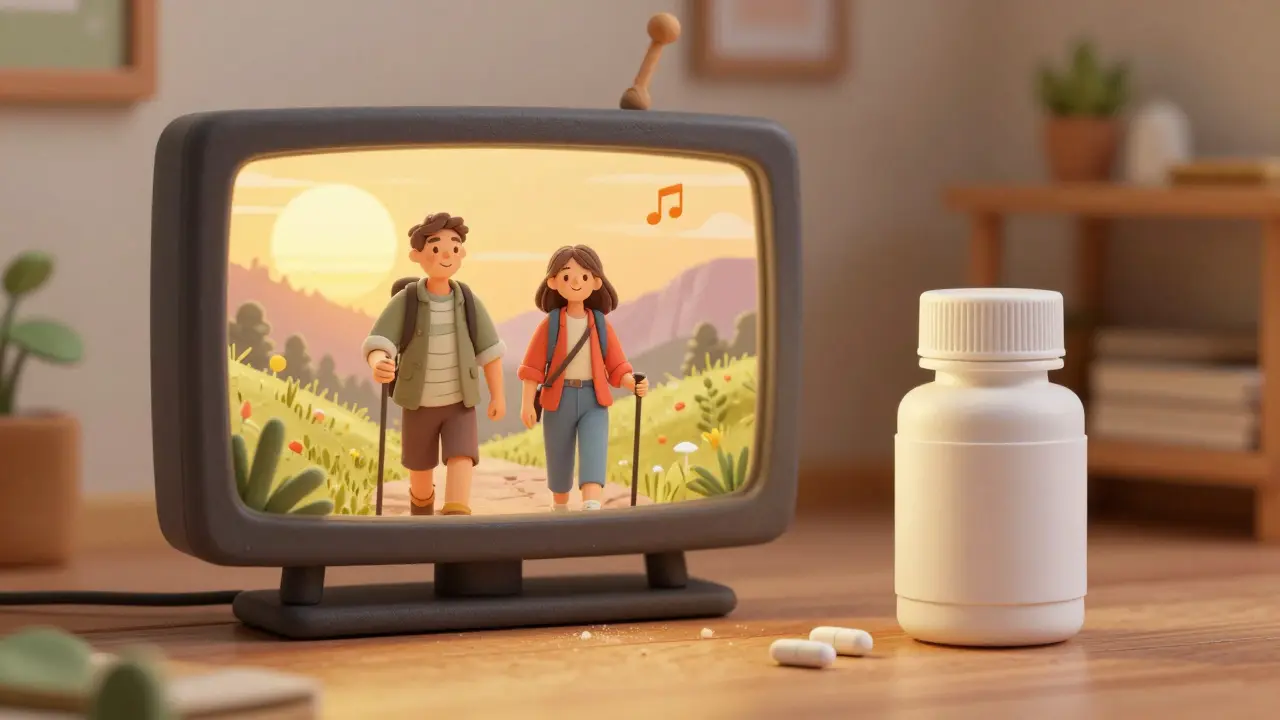
When you see a TV ad for a new prescription drug, it’s not just selling a pill-it’s shaping how you think about every similar drug on the shelf. That’s especially true for generic medications, which are just as effective as their branded cousins but cost far less. Yet, thanks to aggressive direct-to-consumer (DTC) advertising, many patients believe the branded version is superior-even when their doctor recommends the generic.
The Power of a Commercial
In the U.S., pharmaceutical companies spent over $6.5 billion on direct-to-consumer drug ads in 2020. That’s more than ten times what they spent in 1996. These ads don’t just inform-they create desire. They show happy people hiking, laughing, playing with grandchildren. They use soft music, bright skies, and calm voices to make you feel like this drug is the key to a better life. Meanwhile, generic versions of the same medicine? No ads. No emotional storytelling. Just a label on a bottle in the pharmacy aisle. This isn’t accidental. Companies know that when patients see an ad for a branded drug like Lipitor or Humira, they often ask their doctor for it. And doctors, even if they prefer a generic, frequently comply. A 2005 JAMA study found that patients who requested a specific drug by name were far more likely to get it-regardless of whether it was the best option. That’s the power of advertising: it shifts the decision-making process from clinical judgment to patient demand.Generics Get Left Behind
Generic drugs are required by law to contain the same active ingredients, dosages, and effectiveness as brand-name drugs. They’re tested, approved, and monitored by the FDA. Yet, because they don’t advertise, they’re invisible to most consumers. When patients hear about a drug on TV, they rarely hear about its generic equivalent. Even when doctors suggest it, patients often say, “But the commercial said the other one works better.” Research from the Wharton School shows that for every 10% increase in advertising exposure, prescriptions for that drug class rise by about 5%. But here’s the twist: 70% of that increase comes from people starting treatment for the first time, not from people already taking the drug. And among those new users, adherence rates are actually lower. People who start meds because of an ad are less likely to stick with them long-term. That means more spending, less benefit.The Spillover Effect-And Why It Doesn’t Help Generics Enough
There’s one bright spot: advertising for branded drugs sometimes boosts generic use too. This is called the “spillover effect.” When someone asks for Lipitor, their doctor might prescribe atorvastatin-the generic version-because it’s cheaper and just as good. So, indirectly, ads for brands help generics get prescribed more often. But that’s not the same as patients choosing generics. The spillover effect doesn’t change perception. It doesn’t make people think, “I want the generic.” It just means doctors, in some cases, substitute the cheaper option behind the scenes. Patients still believe the branded version is better. And that belief drives demand, even when it’s not medically necessary.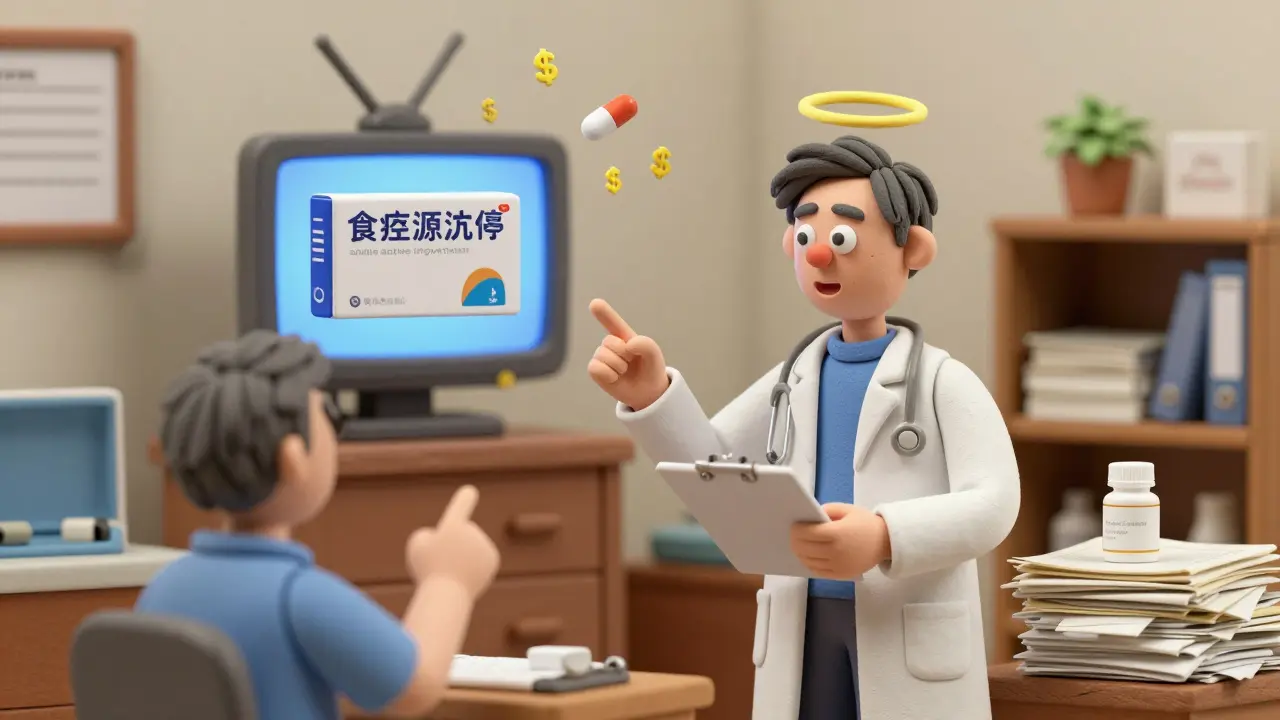
What the Ads Don’t Tell You
Pharmaceutical ads are legally required to mention risks. But here’s the problem: they bury them. The benefits are shown in vivid, emotional scenes. The risks? A quick voiceover over a fading sunset. A 2018 FDA study found that even after watching an ad four times, most people still couldn’t accurately recall the side effects. Risk information needs more repetition to stick-and ads don’t give it. Meanwhile, the visuals tell a different story. Ads show young, active people. They rarely show elderly patients, those with multiple conditions, or people on tight budgets. That skews perception. You start to think, “This drug is for people like me-healthy, active, in control.” But generics? They’re not in those scenes. So you assume they’re for people who can’t afford the real thing-not for people who want smart, evidence-based care.Doctors Are Caught in the Middle
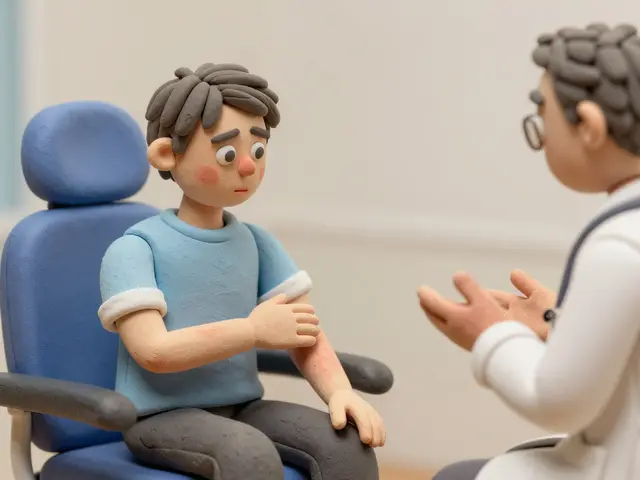
Physicians know the science. They know generics work. But they also know what happens when patients insist on a branded drug. A University of Montana study found that doctors filled 69% of patient requests for treatments they considered inappropriate. That includes requests for expensive branded drugs when a generic would do. It’s not that doctors are weak. It’s that they’re under pressure. A 15-minute appointment isn’t enough to undo the emotional impact of a 30-second commercial. Patients leave the office with a name in their head-and if the doctor says no, they might just go elsewhere.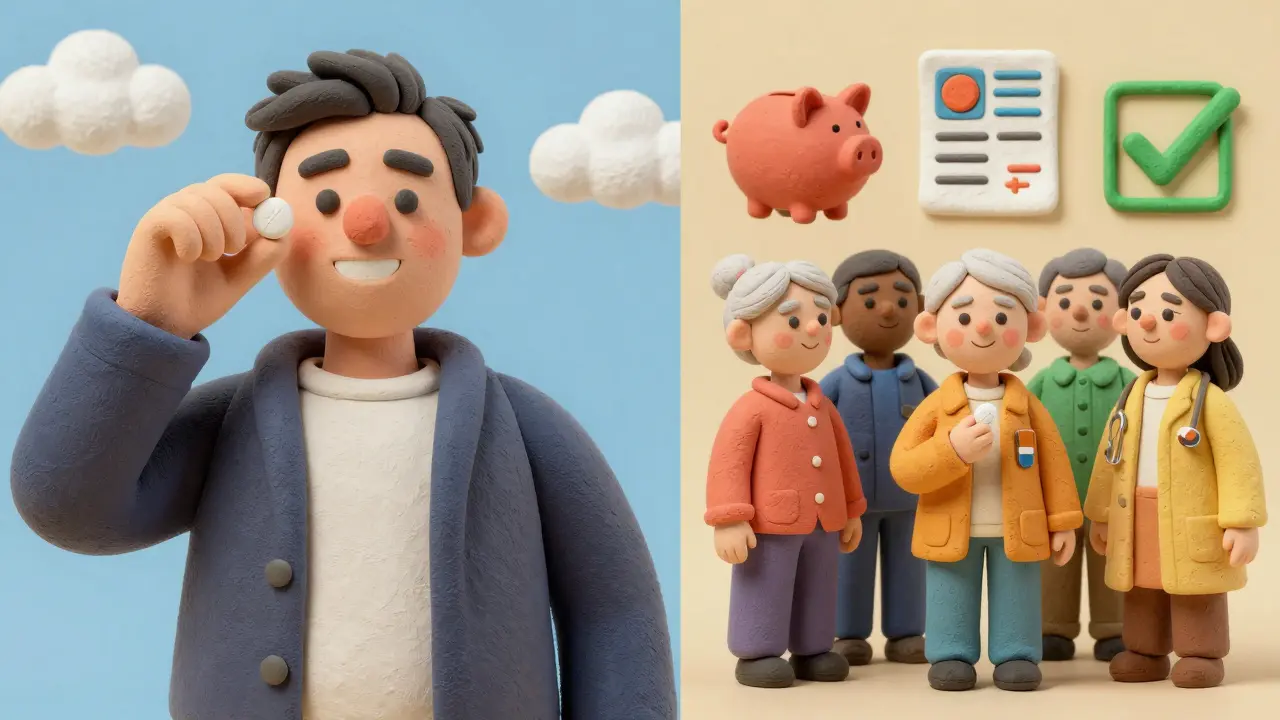
Why This Matters Beyond the Pharmacy
This isn’t just about personal choice. It’s about the entire healthcare system. When patients choose branded drugs over generics, it drives up costs for insurers, employers, and taxpayers. In 2020, every dollar spent on DTC advertising generated over $4 in drug sales. That’s a massive return-for the companies, not for the patients. And the worst part? The increased spending doesn’t mean better outcomes. People who start drugs because of ads are less likely to take them consistently. They’re more likely to stop when they feel fine-even if they shouldn’t. That leads to more hospital visits, more complications, and more long-term costs.Could Advertising Help Generics Too?
There’s no rule saying only branded drugs can advertise. Generic manufacturers could run their own campaigns. But they don’t. Why? Because it’s expensive. And because the system rewards branded drugs. Why spend millions to promote a drug that makes you pennies per pill? But imagine if a generic ad said: “Same active ingredient as [Branded Drug]. Same effectiveness. One-tenth the price.” What if it showed real people-older adults, single parents, people on fixed incomes-taking control of their health without overspending? That kind of messaging could shift perception. But it would require a policy change, or a public health campaign strong enough to compete with corporate ad budgets.The Bigger Picture
The U.S. and New Zealand are the only two countries that allow direct-to-consumer prescription drug ads. Everywhere else, these ads are banned. Why? Because the evidence is clear: they don’t improve health outcomes. They just increase spending. Generics are one of the most effective cost-saving tools in modern medicine. They’ve saved the U.S. healthcare system over $300 billion in the last decade alone. But if advertising continues to convince people that generics are second-rate, we’ll keep paying more for no better results. The solution isn’t to ban ads entirely. It’s to make them fair. Require ads to show generic alternatives. Mandate equal time for risk and benefit. Encourage transparency about cost and effectiveness. Until then, the message in your living room won’t match the science on the pharmacy shelf.Do generic drugs work as well as brand-name drugs?
Yes. Generic drugs contain the same active ingredients, in the same strength and dosage form, as their brand-name counterparts. The FDA requires them to meet the same strict standards for safety, effectiveness, and quality. The only differences are in inactive ingredients-like fillers or dyes-and packaging. These don’t affect how the drug works in your body.
Why do doctors sometimes prescribe branded drugs instead of generics?
Doctors often prescribe branded drugs because patients ask for them after seeing ads. Even when a generic is appropriate, many physicians feel pressured to comply with patient requests to avoid conflict or loss of trust. In some cases, the brand may have a unique delivery system or formulation that’s not yet available as a generic, but this is rare. Most of the time, it’s marketing, not medicine, driving the choice.
Are generic drugs cheaper because they’re lower quality?
No. Generic drugs are cheaper because their manufacturers don’t spend billions on advertising, marketing, or patent litigation. They don’t need to recoup research and development costs, since the original formula is already proven. The manufacturing process is just as regulated. Many generic drugs are made in the same factories as brand-name versions.
Why don’t generic drug companies advertise like brand-name companies?
Generic manufacturers typically don’t advertise because their profit margins are too thin. A single pill might cost 90% less than the brand version, leaving little room for marketing campaigns. Also, since generics are often sold under multiple brand names, there’s no single company with enough incentive to run national ads. The system rewards brands, not value.
Can DTC advertising lead to unnecessary drug use?
Yes. Studies show that patients who start taking a drug because of an ad are more likely to be ones who didn’t need it in the first place. These patients also have lower adherence rates, meaning they stop taking the drug sooner. This leads to higher healthcare costs without better health outcomes. Ads often target people with mild symptoms or no diagnosis at all, turning normal life experiences into medical problems needing a pill.

clifford hoang
Bro, think about it-Big Pharma is literally programming our brains with sunset visuals and happy grandkids while burying the side effects in a whisper. 🤯 It’s not medicine, it’s a cult. They don’t want you to know generics are made in the same factories. They want you addicted to the brand name like it’s a status symbol. 💸 The FDA? Just a rubber stamp for billionaires. 🧠 We’re not patients-we’re data points in a $6.5B marketing experiment. And we’re loving it. 😅
Art Gar
It is an undeniable fact that the regulatory framework governing pharmaceutical advertising in the United States is fundamentally flawed. The absence of equitable representation for generic alternatives constitutes a systemic bias that undermines evidence-based clinical decision-making. The emotional manipulation inherent in direct-to-consumer advertising is not merely unethical-it is antithetical to the principles of medical autonomy and informed consent. Furthermore, the disparity in funding between branded and generic manufacturers creates a market distortion that prioritizes profit over public health.
Shane McGriff
I get why this feels unfair-but let’s be real. Most people don’t have time to dig into FDA guidelines. They see a commercial with someone laughing on a beach and think, ‘That’s me.’ And honestly? That’s not their fault. The system is rigged to make them feel dumb for choosing the cheaper option. But here’s the thing: if generics had even a fraction of that ad budget, we could flip the script. Imagine an ad showing a single mom choosing a generic, saving $200/month, and still feeling great. That’s the story we need. Not fear. Not jargon. Real life.
Paul Barnes
The article contains numerous grammatical errors, including improper punctuation and inconsistent paragraph structure. Additionally, the phrase 'just as effective as their branded cousins' is colloquially imprecise; 'counterparts' would be more appropriate in an analytical context. The argument itself is sound, but the presentation lacks scholarly rigor.
pragya mishra
Why do you think your doctor doesn't push generics harder? Because they get kickbacks. I know a nurse who said the reps give free lunches and trips to conferences. You think that doesn't influence prescriptions? They don't care if you live or die-they care about their bonus. 🤫
Andy Thompson
They're not just advertising drugs-they're selling American exceptionalism. Every other country bans these ads because they know it's a scam. But here? We think if it's on TV, it must be legit. 🇺🇸 Big Pharma owns Congress. They own the FDA. They own your doctor's lunch. And now they own your mind. Wake up. This isn't healthcare-it's corporate colonization. 🚩
sagar sanadi
So generics are same stuff, cheaper, but no ads. So... they're like the boring cousin at family dinner who nobody talks to? 😂 Guess that's why I still buy the branded one. At least it looks fancy on the shelf.
kumar kc
Generics are not inferior. Choosing branded drugs out of fear is irrational and costly. The system is broken, and you are paying for it.
Edith Brederode
I used to think generics were ‘second-best’ until my dad started taking one after his heart attack. He saved $150 a month and felt just as good. 💙 I wish I’d known sooner. Maybe if we saw ads with real people-like him-instead of models hiking in slow motion, we’d all make smarter choices. Thank you for writing this. It made me feel less alone.
Arlene Mathison
Let’s make this happen. Let’s crowdsource a generic drug ad campaign. #SameDrugCheaperPrice. We don’t need Big Pharma’s money-we’ve got real stories. Single moms. Veterans. College students. People who just want to live without going broke. Let’s show the world what real healthcare looks like. 🙌 You want change? Stop waiting for them to fix it. Build it yourself.