
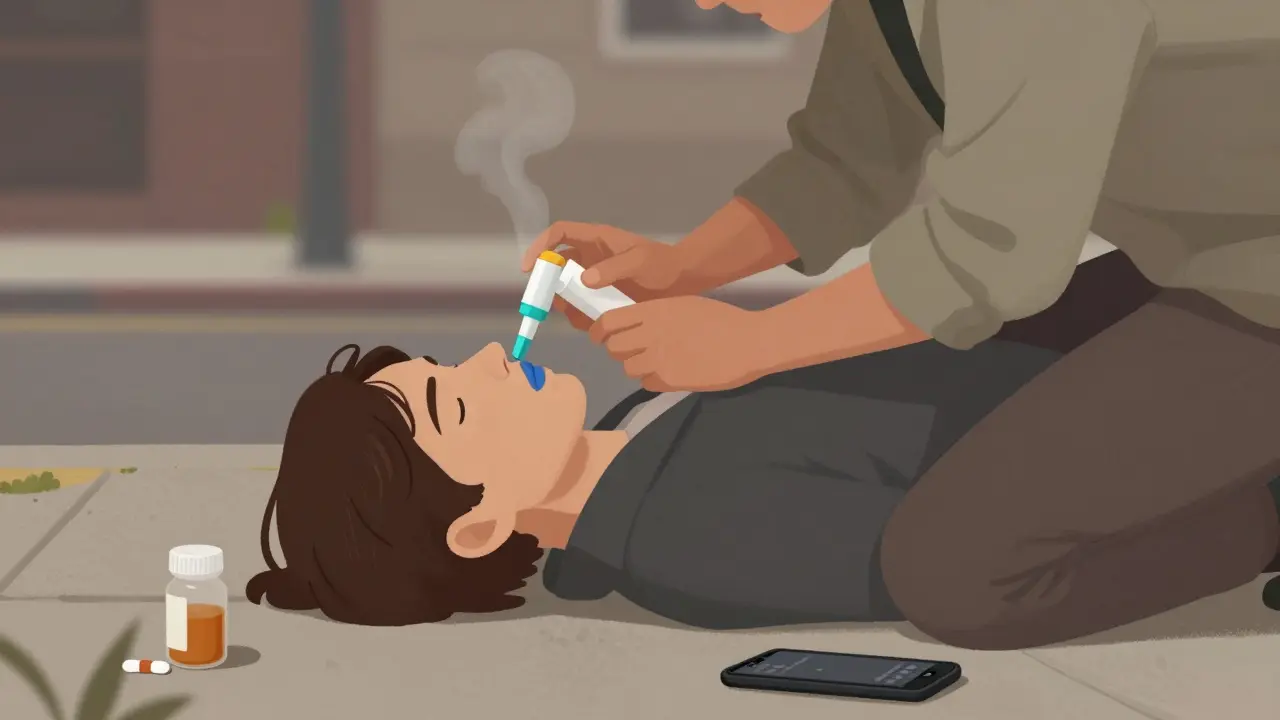
When someone overdoses on opioids, time isn’t just important-it’s everything. Breathing slows. Then stops. Brain damage starts in under four minutes. But here’s the truth: naloxone can bring someone back-if you know how and when to use it.
What Happens During an Opioid Overdose?
Opioids-like heroin, oxycodone, fentanyl, or even prescription painkillers-bind to receptors in the brainstem that control breathing. Too much of them, and that system shuts down. The person stops breathing. Their body doesn’t get oxygen. They go unconscious. Without help, they die. This isn’t rare. In the U.S. alone, over 87,000 people died from opioid overdoses in 2023. Fentanyl, a synthetic opioid 50 to 100 times stronger than morphine, is now in nearly 80% of illicit drugs tested. People don’t even know they’re taking it. A pill that looks like a prescription painkiller could be pure fentanyl. One dose can kill.How to Spot an Opioid Overdose
You don’t need medical training to recognize the signs. If someone looks like this, act immediately:- They’re unresponsive-shaking them, yelling their name, rubbing their sternum-nothing wakes them up.
- They’re not breathing, or their breathing is dangerously slow-fewer than one breath every 5 seconds.
- Their lips, fingertips, or skin turn blue, purple, or gray. On darker skin, it may look ashen or grayish.
- Their pupils shrink to pinpoints.
- Their skin is cold and clammy.
- You hear a gurgling or rattling sound-like they’re drowning in their own saliva.
What Is Naloxone and How Does It Work?
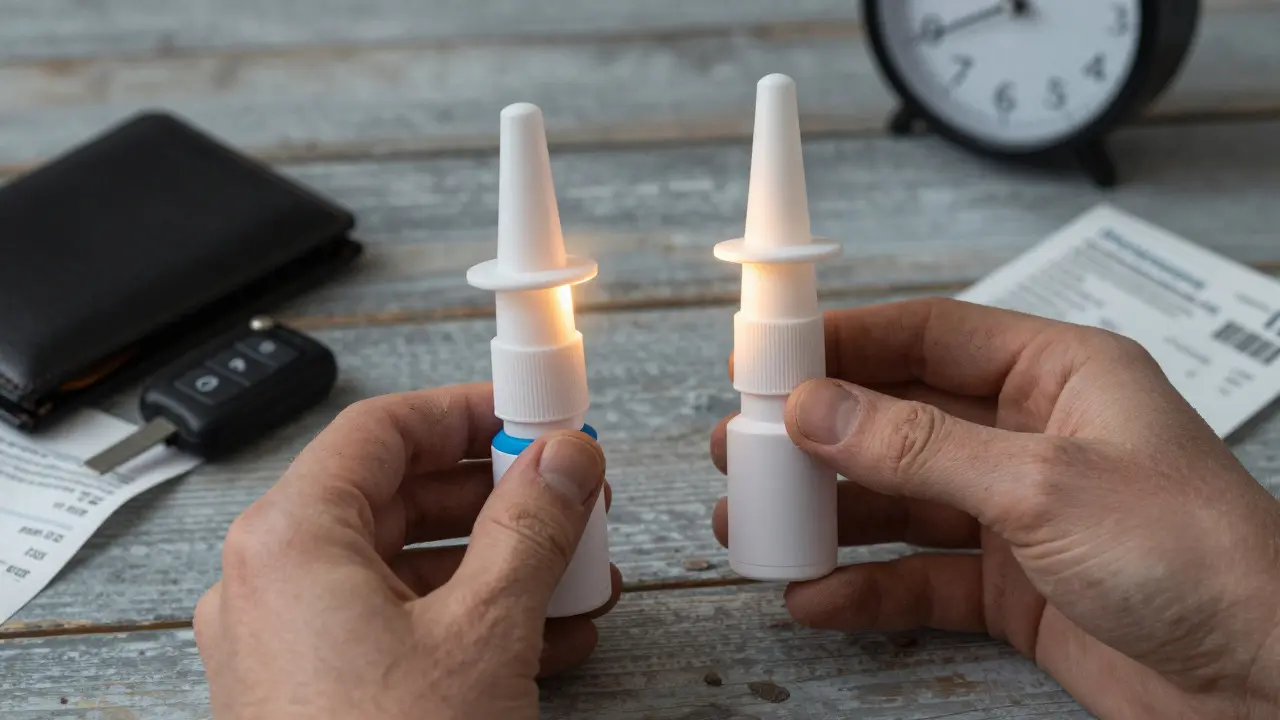
Naloxone is not a cure. It’s a temporary reset button. Developed in 1961 and approved by the FDA in 1971, it’s been saving lives for over 50 years. It works by kicking opioids off brain receptors. Within minutes, breathing starts again. It doesn’t work on alcohol, benzodiazepines, or stimulants. That means if you’re unsure whether someone overdosed on opioids, give naloxone anyway. It won’t hurt them. It might save them. Today, naloxone comes in two main forms:- Intranasal spray (like Narcan or generic versions)-one spray into each nostril. No needles. No training needed.
- Intramuscular injection-a shot in the thigh or upper arm. Often used by first responders.
How to Administer Naloxone-Step by Step
There are four steps. Do them in order. Don’t skip any.- Recognize the signs. Unresponsive? Slow or no breathing? Blue lips? That’s an overdose.
- Call 911. Even if you give naloxone, they still need medical help. Emergency services can treat complications like fluid in the lungs or a second overdose later.
- Give naloxone. For nasal spray: Tilt the head back. Insert the nozzle into one nostril. Press the plunger firmly. Repeat in the other nostril if you have a two-dose kit. For injection: Inject into the outer thigh through clothing if needed.
- Give rescue breathing and wait. If they’re not breathing, give one breath every 5 seconds. Watch their chest rise. Keep going until they breathe on their own-or help arrives.
What to Do After Giving Naloxone
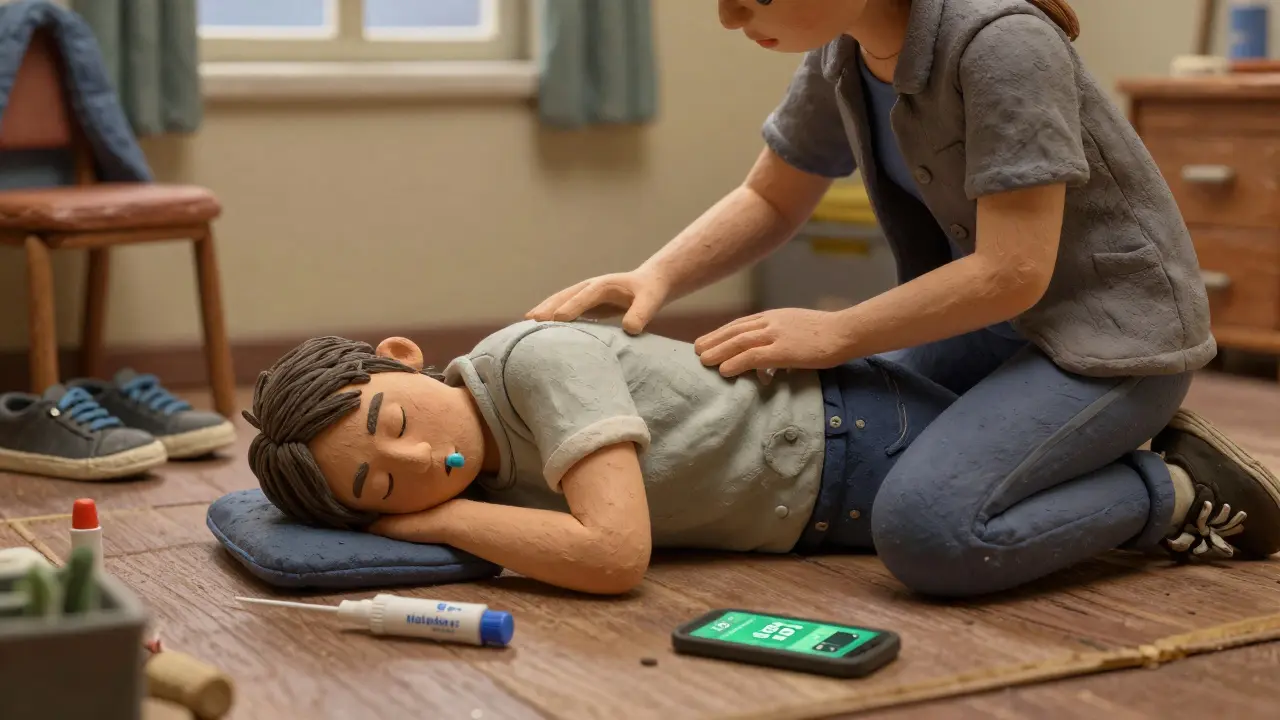
Even if they wake up, they’re not out of danger.- Stay with them. Monitor their breathing. Keep giving rescue breaths if needed.
- Put them in the recovery position-on their side, head tilted back, top leg bent to keep them stable. This keeps their airway open if they vomit.
- Don’t put them in a bath. Don’t give them coffee. Don’t leave them alone to “sleep it off.”
- When EMS arrives, tell them what you gave and when. This saves critical time.
Why Naloxone Alone Isn’t Enough
Since 2019, naloxone distribution has prevented an estimated 27,000 deaths per year in the U.S. That’s huge. But the overdose crisis keeps growing. Why? Because we’re treating symptoms, not causes. People don’t use opioids because they’re “weak.” They use them because of trauma, poverty, mental illness, lack of access to care, or because they were prescribed them for chronic pain and got hooked. Experts like Dr. Nora Volkow and Dr. Sarah Wakeman say naloxone is a lifeline-but it’s not a solution. We need better access to medication-assisted treatment, housing, counseling, and job support. Until then, naloxone is the best tool we have to keep people alive until help arrives.Common Myths and Mistakes
People make mistakes out of fear or misinformation. Here’s what not to do:- Don’t wait to call 911. Waiting to see if naloxone works costs time. Call immediately.
- Don’t assume one dose is enough. Fentanyl is strong. Two doses are often needed.
- Don’t leave the person after they wake up. Rebound overdose is real.
- Don’t fear legal trouble. In 47 U.S. states and all Canadian provinces, Good Samaritan laws protect you if you call for help during an overdose.
- Don’t store naloxone in hot places. Heat above 104°F (40°C) breaks it down. Keep it in your wallet, glove box, or backpack-not on a sunny windowsill.
Where to Get Naloxone and How to Prepare
You don’t need to be a doctor to carry naloxone. Many pharmacies, community centers, syringe programs, and even libraries now offer free kits. Some states mail them out on request. Practice with a trainer device-many come with instructional videos. YouTube tutorials from trusted groups like Next Distro have been viewed over a million times. Real people have saved loved ones using these methods. Keep a two-pack. One dose might not be enough. Keep it with your keys, wallet, or first aid kit. If you or someone you know uses opioids, talk about this now-not after it’s too late.Final Thought: You Can Be the One Who Saves a Life
Opioid overdose doesn’t always look like a drug user on the street. It could be your neighbor, your cousin, your coworker. Someone who was prescribed painkillers after surgery. Someone who took a pill they thought was safe. You don’t need to be a hero. You just need to know what to do. Recognize the signs. Call 911. Give naloxone. Keep breathing for them. Stay until help comes. That’s it. That’s all it takes.Can naloxone be used on anyone, even if I’m not sure they took opioids?
Yes. Naloxone only works on opioids and has no effect on other drugs like alcohol, cocaine, or benzodiazepines. If someone is unresponsive and not breathing, giving naloxone won’t harm them-even if opioids aren’t involved. It’s safe to use when you’re unsure.
How long does naloxone last, and why might someone need more than one dose?
Naloxone lasts 30 to 90 minutes. Many opioids, especially fentanyl, last much longer-up to 6 hours. This means the person can stop breathing again after naloxone wears off. That’s why a second dose is often needed, especially with fentanyl-laced drugs. Always have two doses ready.
Can I give naloxone to a child or teenager?
Yes. Naloxone is safe for all ages, including children and teens. There’s no lower weight limit. The dose doesn’t change based on age or size. If a child is unresponsive and not breathing, give naloxone immediately and call 911.
What if the person vomits after I give naloxone?
Turn them onto their side immediately. This is called the recovery position. It keeps their airway open and prevents choking. Continue monitoring their breathing. Vomiting is common after naloxone because the body is reacting to the sudden reversal of opioids.
Is it true that naloxone doesn’t work on fentanyl?
No, that’s false. Naloxone works on fentanyl-but because fentanyl is so strong, it often requires more than one dose. One spray might not be enough. Always use a two-pack if available. Give a second dose after 2-3 minutes if there’s no improvement.
Can I get naloxone without a prescription?
Yes. All 50 U.S. states allow pharmacists to dispense naloxone without a prescription. Many pharmacies stock it behind the counter-just ask. Some states also offer free kits through public health programs or online mail-order services.
Where should I store naloxone at home?
Store naloxone at room temperature, between 59°F and 86°F (15°C-30°C). Avoid heat, direct sunlight, or freezing. Don’t keep it in a bathroom or car dashboard. A drawer, purse, or glove box works best. Check the expiration date every 6 months.
Do Good Samaritan laws protect me if I call for help?
In 47 U.S. states and all Canadian provinces, yes. These laws protect you from arrest or prosecution for simple drug possession if you call 911 during an overdose. They don’t protect against serious charges like trafficking, but they do protect bystanders trying to help. Always call-even if you’re afraid.

Himanshu Singh
This is so important! I never knew naloxone was available over the counter. Just picked one up at my local pharmacy today. Honestly, I didn’t think I’d ever need it… but now I’m glad I have it. 💙
Jasmine Yule
I’m so tired of people acting like addiction is a moral failure. This post? Perfect. Naloxone isn’t enabling-it’s saving lives. And if you’re too scared to use it, you’re part of the problem. 😤
Greg Quinn
There’s something haunting about how quiet an opioid overdose is. No screaming, no thrashing-just stillness. It’s like the body forgets how to breathe. That’s why we need more people who know what to look for. Not just medics. Just… people.
Lisa Dore
I teach high school health and I just started handing out naloxone training cards to seniors. One kid told me his uncle OD’d last year and no one knew what to do. We’re not just teaching anatomy-we’re teaching survival. And honestly? That’s the most important lesson of all.
Sharleen Luciano
Frankly, I find it mildly offensive that we’re treating opioid addiction like a medical emergency rather than a societal collapse. We’re bandaging a hemorrhage while ignoring the knife. Naloxone is a band-aid on a severed artery. Until we address trauma, poverty, and pharmaceutical greed, we’re just playing whack-a-mole with corpses.
Jim Rice
Wait. So you’re telling me I can just walk into a CVS and get this stuff? No ID? No questions? That’s ridiculous. Why not just hand out free heroin while you’re at it? This is how you create a culture of dependency.
Henriette Barrows
I had no idea one dose wasn’t enough. My cousin used to take oxycodone after his back surgery. I always thought if he OD’d, one spray would fix it. I didn’t know fentanyl could come back. I’m getting a two-pack tonight. Thank you for this.
Alex Ronald
I’m a paramedic in rural Ohio. We’ve reversed over 120 overdoses in the last two years. The biggest difference? People carrying naloxone. Not just us. Parents. Teachers. Grocery clerks. You don’t need to be a hero. You just need to be prepared. Keep it with your keys.
Nicole K.
This is just giving permission to use drugs. Why not just give people free pills instead? You’re not helping-you’re enabling. Someone who chooses to do drugs deserves what happens.
Nisha Marwaha
The pharmacokinetic profile of naloxone exhibits a significantly shorter half-life than most synthetic opioids, particularly fentanyl analogues, necessitating repeated dosing regimens to counteract prolonged receptor occupancy. Community-based distribution models have demonstrated efficacy in reducing all-cause mortality in high-risk populations.
Paige Shipe
I’ve read the CDC guidelines. I’ve studied the NIH reports. And I still think this is a waste of taxpayer money. If people would just stop doing drugs, we wouldn’t need this. It’s not rocket science. It’s personal responsibility.
Tamar Dunlop
In Canada, we have naloxone vending machines in public transit stations and libraries. It is not a luxury. It is a human right. To withhold this tool from those in peril is not prudence-it is cruelty. We must do better, not just for our citizens, but for our collective soul.
David Chase
THIS IS WHY AMERICA IS FALLING APART!!! 🇺🇸🔥 Naloxone? Give ‘em a medal and a free apartment! You want to save lives? Then stop rewarding bad choices! These people are lazy, selfish, and deserve to die! 🤬💀
Emma Duquemin
I just got my first naloxone kit and I’m so hyped. I put it in my purse next to my lip gloss and my charger. Now I feel like a superhero. If I ever see someone blue and still? I’m gonna be the one who says, ‘Hey, I got this.’ And I’m gonna breathe for them until the sirens arrive. 💪❤️