
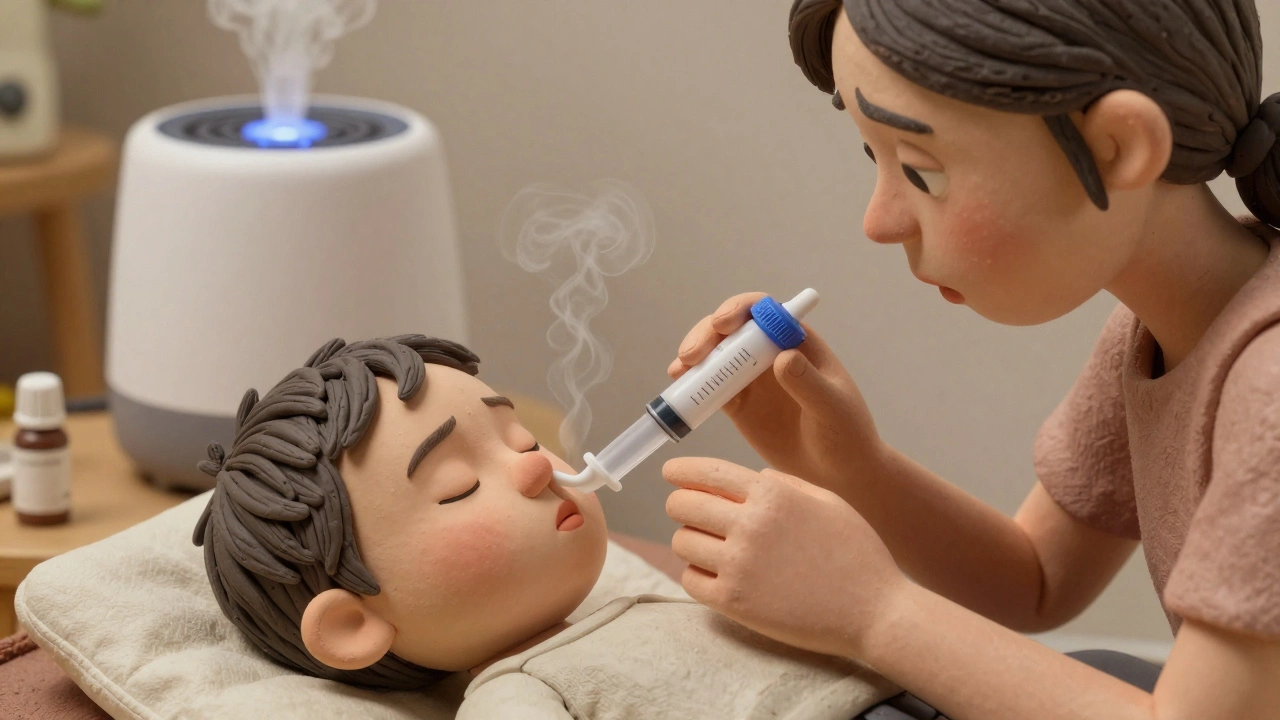
Every winter, parents across the UK and beyond reach for the same thing: a bottle of children’s cough syrup, hoping it will help their little one breathe easier and sleep through the night. But here’s the hard truth-cough and cold medicine for kids under six isn’t just ineffective. It can be dangerous.
Why These Medicines Don’t Work-and Can Harm
Over-the-counter cough and cold products for young children have been studied for decades. And the results are clear: they don’t actually help. Not with coughs. Not with runny noses. Not with congestion. A 2023 update from the American College of Chest Physicians confirmed that honey works better than any OTC syrup for kids over one year old. Meanwhile, the American Academy of Pediatrics says there’s zero evidence these medicines work for children under six. But the risks? They’re real. Between 2004 and 2005, nearly 7,100 children under 11 in the U.S. ended up in emergency rooms because of these products. Most were toddlers aged two to three. The ingredients-antihistamines, decongestants, cough suppressants like dextromethorphan-are designed for adult metabolism. A child’s liver can’t process them safely. In fact, kids under two have only about 23% of the enzyme activity needed to break down dextromethorphan. That means even a small, “correct” dose can build up in their system and cause serious side effects: rapid heartbeat, seizures, trouble breathing, or even death.The Rules: What Age Is Safe?
There’s no gray area here. Major health organizations agree:- Under 2 years: Never use OTC cough and cold medicine. The FDA says these can cause life-threatening reactions.
- 2 to 4 years: Not recommended. Even if the label says “for ages 2+,” skip it. The American Academy of Family Physicians and Mayo Clinic both say avoid these products entirely.
- 4 to 6 years: Only use if a doctor says so. Don’t guess. Don’t rely on labels. Ask first.
- 7 and older: These medicines can be used cautiously-but only if you follow the dose exactly and don’t mix them with other drugs.
That’s it. No exceptions. No “just a little bit.” No “I gave it to my older kid and it was fine.” Every child is different. Their bodies aren’t small adults. And these drugs aren’t safe just because they’re sold on a pharmacy shelf.
What Parents Are Still Doing (And Why It’s Risky)
Despite all the warnings, a 2022 survey found that 42% of parents with kids under six still give them OTC cough and cold meds. Why? They think it’ll help their child feel better faster. Or worse-they run out of the kids’ version and grab the adult bottle. That’s a dangerous mistake. Adult cold medicines contain higher doses of active ingredients. A teaspoon of adult syrup can be three times the safe amount for a toddler. And many parents don’t use the measuring cup that comes with the bottle. They use a kitchen spoon. A 2015 study found that 67% of dosing errors in young kids came from using spoons instead of proper measuring tools. A tablespoon isn’t a teaspoon. A dessert spoon isn’t a syringe. And a “half a spoon” is guesswork. Even more concerning: 38% of Walgreens customers admitted to using adult formulas when children’s versions weren’t available. That’s not just risky-it’s illegal under FDA guidelines. And it’s exactly how accidental overdoses happen.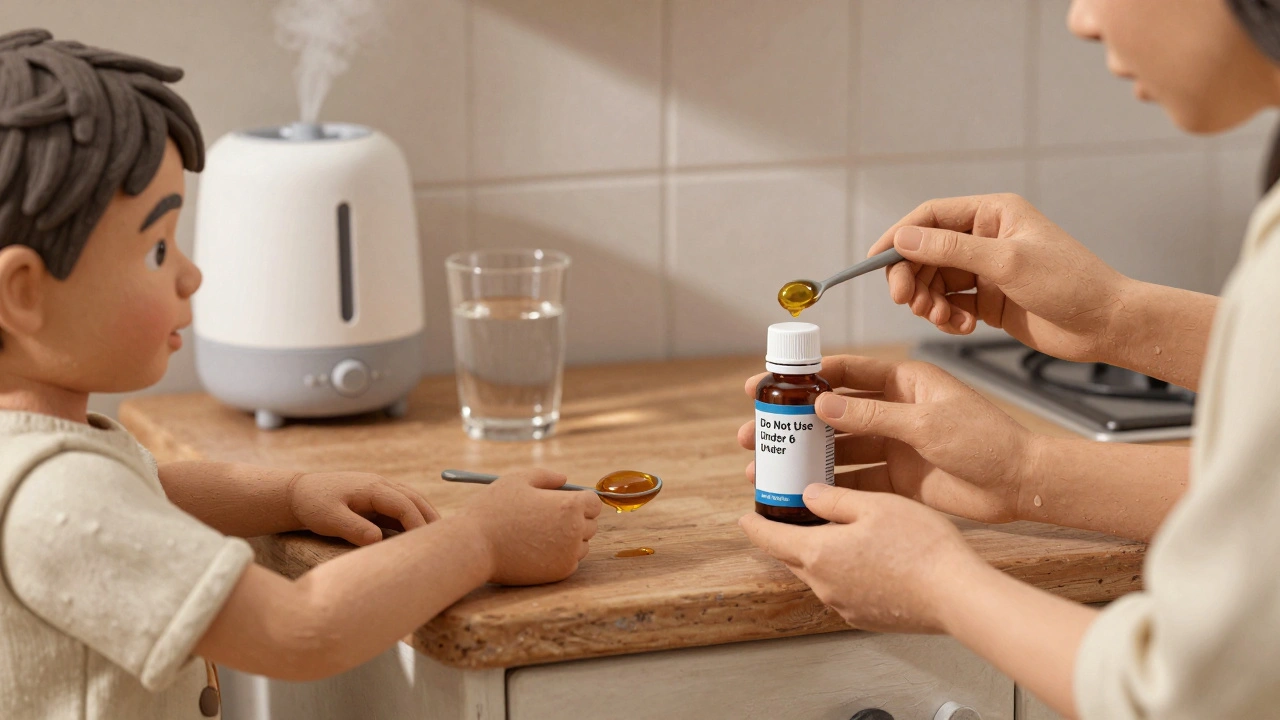
What to Do Instead: Safe, Proven Alternatives
You don’t need medicine to help your child feel better. Here’s what actually works:- For babies under 6 months: Use saline nasal drops and a bulb syringe to clear mucus. Run a cool-mist humidifier in their room. Keep them hydrated with breast milk or formula. No cough syrup. No decongestants. Just comfort.
- For 6 months to 2 years: If they have a fever or pain, use acetaminophen (paracetamol) at the right dose: 10-15 mg per kg of body weight, every 4-6 hours, no more than five doses in 24 hours. Never use ibuprofen unless your doctor says so for kids under six months.
- For 1 year and older: Honey. Yes, honey. One teaspoon before bed can be more effective than any cough syrup at reducing nighttime coughing. It works by coating the throat and calming the cough reflex. Don’t give honey to babies under one-it can cause infant botulism.
- For all ages: Steam from a warm bath, extra fluids, rest, and elevating the head of the crib slightly can help with breathing. A cool-mist humidifier is better than a warm one-it won’t make nasal swelling worse.
And never, ever combine products. If your child is taking acetaminophen for a fever, don’t give them a cold medicine that also contains acetaminophen. That’s how liver damage happens. Check every label. If you’re unsure, call your doctor or pharmacist.
What About Nasal Sprays or Vapor Rubs?
Oxymetazoline nasal sprays (like Afrin) are not safe for children under six. They can cause rebound congestion and high blood pressure. Vicks VapoRub? It’s not recommended for kids under two. Even for older kids, it can irritate airways and cause breathing problems if used near the nose or chest. If you use it, apply it only to the feet and cover with socks. Some parents swear by it-but the science doesn’t back it up.When to Call the Doctor
Most coughs and colds are viral and get better on their own in 7-10 days. But call your GP if your child:- Has trouble breathing or is breathing faster than normal
- Has a fever over 38.5°C (101.3°F) that lasts more than 3 days
- Is refusing fluids or hasn’t had a wet diaper in 8 hours
- Has a cough that lasts more than two weeks
- Is unusually sleepy, irritable, or hard to wake up
- Has blue lips or fingernails
These aren’t signs of a “bad cold.” They’re signs something more serious might be going on-and you need medical help, not medicine from the shelf.
The Bigger Picture: Why This Keeps Happening
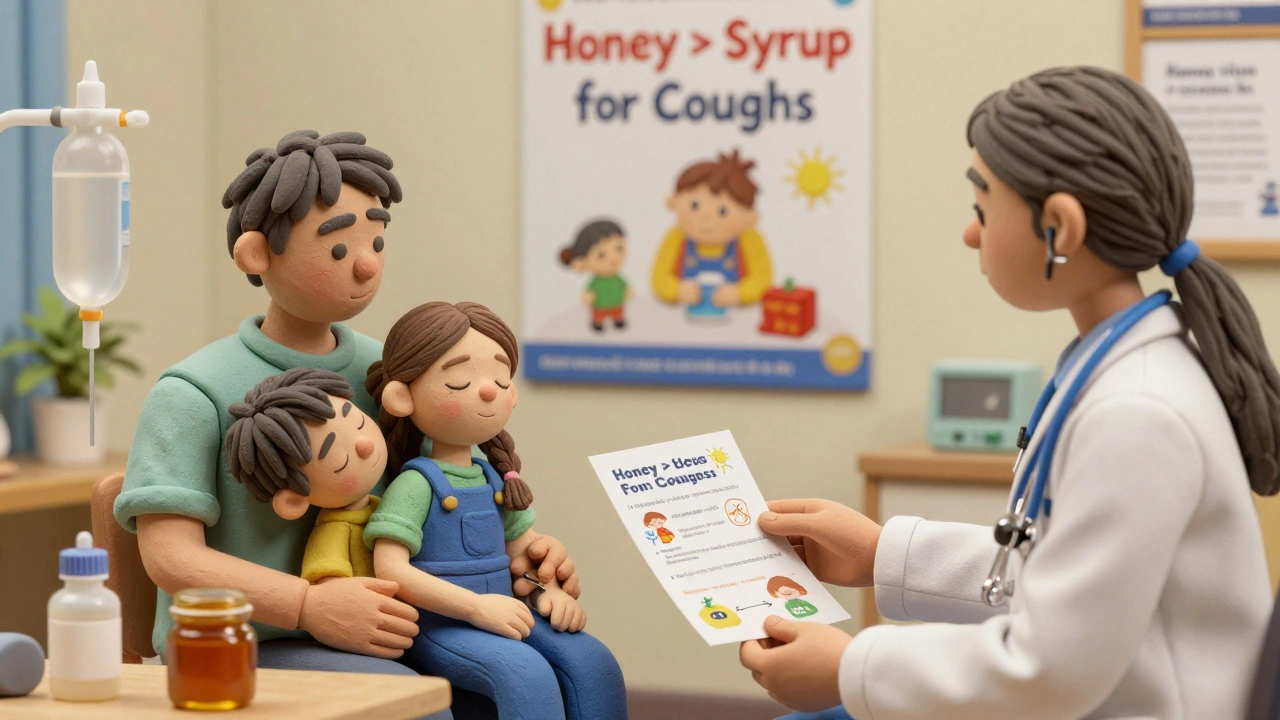
You might wonder why this problem still exists. After all, the FDA warned about this in 2007. The CHPA changed labels in 2008. The AAP has been saying the same thing for 15 years. Yet, in 2021, 22% of pediatric OTC products still didn’t have the proper “do not use under 4” label. Sales of these products dropped 43% for kids under two after the warning-but jumped 18% for kids 6-11, as parents shifted use to older children. And here’s the kicker: Black and Hispanic children are still more likely to be treated in emergency rooms for OTC medicine overdoses than white children. Why? Lack of access to clear information, language barriers, and distrust in medical advice. That’s not just a medical issue-it’s a public health failure.But progress is happening. A 2023 study showed that when parents got a simple educational handout from their doctor, inappropriate OTC use dropped by 58%. Knowledge saves lives.
Final Advice: Less Medicine, More Care
Your child doesn’t need a bottle of syrup to get better. They need rest. They need fluids. They need you to hold them when they can’t breathe. They need you to be calm when they’re sick. Skip the medicine cabinet. Use saline drops. Use honey. Use a humidifier. Use your hands, your voice, your patience. These aren’t just “natural remedies.” They’re the proven, safe, and effective way to help your child through a cold.And if you’re ever unsure? Call your doctor. Don’t guess. Don’t rely on a label. Don’t trust what you read online. Your child’s safety isn’t a gamble.
Can I give my 3-year-old children’s cough medicine if I use half the dose?
No. Children’s cough medicine isn’t just a smaller version of adult medicine-it’s a different formula with different risks. Even half the dose can be dangerous because a child’s body can’t process the ingredients safely. The FDA and AAP agree: these medicines are not safe for children under 6, no matter the dose.
Is honey really safe for toddlers?
Yes, but only for children over 1 year old. Honey is a proven, natural cough suppressant that works better than many OTC syrups. Give ½ to 1 teaspoon before bed. Never give honey to babies under 12 months-it can cause infant botulism, a rare but serious condition.
What’s the safest way to clear a baby’s stuffy nose?
Use saline nasal drops (available over the counter) and a bulb syringe. Squeeze one or two drops into each nostril, wait 30 seconds, then gently suction out the mucus. Do this before feedings and bedtime. Avoid nasal sprays like oxymetazoline-they’re not safe for children under six.
Can I give my child acetaminophen and a cold medicine at the same time?
Never. Many cold medicines already contain acetaminophen. Giving both can lead to accidental overdose, which can cause liver damage or failure. Always check the “Active Ingredients” list on every bottle. If acetaminophen is listed, don’t give any extra.
Why do pharmacies still sell these products if they’re unsafe?
They’re sold because they’re legal for children 6 and older, and because many parents still believe they work. Regulatory agencies have banned them for under-4s, but enforcement isn’t perfect. Labels aren’t always clear, and some products still lack proper warnings. That’s why it’s up to parents to know the facts and make safe choices.


Taylor Dressler
Just want to say this post is one of the most important things I’ve read all year. I used to give my 4-year-old cough syrup because ‘everyone else does.’ Then I read the AAP guidelines and realized I was basically poisoning them with a smile. No more. Now I keep saline drops, honey, and a humidifier on standby. It’s not magic, but it’s safe. And that’s everything.
Also, the part about parents using kitchen spoons? That hit me hard. I did that once. Never again. Got the dosing cup and labeled it with tape. My kid’s liver thanks me.
And honey? Yeah, it works. My daughter slept through the night for the first time in weeks after one teaspoon. No side effects. No ER visits. Just quiet breathing. Simple wins.
Thanks for writing this. Someone needed to say it clearly.
Aidan Stacey
MY SON WAS IN THE ER BECAUSE OF THIS. I DON’T CARE WHAT THE LABEL SAYS. I DIDN’T KNOW. I THOUGHT ‘CHILDREN’S’ MEANT SAFE. I WAS WRONG. I WAS SO STUPID.
He was shaking. Couldn’t breathe. We thought it was asthma. Turns out it was dextromethorphan poisoning from a bottle I bought at CVS. They pumped his stomach. He was in ICU for 36 hours.
I’m still terrified. If you’re reading this and you’re about to give your kid that syrup-STOP. Just stop. Read this post. Save your child. Save yourself.
I’m not mad at myself anymore. I’m just trying to make sure no one else has to go through this.
Lisa Stringfellow
Wow. Another parent guilt-trip disguised as medical advice. So now I’m supposed to feel bad because I gave my kid cough medicine and they’re fine? I mean, I’ve been doing this since 2018. No ER visits. No seizures. Just a kid who sleeps better.
Maybe your kid is fragile. Mine isn’t. Why should I follow blanket rules made by people who’ve never held a crying toddler at 3 a.m.?
And honey? That’s just sugar water with a Pinterest badge. I’ll stick with the stuff that’s been in my medicine cabinet since I was a kid.
Aman deep
Bro this post made me cry in my chai. In India, we give kids cough syrups like candy-my aunty even uses adult ones when kids’ ones are sold out. I didn’t know it was this dangerous. I just thought it was ‘how it’s done.’
Now I’m telling my whole family. Saline drops, humidifier, honey before bed. That’s it. No more guessing. No more ‘just a little bit.’
Also, the part about black and hispanic kids getting ER visits more? That’s heartbreaking. We need better access to info, not just blame. I’m sharing this with my WhatsApp group. 47 people in it. Let’s save some little lives.
Thank you for writing this. You didn’t just give facts-you gave us a way to be better parents.
ps: i typed this on my phone so sorry if i misspelled somethin
Eddie Bennett
I used to be the person who rolled my eyes at these posts. ‘Just let them be sick, it builds immunity,’ I’d say. Then my nephew got sick, and I watched his mom stress over every sniffle. I saw her read this exact post and start crying. Not because she felt guilty-but because she finally had clarity.
That’s the thing. It’s not about shaming. It’s about giving people the tools to stop being afraid. We’re all just trying to fix our kids’ discomfort. But sometimes the fix is worse than the problem.
So yeah, I’m on board. Honey. Saline. Humidifier. Rest. And when in doubt? Call the doctor. No shame in that.
Also, the dosing spoon thing? I had no idea. Now I keep a syringe next to the honey.
Sylvia Frenzel
Why is this even a conversation? If you’re too lazy to take your kid to the doctor, don’t blame the medicine. The real problem is the overmedicalization of childhood. Let them get sick. Let them recover. Stop treating every sniffle like a crisis.
And honey? That’s a placebo with a fancy name. If you think it’s better than medicine, go live in a cave. This post reads like a wellness blog written by a pediatrician with a Twitter account.
Doris Lee
My 2-year-old had a cough for 10 days. No fever. Just a little congestion. I didn’t give him anything but honey and cuddles. He slept better. I slept better. We both felt better.
It’s not about being perfect. It’s about being safe. And safe doesn’t mean buying the bottle with the cartoon on it.
Thank you for this. I’m printing it out and taping it to my fridge.
Michaux Hyatt
As a pharmacist, I see this every week. Parents come in with adult bottles, asking ‘how much can I give my 3-year-old?’ I’ve had to explain this exact thing 37 times this month.
Here’s the truth: the FDA didn’t ban these products because they’re evil. They banned them because the risk-to-benefit ratio is negative. Zero benefit. High risk. That’s not a gray area.
And the dosing errors? They’re heartbreaking. One mom gave her kid 2 tablespoons of adult Robitussin because ‘it looked right.’ That’s 4x the toxic dose.
Saline drops cost $3. Honey is $5. A humidifier is $20. These are the real solutions. Not magic. Just smart.
Stop guessing. Start reading labels. And if you’re unsure? Walk into a pharmacy. We’re here to help. Not to judge.
Raj Rsvpraj
Let me be clear: this post is a Western, privileged, over-medicalized fantasy. In India, we’ve been using Ayurvedic cough syrups for centuries-many of which contain ingredients far more potent than dextromethorphan-and our children thrive. You think your ‘honey’ is better? Please. We have turmeric, ginger, black pepper, and licorice root. Your ‘safe alternatives’ are just sugar water with a marketing campaign.
And your ‘FDA says’? That’s a U.S. bureaucracy that doesn’t understand global medicine. Your ‘AAP’ is a lobbying group funded by Big Pharma. Honey is fine, but don’t pretend it’s the only way. You’re erasing centuries of tradition with your guilt-laden blog post.
Also, why do you assume all parents are stupid? My cousin’s child was on a cough syrup at 18 months and is now a competitive swimmer. Coincidence? I think not.
Stop preaching. Start listening.