
Medication Reaction Severity Checker
Identify Your Reaction Severity
This tool helps assess whether your symptoms indicate a mild, moderate, or severe allergic reaction to medication. It is not a substitute for medical advice.
When you take a pill or get an injection, your body usually handles it just fine. But for some people, even a small dose can trigger an immune response that turns dangerous. Not all allergic reactions to medications are the same. Some are annoying. Others can kill you. The difference isn’t just in how you feel-it’s in what’s happening inside your body. And knowing that difference can save your life.
What Actually Counts as an Allergic Reaction?
Not every bad reaction to a drug is an allergy. Many people think they’re allergic because they got a rash, felt nauseous, or had a headache after taking medicine. But those are often just side effects, not immune responses. True drug allergies happen when your immune system mistakes the medication for a threat-like a virus or bacteria-and goes into overdrive. This is called drug hypersensitivity.
According to research, only about 10-15% of all reported drug reactions are true allergies. The rest? Usually just side effects, interactions, or unrelated illnesses. That’s why so many people think they’re allergic to penicillin when they’re not. Studies show up to 80% of those who say they’re allergic to penicillin test negative when properly evaluated.
True allergies follow specific biological patterns. The most common types are classified as Type I to Type IV reactions, based on how your immune system responds. Type I kicks in fast-within minutes. Type IV can take days. Each type has different symptoms, and each level of severity tells a different story.
Mild Reactions: The Warning Signs You Can’t Ignore
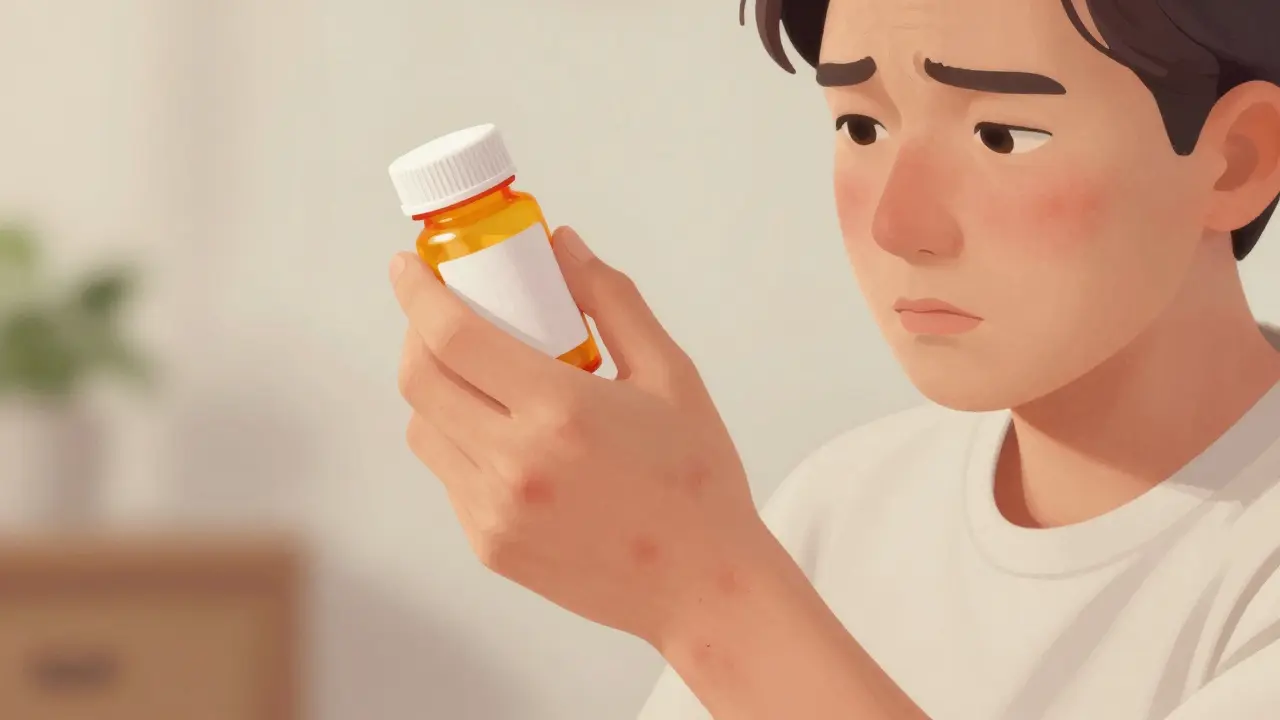
Mild allergic reactions are the most common. They affect 60-70% of people who have drug allergies. These aren’t emergencies, but they’re not harmless either. They’re your body’s first signal that something’s wrong.
Typical signs include:
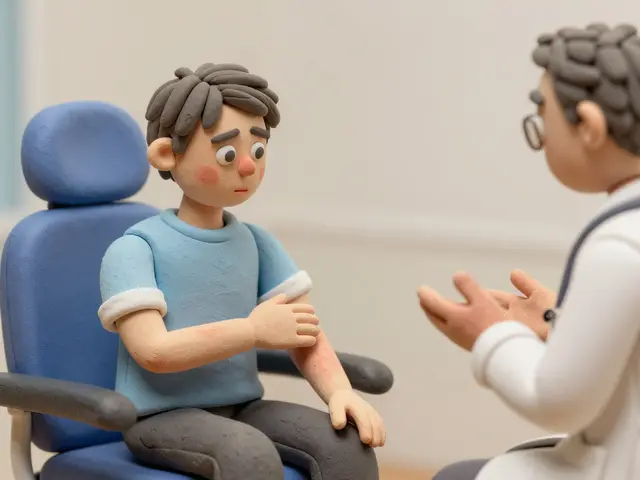
- A localized rash or hives covering less than 10% of your skin
- Itching that doesn’t go away with over-the-counter creams
- Mild swelling around the eyes or lips
- A runny nose or sneezing after taking a pill
These reactions usually show up within minutes to hours after taking the drug. They’re often IgE-mediated (Type I), meaning your body releases histamine-chemicals that cause itching, redness, and swelling. Histamine levels in these cases are typically between 2-5 ng/mL. That’s low, but enough to make you uncomfortable.
Most people treat these with antihistamines like cetirizine or diphenhydramine. Symptoms fade within 24-48 hours. But here’s the catch: if you ignore a mild reaction and keep taking the drug, it can get worse. A study from the American Academy of Allergy, Asthma & Immunology found that 1 in 5 people who continued taking a drug after a mild rash later developed a severe reaction.
Moderate Reactions: When It’s More Than Just a Rash
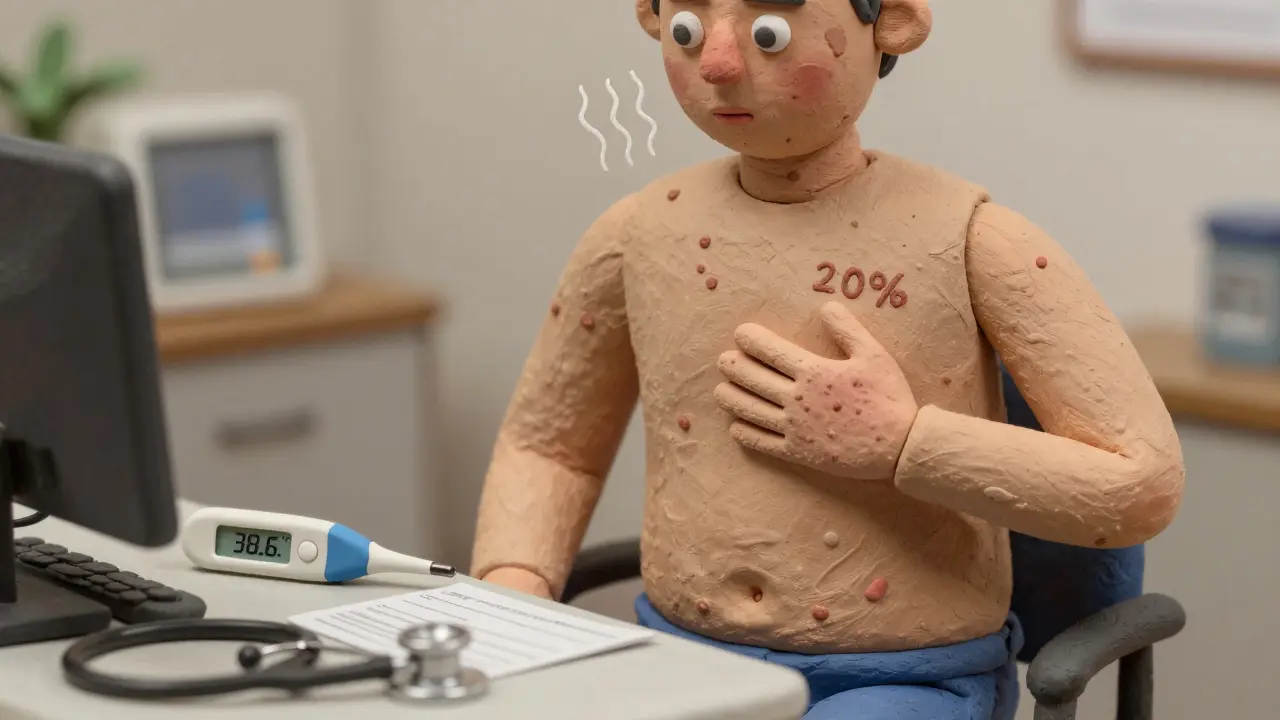
Moderate reactions are less common but more serious. They affect 20-30% of allergic drug reactions. This is where you stop thinking it’s "just a rash" and start worrying.
Symptoms include:
- Hives covering 10-30% of your body
- Swelling under the skin (angioedema) that affects your face, hands, or feet
- Fever above 38.5°C (101.3°F)
- Joint pain or swollen lymph nodes
- Wheezing or tightness in the chest (without full breathing trouble)
These can be Type I (immediate) or Type IV (delayed). Type IV reactions, like those from antibiotics or anticonvulsants, often appear 3-7 days after starting the drug. That’s why people don’t connect the dots-they think the rash is from something else.
Histamine levels rise to 5-10 ng/mL. Blood tests might show elevated eosinophils or mild drops in platelets. You won’t collapse, but you’ll feel awful. Treatment usually means stopping the drug, taking oral steroids like prednisone, and being monitored for 4-6 hours.
One common example is NSAID reactions. About 0.1% of people who take ibuprofen or naproxen develop moderate reactions. They get widespread hives and facial swelling. Most recover in 72 hours with treatment. But if you don’t stop the drug? You’re risking progression.
Severe Reactions: The Life-Threatening Ones
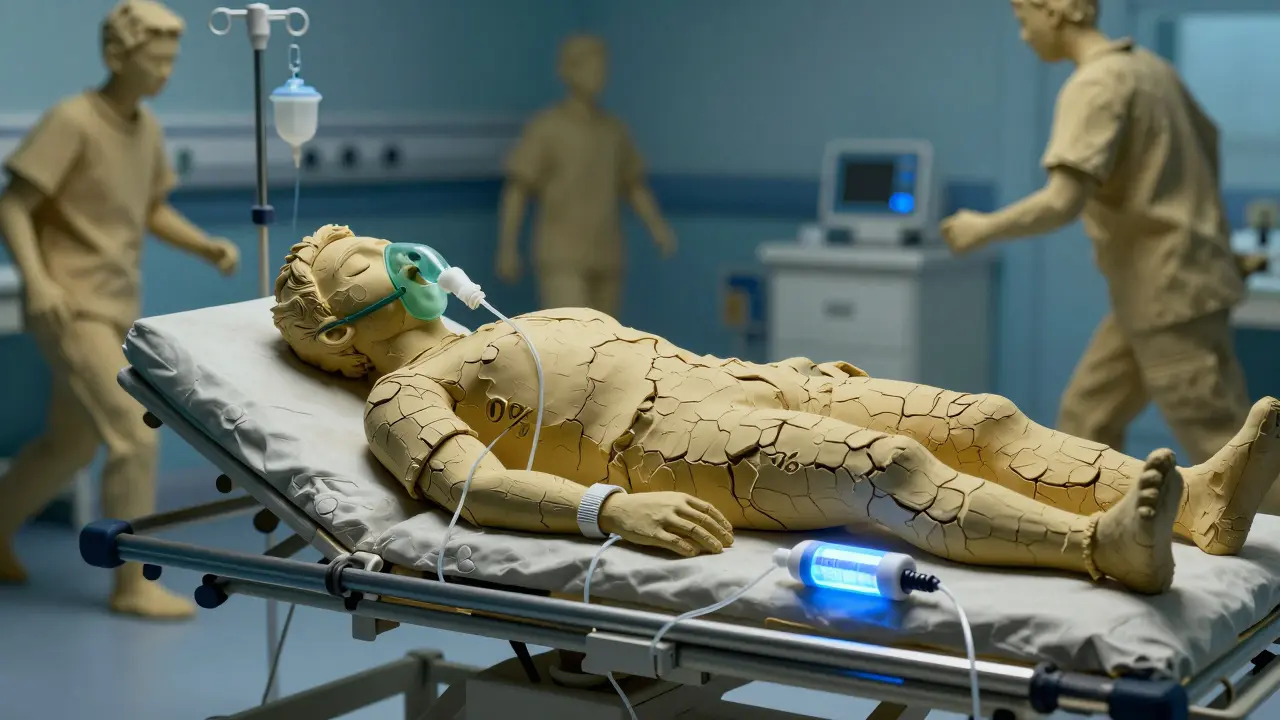
Severe reactions make up only 5-10% of drug allergies-but they cause 5% of all hospital admissions due to adverse drug events. This is where seconds matter.
There are three main types:
1. Anaphylaxis
This is the classic emergency. It happens fast-usually within minutes. Symptoms include:
- Difficulty breathing or wheezing
- Drop in blood pressure (systolic below 90 mmHg)
- Swelling of the throat or tongue
- Dizziness, fainting, or loss of consciousness
- Heart palpitations or rapid pulse
Histamine levels spike above 10 ng/mL. The body goes into shock. Without epinephrine, death can occur in under 30 minutes. Penicillin causes anaphylaxis in about 1-5 out of every 10,000 courses. But if you’ve had it once, your risk jumps dramatically.
2. Stevens-Johnson Syndrome (SJS) and Toxic Epidermal Necrolysis (TEN)
These are skin disasters. They start as a rash, then your skin begins to die and peel off-like a severe burn. SJS affects less than 10% of your skin. TEN affects over 30%. Both are Type IV reactions, often triggered by antibiotics (sulfonamides), anticonvulsants (carbamazepine), or gout meds (allopurinol).
Carbamazepine carries a 10-fold higher risk of SJS in people with the HLA-B*15:02 gene. That’s why genetic testing is now recommended before prescribing it in certain populations. Mortality for SJS is 5-15%. For TEN? 25-35%. Patients need ICU care, fluid replacement, and burn unit protocols.
3. DRESS Syndrome
Drug Reaction with Eosinophilia and Systemic Symptoms is a delayed, multi-organ disaster. It can appear 2-6 weeks after starting a drug. Symptoms include:
- Fever over 38.5°C
- Widespread rash
- Swollen lymph nodes
- Liver or kidney damage
- Elevated white blood cells (especially eosinophils)
DRESS can mimic an infection or autoimmune disease. It’s often misdiagnosed. But if left untreated, it can lead to organ failure. Mortality is around 10%.
Why the Distinction Matters More Than You Think
Here’s the brutal truth: if you don’t know the difference, you could die.
On Reddit, users share stories of being told "it’s just a rash" by doctors-only to end up in the ICU days later. One person took a sulfa drug for a UTI. The GP said, "Keep taking it." Three days later, 25% of their skin had detached. They spent 10 days in a burn unit.
Conversely, people who recognize mild symptoms early and stop the drug reduce their risk of progression by over 80%. The key is not just recognizing symptoms-but understanding what they mean.
Doctors use tools like the ACAAI Reaction Severity Calculator, which scores reactions from 1 to 100 based on 12 factors: skin coverage, breathing difficulty, blood pressure, fever, organ involvement. A score under 20? Mild. 21-50? Moderate. Over 50? Severe. This isn’t guesswork-it’s science.
What to Do If You Suspect an Allergic Reaction
Don’t wait. Don’t hope it goes away. Don’t take another dose to "see if it’s just a coincidence."
Here’s what to do based on severity:
- Mild: Stop the drug. Take an antihistamine. Monitor for 24 hours. If it worsens, go to urgent care.
- Moderate: Stop the drug. Call your doctor. Get evaluated within hours. You may need steroids. Do NOT drive yourself.
- Severe: Use your epinephrine auto-injector (if you have one). Call 999. Go to the ER immediately. Do not wait. Do not drive. Lie down and elevate your legs if you feel dizzy.
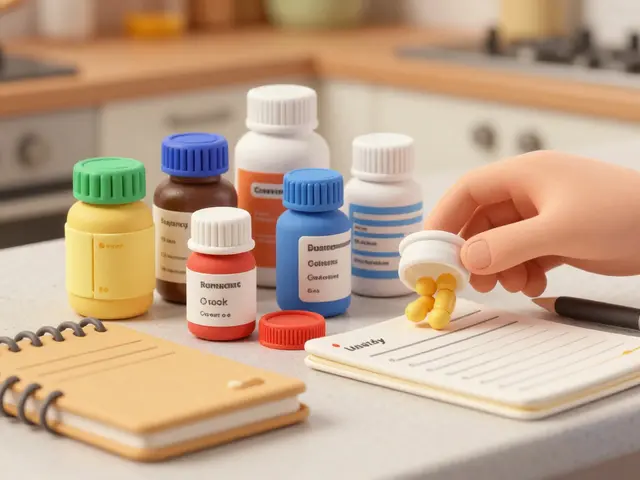
Document everything: What drug? When did you take it? When did symptoms start? What did they look like? This helps future doctors avoid dangerous mistakes.
The Future: Better Testing, Fewer Deaths
The field is changing fast. In 2024, the European Academy of Allergy and Clinical Immunology updated its classification system to include Type VII reactions-cases where multiple immune pathways activate at once. This explains why some reactions are so unpredictable.
Genetic testing is becoming standard. Before prescribing carbamazepine, doctors in the UK now check for HLA-B*15:02 in patients of Southeast Asian descent. If positive, they avoid the drug entirely. This single step has cut SJS cases by over 70% in high-risk groups.
By 2026, the European Medicines Agency will require all new drugs to include severity-specific risk plans. Electronic health records will soon auto-flag suspected allergies and suggest alternatives.
And here’s the biggest shift: we’re moving from treating reactions to preventing them.
For years, people were told to avoid all penicillin if they had one reaction. Now, we know that’s wrong. Skin tests and blood tests can confirm if the allergy is real. If it’s not, you can safely take penicillin again. That means better treatments, fewer antibiotics like vancomycin (which can cause dangerous side effects), and less risk of antibiotic resistance.
Final Thought: Trust Your Body, But Verify
If you’ve ever had a reaction-even a mild one-get it properly evaluated. Don’t assume you’re allergic forever. Don’t assume it’s harmless. And don’t let someone dismiss your symptoms because they don’t look "bad enough."
Medication allergies aren’t about fear. They’re about awareness. And awareness saves lives.

phyllis bourassa
I can't believe people still think a rash is just a rash. I had a mild reaction to amoxicillin in 2018 and my doctor told me to "keep taking it"-guess what? Three days later, I was in the ER with full-body peeling skin. They called it DRESS syndrome. I almost died. Now I carry an EpiPen and a laminated card that says "ALLERGIC TO PENICILLIN". Don't be that person who ignores the signs. Your body isn't lying.
PS: If you're reading this and you've ever been told "it's just a side effect"-you're welcome.
Jeff Mirisola
I love how this article breaks it down without fearmongering. Seriously. Too many people panic over hives and too many doctors dismiss them. I work in ER and I’ve seen both ends-people who ignored mild reactions and ended up in ICU, and people who caught it early and lived to tell the story. Knowledge isn’t just power-it’s a lifeline.
Also, if you’ve ever been told you’re "allergic" to penicillin without testing? Get tested. You might be able to take it again. And that’s not just convenience-it’s saving your liver from vancomycin’s side effects.
Susan Purney Mark
This is so important 💔 I had a mild reaction to ibuprofen last year-just a little rash and itchy palms. I stopped it right away and called my pharmacist. She said, "Good call." She’s the reason I’m still here. If you feel weird after a med? Trust it. Don’t wait for it to get worse. Your gut knows before your brain does. 🙏
Ian Kiplagat
Spot on. I'm a GP in London. We see this all the time. One patient came in with a rash after amoxicillin. Said "it’s just a reaction." Turned out it was SJS. Skin peeled off her arms. She’s lucky she made it. We now screen all patients of African/Caribbean descent for HLA-B*15:02 before prescribing carbamazepine. Simple. Effective. Life-saving.
Amina Aminkhuslen
I call it the 'I'm-not-sick-enough-to-die' delusion. People treat allergic reactions like a bad Yelp review-"eh, it’s just a little red." Meanwhile, their immune system is throwing a full-on rave in their bloodstream. Histamine? More like HISTAMINE APOCALYPSE. And don’t even get me started on doctors who say "it’s probably just anxiety." I’ve seen people die because someone thought a fever was "just a cold."
amber carrillo
Thank you for this clear, factual breakdown. Medication safety is too often treated as optional. I appreciate the emphasis on documentation and the ACAAI scoring system. It’s not about fear. It’s about precision. And precision saves lives.
Patrick Jackson
I read this and I just… cried. Not because I’m dramatic (okay maybe a little) but because I almost lost my sister. She took a sulfa drug for a UTI. GP said "it’s just a rash." She didn’t stop. Three days later? Her skin was falling off. She spent 17 days in ICU. Burn unit. IV fluids. No skin on her back. She’s fine now. But I still have nightmares. If you feel something strange after a med? STOP. CALL. DON’T WAIT. PLEASE.
Andrew Poulin
DRESS is a silent killer. I had it after allopurinol. No one knew what it was. Thought I had the flu. Took 3 weeks to diagnose. Liver was failing. My kidneys shut down. Now I have a medical alert bracelet. If you're on a new med and feel off? Google DRESS. Don't wait for a doctor to tell you. You're your own best advocate.
Weston Potgieter
Why do we even have to learn this? Shouldn't the system just auto-block dangerous meds? Why is it on the patient to be a medical detective? My cousin died because her doctor didn't check her history. She was allergic to sulfa. They gave her a UTI med anyway. It's 2024. This shouldn't be this hard.
Vikas Verma
As a pharmacist, I can confirm: 80% of penicillin allergies are misreported. Skin testing is underutilized. We have the tools. We need the awareness. Patients who get tested and cleared can safely use beta-lactams-reducing antibiotic resistance and improving outcomes. Education isn't optional-it's clinical necessity.
Sean Callahan
I had a mild rash after amoxicillin and kept taking it because I didn't want to miss work. Then I got fever and my lymph nodes swelled up like golf balls. Turns out it was DRESS. I was in the hospital for 10 days. I still have liver damage. Don't be me. Stop the drug. Call your doctor. I'm not even mad anymore. Just sad. And tired. And I still can't take ibuprofen. 🤷♂️