
Bariatric Surgery Medication Adjustment Calculator
After bariatric surgery, many medications require dose adjustments due to changes in absorption. This tool helps determine appropriate dosage changes based on your surgery type and medication characteristics.
Important: Always consult your healthcare provider before changing medications. This calculator provides general guidance based on clinical data.
Your Surgery Type
Medication Type
units
Recommended Adjustment
Original dose:
Adjusted dose:
Change:
Key recommendations
After bariatric surgery, many patients quickly notice something unexpected: their medications don't seem to work the same way. A pill that once kept their blood pressure steady now feels like it's doing nothing. Thyroid medicine that kept TSH levels in range suddenly stops working. Painkillers that used to last 12 hours now wear off in 4. This isn't in their head. It's physics, chemistry, and anatomy changing under the hood.
Why Your Pills Don't Work Like They Used To
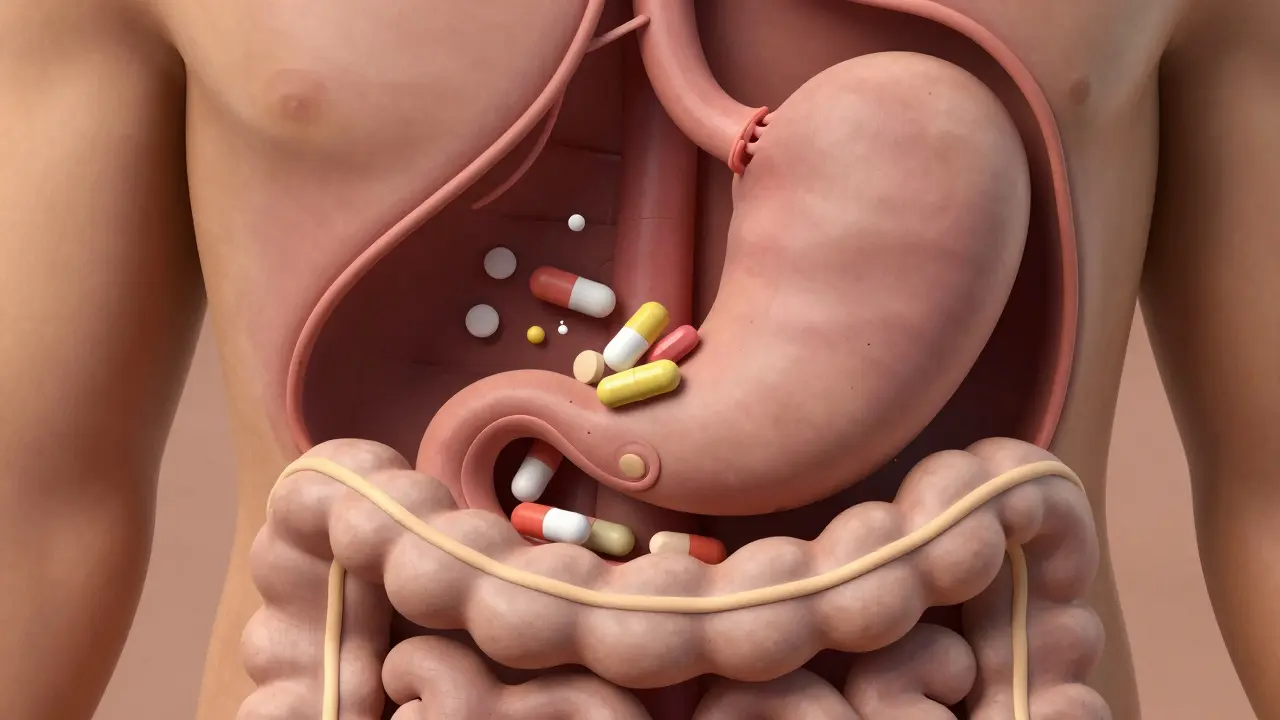
Bariatric surgery doesn't just shrink your stomach. It rewires your digestive system. The two most common procedures-sleeve gastrectomy and Roux-en-Y gastric bypass (RYGB)-alter how drugs move through your body. In sleeve surgery, your stomach is reduced from about 1,500 mL to just 100-150 mL. That means less space for pills to dissolve. More importantly, stomach acid drops. Normal gastric pH is 1.5-3.5. After surgery, it rises to 4.0-6.0. Many drugs need that acidic environment to break down. Without it, they sit there, undissolved, and get passed out. RYGB takes it further. It skips the duodenum-the first 100-150 cm of the small intestine-where most drugs are absorbed. That’s roughly 25-30% of your total absorptive surface gone. Your food and meds now zip through the system in 30-60 minutes instead of 2-5 hours. Pills meant to release slowly over 12 hours get flushed out before they finish. Extended-release tablets? They often come out whole, untouched.What Happens to Different Types of Medications
Not all drugs are affected equally. Some are hit hard. Others barely notice. Here’s what actually changes:- Extended-release pills: These are the biggest problem. Glipizide XL, metformin ER, oxycodone CR-these can lose 40-60% of their effectiveness. The slow-release coating needs time and surface area to work. In a bypassed gut, they don’t get it. Mayo Clinic data shows 47% of patients on time-release meds needed to switch to immediate-release versions after RYGB.
- Enteric-coated pills: These are designed to survive stomach acid and dissolve in the intestine. But if the duodenum is bypassed, they dissolve in the wrong place. Many end up in the colon, where absorption is poor. Result? The drug doesn’t get into your bloodstream at all.
- Acid-dependent drugs: Medications like ketoconazole, itraconazole, and some forms of levothyroxine need low pH to dissolve. After surgery, their absorption drops by 25-30%. Patients often need to double their levothyroxine dose after RYGB.
- Lipophilic drugs: Fat-soluble drugs like cyclosporine, simvastatin, and vitamin D rely on bile and fat to be absorbed. Bariatric surgery reduces bile mixing. Studies show absorption of these drops by 30-50%.
- Calcium and vitamin D: These are almost universal. After surgery, 72% of patients need higher doses. Bone density plummets without proper supplementation. The NHS recommends 1,200-2,000 mg of calcium citrate daily post-op, not carbonate.
Sleeve vs. Bypass: Big Differences in Drug Impact
Not all surgeries are the same. Sleeve gastrectomy is mostly about restriction. It shrinks the stomach but leaves the intestines intact. That means less disruption to drug absorption. Still, pH rises and gastric emptying speeds up. About 15-20% of patients need dose adjustments, mostly for thyroid meds and some antidepressants. RYGB? That’s a different story. The duodenum is bypassed. The absorptive surface is cut. Studies show 68% of RYGB patients need medication changes. The NHS Specialist Pharmacy Service found that 85% of normal absorption capacity remains after sleeve surgery, but only 60-70% after bypass. Biliopancreatic diversion? Rare, but extreme. It can cut drug absorption by 50-70%. Only 2.5% of surgeries are this type, but for those patients, even liquid meds may need higher doses.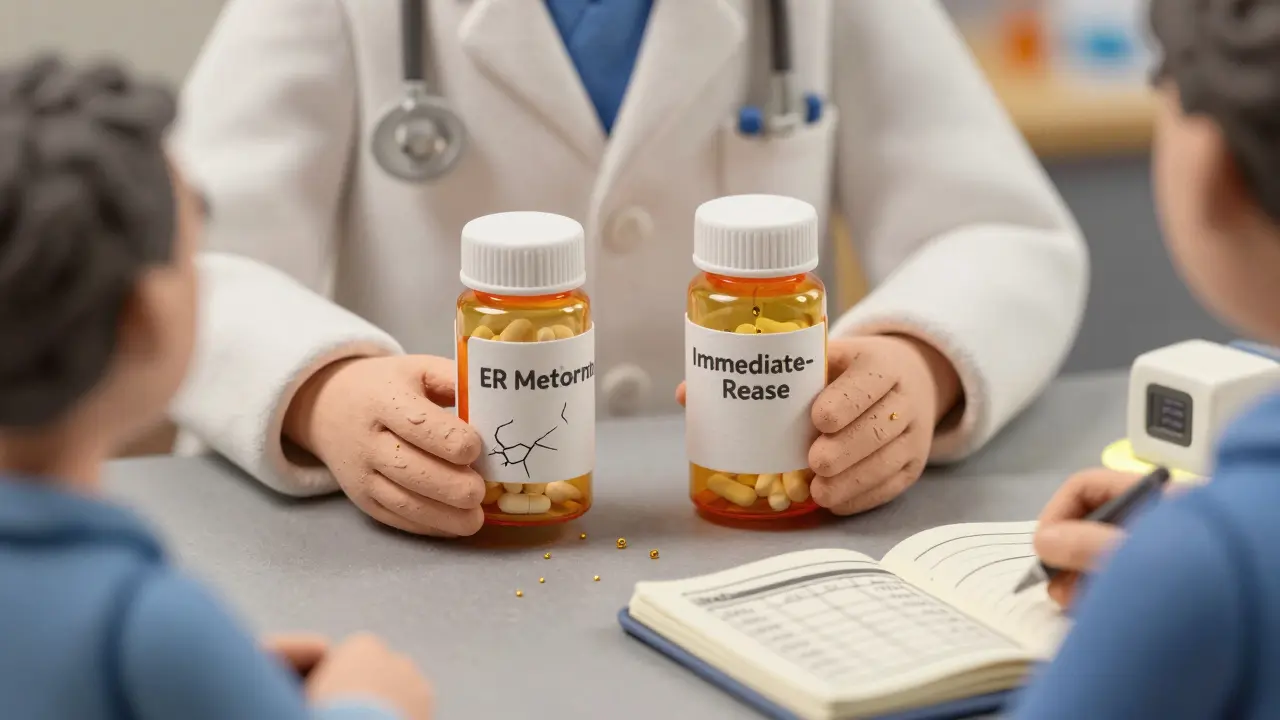
What Doctors and Pharmacists Do About It
The American Society for Metabolic and Bariatric Surgery (ASMBS) issued clear guidelines in 2021. They say: Convert all extended-release pills to immediate-release before surgery if possible. For metformin ER, that means switching to 500 mg immediate-release taken three times daily. For glipizide XL, go from one 10 mg tablet to two 5 mg tablets twice a day. Liquid forms are preferred for the first 3 months. They absorb faster and don’t rely on stomach breakdown. If a patient can’t swallow liquids, crushed pills (if safe) are sometimes used-but only if the label allows it. Many extended-release pills can’t be crushed without losing their timed effect. Therapeutic drug monitoring is critical for high-risk drugs. Warfarin, phenytoin, cyclosporine, levothyroxine, and some antidepressants need blood tests. Vanderbilt University found that 60% of RYGB patients needed a 25-35% increase in warfarin dose to maintain the same INR level. Without monitoring, bleeding risk skyrockets.Real Patient Stories (And What Went Wrong)
A 42-year-old woman on levothyroxine 75 mcg daily had stable TSH levels for years. After RYGB, her TSH shot up to 12.5 (normal is 0.4-4.0). Her doctor assumed she wasn’t taking it. She was. She had to increase to 125 mcg. Her symptoms vanished. A man on oxycodone CR 20 mg twice daily for chronic pain noticed the pain returned after 4 hours post-surgery. His surgeon told him to "just take more." He doubled the dose. He ended up in the ER with respiratory depression. He should have switched to immediate-release oxycodone, 10 mg every 4 hours. Reddit’s r/bariatricsurgery has hundreds of posts like this. One user wrote: "I took my antidepressant like always. I felt worse than before surgery. My doctor said it was in my head. I switched to liquid sertraline. My mood improved in 3 days."
What You Should Do Now
If you’ve had or are planning bariatric surgery:- Get a full medication review from a pharmacist before surgery. Don’t wait until after.
- Ask: "Is this pill extended-release? Enteric-coated? Acid-dependent?" If yes, it likely needs adjustment.
- Switch to liquid or immediate-release forms whenever possible. Avoid pills that are too big to swallow.
- Take thyroid meds on an empty stomach, 30-60 minutes before food. Take calcium citrate with food.
- Request blood tests for critical drugs (TSH, INR, phenytoin, cyclosporine) at 1, 3, and 6 months post-op.
- Keep a log: "Medication, dose, time taken, symptoms." Bring it to every appointment.





Alexander Erb
This is wild but makes total sense. I had the sleeve and my blood pressure med went from one pill a day to three. My pharmacist caught it before I ended up in the ER. 🤯 Also, switch to liquid levothyroxine if you can. Game changer. I was so tired for months thinking it was just "post-surgery fatigue". Nope. Just my thyroid crying for help.
Donnie DeMarco
so like... my oxycodone CR was basically a paperweight after ruygb. i thought i was just getting weaker. turns out my guts just said "nope, not today" and spit it right out. switched to immediate-release and now i can actually sit down without feeling like a ghost. also, crushin' pills? don't. unless you wanna die. or get high. same diff.
Tom Bolt
The systemic failure in post-bariatric medication management is not merely an oversight-it is a public health liability. The fact that 68% of RYGB patients require pharmacological intervention, yet are routinely dismissed by primary care providers who lack specialized training, represents a catastrophic breach of the duty of care. This is not anecdotal. This is evidence-based negligence. The ASMBS guidelines exist. Why aren’t they mandated?
Shourya Tanay
From a pharmacokinetic standpoint, the altered gastric emptying and reduced surface area in RYGB significantly impact first-pass metabolism and CYP450 enzyme exposure. The bioavailability of lipophilic agents like simvastatin drops due to diminished micelle formation from reduced bile salt reabsorption. Additionally, the pH shift from 2.5 to 5.5 alters ionization states, particularly affecting weak acids. This necessitates therapeutic drug monitoring-especially for narrow-therapeutic-index drugs like warfarin and phenytoin. A one-size-fits-all dosing model is pharmacologically unsound.
Denise Jordan
So... you're telling me I need to take more pills now? After I just spent a year eating like a bird? This is the opposite of freedom. I just wanted to stop hating my body. Now I have to become a pharmacist too? Ugh.
Gene Forte
You are not broken. You are reborn. This isn't a setback-it's an upgrade. Your body is learning a new language, and the meds? They're just trying to catch up. Talk to your pharmacist. Track your symptoms. Ask for tests. You’ve already done the hard part. Now, take control of the next chapter. You’ve got this. One pill, one dose, one day at a time.
Kenneth Zieden-Weber
So let me get this straight… you shrink my stomach, cut out 30% of my gut, and now I need to take 3x the pills? And the solution is... more pills? Cool. Cool cool cool. Next you’ll tell me to swallow a whole pharmacy in a smoothie. Meanwhile, my 75-year-old grandma on metformin ER is still alive and kicking. Guess she didn’t get the memo.
Alexander Erb
@Kenneth Zieden-Weber - lol your grandma’s probably on immediate-release. That’s the whole point. ER pills are useless after surgery. She’s lucky she didn’t get bypassed. And yes, more pills. But not just more. The *right* kind. My pharmacist printed me a color-coded chart. It’s like a cheat code for surviving after surgery.