
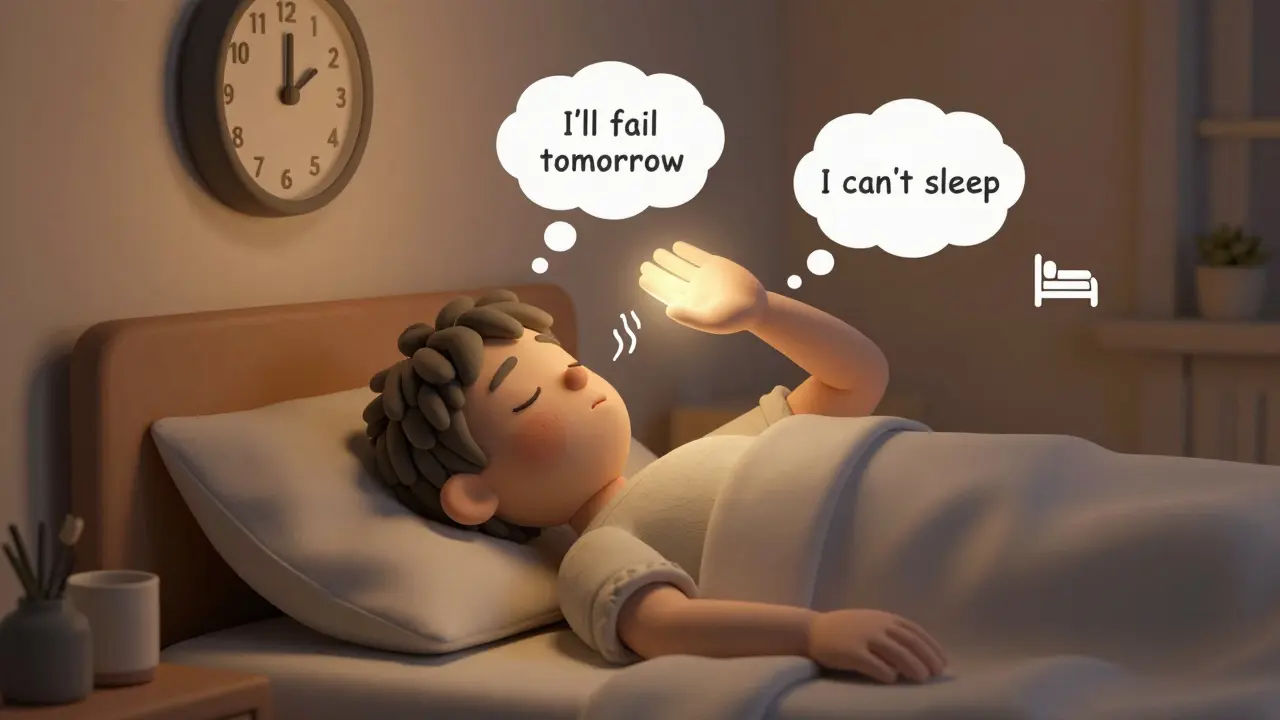
For millions of people struggling to fall asleep or stay asleep, the go-to solution has long been a pill. But what if the real fix isn’t in a bottle at all? Insomnia isn’t just about not getting enough sleep-it’s often about how you think about sleep, what you do in bed, and how your body learned to stay wired at night. And the most powerful tool we have to break that cycle isn’t a drug. It’s Cognitive Behavioral Therapy for Insomnia, or CBT-I.
What CBT-I Actually Does (And Why It Works)
CBT-I isn’t a single trick. It’s a structured, six-to-eight-week program built on proven science. Unlike sleeping pills that just mask the problem, CBT-I attacks the root causes. Think of it like fixing a leaky pipe instead of mopping up the water every time it floods.
Here’s how it breaks down:
- Sleep Restriction Therapy (SRT): You limit your time in bed to match how much you’re actually sleeping. If you’re only getting 5 hours a night, you’re only allowed to be in bed for 5 hours. Sounds harsh? It is-but it works. By building up sleep pressure, your body learns to fall asleep faster and stay asleep longer. Studies show this single component accounts for about 40% of CBT-I’s success.
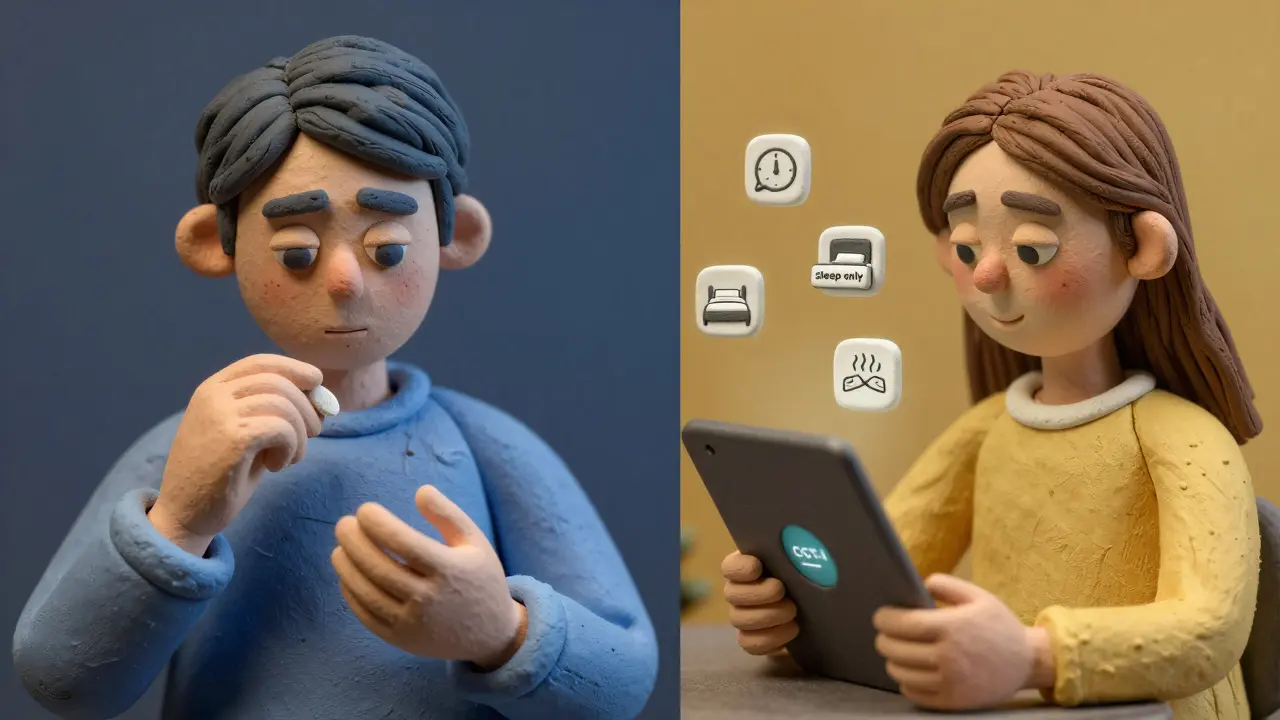
- Stimulus Control Therapy (SCT): Your bed becomes a sleep-only zone. No watching TV, no scrolling, no lying there worrying. If you’re awake for more than 20 minutes, you get up and leave the bedroom until you feel sleepy again. This breaks the mental link between your bed and stress.
- Cognitive Restructuring: Ever think, “If I don’t sleep 8 hours, I’ll fail at work tomorrow”? That kind of thinking keeps you awake. CBT-I helps you challenge those thoughts. You learn to replace catastrophic beliefs with realistic ones. One 2024 study found patients who did at least 80% of these exercises cut their insomnia severity by 62% more than those who didn’t.
- Relaxation Techniques: Deep breathing, muscle relaxation-practiced daily for 15-20 minutes. These aren’t just fluff. Polysomnography data shows they reduce physical hyperarousal by 27% after six weeks.
It’s not magic. It’s behavior change. And it sticks.
How CBT-I Beats Sleeping Pills
Let’s compare CBT-I to the most common sleep meds, like zolpidem (Ambien). At first glance, they seem similar. Both help you fall asleep faster. But here’s where they diverge:
- Short-term: Medications win. They work fast-within days. CBT-I takes weeks to show results. That’s why many people quit before they get to the payoff.
- Long-term: CBT-I crushes it. A 2022 meta-analysis found that 68% of people who completed CBT-I still had better sleep a year later. Only 32% of those on medication did. Why? Because pills don’t retrain your brain. They just sedate it.
- Side effects: Zolpidem causes dizziness, memory issues, next-day grogginess, and dependence. In 42% of users, tolerance builds within 8 weeks. CBT-I? No side effects. Just better sleep.
A 2023 JAMA study of over 4,000 people showed digital CBT-I improved insomnia severity scores by 3.2 points more than medication alone at six months. That’s not a small difference. That’s the difference between tossing and turning and sleeping soundly.
The Real Problem: Why CBT-I Isn’t More Common
If CBT-I is so effective, why are doctors still prescribing pills? The answer isn’t science-it’s systems.
Only 15% of U.S. primary care doctors feel trained to deliver CBT-I. Insurance often covers a $15 zolpidem pill but demands a $120 copay for a therapy session. Even when CBT-I is available, many people give up because the first few weeks are hard. Sleep restriction means being tired. That’s uncomfortable. People mistake discomfort for failure.
And yet, the data doesn’t lie. A 2024 study found that patients who stuck with CBT-I had improvements that lasted over a decade. One 2023 study tracked people 10+ years after treatment. Their insomnia severity scores were still 56% lower than before they started.
Digital CBT-I: A Game Changer
You don’t need to see a therapist in person anymore. Platforms like Sleepio and Somryst are FDA-cleared as digital therapeutics. They deliver the full CBT-I protocol through apps, videos, and interactive tools.
Here’s what users report:
- 78% of Reddit users who finished CBT-I said they saw “significant improvement.”
- 89% said they no longer woke up groggy.
- 83% said the results lasted.
Adherence is surprisingly high-65-70% complete the full course, even online. And for older adults, tailored digital programs have made it easier than ever. One 2024 trial showed 82% of people aged 65-85 completed the program with minimal help.
Medicare started covering digital CBT-I in 2022. UnitedHealthcare now covers it for 28 million members. And 63 Fortune 500 companies offer it as part of employee wellness programs.
Who Benefits Most?
CBT-I works for almost everyone with chronic insomnia. But some groups see outsized results:
- Adolescents: A 2024 meta-analysis found CBT-I improved sleep onset by 28 minutes and total sleep time by 45 minutes-far more than medication ever did.
- Cancer survivors: Nearly half struggle with insomnia. CBT-I helps without adding more drugs to their regimen.
- Pregnant women: Hormones and discomfort disrupt sleep. Medications aren’t always safe. CBT-I is.
Even people who’ve tried meds for years and failed still respond well to CBT-I. One patient told me (in a forum post I read), “I’d been on Ambien for seven years. I quit cold turkey and started CBT-I. Week 3 was brutal. But by week 6, I slept like I did in college.”
What to Expect If You Try It
Week 1-2: You’ll feel more tired than usual. That’s intentional. You’re not sleeping as much as you think you are, so your time in bed gets cut. It’s hard. But it’s temporary.
Week 3-4: You start seeing improvements. Falling asleep faster. Waking up less. Your mind starts to associate bed with sleep again.
Week 5-8: You’re gradually adding time back into your sleep window. You’re no longer afraid of a bad night. You know how to fix it.
After 8 weeks? You have tools. Not a prescription. You can manage sleep for life.
Final Thought: Stop Treating Symptoms. Fix the System.
Insomnia isn’t a chemical imbalance you need to drug. It’s a learned habit. And habits can be unlearned.
Sleeping pills give you a quick fix. CBT-I gives you a lifelong skill. It’s harder at first. But it’s worth it. The evidence is overwhelming. The results are lasting. And the best part? You don’t need to take anything forever.
Is CBT-I effective for everyone with insomnia?
CBT-I works for most people with chronic insomnia-especially those whose sleep problems have lasted more than three months. It’s less effective for insomnia caused purely by medical conditions like sleep apnea or restless legs syndrome, but even then, it can help with the anxiety around sleep. Studies show it works across age groups, including teens and older adults. The key is consistency. If you follow the protocol, you’re likely to see results.
How long does it take for CBT-I to work?
Most people start noticing improvements around week 3-4. Sleep efficiency (the percentage of time in bed actually spent sleeping) typically rises by 15-20% by session 3. Full results-like sleeping 7+ hours without medication-usually show up by week 6-8. It’s not instant, but the changes are lasting.
Can I do CBT-I on my own without a therapist?
Yes. Digital platforms like Sleepio, Somryst, and the NIH Sleep Education Curriculum offer fully guided CBT-I programs. Studies show they’re just as effective as in-person therapy for most people. The key is sticking to the schedule-keeping a sleep diary, following sleep restriction rules, and doing the cognitive exercises daily. About 65-70% of users complete digital programs successfully.
Why do some people quit CBT-I early?
The biggest reason is sleep restriction. Being intentionally sleep-deprived for a few weeks feels awful. Many people think they’re failing when they’re actually in the hardest, most effective phase. About 28% drop out during weeks 2-3. But those who push through usually say it was the best decision they ever made for their sleep.
Does insurance cover CBT-I?
More insurers are covering it now. Medicare has covered digital CBT-I since 2022 under CPT code 96156. UnitedHealthcare and other major insurers now cover it for millions of members. Coverage for in-person therapy varies, but digital options are increasingly accessible and often cost less than a month’s supply of sleeping pills.



Shivam Pawa
CBT-I makes sense. No magic, just retraining. I tried it after years of Ambien. Week 2 was rough, but by week 5 I was sleeping without thinking about it. No grogginess. No dependency. Just sleep.
Simple. Effective. Quietly revolutionary.
Stephen Vassilev
I've analyzed the data behind CBT-I, and I must point out: there's a hidden correlation between the rise of digital sleep platforms and the decline in pharmaceutical R&D investment in sleep aids. This isn't coincidence-it's systemic. The FDA approval of Somryst and Sleepio coincides precisely with the peak of zolpidem patent expirations. Coincidence? I think not. The pharmaceutical industry has quietly pivoted to wellness tech, and they're funding these studies to maintain market control under a new guise.
Lebogang kekana
This is the most important thing I've read in years. I was a zombie for 12 years. Pills didn't fix me-they just made me numb. CBT-I? It was hell for the first month. I hated it. I wanted to quit. But I stuck with it. Now? I sleep like I'm 19 again. No pills. No guilt. Just peace. If you're struggling-do it. Even if it hurts. It's worth every second of misery.
Callum Duffy
The evidence presented is compelling, and the structural barriers to access are indeed troubling. While pharmacological interventions offer immediate relief, they are fundamentally palliative. CBT-I, by contrast, constitutes a paradigmatic shift toward self-regulatory health management. The institutional inertia favoring pharmaceutical solutions reflects not a clinical preference but an economic one. Reforming reimbursement structures and expanding training for primary care providers are necessary steps to align practice with evidence.
Levi Viloria
I'm from the States, and I've seen this play out in my own family. My mom was on Ambien for 8 years. Then she tried a digital CBT-I program through her employer. First two weeks? She was a zombie. But after that? She hasn't taken a pill since. Now she tells everyone. It's wild how something so simple-sleep restriction, no screens in bed-can change your life. No hype. Just science.
Dean Jones
It's not just about sleep. It's about the entire cultural framework of medicalization. We've turned a behavioral issue-a learned pattern of hyperarousal and conditioned wakefulness-into a chemical defect requiring pharmacological correction. That's not just ineffective; it's epistemologically bankrupt. CBT-I works because it restores agency. It doesn't sedate the problem; it reintegrates the sleeper into their own circadian rhythm. The real tragedy isn't that people don't know about it-it's that the system actively disincentivizes it. Insurance won't cover it. Doctors aren't trained. And the pharmaceutical lobby ensures that the narrative stays centered on pills. We're not treating insomnia. We're commodifying it.
Matt Alexander
If you're tired all the time and on pills, try this: for one week, only allow yourself 5 hours in bed. No more. No naps. Wake up at the same time every day. Don't check your phone. It's hard. But your body will adapt. It's not magic. It's math. And it works.
Gretchen Rivas
I did CBT-I after my second baby. No meds were safe. The sleep restriction felt cruel. But by week 4, I slept 6 hours straight for the first time in 18 months. No drugs. Just discipline. It's not easy. But it's possible.
Mike Dubes
i tried cbt-i after 5 years of zolpidem. week 3 was the worst. i felt like i was dying. but then… boom. i slept. like, really slept. no alarm needed. no grog. just… peace. if you're on the fence, just start. you’ll thank yourself later.
Helen Brown
I’ve been reading about this for months. But I’ve got to ask-how do we know these digital platforms aren’t just collecting our sleep data to sell to advertisers? Or worse, to government agencies? They track your bedtime, your heart rate, your movement. What if this isn’t therapy… but surveillance in disguise?