
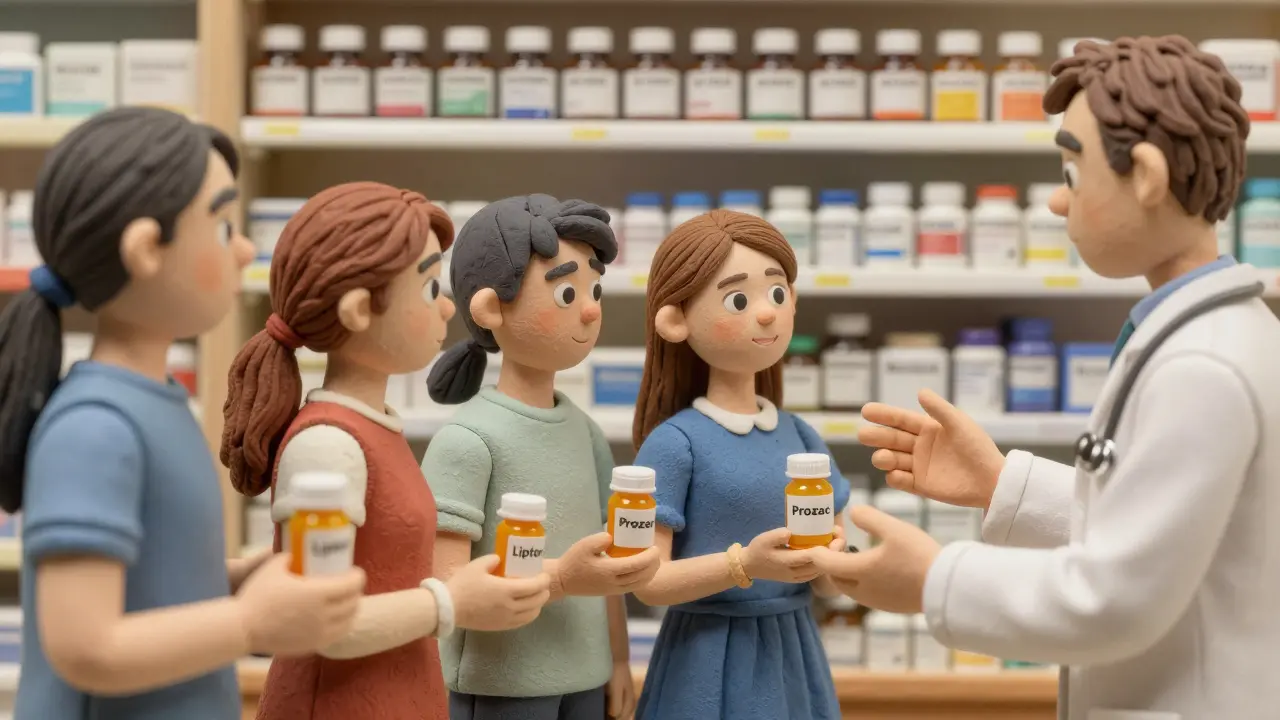
It’s a common sight: a patient walks into the pharmacy, hands over a prescription, and says, "I need the brand name. The generic doesn’t work for me."" They’re not alone. Even though generics have the same active ingredients, are approved by the FDA, and cost up to 80% less, millions of people still insist on brand-name drugs. Why? It’s not about science. It’s about psychology.
Same Drug, Different Feel
Let’s clear up one myth right away: a generic pill isn’t a cheaper copy. It’s the exact same medicine. The FDA requires generics to have the same active ingredient, strength, dosage form, and route of administration as the brand. They must also prove they’re absorbed into the body at the same rate and to the same extent. That’s called bioequivalence. If a generic passes this test, it’s legally and medically identical.
So why do people swear their brand-name antidepressant works better than the generic? It’s not because the chemistry is different. It’s because their brain expects it to work better. Studies show that when patients believe they’re taking a premium product-even if it’s a placebo-they report fewer side effects and better results. This is called the placebo effect, and it works backwards too. If someone thinks a generic is "inferior," their body can respond as if it is.
Trust Built Over Years
Brand-name drugs don’t just appear on shelves. They’re backed by decades of marketing, TV ads, doctor visits, and patient stories. Think about Lipitor. For years, it was the most prescribed drug in the U.S. Patients saw the ads. Their doctors mentioned it. Pharmacies stocked it. When it went generic, many didn’t switch-not because they had to, but because they didn’t want to.
That trust runs deep. A 2023 survey found that 62% of Gen Z patients trust brand-name drugs more for safety and quality. That’s not because they’re smarter about medicine. It’s because they’ve grown up seeing those names everywhere. Brands become familiar. Familiarity feels safe. In healthcare, where mistakes can be life-threatening, that feeling matters more than data.
Doctors Play a Role Too
It’s not just patients. Doctors often reinforce brand loyalty. A 2023 GlobalData survey found that 40% of physicians would prescribe a brand-name drug if cost weren’t an issue. In Japan, that number jumps to 57%. Why? Some doctors genuinely believe certain patients respond better to brands. Others worry about lawsuits if a generic causes an issue-even if science says it shouldn’t.
Psychiatrists are especially cautious. Medications for anxiety, depression, or epilepsy often have thin margins between effectiveness and side effects. A patient might say, "The generic made me feel weird." Even if lab tests show no difference, the doctor may hesitate to switch again. The fear of destabilizing someone’s mental health is real-even if the risk is small.
Generations See It Differently
Age matters. Gen Z is the most loyal to brand-name drugs. A Fortune survey in 2022 found that 35% of Gen Z patients prefer brands, even when they’re 79% more expensive. Why? They grew up with personalized medicine ads, influencer health tips, and a culture that equates "name brand" with "better." Millennials and Gen X are more likely to save money with generics. But for younger people, the idea of saving $50 a month doesn’t outweigh the anxiety of "what if?"
Meanwhile, older adults-who’ve lived through decades of healthcare changes-are more likely to follow their doctor’s advice. If the doctor says, "This generic is fine," they’ll try it. But if they’ve been on the same brand for 15 years, they often stick with it out of habit.
Cost Isn’t the Only Factor
You’d think price would win. After all, generics cost less. But research shows that lower-income and less-educated patients are actually more likely to stick with brand-name drugs-even when they can’t afford them.
A 2023 study found that people with less education were 1.54 times more likely to remain loyal to a brand, regardless of price. Why? Because they’re more likely to believe that "you get what you pay for." They worry that a cheaper drug is a lower-quality drug. This isn’t irrational-it’s a survival instinct. In healthcare, cutting corners can feel like risking your life.
And then there’s the pharmacy experience. If you’ve ever had a generic that made you feel nauseous, dizzy, or just "off," you remember it. Even if it was a coincidence, your brain links the feeling to the pill. Reddit threads are full of stories like: "I tried three generics of my ADHD med. Only the brand worked." Those stories spread. They become truth.
When Generics Really Do Cause Problems
Let’s be honest: sometimes, generics aren’t perfect. While they’re required to be bioequivalent, they can have different inactive ingredients-fillers, dyes, coatings. For most people, this doesn’t matter. But for someone with a rare allergy, a dye in a generic might trigger a reaction. Or a coating that dissolves too slowly might delay absorption.
That’s why some medications have lower generic adoption. Statins? Almost all are generic now. Antiepileptics? Only about half. Why? Because small changes in blood levels can cause seizures. Patients and doctors are terrified of that risk. So even if science says it’s safe, emotion says: stick with what you know.
What Happens When You Switch?
Switching from brand to generic isn’t always smooth. A 2023 survey by the National Community Pharmacists Association found that 43% of patients feel anxious about switching. That anxiety can lead to non-adherence-people skip doses because they’re worried. And that’s worse than the cost.
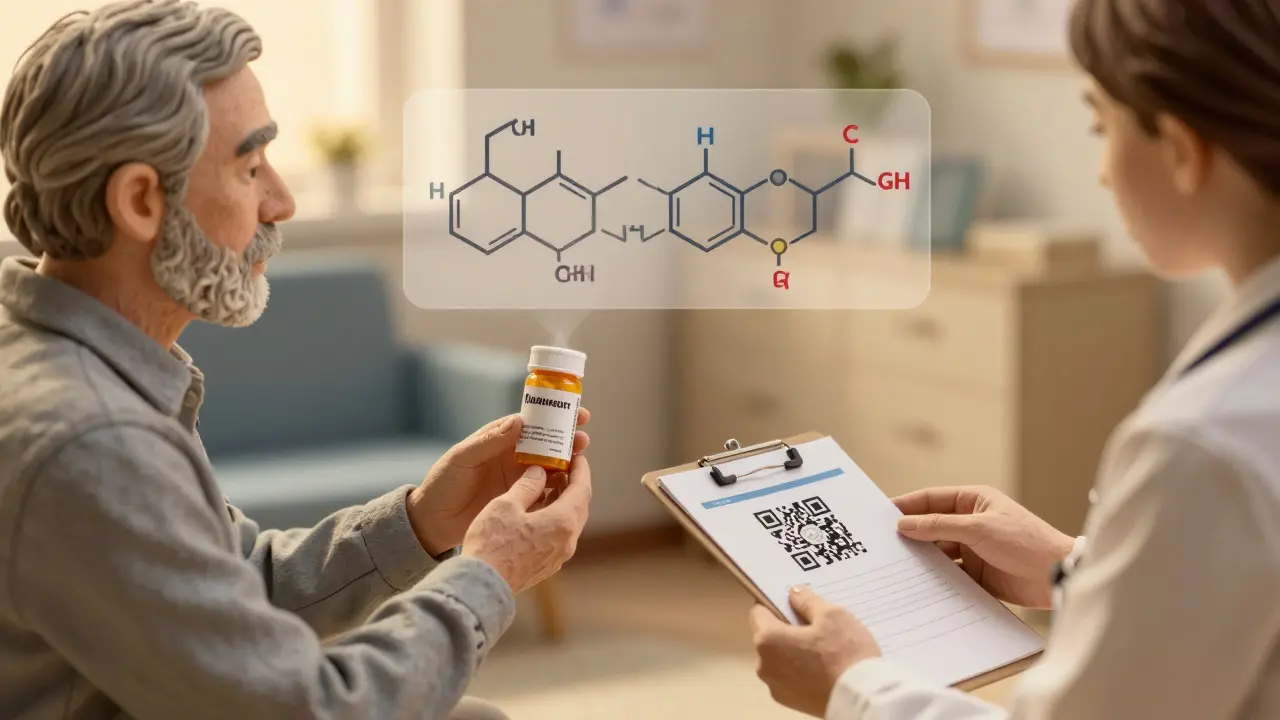
But here’s the good news: when pharmacists take five minutes to explain bioequivalence, 67% of patients accept the generic. A simple conversation-"This is the same medicine, just cheaper"-makes a huge difference. Some clinics now use printed guides, videos, or even QR codes that link to FDA explanations. The results? Up to 32% more people stick with generics.
What’s Changing?
Change is coming. The FDA is speeding up generic approvals. Employers are charging higher copays for brand-name drugs. Insurers are pushing generics harder. And biosimilars-complex versions of biologic drugs-are entering the market. But even here, loyalty is strong. Only 32% of patients switch to biosimilars in the first year.
Still, trends point to a future where generics dominate. By 2030, experts predict 95% of prescriptions will be generic. But that doesn’t mean brand loyalty will disappear. It’ll just shift. The drugs that survive? The ones where patients feel they have the most to lose: mental health meds, cancer treatments, autoimmune therapies.
It’s Not About the Pill. It’s About the Person.
At the end of the day, brand loyalty in medication isn’t about chemistry. It’s about fear, trust, habit, and identity. A pill is just a pill. But to someone who’s spent years managing a chronic illness, it’s a lifeline. If that lifeline has a name they recognize, they’ll hold on to it-even if it costs twice as much.
The answer isn’t to shame patients for choosing brands. It’s to meet them where they are. Educate. Listen. Offer options. Sometimes, the best medicine isn’t the cheapest one. It’s the one the patient will take-consistently, confidently, without fear.
Are generic drugs really the same as brand-name drugs?
Yes, legally and scientifically. The FDA requires generics to contain the same active ingredient, strength, dosage form, and route of administration as the brand. They must also prove they’re absorbed into the body at the same rate and extent. This is called bioequivalence. The only differences are in inactive ingredients like fillers or dyes-which rarely affect most people.
Why do some people say generics don’t work for them?
Often, it’s psychological. If someone believes a generic is inferior, their body may respond as if it is. In rare cases, differences in inactive ingredients (like dyes or coatings) can cause mild reactions in sensitive individuals. But for the vast majority, there’s no real difference in effectiveness. Studies show most perceived differences aren’t backed by clinical data.
Do doctors prefer brand-name drugs?
Many do-especially in specialties like psychiatry or neurology, where small changes in drug levels can have big effects. A 2023 survey found 40% of physicians would prescribe brand-name drugs if cost weren’t a factor. Some trust the original manufacturer’s consistency. Others fear liability if a patient has a bad reaction, even if science says it’s unlikely.
Why is brand loyalty stronger in younger generations?
Gen Z grew up in a world of branded experiences-from smartphones to skincare. They associate "name brand" with quality and reliability. Marketing plays a big role. Ads, influencer content, and social media reinforce the idea that premium equals better. Even if they’re price-sensitive, they’re more willing to pay extra for peace of mind.
Can pharmacists help patients switch to generics?
Absolutely. When pharmacists take just 5-7 minutes to explain that generics are FDA-approved and bioequivalent, 67% of patients agree to switch. Simple tools-like printed fact sheets, QR codes to FDA pages, or short videos-make a big difference. The key is empathy: acknowledge their concerns, then provide clear facts.
Are there medications where generics aren’t recommended?
The FDA doesn’t say no, but doctors often avoid switching for drugs with narrow therapeutic windows-like antiepileptics, blood thinners, or certain psychiatric meds. Even tiny changes in absorption can lead to serious side effects. In these cases, staying on the brand may be the safest choice, even if it costs more. Always consult your doctor before switching.


Stephen Rudd
Let me get this straight-you’re telling me people are paying 80% more for a pill that’s chemically identical? This isn’t healthcare, it’s cult behavior. You’d think in a country that runs on capitalism, people would demand value. Instead, they worship pharmaceutical branding like it’s Apple. Pathetic.
Erica Santos
Oh please. The placebo effect is real, but so is the fact that Big Pharma spends billions on ads telling people generics are "inferior." You think patients are irrational? They’re just responding to the same manipulation that sold them SUVs and energy drinks. We’re not talking about belief-we’re talking about engineered dependence.
Scott Easterling
I’ve seen this too many times. Someone switches to generic, gets a weird headache, blames the pill. But they didn’t change their sleep, didn’t change their coffee, didn’t change their stress levels. It’s all in their head. And now they’re convinced the FDA is in on it. Conspiracy culture meets medicine = disaster.
George Vou
You ever notice how the same people who say "trust the science" on vaccines are the first to scream "it’s not the same!" when it comes to generics? It’s not about medicine-it’s about control. If you can’t control your meds, you feel powerless. So you cling to the name. Sad.
Mantooth Lehto
I was on Lexapro for 7 years. Switched to generic. First week, I felt like a zombie. My therapist said it was "all in my head." But I cried for three days straight. I didn’t want to get out of bed. I didn’t care if it was "bioequivalent." My body knew something was off. Don’t tell me to just "trust the system."
Melba Miller
I work in a rural clinic. Half my patients are on Medicaid. They choose brand-name drugs even when it means skipping rent. Why? Because they’ve been told their life depends on it. And guess who told them? The ads. The doctors. The pharmacists who didn’t bother to explain. It’s not stupidity. It’s survival.
Katy Shamitz
I’m a nurse. I’ve had patients cry because their insurance forced them to switch. One man said, "This isn’t just a pill-it’s the reason I can hold my daughter again." I don’t care if it’s placebo. If it helps them function, who are we to take it away? Compassion > cost-cutting.
Nicholas Gama
Let’s be real: if you’re the type to believe a pill’s name determines its efficacy, you’re probably also the type who thinks TikTok cures cancer. The FDA doesn’t care about your feelings. The market does. And right now, the market is being manipulated by billion-dollar marketing machines. Wake up.
Dan Mayer
I’m a pharmacist. I’ve been doing this 22 years. I’ve seen patients have panic attacks because I handed them a generic. I’ve had people scream at me for "trying to kill them." But here’s the truth: 98% of the time, the generic works fine. The other 2%? Sometimes it’s the dye. Sometimes it’s the coating. Sometimes it’s the patient’s brain. But we never tell them that. We just say "it’s the same." And then we wonder why they don’t trust us.
Janelle Pearl
I get it. I really do. I’ve been on the same brand of seizure med for 14 years. I switched once. Seizure. Not because the drug was different. Because my body panicked. I didn’t know the difference between bioequivalence and a placebo. I just knew I felt like I was dying. Now? I take the brand. My doctor gets it. My insurance doesn’t. But I’m alive. And that’s what matters.
Ray Foret Jr.
I tried switching my ADHD med to generic. Felt like I was underwater. Took 3 weeks to feel normal again. I didn’t know it was the filler. Now I know. But I still pay extra. Why? Because I can’t afford to be a lab rat. My job depends on focus. My life depends on stability. And I’m not risking it for $50 a month.
Samantha Fierro
If we want patients to switch, we need to stop treating them like numbers. We need to talk to them. Show them the data. Let them ask questions. Offer them a trial. A handwritten note from the pharmacist saying, "I’ve seen this work for hundreds-here’s what to expect"? That’s worth more than any ad. Empathy isn’t a luxury. It’s part of the treatment.