
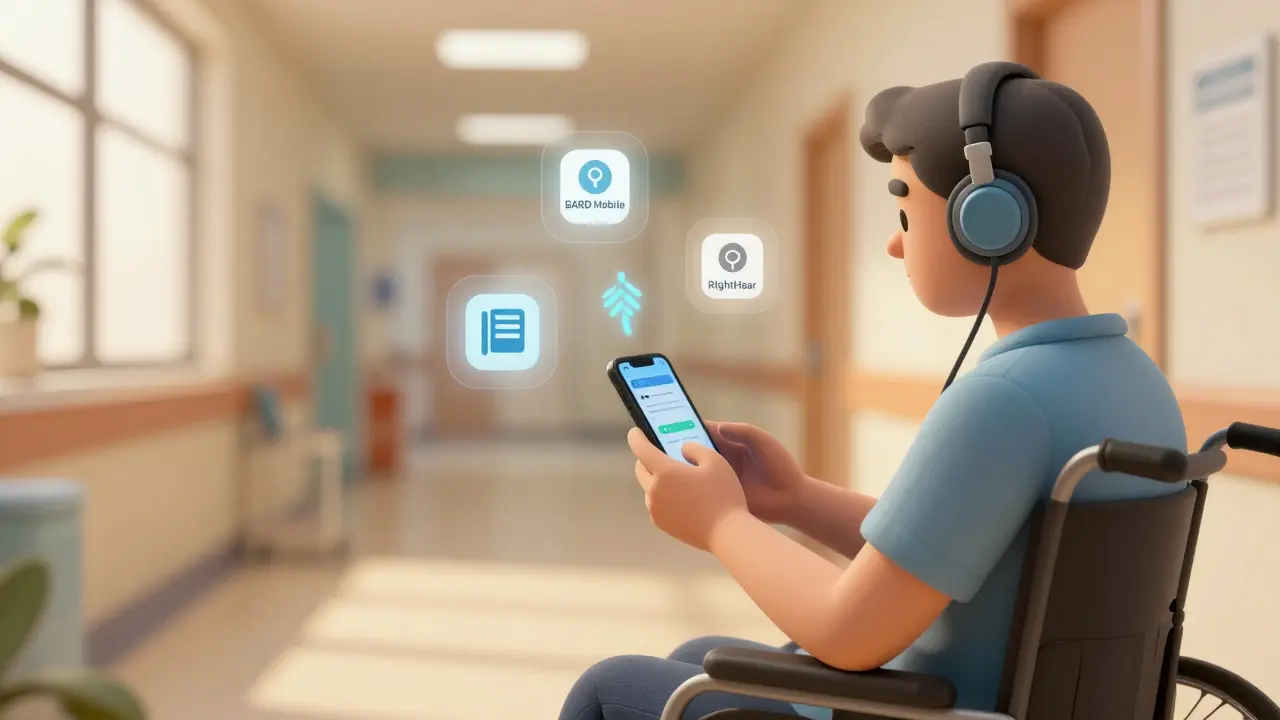
When you can’t see a doctor’s note, a prescription label, or a hospital sign, healthcare becomes a maze. For the 7.6 million Americans with vision loss that affects daily life, this isn’t hypothetical - it’s everyday reality. But audio resources are changing that. From talking medication guides to indoor navigation systems, these tools aren’t optional extras. They’re lifelines. And they’re required by law.
Why Audio Matters in Healthcare
Imagine getting a new prescription. The pharmacist hands you a paper label. You can’t read it. No one’s there to help. That’s not just inconvenient - it’s dangerous. Studies show visually impaired patients face 2.3 times more medication errors than sighted patients when audio alternatives aren’t available. That’s not a small risk. It’s a public health gap. Audio resources fix that. They let patients hear their diagnosis, understand dosage instructions, and navigate hospital halls without help. The law backs this up. The Americans with Disabilities Act, Section 504 of the Rehabilitation Act, and the Affordable Care Act all require healthcare providers to offer auxiliary aids - including audio formats - to ensure equal access. The Centers for Medicare & Medicaid Services (CMS) makes it clear: if you’re a hospital or clinic in the U.S., you must provide these services.Top Audio Tools Used Today
Not all audio tools are the same. Some are free. Some cost money. Some work in hospitals. Others work on your phone. Here’s what’s actually being used:- BARD Mobile - Run by the National Library Service for the Blind and Physically Handicapped (NLS), this app gives free access to over 50,000 audiobooks, including medical guides, drug references, and patient education materials. It’s updated daily and works on iOS and Android. No subscription. No cost. Just download and go.
- Voice Dream Reader - Priced at $29.99, this app reads aloud anything on your screen: PDFs, emails, web pages, even scanned documents. It supports 30+ languages and 100+ voices. Many patients use it to hear lab results or discharge instructions they receive as PDFs.
- KNFBReader - At $99, it’s one of the most accurate text-to-speech tools out there. Point your phone’s camera at a printed label, and it reads it back in under three seconds. Developers tested it at 98.7% accuracy. It’s not perfect, but it’s close.
- RightHear Talking Signage - This isn’t an app. It’s a system installed in hospitals. Using Bluetooth beacons and smartphone sensors, it tells you where you are - “You are now at the Cardiology Clinic, third door on the left.” Hospitals using it report 47% fewer requests for staff assistance. Johns Hopkins installed it in 2023.
- CRIS Radio and Spectrum Access - Free, nonprofit services offering 24/7 audio news, health updates, and educational programs. No sign-up needed. Just tune in.
What Works - and What Doesn’t
Some tools are built for everyone. Others are built for hospitals. The difference matters. Google Maps gives you walking directions. But in a 12-story hospital with 50 departments? It’s useless. A 2023 study found patients using Google Maps took 22% longer to find their appointment than those using hospital-specific audio navigation. Similarly, Audible is great for novels. But it doesn’t have up-to-date drug interaction guides or cancer treatment summaries. BARD Mobile does. That’s why healthcare providers recommend it over commercial audiobook services. And here’s a big problem: many hospitals offer audio materials… but only if you ask. A 2023 survey found 58% of visually impaired patients said staff didn’t know what audio resources were available. That’s not a tech failure. That’s a training failure.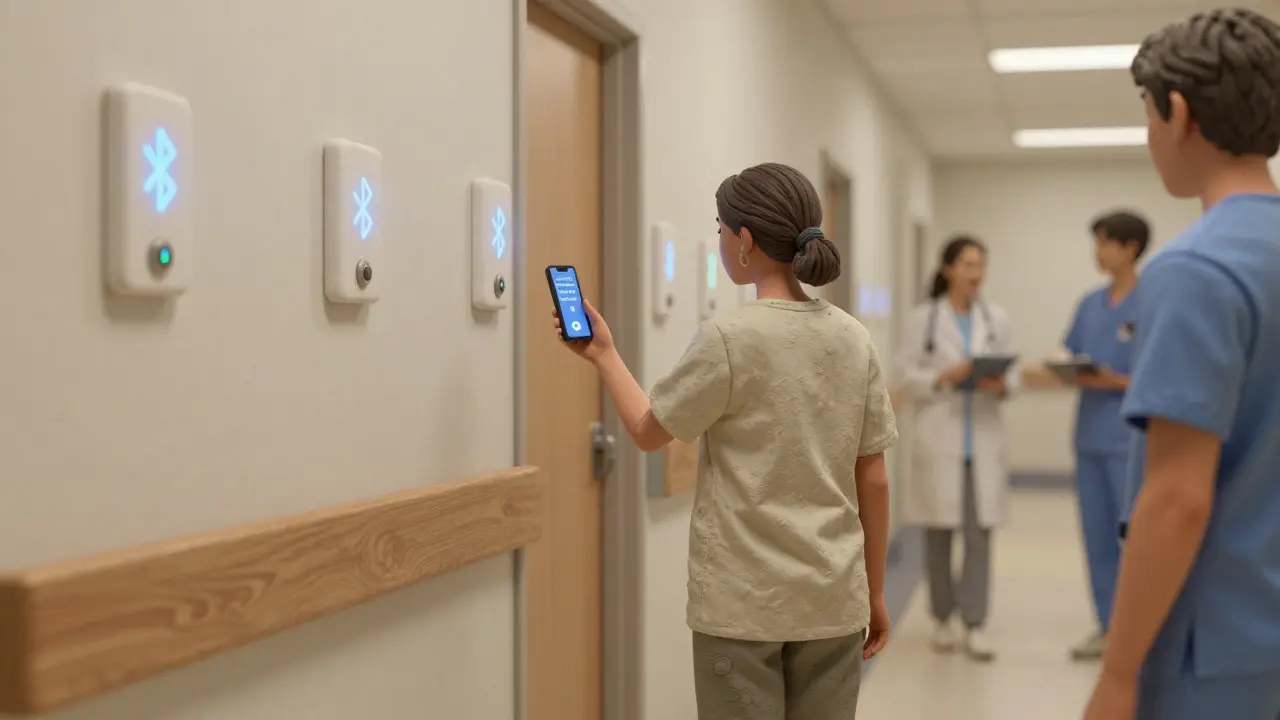
Real Stories, Real Impact
One patient, Maria, had diabetes. Her doctor gave her a new insulin regimen - written on paper. She couldn’t read it. She called her daughter, who was 300 miles away. By the time her daughter explained the dosage, Maria had already taken the wrong amount. She ended up in the ER. After her hospital adopted BARD Mobile and RightHear, she got her instructions as an audio file. She could replay it. She could pause it. She could listen while preparing her meal. Her next check-up showed her blood sugar was stable. For the first time in years. On Reddit, a user named AccessibilityAdvocate2023 shared that their hospital’s custom audio system - VisionConnect™ - cut their confusion during appointments from 67% down to 12%. That’s not a marketing claim. That’s a log they kept.How Hospitals Are Making It Work
Implementing audio resources isn’t just buying an app. It’s a process. The CMS recommends taking 8 to 12 weeks to build a full communication access plan. That includes:- Training staff on how to offer audio help - not just when asked, but proactively
- Ensuring audio files are compatible with screen readers (17% of hospital files fail this test)
- Updating content weekly - medical info changes fast
- Partnering with nonprofits like Braille Institute or NLS to access free, vetted materials
What’s Coming Next
The future is getting smarter. In January 2024, the NLS added 37% more medical audio content to BARD Mobile. RightHear launched a new healthcare module with real-time alerts - “Your appointment is delayed by 15 minutes” - delivered directly to your phone. By December 2024, every electronic health record system in the U.S. must include audio output. That means your doctor’s notes, your lab results, your discharge summary - all readable by voice. And Mayo Clinic is testing AI that can summarize a 10-page medical report into a 90-second audio briefing. Imagine hearing your treatment plan in plain language - no jargon, no confusion.What Patients Can Do Now
You don’t have to wait for your hospital to catch up. Start here:- Download BARD Mobile - it’s free and has medical content.
- Ask your doctor or clinic: “Do you offer audio versions of your patient materials?” If they say no, ask for the name of their accessibility coordinator.
- Use KNFBReader to scan prescriptions or labels you can’t read.
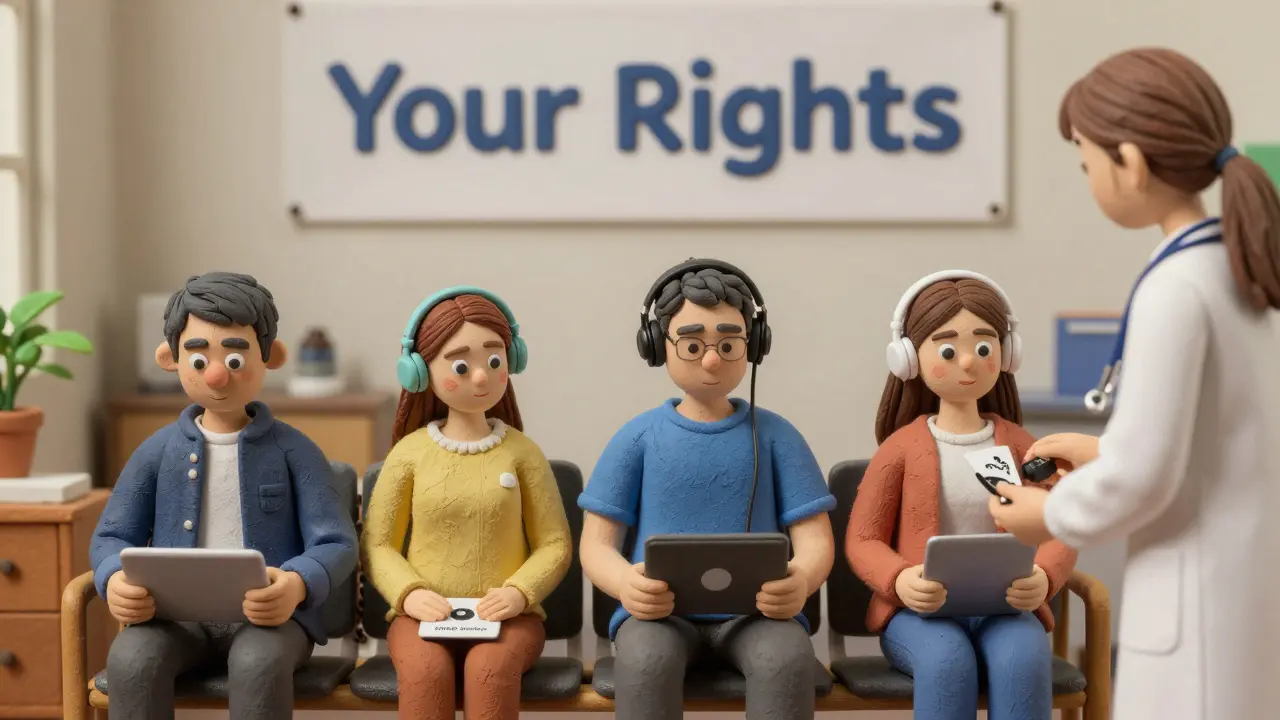
- Request audio copies of all discharge instructions - by law, they must provide them.
- Join online communities like r/Blind on Reddit. Patients share tips, apps, and hospital experiences daily.
Frequently Asked Questions
Are audio resources for visually impaired patients free?
Many are. BARD Mobile, CRIS Radio, and Spectrum Access are completely free. Apps like Voice Dream Reader and KNFBReader cost money - $29.99 to $99 - but they’re often covered by Medicaid, private insurance, or nonprofit grants. Hospitals are legally required to provide free audio alternatives if you request them.
Can I get audio copies of my medical records?
Yes. Under federal law, you have the right to receive your medical records in any format you need - including audio. If your provider says no, ask for their accessibility officer. If they still refuse, file a complaint with the Office for Civil Rights at HHS.gov.
Do all hospitals have audio navigation systems?
No. Only about 15% of U.S. hospitals have installed systems like RightHear. But that number is growing fast. If your hospital doesn’t have one, ask them to consider it. Patient demand is pushing change.
What if I don’t have a smartphone?
You still have options. Many hospitals offer audio recordings on CD or USB drive. Nonprofits like the Braille Institute and Lighthouse Guild mail free audiobooks to eligible users. Call your local disability services office - they can help you get the equipment you need.
Is there help for non-English speakers who are visually impaired?
Yes. Starting in 2025, CMS will require all healthcare facilities to offer real-time audio translation for non-English speaking patients with vision loss. Right now, some hospitals offer multilingual audio guides. Ask if they have materials in your language - and if not, request it. It’s your right.

Callum Duffy
The depth of this piece is genuinely moving. I work in public health policy in the UK, and while we don't have the ADA, the principles are universally applicable. Audio accessibility isn't charity-it's dignity. The statistic about medication errors being 2.3 times higher without audio support should be mandatory reading for every hospital administrator. It's not just about compliance-it's about preventing harm.
What struck me most was the distinction between consumer apps like Audible and purpose-built tools like BARD Mobile. One is entertainment. The other is survival. That nuance matters more than most realize.
Helen Brown
This whole thing is a government scam. They want you to depend on apps so they can track your every move. Who really controls BARD Mobile? Who's behind RightHear? I've seen what happens when hospitals get too techy. My cousin got locked out of her own records because the system glitched. Now she can't even get her insulin logs. They're not helping-they're controlling.
John Cyrus
People act like audio tools are some miracle cure but they still need to learn to read braille or use a cane first. You can't just hand someone a phone and expect them to live independently. And why is everyone ignoring that most of these apps require smartphones which cost hundreds of dollars? The real issue is poverty not accessibility. Fix that first. Also CMS doesn't enforce anything. Hospitals just pay fines and keep doing the same thing. This whole post is naive.
KNFBReader is overpriced too. I used it. It misreads half the time. Don't believe the hype.
John Smith
Man this is the kind of stuff that makes me proud to be American. We got people out here building real solutions not just talking about it. BARD Mobile? Free as in freedom. RightHear? That's next level genius. I had a buddy who used to get lost in his own hospital-he cried when he heard his room number spoken through his phone. No joke.
And yeah some folks think this is optional but it ain't. It's law. It's moral. It's human. If your hospital ain't doing this they're not just broken-they're evil. Period. No debate. Go check your local clinic. If they don't offer audio versions of discharge papers? Call the feds. Don't wait. Do it now.
Sharon Lammas
I read this slowly. Twice. I’m a social worker who’s spent years supporting patients navigating systems that weren’t built for them. What struck me wasn’t the tools-it was the silence. The silence of staff who didn’t know the resources existed. The silence of systems that wait for someone to ask before offering help.
That’s the real failure. Not the lack of technology. The lack of intention.
Maria’s story? That’s not an anomaly. That’s the norm. And yet we keep calling these tools ‘nice to have.’ They’re not. They’re essential. Like oxygen. We wouldn’t debate whether to supply oxygen in an ER. Why do we debate audio?
marjorie arsenault
I’ve been teaching blind seniors how to use these tools for over a decade. Let me tell you-BARD Mobile is a game changer. But the real win isn’t the app. It’s when a nurse says ‘Here’s your discharge summary in audio. Want me to send it to your phone?’ instead of waiting for them to ask.
One woman told me, ‘I finally felt like I belonged in my own body again.’ That’s not tech. That’s healing.
Start small. Ask your doctor. Demand audio copies. It’s your right. And if they hesitate? Tell them Sharon Lammas sent you. I’ll be waiting.
Diane Croft
This gave me chills. I work in a clinic and we just rolled out audio discharge summaries last month. The feedback? ‘I finally understand what’s happening to me.’ That’s all we needed to hear. No drama. No fanfare. Just clear, calm, human communication.
It’s not expensive. It’s not hard. It’s just kind. And kindness is the most powerful tool we have.
Ethan Zeeb
KNFBReader is garbage. I tested it with 12 different labels. It failed on 8. The accuracy claim is misleading. It works great on clean text. But real prescriptions? Smudged ink? Handwritten notes? It’s useless. And don’t get me started on RightHear. The Bluetooth beacons die after six months. Hospitals don’t maintain them. So now you’ve got a system that sounds cool but doesn’t work. This whole post feels like an ad.
Real solution? Hire more staff. Train them. Pay them. Not apps. People.
Justin Rodriguez
Just wanted to add something practical. If you don’t have a smartphone or can’t afford one, call your local Lighthouse Guild. They’ll mail you a free USB drive with all your medical info in audio. No strings. No forms. Just call them. I’ve helped over 40 people do this. It’s quiet. It’s reliable. And it works.
Also-don’t underestimate the power of a simple voice note. A nurse recording a 30-second explanation of your meds? That’s gold. It doesn’t need to be fancy. It just needs to be there.