
What PSA Testing Really Tells You (and What It Doesn’t)
A PSA test measures the level of prostate-specific antigen in your blood. It’s not a cancer test. It’s a signal-sometimes clear, often fuzzy. For decades, doctors used it like a flashlight in a dark room, hoping to spot trouble early. But the light doesn’t always show what’s really there. A PSA level above 4.0 ng/mL used to mean "time for a biopsy." Now, many doctors are lowering that bar to 3.0 ng/mL. Why? Because studies show catching cancer earlier can save lives. But here’s the catch: for every man who benefits, three or four get a biopsy they don’t need.
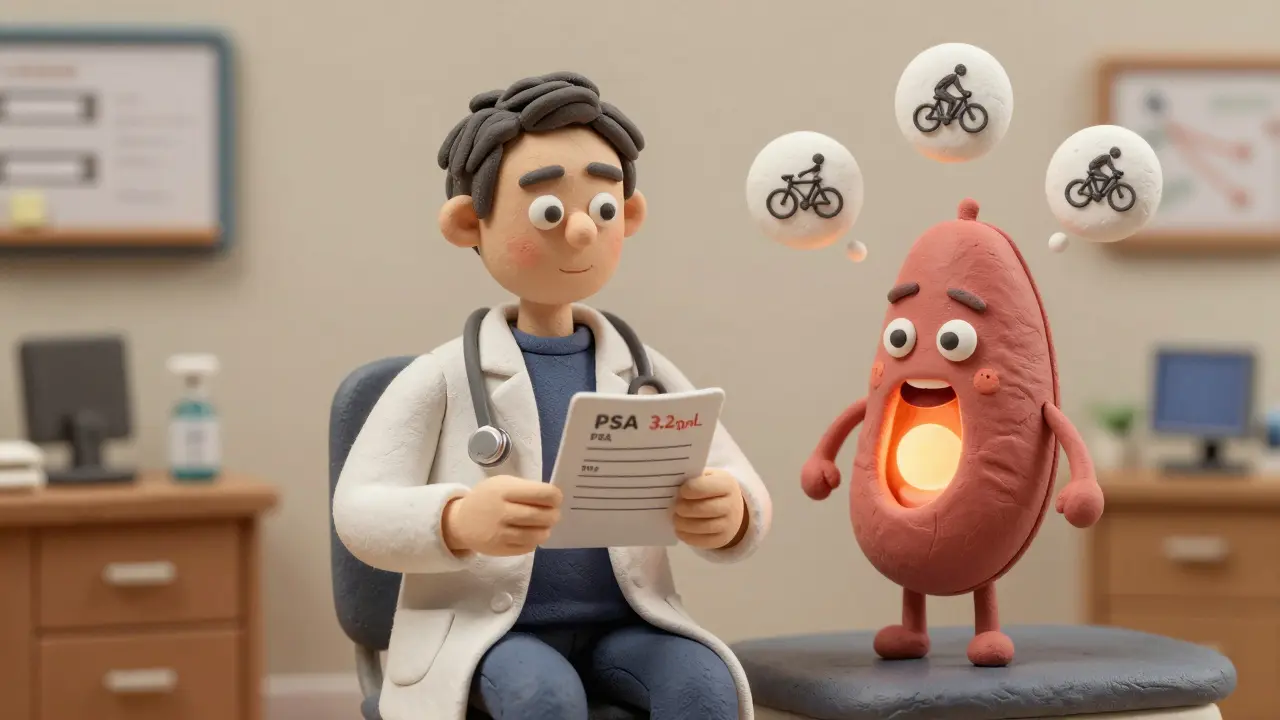
At a PSA of 4.0 ng/mL, only about 25% of men who get a biopsy actually have prostate cancer. That means 75% of the time, your body is making extra PSA for reasons that have nothing to do with cancer. An enlarged prostate. An infection. Even riding a bike the day before can spike your numbers. And if your PSA is between 4 and 10, you’re in the "gray zone"-where uncertainty is the norm, not the exception.
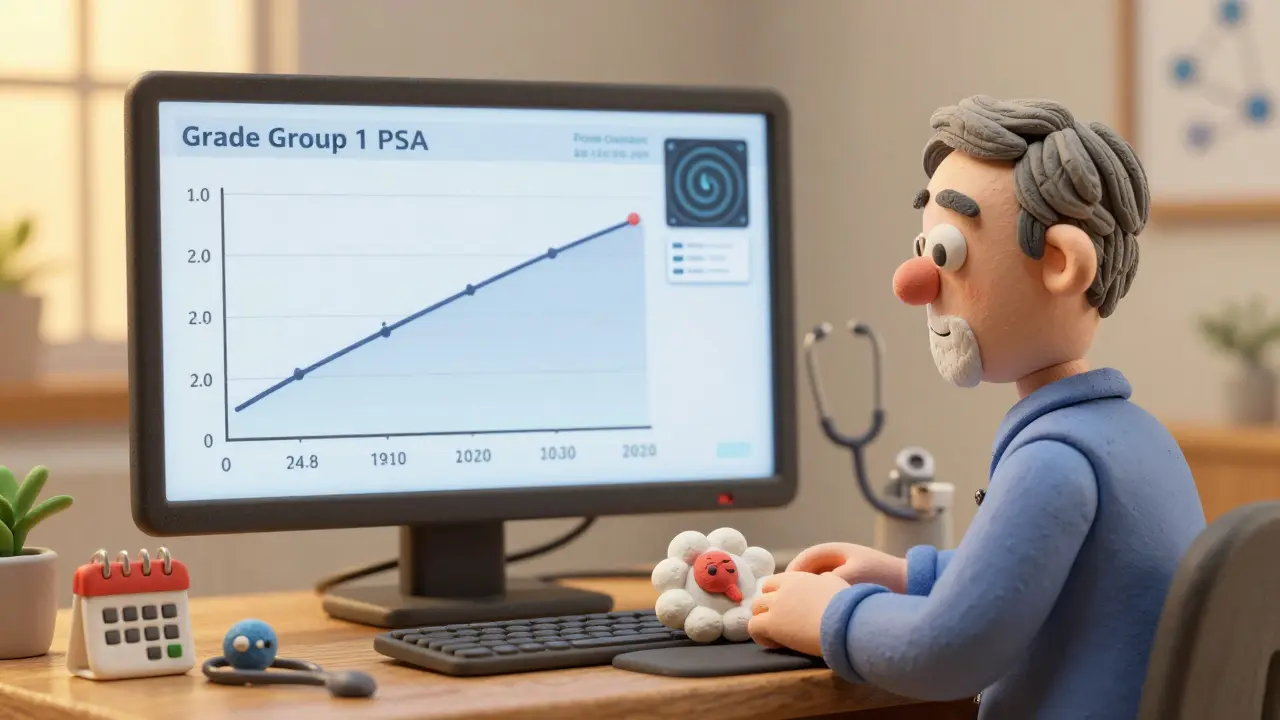
Some men panic when they see a number above 3.0. But that’s not always a red flag. Research shows that even men with PSA levels under 1.0 ng/mL can develop aggressive cancer over time. The real story isn’t in one number-it’s in the trend. A PSA that jumps from 1.5 to 3.2 in a year is far more concerning than a steady 3.5 for five years. That’s why experts now recommend a baseline PSA at age 40-45. It gives you a personal starting point. If yours is already high at 45, you’re in a higher-risk group. If it’s low, you might not need another test for five years.
Why Biopsies Often Miss the Mark
If your PSA is elevated, the next step is usually a biopsy. But here’s the uncomfortable truth: a biopsy doesn’t always find cancer, even when it’s there. And when it does find cancer, it often finds the kind that would never hurt you. About 20% of prostate cancers detected through screening are so slow-growing they’ll never cause symptoms or shorten your life. Yet once you know you have it, the pressure to treat it is intense.
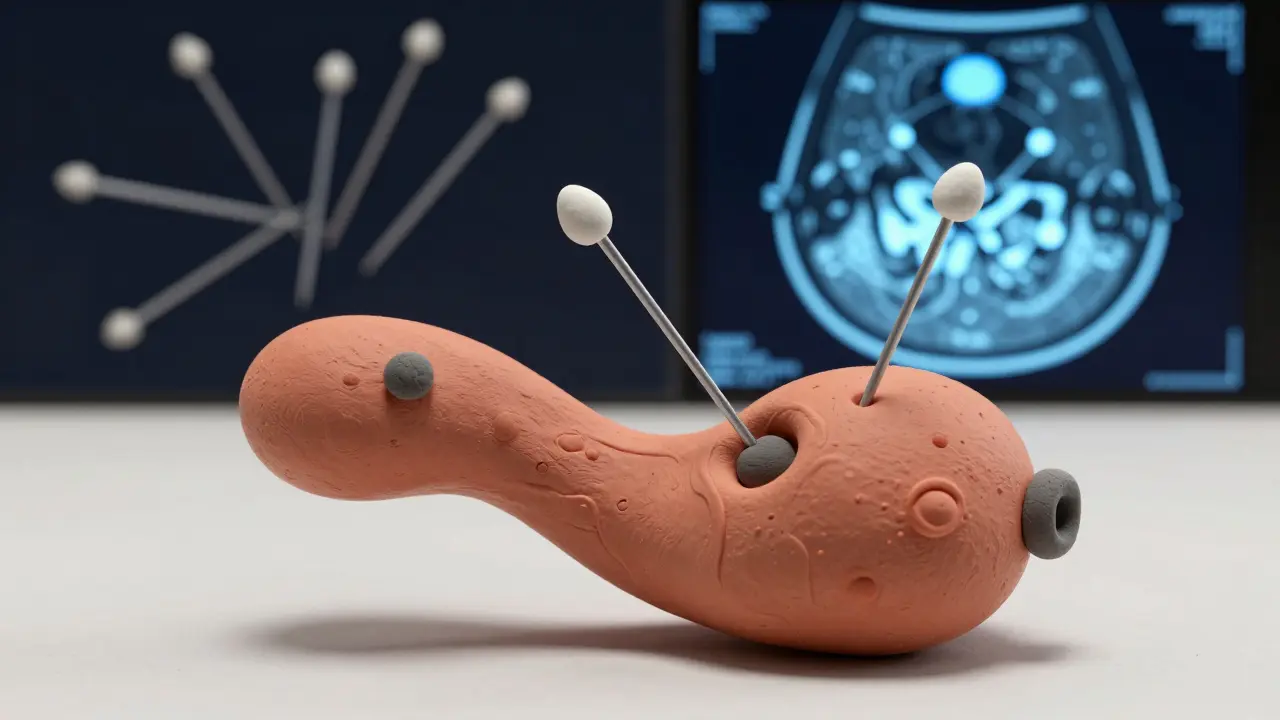
Biopsies use needles to pull tiny tissue samples from the prostate. It’s uncomfortable. It carries a small risk of infection. And it’s not perfect. Studies show that up to 15% of aggressive cancers are missed because the needle doesn’t hit the right spot. That’s why many clinics now combine PSA testing with an MRI first. If the MRI looks clean, you might skip the biopsy entirely. If it shows something suspicious, the biopsy can be guided precisely to that area. This approach, called MRI-targeted biopsy, cuts down on unnecessary procedures and finds more dangerous cancers.
Black men face an extra layer of risk. Data shows they’re 2.3 times more likely than White men to get a biopsy when their PSA is between 3 and 4 ng/mL-yet they’re 18% less likely to actually have cancer. This isn’t about biology. It’s about how we interpret numbers. Without adjusting for race, age, or family history, we’re overtreating people who don’t need it.
What Happens After a Positive Result?
If cancer is found, the next question isn’t "Do I treat it?" but "How urgent is it?" Prostate cancer isn’t one disease. It’s a spectrum. Some tumors grow so slowly they’re more like a benign growth. Others spread fast and need immediate action.
Doctors grade prostate cancer using the ISUP system, from Grade Group 1 (least aggressive) to Grade Group 5 (most dangerous). If your cancer is Grade Group 1 or 2, and it’s small and contained, active surveillance might be your best option. That means regular PSA tests, MRIs, and occasional biopsies-not surgery or radiation. You’re not ignoring it. You’re watching it closely. Many men on active surveillance never need treatment. In fact, a 10-year study showed that 80% of men with low-risk cancer stayed on surveillance without needing intervention.
But if your cancer is Grade Group 3 or higher, or if it’s spreading beyond the prostate, treatment becomes necessary. Options include surgery (removing the prostate), radiation (external beams or radioactive seeds), or hormone therapy to starve the cancer of testosterone. Each has side effects. Surgery can lead to incontinence or erectile dysfunction. Radiation can cause bowel irritation or bladder problems. Hormone therapy can cause fatigue, weight gain, and loss of muscle mass. The goal isn’t to pick the "strongest" treatment. It’s to pick the one that matches your cancer’s behavior and your life goals.
Advanced Tests That Actually Help
PSA alone is outdated. Newer tests give you more clarity without more needles. The 4Kscore and PHI tests look at different forms of PSA in your blood, along with other proteins, to calculate your risk of having aggressive cancer. They’re not perfect, but they’re better. In men with PSA between 2 and 10 ng/mL, these tests reduce unnecessary biopsies by 30-40% without missing dangerous cancers.
Then there’s PSMA-PET/CT. This isn’t a blood test. It’s an imaging scan that finds prostate cancer cells anywhere in the body. It’s used mostly after diagnosis to see if cancer has spread. But new studies show it can even detect hidden tumors before biopsy. When combined with MRI, its accuracy jumps. The negative predictive value hits 91%-meaning if the scan says no cancer, you can be 91% sure there isn’t any. That’s powerful. But it’s expensive-$3,000 or more-and not available everywhere. Insurance often requires prior approval.
And then there’s IsoPSA, a new test that measures the shape of PSA molecules, not just the amount. In trials, it was 92% accurate at spotting aggressive cancer-far better than standard PSA. It’s not widely available yet, but it’s coming fast.
What You Should Do Right Now
If you’re a man between 55 and 69, you’re in the age group where PSA screening makes the most sense. But don’t just show up for a test. Ask for a conversation. A good doctor will spend 15-20 minutes explaining the risks: overdiagnosis, false alarms, treatment side effects. They’ll ask about your family history, your race, your values. Do you want to avoid treatment at all costs? Or would you rather catch anything early, even if it means more tests?
Here’s a simple plan:
- Get a baseline PSA at 40-45. Write it down.
- If it’s under 1.0, wait until 45-50 for the next test.
- If it’s 1.0-3.0, get tested every 2-4 years.
- If it’s above 3.0, ask for an MRI before a biopsy.
- If cancer is found, ask for the Grade Group. Don’t rush into treatment.
Don’t let a single number dictate your health. Your PSA is one piece of a bigger puzzle. The goal isn’t to eliminate all risk. It’s to avoid unnecessary harm while catching the real threats.
What’s Changing in 2026
The old way of screening-PSA, then biopsy, then treat-is fading. The future is risk-based. Your age, family history, genetics, and even your PSA trend over time will all be fed into algorithms that tell you your true risk. Some clinics are already using AI to analyze PSA patterns and predict cancer years before it shows up on a biopsy.
The PICTURE trial, with results expected in early 2024, showed that using MRI first instead of PSA alone could cut biopsy rates by half. That’s huge. If you’re getting screened now, ask if your clinic offers MRI-first screening. It’s not everywhere yet, but it’s spreading.
And the big shift? We’re moving away from treating every cancer we find. We’re learning to live with some. That’s not defeat. It’s wisdom. The goal isn’t to live forever. It’s to live well-without the burden of treatments you don’t need.


Adarsh Uttral
bro i got my psa tested last year and it was 3.8... panicked for weeks till my doc said "chill, ride your bike less and come back in 3 months". turned out it was just inflammation from cycling. thanks for the heads up about the bike thing.
Sazzy De
i wish more doctors would talk about trends instead of single numbers. my dad had a steady 3.2 for 7 years then jumped to 4.1 in 6 months. that's when they found it. the pattern mattered more than the number.
owori patrick
this is so important for men in africa too. we don't have access to mris or advanced tests but knowing that psa trends matter more than one high number could save lives. thanks for sharing this in plain language.
Claire Wiltshire
as a nurse who's seen too many men rush into surgery after a single elevated psa, i'm thrilled to see this shift toward risk-based screening. active surveillance isn't neglect-it's precision medicine. educate your patients, not scare them.
Donna Fleetwood
my husband is on active surveillance for grade group 2. we do psa every 6 months and an mri yearly. he's 58 and still hiking, biking, playing with the grandkids. no side effects. no panic. just smart monitoring. this is the future.
Diksha Srivastava
so glad to see this info! in india many men still think if psa is high, they must get surgery immediately. this article is a breath of fresh air. let's spread awareness and stop the fear-mongering!
kate jones
the 4kscore and phi tests are game changers. i had a psa of 5.1 and was scheduled for biopsy. did the 4kscore-it showed 12% risk of aggressive cancer. my urologist canceled the biopsy and ordered an mri instead. turned out benign. saved me from a 3-hour procedure and 2 weeks of anxiety.
Beth Cooper
wait... so you're telling me the medical industry has been scamming men for decades with unnecessary biopsies? and now they want us to pay $3000 for psma-pet scans? sounds like a new profit center to me. i'm not falling for this "advanced testing" nonsense. they just want to sell more machines.
Amy Insalaco
the real issue isn't psa-it's the reductionist biomedical paradigm that reduces complex physiology to a single biomarker. we're operating within a mechanistic framework that ignores systemic inflammation, microbiome dysbiosis, and epigenetic modulation of androgen receptor expression. until we adopt a systems biology approach, we're just rearranging deck chairs on the titanic.
KATHRYN JOHNSON
as a woman who lost her father to metastatic prostate cancer because they waited too long, i find this "wait and see" approach terrifying. if you wait for symptoms, it's too late. early detection saves lives. don't let fear of overdiagnosis blind you to real danger.
Sidhanth SY
i'm indian, dad had prostate cancer at 62. we did the baseline psa at 45-it was 0.9. got tested again at 50: still 1.1. no stress. no biopsies. just peace of mind. this stuff works if you're smart about it.
Yanaton Whittaker
USA FOREVER! we lead the world in prostate cancer tech! psma-pet, isoPSA, ai algorithms-none of this exists in other countries! if you're not getting the latest scans, you're basically living in the stone age 😎🇺🇸
Kathleen Riley
the ontological burden of the biomarker paradigm in urologic oncology reflects a profound epistemological rupture between the lived experience of the patient and the quantified gaze of the clinical gaze. one must question whether the pursuit of statistical certainty erodes the dignity of uncertainty inherent in human physiology.
Carolyn Whitehead
my doc said i dont need another psa till 50 because mine was 0.7 at 45. i feel so much better knowing i dont have to stress about it. thanks for the clear advice
Shubham Dixit
this is why india needs to stop copying american medical guidelines. we have different genetics, different diets, different lifestyles. why should we follow some usa study that ignores our reality? we need our own data, our own norms. psa thresholds must be recalibrated for indian men, not just imported like cheap electronics.