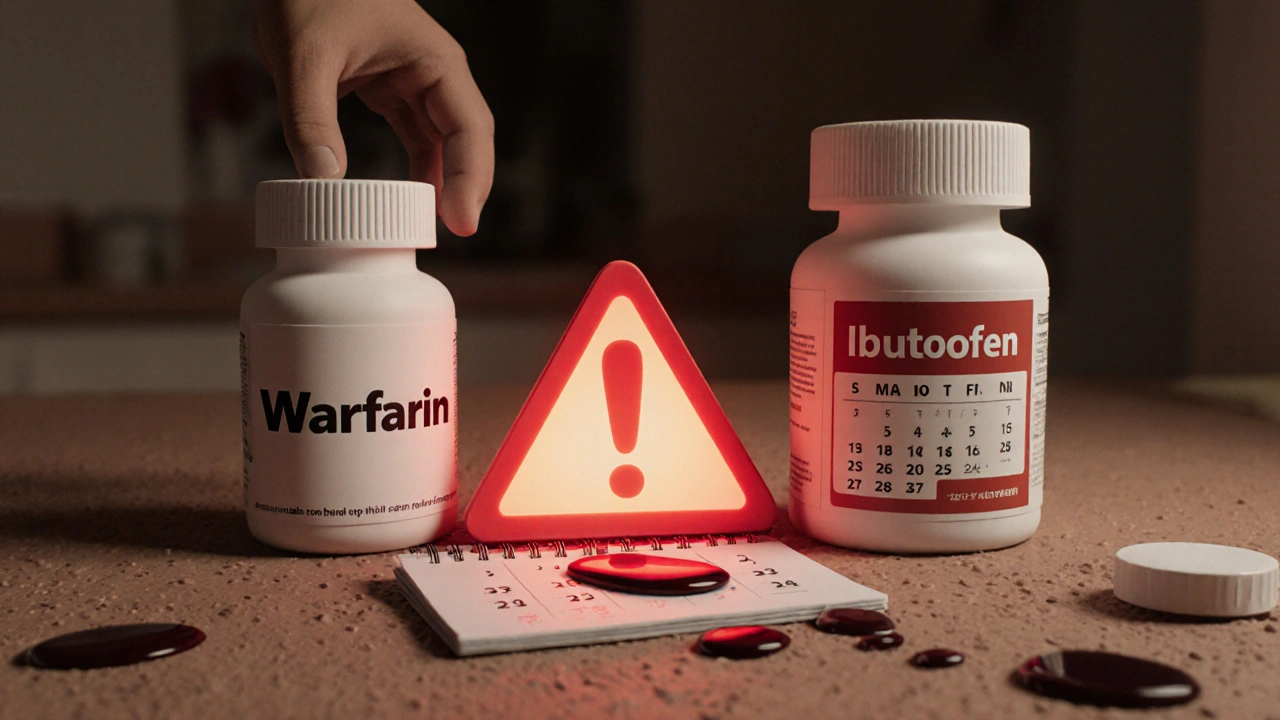
Combining NSAIDs like ibuprofen or naproxen with blood thinners greatly increases the risk of dangerous bleeding. Learn which pain relievers are safe, what to avoid, and how to manage pain without risking your health.
NSAID Bleeding Risk: What You Need to Know Before Taking Common Pain Relievers
When you reach for ibuprofen or aspirin for a headache or sore knee, you’re using a type of medication called a NSAID, nonsteroidal anti-inflammatory drugs used to reduce pain, fever, and inflammation. Also known as nonsteroidal anti-inflammatories, these drugs are among the most widely used medicines in the world—but they come with a quiet danger: gastrointestinal bleeding, internal bleeding in the stomach or intestines caused by damage to the protective lining. This isn’t rare. Every year, tens of thousands of people end up in the hospital because of it.
It’s not just about taking too much. Even low doses of aspirin, a common NSAID used for heart protection and pain relief can thin your blood enough to cause bleeding, especially if you’re over 60, have a history of ulcers, or take blood thinners like warfarin. Ibuprofen, a popular over-the-counter NSAID for muscle pain and arthritis carries the same risk. The damage builds slowly—irritating the stomach lining, reducing mucus that protects it, and stopping platelets from clumping to seal small cuts. You might not feel anything until you vomit blood, pass black stools, or suddenly feel dizzy and weak.
Here’s the hard truth: many people don’t realize their daily painkiller is the cause. They think it’s just heartburn or a bad stomach bug. But if you’ve been taking NSAIDs regularly—even just a few times a week—you’re increasing your chances of bleeding. The risk goes up even more if you drink alcohol, smoke, or take steroids. It’s not just about the drug—it’s about how it interacts with your body over time. That’s why doctors now warn against long-term NSAID use without checking in first.
What can you do? If you need pain relief, there are safer options. Acetaminophen doesn’t cause bleeding like NSAIDs do. For inflammation, cold packs, physical therapy, or even low-dose naproxen (taken with food and for the shortest time possible) might be better choices. If you’re on aspirin for your heart, talk to your doctor before stopping—it’s not always safe to quit cold turkey. The key is awareness. Know your risks. Track how often you take these pills. And if you notice any signs of bleeding—dark stools, unusual bruising, fatigue—don’t wait. Get checked.
The posts below cover real cases, alternatives, and hidden dangers tied to NSAID use. You’ll find stories from people who learned the hard way, guides on safer pain management, and comparisons with other drugs that won’t tear up your stomach. Whether you’re taking NSAIDs daily or just occasionally, this collection gives you the facts you need to protect yourself—not just treat the pain.