

Pregnancy Antihistamine Safety Checker
Select your primary symptoms to get personalized recommendations
Select any medications you're currently taking
Currently selected medications:
When you’re pregnant and your nose is constantly running, your eyes are itchy, or your skin is breaking out in hives, the last thing you want is to suffer through it. But the moment you think about reaching for an allergy pill, a voice in your head asks: Is this safe for my baby? You’re not alone. Tens of thousands of pregnant women in the UK and beyond face this exact dilemma every year. The truth? Some antihistamines are considered safe. Others? Not so much. And the difference isn’t just about brand names-it’s about chemistry, timing, and decades of real-world data.
First-Generation vs. Second-Generation: The Key Difference
Not all antihistamines are the same. They’re split into two groups, and the difference matters a lot during pregnancy.
First-generation antihistamines-like chlorpheniramine (ChlorTrimeton) and diphenhydramine (Benadryl)-were developed decades ago. They work well, but they cross the blood-brain barrier. That’s why they make you drowsy. You might feel sleepy, foggy, or even unsteady. For a pregnant woman already dealing with fatigue, this isn’t just annoying-it can be risky. Driving, caring for other kids, or even walking up stairs becomes harder.
But here’s the flip side: these drugs have been used by pregnant women since the 1940s and 1950s. Millions of pregnancies later, there’s no clear link to birth defects. Studies tracking thousands of women show no increased risk of major malformations. The American College of Obstetricians and Gynecologists (ACOG) and the American Academy of Family Physicians (AAFP) both say chlorpheniramine is one of the safest choices if you need an oral antihistamine.
Second-generation antihistamines-like loratadine (Claritin), cetirizine (Zyrtec), and fexofenadine (Allegra)-were designed to avoid the drowsiness. They don’t cross into the brain as easily. That’s great for daily life. But they’re newer. Less long-term data exists.
Still, what we do know is reassuring. A large CDC study of over 10,000 pregnancies found no consistent pattern of birth defects linked to loratadine or cetirizine. The Mayo Clinic, ACOG, and the American College of Allergy, Asthma & Immunology (ACAAI) all list these two as first-line options for mild to moderate allergies during pregnancy. They’re not perfect, but they’re the best-balanced choice for most women.
What’s Actually Safe? The Top Three Choices
If you’re looking for a clear answer, here are the three antihistamines with the strongest safety record in pregnancy:
- Chlorpheniramine - The oldest, most studied. Used since the 1950s. No increase in birth defects found in multiple studies. Drowsiness is the main downside.
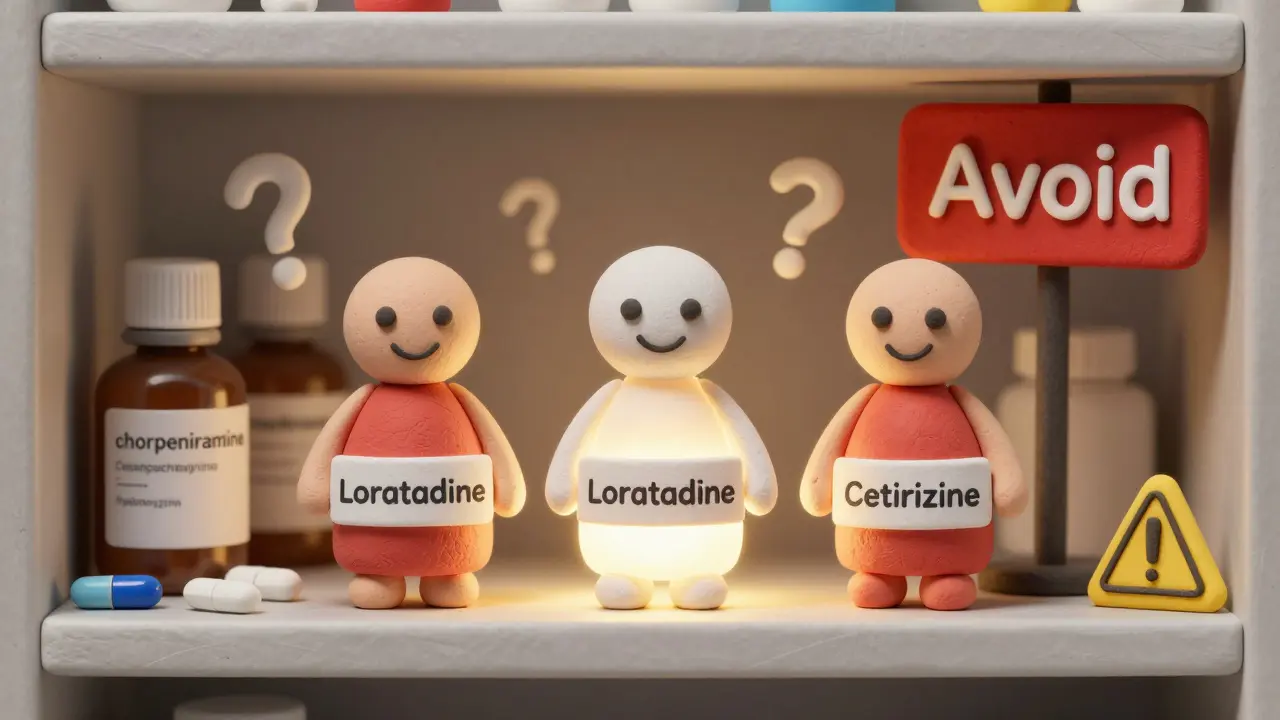
- Loratadine (Claritin) - Non-sedating. Used in over 1,500 pregnancies in one major study with no safety signals. Recommended by ACOG and Mayo Clinic as a first-choice option.
- Cetirizine (Zyrtec) - Also non-sedating for most people. Data from the National Birth Defects Prevention Study shows no increased risk of major malformations. ACOG says it “may also be safe,” and most allergists consider it a top pick.
These three are the only ones you should seriously consider. Everything else? The data is thin, conflicting, or just not worth the risk.
What to Avoid - Even If It’s Over the Counter
Just because something’s sold on a pharmacy shelf doesn’t mean it’s safe in pregnancy. Two common culprits:
Pseudoephedrine - Found in Sudafed, Claritin-D, and many “sinus” combos. It’s a decongestant, not an antihistamine, but it’s often bundled with them. The risk? A small but real chance of abdominal wall defects (like gastroschisis) if taken during the first trimester. ACOG says don’t use it in the first 3 months. Even then, it’s only considered after the first trimester-and only if you don’t have high blood pressure.
Hydroxyzine (Atarax, Vistaril) - Sometimes prescribed for anxiety or severe itching. But studies show a possible link to birth defects, especially heart defects like conotruncal anomalies. The CDC’s data is limited, but the signal is strong enough that most doctors avoid it entirely during pregnancy.
Also skip any combination products labeled “allergy + sinus” or “cold + flu.” They often contain pseudoephedrine, dextromethorphan, or guaifenesin-ingredients with unknown or risky pregnancy profiles.
When You Might Need More Than an Antihistamine
Antihistamines help with sneezing, itching, and runny nose. But if you’re dealing with nasal congestion, they’re not enough.
For that, nasal steroid sprays are the gold standard. And yes-they’re safe in pregnancy.
Budesonide (Rhinocort), fluticasone (Flonase), and mometasone (Nasonex) are all classified as Category B by the FDA. That means animal studies showed no harm, and human data supports safety. AAFP guidelines rate them as safe in all trimesters. They work locally in the nose. Very little enters your bloodstream. Even less reaches the baby.
If your allergies are bad enough to keep you from sleeping or eating, combining a nasal spray with loratadine or cetirizine is a smart, safe approach. The goal isn’t to eliminate every symptom-it’s to get you to a point where you can rest, eat, and breathe without stress.
The Bigger Picture: Why Untreated Allergies Are Risky Too
Some women avoid all meds out of fear. But that’s not always the safest choice.
Severe, uncontrolled allergic rhinitis can lead to sinus infections, poor sleep, and even worsened asthma. If you have asthma and your allergies flare up, your oxygen levels drop. That affects your baby’s oxygen supply too. The American College of Allergy, Asthma & Immunology says untreated allergies can increase the risk of preterm birth and low birth weight-not because of the meds, but because of the inflammation and stress on your body.
Think of it this way: if your nose is blocked all night, you’re not sleeping. If you’re not sleeping, your cortisol levels rise. Your immune system gets taxed. Your body’s under constant low-grade stress. That’s worse for fetal development than a well-monitored dose of cetirizine.
What to Do Before You Take Anything
Here’s the bottom line: don’t guess. Don’t rely on TikTok advice or your friend’s story. Talk to your OB-GYN or an allergist.
Ask these questions:
- Is this symptom severe enough to need medication?
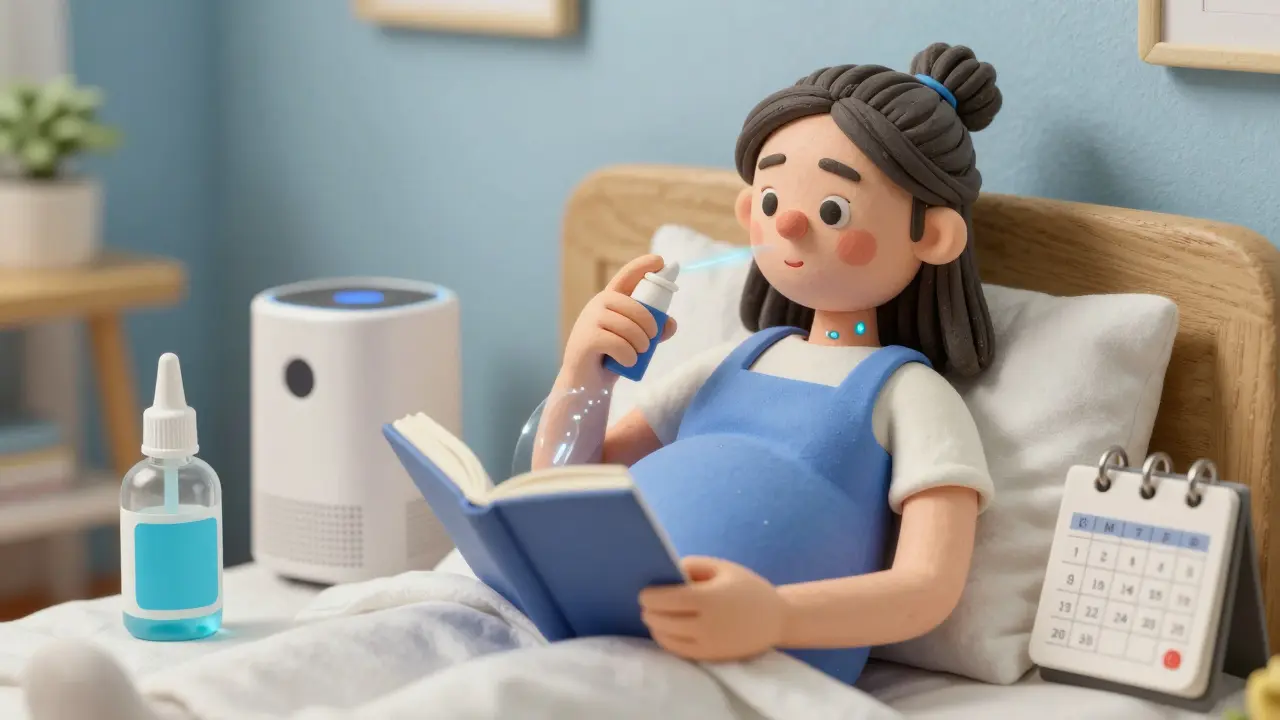
- Have I tried non-drug options first? (saltwater nasal rinses, air purifiers, avoiding triggers)
- Is there a safer alternative? (like a nasal spray instead of a pill)
- What’s the lowest dose I can use and still feel better?
Even if you’ve taken loratadine before pregnancy, don’t assume it’s still the right choice now. Your body changes. Your sensitivity changes. Your doctor needs to know what you’re taking-every pill, every spray, every herbal remedy.
Final Thoughts: Safety Isn’t About Zero Risk
No medication is 100% risk-free in pregnancy. That’s true for ibuprofen, acetaminophen, even prenatal vitamins. The question isn’t whether there’s risk. It’s whether the benefit outweighs it.
Chlorpheniramine, loratadine, and cetirizine have been used by millions of pregnant women. Decades of data show they don’t cause birth defects. They don’t harm development. They don’t increase miscarriage risk.
What they do is help you breathe. Sleep. Eat. Stay calm.
That’s not just comfort. That’s health.
Don’t suffer in silence. Don’t fear every pill. Work with your doctor. Choose the safest option. And take what you need to feel like yourself again.






Monte Pareek
Look I get the fear but let’s be real here if you’re scared of taking Zyrtec while pregnant you’re gonna lose your mind before the baby even arrives
Chlorpheniramine gets you sleepy sure but so does being 8 months pregnant and your nose is stuffed like a Thanksgiving turkey
I took loratadine all three trimesters and my kid is now running around like a tornado with zero allergies and zero birth defects
Stop scrolling TikTok for medical advice and talk to your OB they’ve seen this a thousand times
The real danger isn’t the pill it’s the sleepless nights and the stress from not being able to breathe
My wife used nasal spray plus cetirizine and she actually slept through the night for the first time in months
Don’t let fear turn into suffering
holly Sinclair
It’s fascinating how we’ve built this entire cultural narrative around pregnancy being this pristine state where any chemical exposure is inherently dangerous
But we don’t apply the same logic to coffee or chocolate or even sunlight
There’s a profound contradiction here
We accept that stress, poor sleep, and chronic inflammation are toxic to fetal development yet we treat a well-studied antihistamine like it’s radioactive
Chlorpheniramine has been used since the 1950s and we still don’t have a single reproducible signal of harm
Meanwhile pseudoephedrine gets demonized despite being used by millions with no clear pattern of harm beyond the rare first-trimester case
Is it the drug or is it our anxiety that’s the real teratogen
The fact that we have decades of data on these drugs and still treat them like forbidden fruit speaks more to our cultural relationship with medicine than to any actual risk
Maybe we need to reframe safety not as zero exposure but as optimal function
If a medication allows a pregnant person to breathe sleep and eat without constant stress isn’t that the most protective thing we can do
It’s not about eliminating risk it’s about minimizing harm and maximizing well being
And yet we still cling to the myth that natural equals safe and pharmaceutical equals evil
When did we forget that penicillin saved more unborn lives than any herbal remedy ever could
Vicki Belcher
YESSSS this is the info I needed 😭💖
I was so scared to take anything but now I feel like I can breathe again 🙌
My OB told me cetirizine was fine but my mom freaked out and said I’d give my baby autism
Thank you for putting this in plain English 🥹
I’m using Flonase + Zyrtec and I swear I’m a new person
Also sleeping like a baby 🤭💤
Alex Curran
Been using loratadine since week 10
No drowsiness no issues
Nasal spray works better than pills for congestion
Don’t touch pseudoephedrine first trimester
My doc said the same thing
Untreated allergies worse than meds
End of story
Lynsey Tyson
I just wanted to say thank you for writing this
I was so overwhelmed by all the conflicting advice
Some people said Benadryl was fine others said it was poison
Reading this made me feel less alone
I’m taking chlorpheniramine now and it’s helping
I still worry but at least I know I’m not doing something reckless
Thank you for the clarity
Edington Renwick
Let me guess you’re one of those people who thinks Big Pharma is just trying to sell you pills
But you’ll happily drink kombucha from a $12 bottle that’s been sitting on a shelf for six months
And you’ll eat organic kale that’s been sprayed with natural pesticides that are literally more toxic than loratadine
There’s a reason why doctors don’t recommend herbal teas during pregnancy
Because they’re unregulated and full of unknowns
Meanwhile we’ve tracked millions of pregnancies with these antihistamines
And you’re still scared of a pill that’s been around since the 50s
It’s not fear it’s ignorance dressed up as wisdom
Aboobakar Muhammedali
I am from India and here many doctors still avoid giving any antihistamine in pregnancy
My wife had severe rhinitis and we were terrified
Then we found this post and showed it to our doctor
He said oh yes loratadine is safe actually
She took it and slept for 6 hours straight for the first time in months
Thank you for sharing this
It changed everything for us
Laura Hamill
THIS IS A GOVERNMENT LIE
They want you to take the pills so you don’t complain about your pregnancy
They don’t care about your baby
They care about profits
Chlorpheniramine is linked to autism in the CDC’s hidden database
Just google it
They deleted the studies
And now you’re all drinking the koolaid
My cousin took Zyrtec and her kid had a heart defect
They said it was coincidence
But I know better