
The global generic drug market isn’t just surviving-it’s evolving. By 2028, it’s expected to hit nearly $656 billion, up from $435 billion in 2023. That’s an 8.5% annual growth rate. But behind the numbers, something deeper is happening. Generic drugs are no longer just cheap copies of branded pills. They’re becoming more complex, more strategic, and more critical to keeping healthcare affordable worldwide.
Why Generics Matter More Than Ever
Generic drugs make up 90% of prescriptions in the U.S., yet they account for only 23% of total drug spending. That’s the power of generics: they save money without sacrificing effectiveness. In Europe, Germany fills 72% of its prescriptions with generics. Italy? Only 28%. Why the difference? It’s not about science-it’s about policy. Countries with strong reimbursement systems and price controls push generics harder. In places like India and Brazil, where out-of-pocket costs can break families, generics aren’t optional-they’re life-saving.When a branded drug loses its patent, prices drop fast. The average generic is 80-85% cheaper than its brand-name counterpart. That’s why governments, insurers, and patients all rely on them. In 2024 alone, around $70 billion in branded drug sales lost patent protection. That’s a flood of new opportunities for generic makers.
The Rise of Biosimilars: The New Frontier
The biggest shift in the generic market isn’t happening in pills-it’s happening in vials. Biosimilars, the generic versions of complex biologic drugs, are growing at 12.3% per year. These aren’t simple chemical copies. Biologics are made from living cells-think cancer drugs like Humira or insulin analogs. Making a biosimilar requires 10 to 20 times more steps than making a regular generic. Development costs? $100-250 million. Compare that to $1-5 million for a traditional small-molecule generic.That’s why only big players are entering this space. But the payoff is worth it. Biosimilars don’t slash prices by 80%. They typically cost 15-30% less than the original. Still, that’s enough to open access for millions. In the U.S., the first biosimilar for Humira hit the market in 2023. Within a year, it captured 15% of prescriptions. By 2030, biosimilars could account for over 20% of all biologic sales.
Who’s Driving the Market? Asia Leads, But the World Is Catching Up
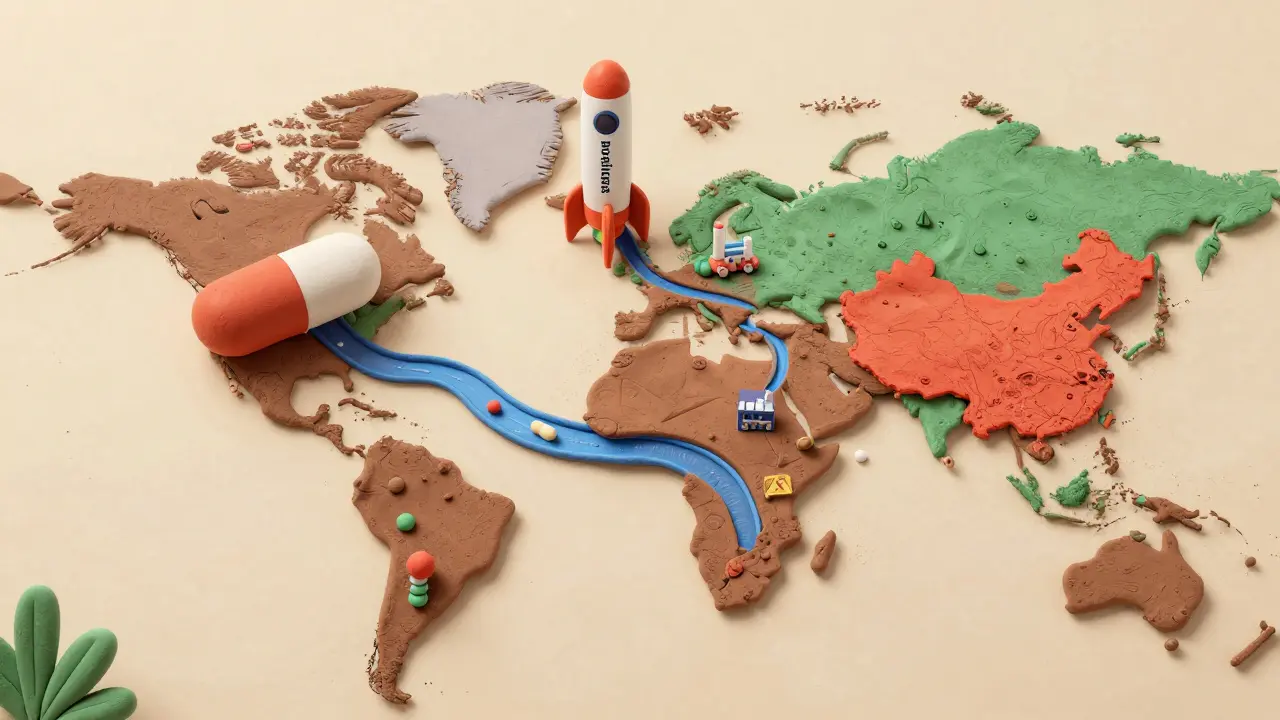
India and China control nearly 35% of global generic manufacturing. India alone produces over 60,000 generic medicines and supplies 20% of the world’s volume by quantity. China makes about 40% of the world’s active pharmaceutical ingredients (APIs)-the raw chemicals that go into pills.But here’s the problem: 65% of global APIs come from China. That’s a single point of failure. If a factory shuts down due to regulation, weather, or politics, drug shortages ripple across continents. The U.S. FDA issued 187 warning letters to foreign generic manufacturers in 2023-40% of those were tied to quality issues in China and India. Regulatory gaps are real. In some countries, fake or substandard generics still make it to shelves.
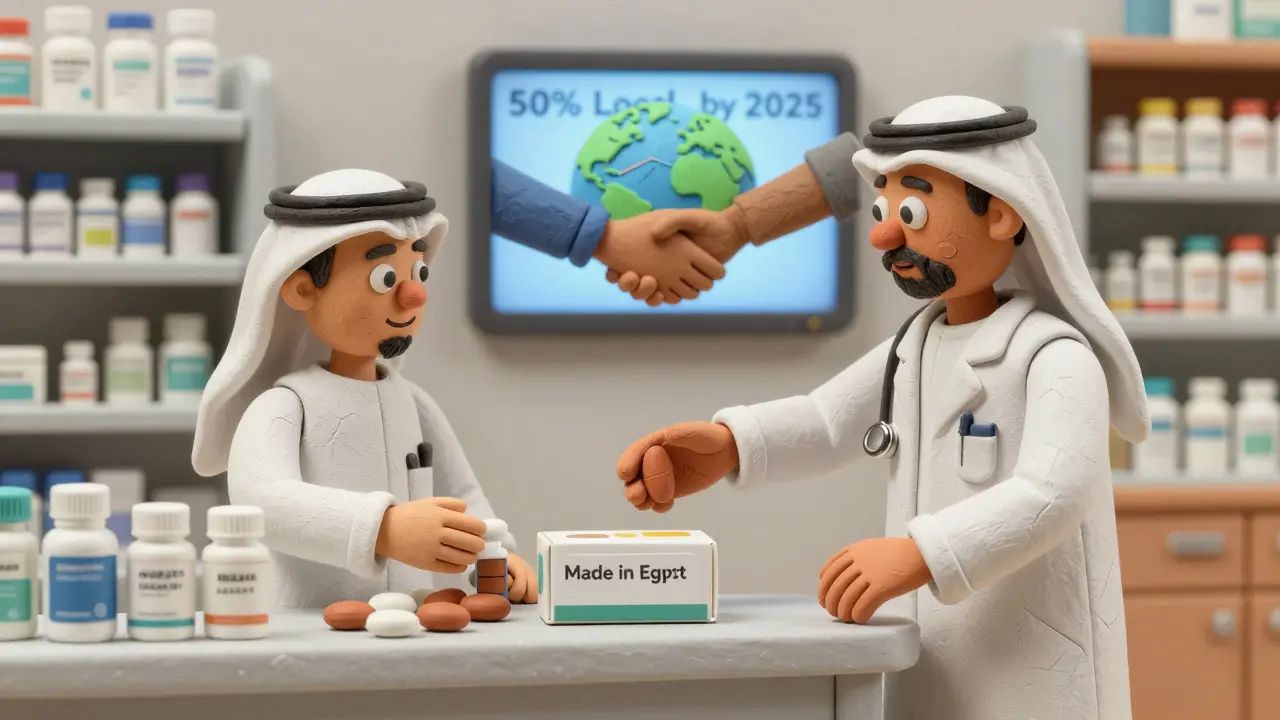
That’s why countries like Saudi Arabia and Egypt are pushing for local production. Saudi Arabia’s Vision 2030 includes building domestic generic manufacturing. Egypt now requires 50% of essential medicines to be made locally by 2025. These aren’t just economic moves-they’re security moves.

Regulatory Chaos and the Push for Harmonization
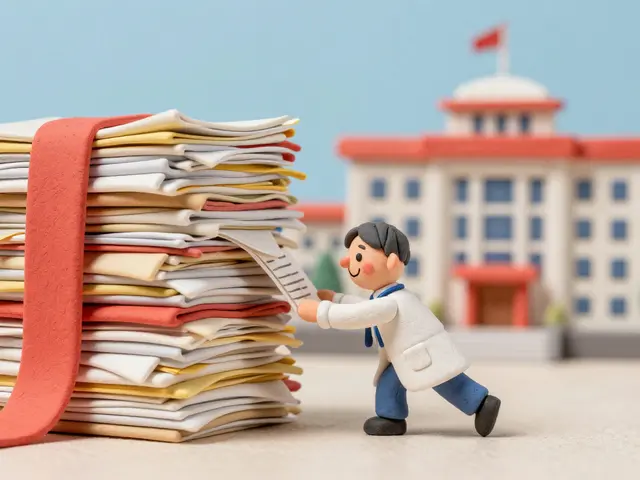
There are 78 different regulatory systems for drugs around the world. That’s a nightmare for manufacturers trying to sell globally. Getting approval in the U.S. doesn’t mean you can sell in Brazil or South Africa. Each has its own rules, paperwork, testing requirements.But things are changing. The International Council for Harmonisation (ICH) is bringing more countries into alignment. In 2024 alone, 15 new countries joined ICH guidelines. That means less duplication, faster approvals, lower costs. For small generic companies, this is a lifeline. For big ones, it’s a chance to scale.
The Profit Problem: Margins Are Squeezed
It used to be easy to make money on generics. In 2020, average profit margins were around 18%. By 2024, they’d dropped to 12%. Why? Too many players. Too much competition. Too many drugs hitting the market at once.When three or four companies start making the same generic, prices plunge. One company wins the contract. The others lose money. This is called “race-to-the-bottom” pricing. It’s why big generic firms are buying up smaller ones. It’s why companies like Teva, Sandoz, and Sun Pharma are shifting focus-from volume to value. They’re investing in biosimilars, complex injectables, and even drug delivery systems like patches or inhalers.
Where Growth Is Still Strong: Pharmerging Markets
While the U.S. and Europe grow slowly (2-5% per year), the real action is in pharmerging markets: India, China, Brazil, Turkey, Russia, and parts of Africa and the Middle East. These markets are growing at nearly 10% a year. Why? More people getting health insurance. More government spending on public health. More chronic diseases.In 2024, chronic illnesses affected 41% of the global population. Diabetes. Heart disease. Cancer. These aren’t one-time treatments. They’re lifelong. And they’re expensive. Generics make them manageable. In India, the government’s Production Linked Incentive (PLI) scheme gave $1.34 billion to local drugmakers in 2024 to boost domestic production. China’s “Healthy China 2030” plan has similar goals.
By 2025, these markets are expected to add $140 billion in drug spending. That’s more than the entire pharmaceutical market of Canada or Australia.
The Dark Side: Supply Chain Risks and Quality Control
You can’t talk about the future of generics without talking about supply chains. APIs don’t just appear. They’re made in factories, shipped across oceans, mixed into pills, then shipped again. Each step adds risk.Over 40% of FDA warning letters in 2023 were about foreign facilities failing to meet quality standards. Some were using unapproved chemicals. Others had dirty equipment. One facility in India was found to be reusing solvent from previous batches. That’s not just sloppy-it’s dangerous.
And then there’s the China factor. If China cuts exports for political or economic reasons, the world feels it. In 2020, during the pandemic, some antibiotics and vitamins disappeared from shelves in Europe and the U.S. because their APIs came from China. That’s not a hypothetical risk. It’s already happened.
What’s Next? The Strategic Shift
The old model-make cheap pills, sell them in bulk-is fading. The winners in the next decade will be those who:- Move into biosimilars and complex generics
- Build local manufacturing in high-growth regions
- Partner with governments and insurers to offer bundled services
- Invest in quality control systems that meet global standards
Some companies are even starting to offer “generic-as-a-service”-helping clinics and hospitals manage inventory, reduce waste, and track usage. It’s not just about selling pills anymore. It’s about solving healthcare system problems.
Will Generics Still Dominate in 2030?
The market share of generics in global drug sales is projected to drop from 57.6% in 2024 to around 53% by 2030. That sounds like a decline. But here’s the twist: total drug spending is expected to hit $1.7 trillion by then. So even if generics hold a smaller slice, the actual dollar value they represent will be bigger than ever.Generics won’t disappear. They’ll just change. The simple, low-margin pills will keep being made-but the high-value, high-complexity ones will drive growth. The future belongs to those who can navigate regulation, manage supply chains, and deliver quality at scale.
For patients, that’s good news. For governments, it’s a necessity. For the industry? It’s a challenge they’re already rising to meet.
Are generic drugs as safe as branded ones?
Yes, when they’re made under proper regulations. Generic drugs must contain the same active ingredient, strength, dosage form, and route of administration as the brand-name version. They’re required to meet the same quality and safety standards set by agencies like the FDA and EMA. The only difference is the inactive ingredients and packaging. However, quality issues can arise from poorly regulated manufacturers, which is why inspections and supply chain transparency matter.
Why are biosimilars more expensive to develop than regular generics?
Biosimilars are made from living cells, not chemicals. This makes them structurally complex and sensitive to production conditions. A small change in temperature, pH, or equipment can alter the final product. That means manufacturers must replicate the original biologic with extreme precision-requiring years of testing, advanced labs, and massive investments. Regular generics are simple chemical copies, so they’re far easier and cheaper to produce.
Which countries produce the most generic drugs?
India and China are the top two producers. India manufactures over 60,000 generic medicines and supplies 20% of the world’s volume by quantity. China produces about 40% of the world’s active pharmaceutical ingredients (APIs) and is a major source of finished generics. Together, they account for roughly 35% of global manufacturing capacity. Other growing producers include Brazil, South Korea, and countries in the Middle East like Saudi Arabia.
How do generics help reduce healthcare costs?
Generics typically cost 80-85% less than brand-name drugs. In the U.S., they save patients and insurers over $300 billion annually. In countries with high chronic disease rates-like diabetes or hypertension-generics make long-term treatment affordable. Without them, many patients would skip doses or go without medication. Governments use generics to stretch limited healthcare budgets, especially in low- and middle-income countries.
Is the generic drug market becoming more concentrated?
Yes. As margins shrink and competition intensifies, smaller manufacturers are being bought out or pushed out. The top five generic companies now control nearly half the global market. This consolidation helps companies invest in biosimilars and complex products, but it also reduces competition in some segments, which can slow price declines. Regulators are watching this trend closely.


Neela Sharma
Generics are the unsung heroes of global health
One pill. One life saved. No fanfare. No stock market hype
India doesn’t make drugs for profit-it makes them because someone, somewhere, can’t afford to die
When I was a kid, my mother swallowed generics like prayers-no brand, no buzz, just survival
Now the world’s waking up to what we always knew: affordability isn’t charity-it’s justice
Lori Jackson
Let’s be clear-this ‘generic revolution’ is just regulatory arbitrage dressed up as public health
Manufacturing in jurisdictions with lax GMP oversight is not innovation-it’s exploitation masquerading as accessibility
The FDA’s 187 warning letters aren’t noise-they’re a screaming red flag
And don’t even get me started on biosimilars-half of them are pharmacologically indistinguishable from placebo-grade nonsense
Until we enforce global harmonization with teeth, this is just a pyramid scheme with syringes
Wren Hamley
Okay but-why does everyone act like biosimilars are this new frontier? They’ve been around since 2006 in Europe
The real story is the supply chain fragility
China controls 65% of APIs? That’s not a market-it’s a geopolitical vulnerability
And nobody’s talking about how the race-to-the-bottom pricing is killing R&D in small generic houses
Meanwhile, the big players are buying up IP and patenting delivery systems like patches and inhalers
It’s not generics anymore-it’s pharma oligopoly with a cheaper label
Sarah Little
Have you considered the psychological impact of prescribing generics? Patients often perceive them as inferior-even when they’re bioequivalent
That stigma leads to non-adherence
And non-adherence leads to hospitalizations
Which leads to higher costs
It’s a self-fulfilling prophecy
We need branded-style marketing for generics-just without the price tag
innocent massawe
From Nigeria to India-we know the pain
Generics are the only thing between us and silence
When the medicine runs out, the silence comes
So we wait. We hope. We pray
And someone, somewhere, ships another batch
Thank you for writing this
It’s not just data-it’s breath
🙂
veronica guillen giles
Oh wow, a 12% profit margin? How tragic
Maybe if you stopped outsourcing to factories that reuse solvents from last Tuesday’s batch, you wouldn’t need to cry into your quarterly report
Also, biosimilars are expensive? Shocking.
Maybe if you didn’t spend $200M on R&D and $150M on lobbying, you’d have more cash to actually make medicine
Just a thought
Ian Ring
It’s fascinating-how the same supply chain that delivers insulin to a child in Nairobi, also delivers antibiotics to a grandmother in Detroit
And yet, we treat it like a commodity chain, not a lifeline
Regulatory fragmentation? Yes. But also: moral fragmentation
We need global standards-not because it’s efficient, but because it’s ethical
And yes, I’m aware that I’m using too many hyphens-this is my way of screaming into the void
erica yabut
India and China producing 35% of generics? That’s not a market-it’s a cartel with a manufacturing license
And don’t pretend the quality is fine-half the FDA warnings are from places that still use open-air drying trays for APIs
Meanwhile, Western regulators pretend they’re ‘harmonizing’ while their own labs are understaffed and underfunded
It’s a house of cards built on the backs of the poor
And you call this progress?
Tru Vista
Generics are just cheap copies. End of story.