
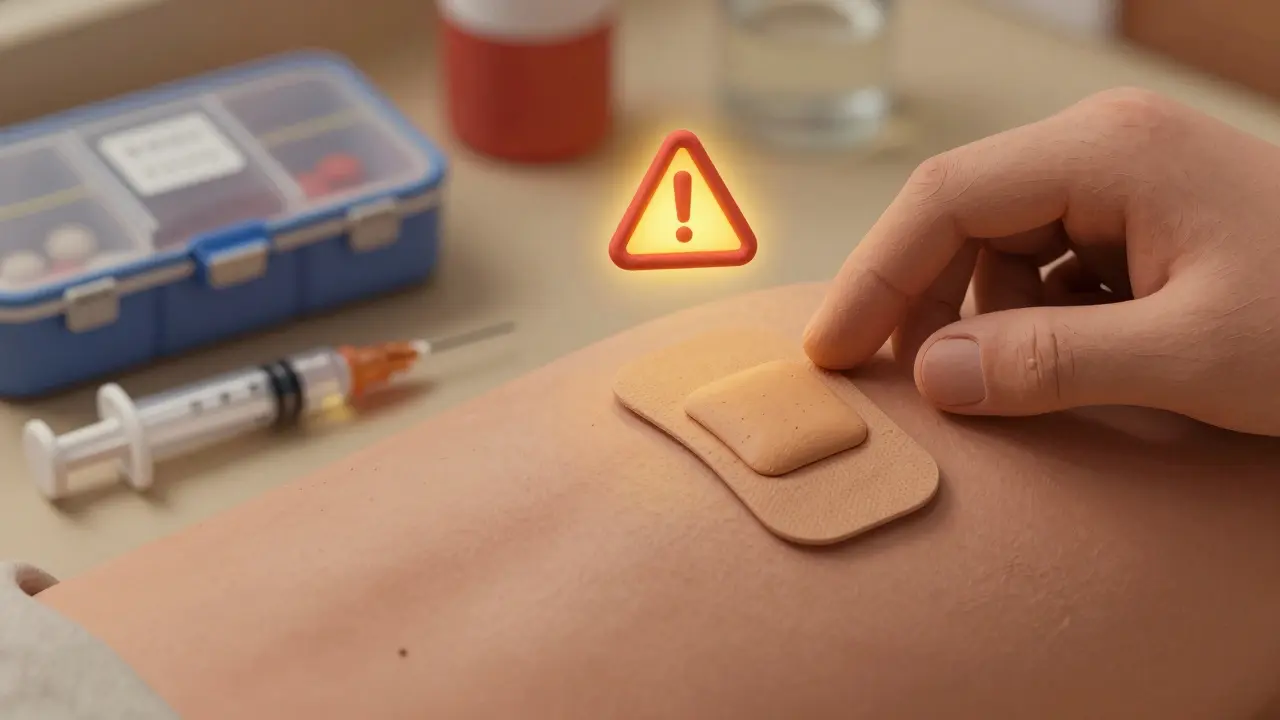
Overdose deaths involving prescription medications are rising, and many of them happen because people don’t understand how patch, liquid, and extended-release medications work. These forms aren’t like regular pills you swallow and forget about. They’re designed to deliver drugs slowly-sometimes over days. But if you misuse them, even once, it can kill you.
Why These Medications Are Riskier Than They Look
Fentanyl patches, liquid morphine, and OxyContin aren’t just different shapes-they’re different beasts. A fentanyl patch can release enough opioid to stop breathing over 72 hours. If you cut it open, heat it up, or stick it on a hot skin area, you’re not just getting more pain relief-you’re getting a lethal dose all at once. Liquid pain meds are easy to mismeasure. A teaspoon instead of a milliliter? That’s a 5x overdose. Extended-release tablets are made to be swallowed whole. Crush them? You’re injecting the entire day’s dose into your system in seconds.These aren’t hypothetical risks. In 2023, over 1,200 overdose deaths in the U.S. were tied to transdermal fentanyl patches being tampered with. Another 800 involved liquid opioids where the wrong measuring tool was used. And nearly 1,500 deaths came from people crushing extended-release pills to get high-or to relieve pain faster.
How to Use Patches Safely
Fentanyl patches are prescribed for chronic pain, not occasional aches. If you’re given one, follow these rules:- Never cut, chew, or puncture the patch. Even a small tear can release the entire dose in minutes.
- Don’t apply heat. Hot tubs, heating pads, or even sitting in the sun can speed up drug absorption.
- Store patches out of reach of kids and pets. A single used patch still contains enough fentanyl to kill a child.
- Dispose of used patches properly. Fold the sticky side together, flush it down the toilet (if instructed), or take it to a drug take-back site. Never throw it in the trash where someone else might find it.
- If you miss a dose, don’t double up. Call your doctor. Missing a patch doesn’t mean you need more-it means your body is adjusting.
Getting Liquid Medications Right
Liquid opioids like morphine, oxycodone syrup, or cough meds with codeine are dangerous because they’re easy to mess up. Most people don’t realize that a household teaspoon holds 5 mL, but many prescriptions require 1 mL or 2 mL. That’s why you need the right tool.- Always use the syringe, dropper, or cup that came with the medicine. Never use kitchen spoons.
- Double-check the concentration. Some liquids are 5 mg per mL, others are 10 mg per mL. Mixing them up can kill you.
- Keep liquids locked up. Kids and pets can drink them like juice. In 2022, over 300 ER visits in the U.S. were from children who accidentally swallowed opioid liquids.
- Don’t mix with alcohol or benzodiazepines. Even a single beer with liquid morphine can shut down your breathing.
- If you’re giving it to someone else-like an elderly parent-write down the dose, time, and amount. Use a medication log. Memory fails. Doses don’t.
Extended-Release Pills: Never Crush, Never Chew
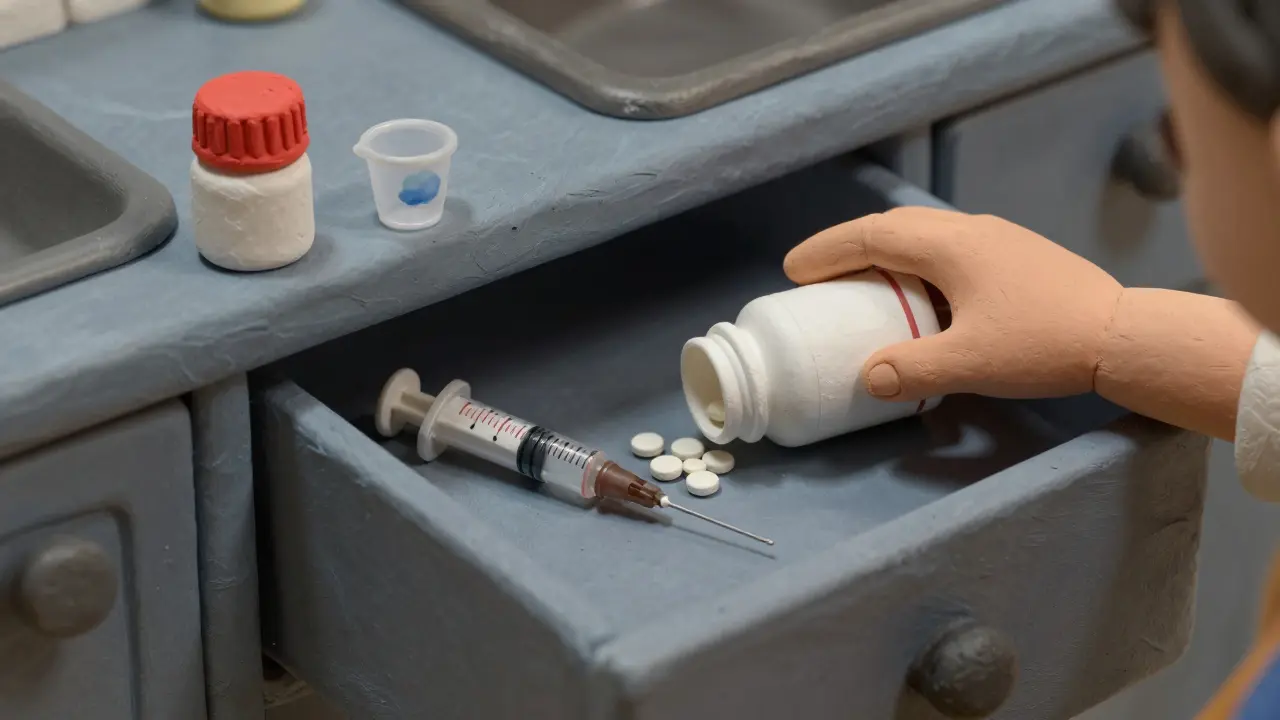
Extended-release tablets are built with special coatings or matrices that control how fast the drug enters your bloodstream. When you crush, snort, or chew them, you bypass that system entirely.- Swallow whole. Always. No exceptions.
- If you can’t swallow pills, talk to your doctor. There are liquid or patch alternatives. Don’t try to crush them.
- Don’t take more than prescribed. Even if your pain feels worse, the pill is still releasing drug over 12-24 hours. Taking another early means you’re doubling up.
- Be extra careful when switching from immediate-release to extended-release. The total daily dose isn’t the same. Your doctor should recalculate it.
- Store these like you would firearms. Locked cabinet. No sharing. No borrowing.
Naloxone Is Not Optional
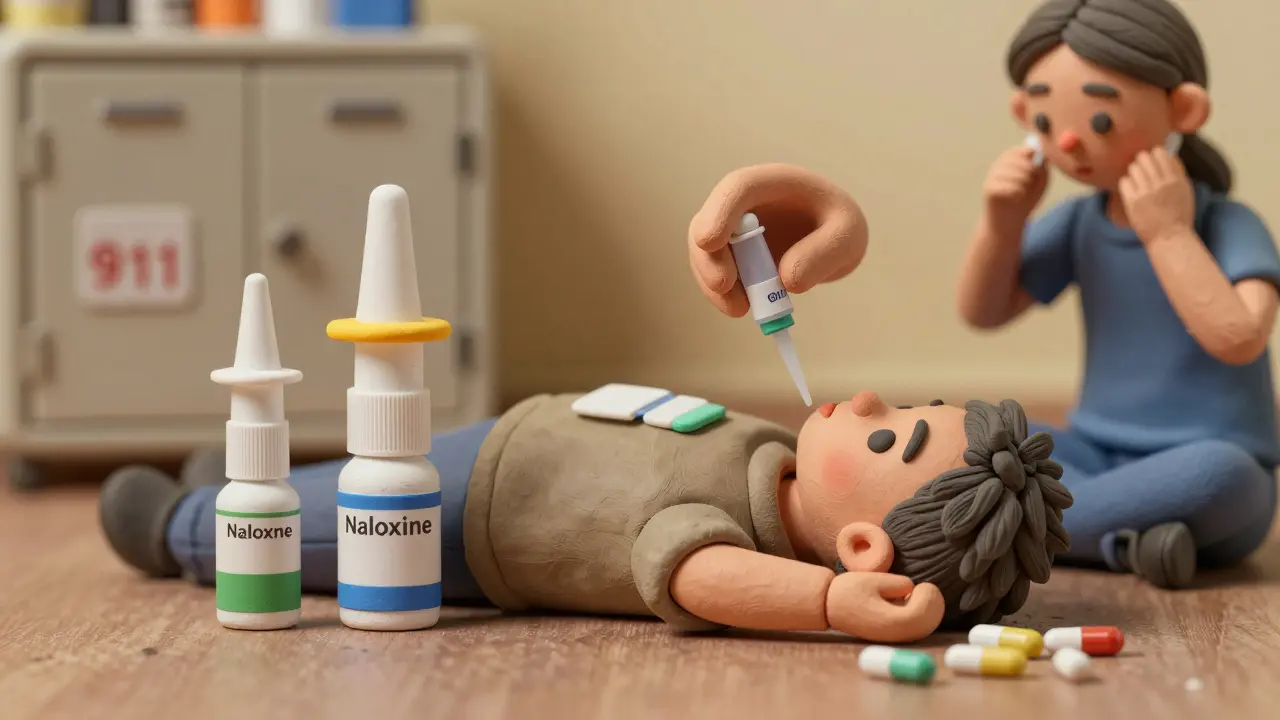
If you or someone you know uses any of these medications, you need naloxone. Not “maybe.” Not “just in case.” You need it now.Naloxone (Narcan, Kloxxado) reverses opioid overdoses. It’s safe, easy to use, and works on fentanyl, morphine, oxycodone-any opioid. But here’s the catch: for extended-release meds, one dose isn’t enough.
- Keep at least two naloxone kits on hand. Extended-release opioids can keep releasing for hours after the first dose wears off.
- Train everyone in your household. Kids, partners, roommates-even neighbors. Naloxone doesn’t care who uses it. It saves lives.
- Know the signs: slow or stopped breathing, blue lips, unresponsiveness. Don’t wait for a full collapse.
- Call 911 after giving naloxone. The drug wears off in 30-90 minutes. The opioid might not.
- Don’t be afraid to use it. Even if you’re not sure it’s an overdose, give it. It won’t hurt someone who doesn’t need it.
What to Do If Someone Overdoses
If someone stops breathing or goes limp:- Shout their name. Shake their shoulder. If they don’t respond, call 911 immediately.
- Give naloxone. Spray one dose into each nostril, or inject into the thigh.
- Start rescue breathing if they’re not breathing. Tilt head back, pinch nose, give one breath every 5 seconds.
- Wait 3-5 minutes. If no response, give a second dose of naloxone.
- Stay with them until help arrives. Even if they wake up, they can slip back under.
Under the 911 Good Samaritan Law in most states, you won’t get arrested for calling for help during an overdose. That law exists because people die alone, scared, and silent. Don’t be silent.
Storage and Disposal Matter More Than You Think
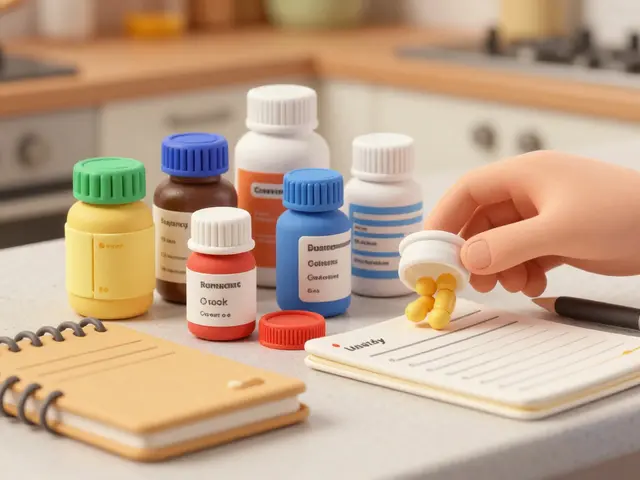
A patch stuck to the inside of a drawer. A bottle of liquid syrup left on the counter. A pill bottle in a teenager’s backpack. These aren’t accidents-they’re ticking time bombs.- Store all opioids in a locked box. Use a pill safe if you have one.
- Keep patches in their original foil packaging until use.
- For liquids, use child-resistant caps and lock them away after each use.
- Don’t flush patches unless the label says to. Take unused meds to a pharmacy drop box. Most pharmacies offer free disposal.
- When you’re done with a medication, destroy the bottle. Remove labels. Shred it. Identity theft isn’t the only risk-someone else might use your leftover pain meds.
When to Talk to Your Doctor
If any of these sound familiar, you need to talk to your doctor:- You’re taking more than prescribed because the pain isn’t going away.
- You’re feeling drowsy, dizzy, or confused even when you take it right.
- You’ve run out of medication early and need a refill.
- You’ve ever crushed, chewed, or cut a pill or patch.
- You’re using alcohol, sleeping pills, or anxiety meds along with your opioid.
These aren’t signs of weakness. They’re signs that your treatment needs adjusting. Your doctor can switch you to a safer alternative, reduce your dose, or connect you with a pain specialist or addiction counselor.
Can you overdose on a fentanyl patch just by wearing it normally?
Yes, if you’re not used to opioids, even a standard patch can cause an overdose. That’s why doctors start with the lowest dose and only prescribe them to patients who’ve already been on opioids. Never use someone else’s patch. Never use one if you’ve never taken opioids before.
Is naloxone effective against extended-release opioids?
Yes, but it might not last long enough. Extended-release opioids keep releasing into your system for hours. Naloxone wears off in 30-90 minutes. That’s why you need two doses ready and why you must stay with the person until paramedics arrive. They may need more naloxone or IV treatment.
Can I use a regular kitchen spoon to measure liquid medicine?
Never. A kitchen teaspoon holds about 5 mL. Most liquid opioids are dosed in 1 mL or 2 mL. Using a spoon can mean giving 5x the intended dose. Always use the measuring tool that came with the bottle.
What if I accidentally cut open a fentanyl patch?
Remove the patch immediately. Wash your skin with water-don’t use soap or alcohol, which can increase absorption. Call poison control at 1-800-222-1222 or go to the ER. Even a small amount of fentanyl from a patch can be deadly.
Are there safer alternatives to extended-release opioids?
Yes. For chronic pain, non-opioid options like gabapentin, physical therapy, or nerve blocks often work better with fewer risks. If you need opioids, immediate-release versions taken at scheduled times are safer than extended-release. Talk to your doctor about alternatives.

Randolph Rickman
Man, I wish my grandma had read this before she started using that fentanyl patch after her hip surgery. She didn’t know a used patch could still kill a dog-and she left it on the nightstand. We found her unconscious. Naloxone saved her, but it took three doses. This post? Pure lifesaver. Share it with everyone you know.
Also-never use a kitchen spoon. I’ve seen people do it. Like, why? You wouldn’t use a coffee mug to measure insulin, right?
SHAMSHEER SHAIKH
Dear friends, I write this with utmost sincerity, and with a heart full of compassion: the wisdom contained herein is not merely informative-it is, in the truest sense, a lifeline cast into the stormy sea of ignorance.
Let us not forget: a single teaspoon, misused, is a silent assassin. A patch, tampered with, becomes a time-bomb in slow motion. And yet-how many of us remain unaware? Let this be the moment we choose awareness over apathy.
I urge you, dear reader, to print this, laminate it, and place it beside the medicine cabinet. Teach your children. Warn your neighbors. Let no life be lost to a simple misunderstanding.
With profound respect, and unwavering hope,
-Shamsheer
Dan Padgett
Man, I used to think pills were pills. Like, you swallow ‘em, you feel better, boom. But this? This hits different.
My cousin crushed OxyContin once ‘cause he said the pain was ‘too slow.’ He didn’t die-but he ended up in the psych ward for three months. Said he felt like his bones were melting. That’s not pain. That’s your body screaming.
And yeah, naloxone? I keep two kits in my glovebox now. My sister’s on methadone. I ain’t risking it. If you ain’t got it, you ain’t serious.
Also-don’t flush patches unless the label says so. I read that part twice. Weird, but important.
Arun ana
Thanks for this 💙
My mom’s on extended-release pain meds and I just learned she’s been using a kitchen spoon. I’m grabbing the right syringe tomorrow. Also, I’m locking up the meds tonight. No more ‘it’s just on the counter’ vibes.
And yes-I’ve got naloxone. Two kits. Just in case. 😊
Kayleigh Campbell
So let me get this straight-you’re telling me a patch that’s supposed to last 72 hours can kill you if you sit in the sun? And people still think this is ‘just medicine’?
Meanwhile, my cousin’s kid found a fentanyl patch in the trash, stuck it on his arm, and passed out for 12 hours. He’s fine now. The patch was from a neighbor’s trash. Yeah. That’s a thing.
Also, ‘don’t use a kitchen spoon’? Bro, that’s like saying ‘don’t drink bleach.’ Why is this even a conversation?
Kim Hines
I’m a nurse. I’ve seen three overdoses from liquid morphine in the last year. All because someone used a regular spoon. All preventable.
Always use the tool. Always lock it up. Always have naloxone.
That’s it.
Cassandra Collins
Okay but… who the hell designed these patches to be so easy to tamper with? I mean, is this a secret government plot to control the population? Why not make them heat-resistant? Why not make the liquid come in pre-filled syringes with child locks? Why not just ban all opioids?
And why do they say ‘flush if instructed’? Who writes these instructions? Are they on the payroll of Big Pharma? I’m not flushing my dad’s patch into my toilet. That’s just gross.
Also-Naloxone? I heard it’s made from bat guano. Is that true? Someone tell me the truth.
Joanna Ebizie
People are so dumb. You don’t cut a patch. You don’t use a spoon. You don’t crush pills. It’s not rocket science. If you’re dumb enough to do this, you shouldn’t be on opioids. Period.
And if you’re asking ‘is naloxone safe?’-yes, idiot. It’s not magic. It’s a drug that reverses opioids. You’re not gonna wake up with wings. You’re gonna wake up alive.
Stop being lazy. Read the damn label.
Elizabeth Bauman
As an American, I’m proud of how much we’ve advanced in harm reduction. Naloxone? Available over the counter. Public education? On the rise. But we still have people using kitchen spoons? In 2024?
Let’s be clear: this isn’t just about medication. It’s about responsibility. And if you can’t handle that, maybe you shouldn’t be taking anything stronger than Tylenol.
Also-lock your meds. Don’t be the reason your neighbor’s kid dies. That’s not patriotism. That’s just being a decent human.
Dylan Smith
I’ve been on extended-release oxycodone for 8 years and I’ve never crushed one. But I didn’t know you needed TWO naloxone kits. I only had one. I’m getting another today.
Also-my sister’s doctor switched her from ER to IR because she kept running out early. Turns out she was taking an extra pill because she thought ‘it wasn’t working.’ Turns out it was working fine. She just got scared.
So yeah. Talk to your doctor. Don’t guess. Don’t wing it. This isn’t a game.
Also-why is everyone so scared to say ‘addiction’? It’s a word. It’s real. We need to stop pretending it’s a moral failure.
Mike Smith
To the person who wrote this: thank you. With profound gratitude, I say this-you have done the work that many in our medical community have avoided. You have translated complex pharmacology into human terms. You have not shamed. You have not lectured. You have equipped.
Let me add this: if you are reading this and you are currently taking any of these medications, know that your life matters. Your pain is valid. But your safety is non-negotiable.
Store your medications as if they were loaded firearms. Because in truth-they are.
And if you have naloxone? Keep it in your wallet. In your purse. In your car. In your child’s backpack. Because the person who needs it may not be able to ask for it.
Be the reason someone lives to see tomorrow.
With respect and urgency,
-Mike
Randolph Rickman
Mike Smith just said everything I was thinking but didn’t have the words for. Thank you.
And to the person who said ‘is naloxone made from bat guano’? No. But if it was, I’d still use it. I’d lick it off a bat if it saved my sister.
Also-I’m printing this and putting it on the fridge. Right next to the fire escape plan.