

When you’re struggling to breathe, the last thing you want is to waste time figuring out how to use your medicine. That’s why so many people ask: nebulizers vs inhalers - which one actually works better? The answer isn’t simple. It depends on who you are, how old you are, how sick you are, and even where you are when you need relief.
How Nebulizers Work - And When They’re Essential
A nebulizer looks like a small machine with a tube, a cup of liquid medicine, and a mask or mouthpiece. You turn it on, and it turns the medicine into a fine mist you breathe in over 5 to 15 minutes. It’s slow. But it’s also forgiving. You don’t need to time your breath. You don’t need to press a button and inhale at the same moment. That’s why it’s the go-to for babies, toddlers, elderly people with shaky hands, or anyone in the middle of a bad asthma attack who can’t coordinate anything. Hospitals use them because they’re reliable when patients are too weak or panicked to use anything else. The downside? You’re stuck in one place. Nebulizers need electricity. They take up space. And they’re messy. If you don’t clean the cup and mask every day, mold can grow - and inhaling mold spores can make your lungs worse, not better. A 2023 CDC report warns that improper cleaning is one of the most common reasons nebulizer treatments fail.How Inhalers Work - And Why Most People Use Them Wrong
An inhaler is a small canister you hold in your hand. You press it down, and a puff of medicine shoots into your mouth. Sounds simple, right? It’s not. Most people - up to 80% of adults - use their inhalers incorrectly. They press the button too early. Too late. Or they don’t breathe in deep enough. That means up to 80% of the medicine sticks to the back of your throat instead of reaching your lungs. That’s not just wasted medicine - it’s wasted money. And it increases your risk of oral thrush, hoarseness, and other side effects. But here’s the game-changer: use a spacer. A spacer is a plastic tube with a chamber that holds the puff after you press the inhaler. You breathe in slowly from the spacer. No timing needed. No coordination. It turns a tricky device into something almost anyone can use - even a 4-year-old. Studies show that with a spacer, lung delivery jumps from 10-20% to 70-80%. That’s the same as a nebulizer - but in 2 minutes instead of 15.What the Science Says: Are Nebulizers Really More Effective?
If you ask patients, most say yes - nebulizers feel more powerful. You can see the mist. You can hear the machine. It feels like something’s happening. But the science says something else. A major 2022 study published in PubMed tracked nearly 1,000 people with asthma or COPD during emergency visits. Those who used MDIs with spacers improved faster. Their peak airflow increased more. They spent less time in the ER. They needed less total medication. And they were less likely to come back within two weeks. Even though nebulizers delivered 2.5 to 3 times more medication, patients didn’t get better faster. The extra medicine just sat in their throats or got swallowed. The Global Initiative for Asthma (GINA) 2022 guidelines are clear: for most people - adults and kids over 5 - inhalers with spacers are just as effective as nebulizers, and they’re the better first choice.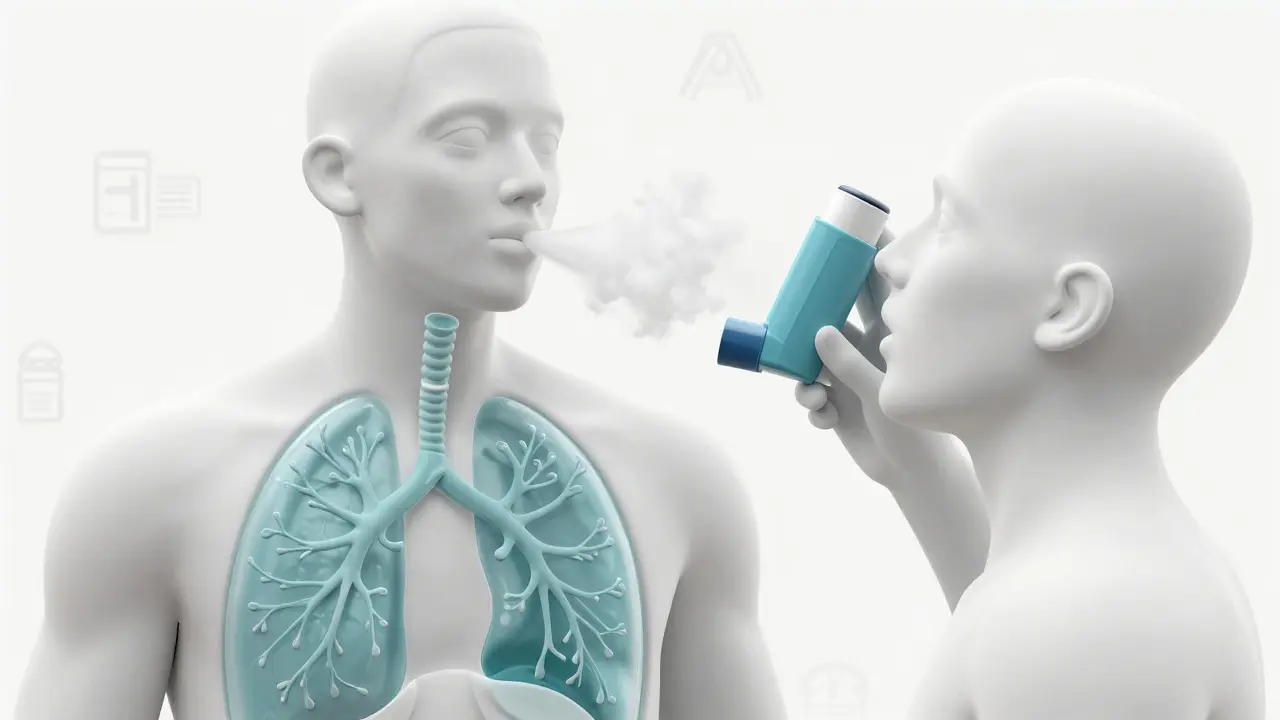
Who Should Use a Nebulizer?
You don’t need to ditch your nebulizer if it works for you. But you should know when it’s truly necessary.- Children under 5 - Most can’t coordinate an inhaler, even with a spacer. Nebulizers are easier.
- People with severe weakness - Stroke survivors, advanced COPD, or those on oxygen often can’t generate enough breath to use an inhaler effectively.
- During acute attacks - If you’re gasping for air and can’t inhale deeply, a nebulizer gives you a steady stream of medicine without effort.
- Those who can’t afford or access spacers - In some areas, spacers aren’t widely available or covered by insurance.
Who Should Switch to an Inhaler with Spacer?
If you’re an adult with asthma or COPD and you’re still using a nebulizer at home for daily treatment - it’s time to reconsider.- You’re always at home. You can’t travel with it.
- You’re spending 15 minutes every time you need your rescue inhaler.
- You’ve had oral thrush or hoarseness after using your inhaler.
- You’ve been told your technique is poor - but you don’t know how to fix it.
Cost, Convenience, and Real-Life Trade-Offs
A basic nebulizer system costs $100 to $200. Replacement cups and masks add $20-$40 a year. Electricity adds a few cents per use. An MDI costs $30-$50. A spacer costs $10-$20. One-time purchase. No electricity. No cleaning beyond wiping the spacer with a damp cloth. For someone who uses their inhaler twice a day, that’s $150 a year for a nebulizer. $50 for an inhaler and spacer. And the inhaler gives you faster relief, anywhere - at work, on the bus, at school. Nurses in the same 2022 study said they preferred MDIs with spacers because they’re faster to set up and easier to manage in busy clinics. But 49% still thought nebulizers were more effective - even though the data didn’t support it. Perception matters. But outcomes matter more.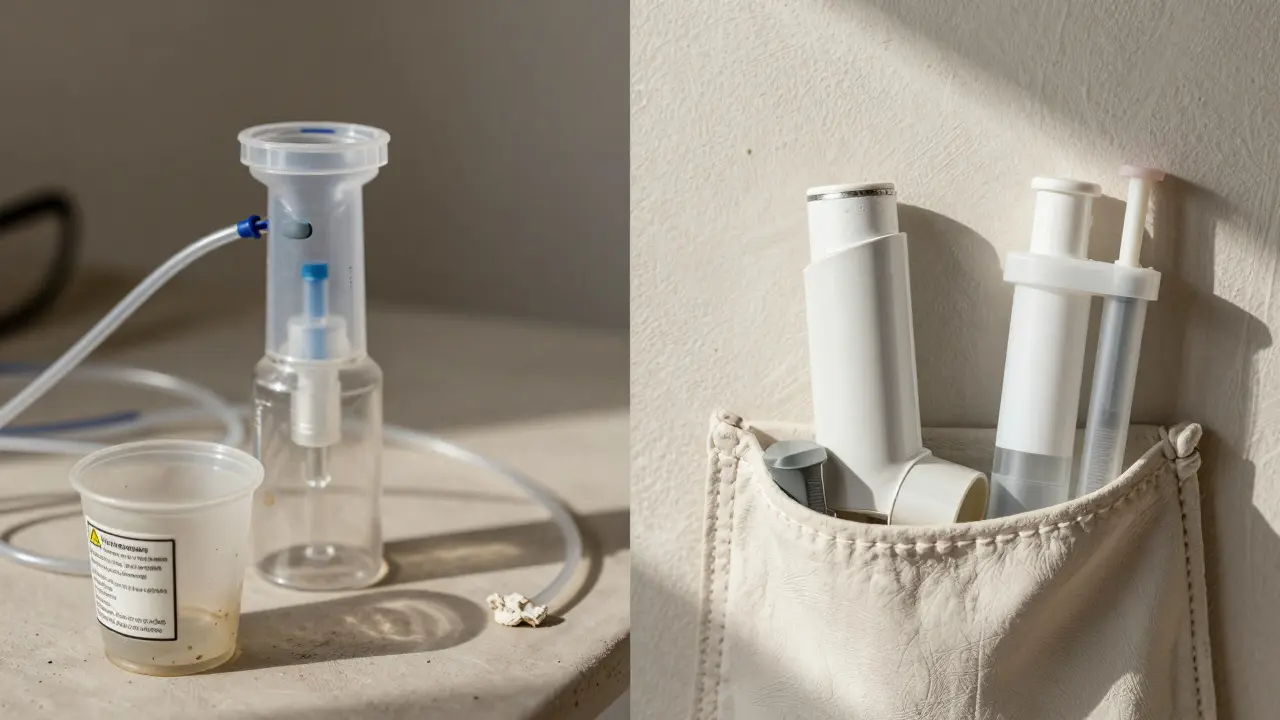
What About Dry Powder Inhalers?
You might hear about dry powder inhalers (DPIs) - like Advair Diskus or Symbicort Turbuhaler. These don’t need a spacer. You breathe in hard and fast. No puff to time. They’re great for adults who can take a strong, quick breath. But most children under 6 can’t generate enough airflow. And during an asthma attack, when you’re gasping, DPIs often don’t work well. They’re not a replacement for nebulizers or MDIs with spacers - they’re a third option, best for stable patients who can master the technique.What’s the Future?
Smart inhalers are coming. Devices like Propeller Health attach to your inhaler and track when you use it. They send reminders to your phone. One 2022 study showed users cut their rescue inhaler use by 58% just by getting feedback. Nebulizers are getting smarter too - breath-actuated models now waste less medicine. But they’re still bulky. Still slow. Still prone to infection if not cleaned. The trend is clear: technology is making inhalers more reliable, more trackable, and more affordable. Nebulizers are becoming the backup - not the default.Final Decision: What Should You Do?
If you’re a parent of a young child: stick with the nebulizer. It’s the easiest way to get medicine into their lungs. If you’re an adult with asthma or COPD: try switching to an MDI with spacer. Ask your doctor for a free demo. Practice in front of a mirror. Watch a video. Get a spacer if you don’t have one. If you’re in the middle of a bad attack: use what works fastest. That might be the nebulizer. But after the attack? Revisit your plan. The goal isn’t to use the fanciest device. It’s to get the right amount of medicine into your lungs - safely, reliably, and quickly. For most people, that’s an inhaler with a spacer. Don’t assume nebulizers are better because they feel stronger. The science doesn’t lie. And your lungs don’t care how loud the machine is - they only care if the medicine gets there.Are nebulizers better than inhalers for asthma attacks?
No - for most people, an inhaler with a spacer works just as well during an asthma attack, and often faster. Studies show patients using inhalers with spacers recover quicker, spend less time in the ER, and need less total medication. Nebulizers are only better if you can’t coordinate your breathing - like with very young children or during severe distress.
Can I use a nebulizer and inhaler together?
Yes - but only if your doctor recommends it. Some people use a nebulizer for daily maintenance and an inhaler with spacer for quick relief. Others use a nebulizer only during flare-ups. Never combine them without medical advice, because you could end up taking too much medication.
Why do doctors still prescribe nebulizers if inhalers are better?
Because they’re easier for some people. Doctors prescribe nebulizers for infants, elderly patients with tremors, or those with severe COPD who can’t inhale deeply. It’s not about what’s best in theory - it’s about what works for the person in front of them. But for the majority, inhalers with spacers are the smarter long-term choice.
How do I clean my nebulizer properly?
After every use, rinse the cup and mouthpiece with warm water and mild soap. Let them air dry. Once a week, soak them in a 1:3 solution of white vinegar and water for 30 minutes, then rinse and dry. Never share your nebulizer parts - mold and bacteria can grow fast, and inhaling them can cause serious lung infections.
Do I need a spacer with my inhaler?
If you’re using a metered-dose inhaler (MDI), yes - especially if you’re an adult or have asthma. Spacers boost lung delivery from 10-20% to 70-80%, cut side effects like oral thrush, and make the medicine work faster. They’re cheap, reusable, and easy to use. If you don’t have one, ask your doctor or pharmacist for a free sample.
Can children use inhalers with spacers?
Absolutely. In fact, most pediatricians recommend spacers for kids over age 1. A mask attaches to the spacer for babies and toddlers. Even a 2-year-old can use one effectively. It’s safer and more reliable than a nebulizer for daily use - and much more portable.



Andy Heinlein
Just switched to an inhaler with a spacer last month and my lungs have never felt better honestly no more throat gunk and i can take it to work now
Paul Ong
Spacers are the real MVPs nobody talks about
Used to hate them thought they were for kids now i carry one everywhere
Layla Anna
My grandma still uses her nebulizer every morning and i get why
She cant hold the inhaler steady and the machine just does the work for her
But she cleans it like a priest cleans a church so no mold ever
Love that she still gets her breathing back without stress
Donna Peplinskie
I live in Canada and we get free spacers from the pharmacy if you ask
Why doesn't this happen everywhere
It's not like they cost much and they save so much medicine
Someone's making money off people using nebulizers when they don't need to
Olukayode Oguntulu
Let us not forget the epistemological underpinnings of respiratory governance
The nebulizer represents a biopolitical apparatus of care that commodifies vulnerability
Whereas the spacer is a neoliberal artifact of individualized responsibility
One is institutionalized dependency the other is performative compliance
And yet the data remains stubbornly indifferent to our ideological frameworks
Stephen Gikuma
Big Pharma pushed spacers because they make more money off inhalers
They know if you use a spacer you need less medicine
They don't want you to know this
They want you hooked on nebulizers so you keep buying more
Bobby Collins
Wait so you're saying the hospital gave me a nebulizer because they don't want me to use the cheap one
They want me to be dependent
That's why my cousin got a spacer for free but i had to pay for mine
They're lying to us
Richard Thomas
It's interesting how perception overrides evidence in medical practice
We equate sensation with efficacy - the whirring machine feels like it's doing more because it's louder and more visible
But the lung doesn't care about noise or mist or the ritual of waiting
It only cares about molecular delivery
And yet we cling to the spectacle because it eases anxiety
Even when the science says the quiet device works better
We need to reframe not just treatment but our relationship with illness
It's not about what feels powerful
It's about what actually works without drama
Bill Medley
While the empirical evidence strongly supports the use of metered-dose inhalers with spacers in most clinical contexts, it is imperative to acknowledge the heterogeneity of patient populations. Individualized care remains the cornerstone of respiratory medicine. A one-size-fits-all approach, however statistically optimal, may inadvertently compromise adherence or safety in vulnerable subgroups. Therefore, clinical decision-making must remain nuanced and patient-centered.
Dusty Weeks
My doctor gave me a spacer but i lost it
Now i just use my inhaler like normal and i'm fine
Also i think nebulizers are for wimps 😎
Heather Josey
I work in a clinic and we've switched almost everyone to inhalers with spacers - and the results speak for themselves. Fewer ER visits, fewer side effects, and patients report feeling more in control. The biggest barrier isn't effectiveness - it's education. Many patients have never been shown how to use a spacer properly. A quick five-minute demo makes all the difference. Let's stop assuming people know how to use their tools and start teaching them with patience and clarity.
gerard najera
Spacers work.
Nebulizers are theater.
Choose science.