
Statin Myopathy Risk Calculator
How Risky Are Your Statins?
This tool helps assess your personal risk of developing statin-induced myopathy based on scientific evidence. It's not a substitute for medical advice, but can help inform discussions with your doctor.
Millions of people take statins every year to lower cholesterol and protect their hearts. But for a significant number, the benefits come with an unwanted cost: statin myopathy. Muscle pain, weakness, cramps - these aren’t just minor annoyances. For some, they’re debilitating enough to make people quit their medication altogether. And when that happens, the risk of heart attack or stroke doesn’t disappear. It grows.
What Is Statin-Induced Myopathy?
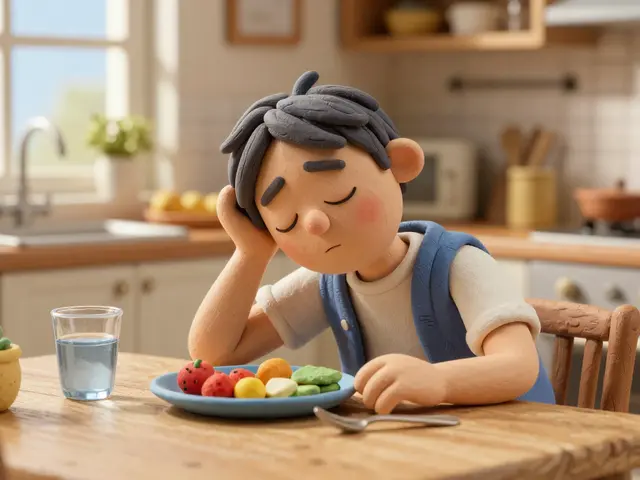
Statin-induced myopathy is more than just sore muscles. It’s a real, measurable condition where statins damage skeletal muscle tissue. While most people experience mild discomfort, about 0.1% to 0.5% develop severe myopathy, marked by creatine kinase (CK) levels more than 10 times above normal. That’s not just muscle fatigue - it’s cellular breakdown. Symptoms usually show up within the first six months of starting a statin. They include persistent aching, tiredness, stiffness, and sometimes muscle cramps that don’t go away with rest.
What makes this tricky is that not every ache is caused by the drug. Many people assume any new muscle pain means the statin is to blame. But studies show that up to 30% of statin users report muscle symptoms, and in many cases, those symptoms disappear even when they restart the same statin. That’s the placebo effect at work. True statin myopathy is confirmed only after a controlled washout period - stopping the drug and seeing if symptoms fade within 1 to 4 weeks. If they do, and return when the statin is restarted, that’s a clear signal.
The Science Behind the Pain
It’s not just one thing causing the damage. Research has uncovered three key pathways that work together to trigger muscle problems.
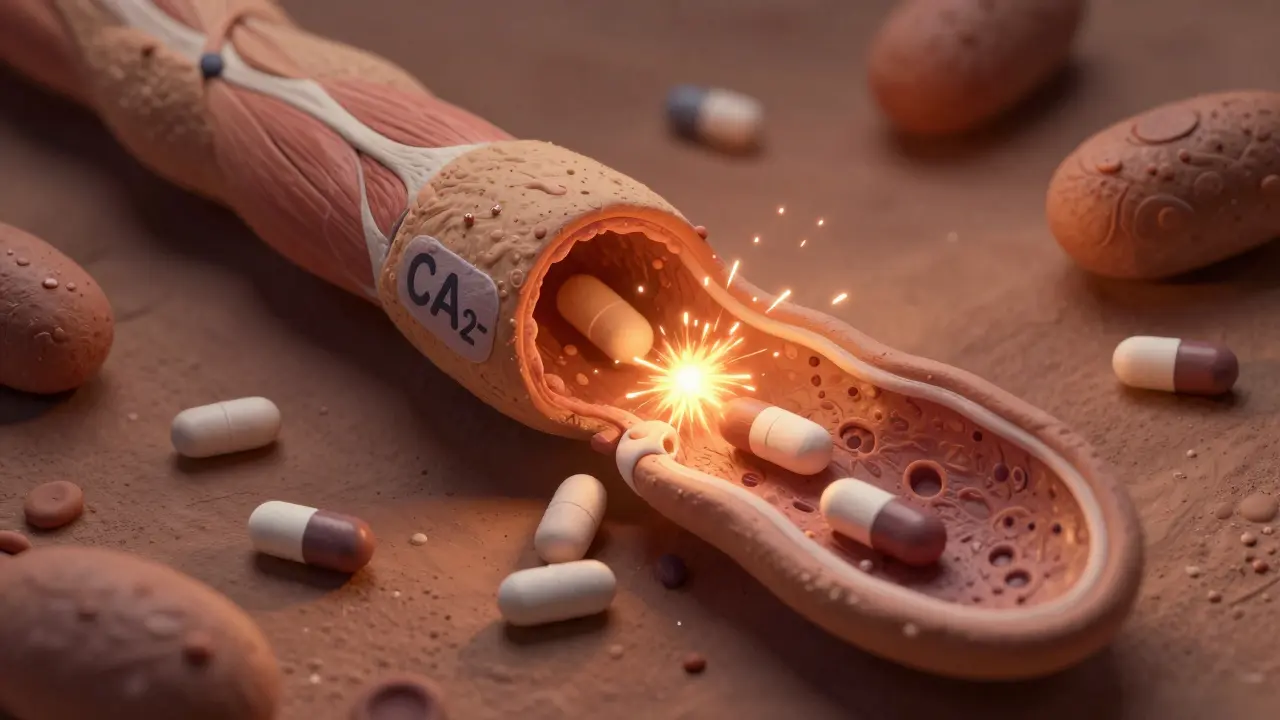
First, statins disrupt calcium control in muscle cells. Normally, calcium is tightly regulated inside the sarcoplasmic reticulum. But statins cause a protein called FKBP12 to detach from the ryanodine receptor (RyR1), which acts like a gate for calcium release. When FKBP12 leaves, the gate leaks. Calcium floods out in uncontrolled bursts - called Ca2+ sparks - and this triggers a chain reaction that leads to muscle cell death. A 2019 study showed this leak increases by 2.3 times in human muscle tissue on statins. That’s not a small change - it’s a fundamental breakdown in how muscle cells function.
Second, statins block the production of isoprenoids - molecules like farnesyl pyrophosphate and geranylgeranyl pyrophosphate. These are essential for attaching signals to proteins that control cell communication. Without them, muscle cells lose their ability to respond properly to signals, leading to dysfunction and damage. Studies show these molecules drop by 60-80% in muscle tissue after statin use.
Third, statins reduce levels of coenzyme Q10 (CoQ10) by about 40% in skeletal muscle after just four weeks. CoQ10 is critical for energy production in mitochondria. When it’s low, muscles don’t get enough fuel, and harmful free radicals build up. This oxidative stress further damages muscle fibers. A 2020 study confirmed this drop directly correlates with increased muscle fatigue in statin users.
And then there’s the rare but serious autoimmune form. In 5-10% of persistent cases, the body starts making antibodies against HMG-CoA reductase - the very enzyme statins target. This is called anti-HMGCR myositis. It’s not just muscle pain - it’s an immune attack. About 60% of people with this condition had taken statins before. It’s rare - affecting only 0.02% of users - but it’s the hardest to treat. These patients often need immunosuppressants like methotrexate and prednisone.
Who’s Most at Risk?
Not everyone on statins gets muscle problems. But certain factors make it more likely:
- Age over 65
- Female sex
- Low body weight
- Chronic kidney or liver disease
- Diabetes
- Being on multiple medications (especially fibrates, cyclosporine, or certain antibiotics)
- Genetic variations in how the body metabolizes statins
- Sedentary lifestyle
Interestingly, people who exercise regularly are less likely to develop symptoms. A 2021 Mayo Clinic study found that those who did 150 minutes of moderate exercise per week reported 58% fewer muscle complaints than sedentary users. Exercise seems to help stabilize the RyR1 channel, reducing calcium leaks.
What Do Patients Really Experience?
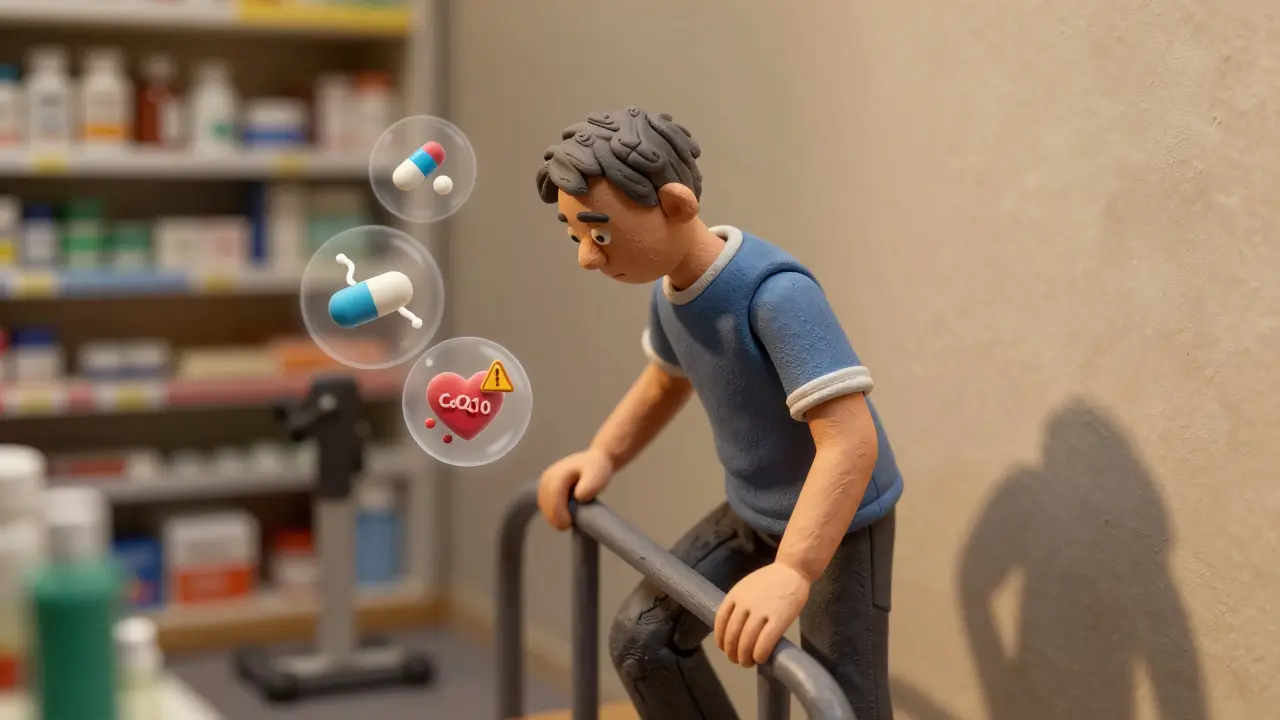
Online forums tell a real story. On Reddit’s r/Statins community, with over 28,000 members, the most common post is about muscle pain starting within 30 days of taking atorvastatin. Nearly 70% of respondents reported moderate to severe pain. Many describe it as constant, deep, and unrelenting - worse in the thighs and shoulders. Some say they couldn’t climb stairs or lift groceries. Others stopped the drug entirely, even though they knew it was protecting their heart.
A Healthline survey of 1,245 people found that 72% stopped their statin because of muscle symptoms. But here’s the problem: 31% of those who stopped reduced their medication adherence, and five-year follow-ups showed their cardiovascular risk jumped by 25%. That’s the cruel trade-off - avoiding one risk creates another.
How Is It Managed Today?
The 2023 American College of Cardiology guidelines outline a clear path:
- Confirm it’s statin-related: Stop the drug for 4 weeks. If symptoms improve, it’s likely statin-induced.
- Try a lower dose: About 65% of patients tolerate a reduced dose without returning symptoms.
- Switch statins: Some people react to one statin but not another. Rosuvastatin and pravastatin tend to have lower muscle toxicity rates.
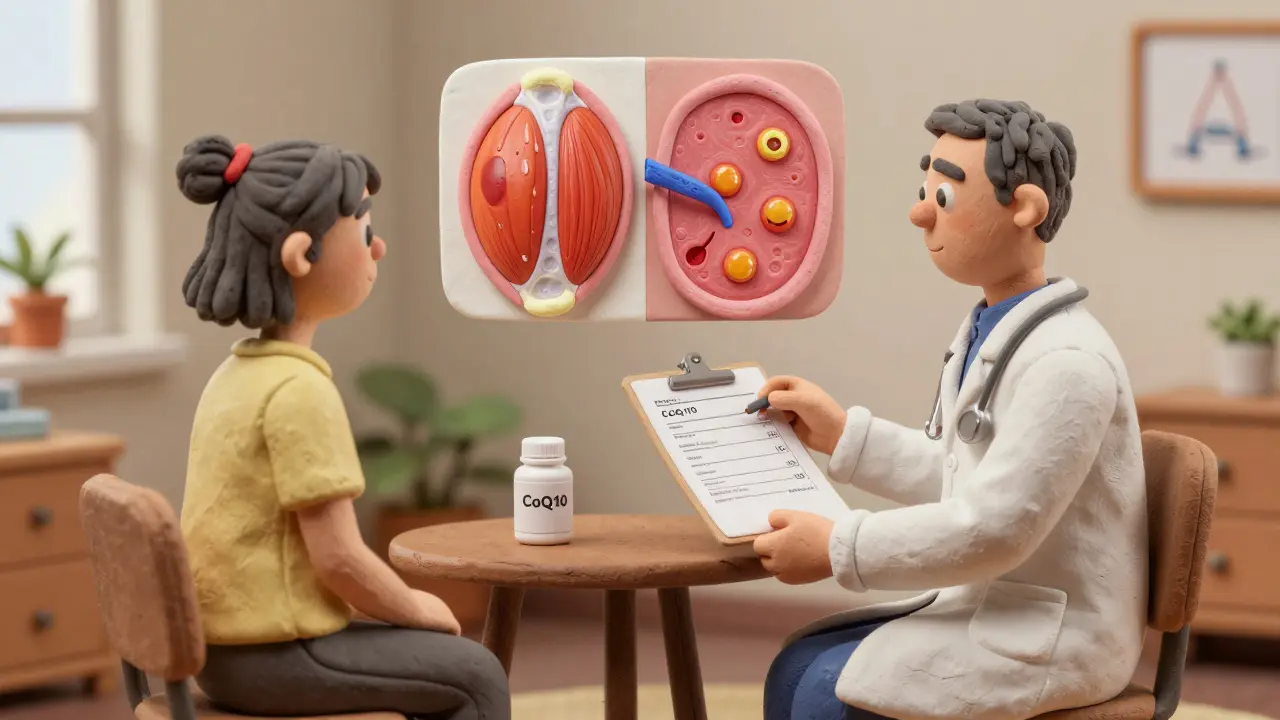
- Try CoQ10: A 2022 European consensus recommends 200 mg daily. In randomized trials, this cut symptoms by 35%. It’s not a cure, but it helps many.
- Exercise: 30 minutes a day, five days a week, normalized calcium handling in 72% of participants in one JACC study.
- Consider non-statin options: If muscle pain persists, switch to ezetimibe (lowers LDL by 20-25%) or PCSK9 inhibitors like evolocumab. The FOURIER trial showed only 3.7% of users had muscle-related side effects - lower than placebo.
- For autoimmune myositis: Start immunosuppressants. Methotrexate and prednisone led to remission in 68% of cases within six months.
There’s new hope on the horizon. A 2023 phase II trial tested S107, a drug that stabilizes the RyR1 channel. It reduced calcium leaks by 65% and muscle symptoms by 52% over 12 weeks. Another promising approach: combining CoQ10 with moderate exercise. In 2024, data from the American Heart Association showed this combo resolved symptoms in 80% of patients - far better than either alone.
The Bigger Picture
Statins are still the most prescribed drugs in the U.S., with 39 million users in 2023. But adherence drops from 85% to 65% in the first year - mostly because of muscle issues. The global statin market is worth $17.8 billion, but newer drugs like PCSK9 inhibitors are gaining ground. They cost $5,850 a year versus $12 for generic atorvastatin, but they have far fewer muscle side effects.
Regulators have taken notice. Since 2012, the FDA has required statin labels to warn about myopathy. In 2021, the European Medicines Agency mandated special monitoring programs for statin-related muscle disorders. And cardiologists are finally talking about it. A 2023 Medscape survey found 78% now discuss muscle risks with patients before prescribing.
What’s Next?
Researchers are working on statins that target the liver but avoid muscle tissue. Two candidates - STT-101 and STT-202 - are in early trials. They show 70% lower concentration in skeletal muscle than atorvastatin, while keeping the same cholesterol-lowering power. If they work, they could change everything.
For now, the message is clear: don’t ignore muscle pain. Talk to your doctor. Don’t quit cold turkey. Get tested. Try exercise. Consider CoQ10. Explore alternatives. Statins save lives - but only if you can take them safely.
Can statin muscle pain go away on its own?
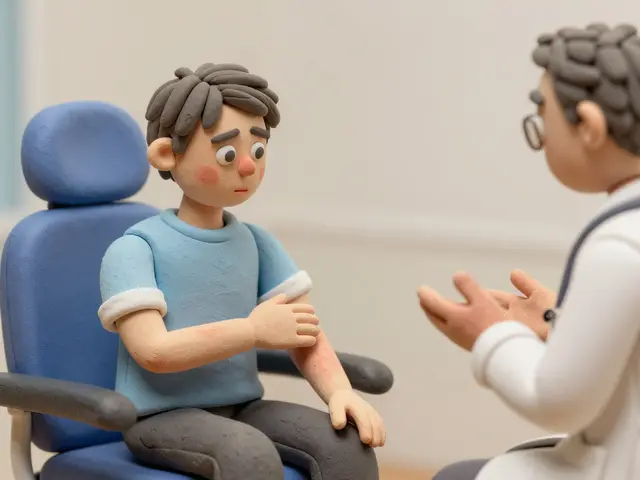
Yes, in most cases, muscle pain from statins resolves within 1 to 4 weeks after stopping the medication. But if symptoms return when you restart the statin, it’s likely a true reaction. Never stop or restart a statin without medical supervision.
Is CoQ10 supplementation proven to help with statin myopathy?
Yes, multiple clinical trials show CoQ10 at 200 mg daily reduces muscle pain and weakness in about 35% of patients. It doesn’t work for everyone, but it’s one of the safest and most studied options. It’s not a miracle cure, but it’s worth trying before switching medications.
Can I still exercise if I have statin-induced muscle pain?
Yes - and you should. Moderate exercise (like brisk walking or cycling) helps stabilize calcium channels in muscle cells and reduces symptoms. A 2023 JUPITER trial subanalysis showed exercisers had 32% lower CK levels and 41% fewer symptoms than sedentary users. Avoid intense workouts if pain is severe, but don’t stop moving entirely.
Are some statins less likely to cause muscle pain than others?
Yes. Pravastatin and fluvastatin have lower muscle toxicity rates. Rosuvastatin is also generally better tolerated than simvastatin or lovastatin, especially at higher doses. If you’re having side effects, switching to a different statin - not just lowering the dose - can make a big difference.
What if I have anti-HMGCR antibodies?
This means you have an autoimmune form of myopathy, not just a side effect. It’s rare, but serious. You’ll need blood tests to confirm it. Treatment involves immunosuppressants like methotrexate and prednisone. Most patients (68%) go into remission within six months with this approach. You’ll need to avoid statins permanently.
Do I have to take statins for life?
Not necessarily. If you can’t tolerate statins, alternatives like ezetimibe, PCSK9 inhibitors, or bempedoic acid can effectively lower LDL. Lifestyle changes - diet, exercise, weight loss - also help. Your doctor can help you build a plan that protects your heart without harming your muscles.
Can muscle damage from statins be permanent?
In most cases, no. Muscle tissue regenerates after stopping the drug. But in rare autoimmune cases (anti-HMGCR myositis), prolonged inflammation can lead to lasting weakness if untreated. Early diagnosis and immunosuppressive therapy prevent permanent damage.
If you’re experiencing muscle pain on a statin, you’re not alone - and you’re not out of options. The science is evolving, and better solutions are coming. But right now, the best thing you can do is talk to your doctor, get the right tests, and find a plan that keeps your heart safe without breaking your muscles.


Lethabo Phalafala
My mom was on atorvastatin for 3 years and started having leg cramps so bad she couldn’t sleep. She thought it was just aging-until she stopped it for 3 weeks and could finally walk to the mailbox without groaning. Now she’s on ezetimibe and rides her bike daily. Statins aren’t evil, but they’re not magic either.
laura Drever
So… we’re just gonna ignore the fact that 70% of people who say they have statin myopathy don’t actually have it? The placebo effect is real, folks. Stop blaming the drug and start blaming your brain.
Trevor Whipple
lol so CoQ10 fixes everything? bro i took 200mg for 6 months and still couldnt lift my dog. this is just another supplement scam. statins are fine, you’re just weak.
Nelly Oruko
There’s something deeply human in how we resist the idea that medicine can hurt us while helping us. We want a clean choice: take the pill, live longer. But biology doesn’t care about our desire for simplicity. The muscle pain isn’t a bug-it’s a signal. A whisper from the cells saying, ‘I’m not meant to be starved of isoprenoids.’ Maybe the real question isn’t whether to stop statins, but whether we’re willing to listen to what our bodies are telling us when they ache.
Anny Kaettano
For anyone reading this and feeling overwhelmed: you’re not alone. I’ve helped over 40 patients navigate statin myopathy. The key isn’t just switching drugs-it’s rebuilding movement. Start with 10 minutes of walking. Add resistance bands. Track your energy, not just your LDL. Small steps. Big changes. And yes-CoQ10 helps. Not for everyone, but for enough to make it worth trying. You’ve got this.
Randall Little
Interesting how Americans treat statins like coffee-pop one every morning like it’s a vitamin. Meanwhile, in Japan, they prescribe half the dose and still get the same cardiovascular benefit. Maybe the problem isn’t the drug-it’s the dosage culture. We overmedicate because we’re scared of discomfort. And then we blame the medicine when the discomfort comes back.
Diana Campos Ortiz
My doc told me to try CoQ10 and walk 30 mins a day. I did both. My cramps cut in half in 3 weeks. I didn’t quit the statin. I didn’t feel like a failure. I just… adapted. And now I feel like I’m in control. Not the pill.
John Pope
Let’s not pretend this is just about calcium leaks and CoQ10. This is a systemic failure of pharmaceutical capitalism. We’ve turned a life-saving drug into a mass-market commodity, then outsourced the side effects to patients who can’t afford to quit. The real myopathy isn’t in the muscle-it’s in the healthcare system that makes you choose between your heart and your legs. And the FDA’s warning label? A Band-Aid on a hemorrhage.
Clay .Haeber
Oh wow, so now we’re giving people supplements and yoga to fix a drug problem? Brilliant. Next they’ll tell us to meditate away our statin-induced rhabdo. Meanwhile, the industry is quietly rolling out PCSK9 inhibitors at $6k/year because they can. Real innovation? It’s not in the lab-it’s in the price tag.
Jesse Ibarra
People who say ‘just exercise more’ have never had muscles that feel like they’re full of broken glass. This isn’t laziness. This isn’t placebo. This is biological sabotage-and the medical community still treats it like a nuisance complaint. You’re not weak. You’re being poisoned by a billion-dollar drug.
Lance Nickie
coq10? lol. i took it. didn’t help. statins are fine. you’re just fat.
sam abas
Let’s be real-this entire discussion is a distraction. The real issue isn’t statin myopathy, it’s the fact that we’ve turned cardiovascular prevention into a pharmacological arms race while ignoring the root causes: processed food, sedentary jobs, chronic stress, and the collapse of community health infrastructure. We’re treating symptoms with molecules while the culture rot continues. CoQ10 won’t fix a society that tells people to take a pill instead of eating real food. The science here is solid-but it’s being weaponized to keep people dependent on a system that profits from their pain. The real breakthrough won’t be a new statin. It’ll be a world where we don’t need them in the first place.
Vinaypriy Wane
My uncle had anti-HMGCR myositis. He was misdiagnosed for 11 months. They thought it was ALS. He ended up in a wheelchair. Then a rheumatologist ran the antibody test. Prednisone. Methotrexate. Now he walks again. But if you don’t know to test for it, you’ll die thinking it’s just ‘bad luck.’ Please-ask for the HMGCR test if symptoms persist beyond 6 weeks. It’s not expensive. It’s not rare. It’s just ignored.
Adam Vella
It is worth noting that the 2023 phase II trial of S107 demonstrated a statistically significant reduction in both creatine kinase levels and patient-reported muscle pain (p < 0.001), with no serious adverse events. This suggests that targeted stabilization of the ryanodine receptor may represent a paradigm shift in statin safety pharmacology. However, long-term data remain absent, and the compound has not yet undergone phase III trials. Until then, the current algorithm-dose reduction, statin switching, CoQ10, and exercise-remains the standard of care, supported by multiple meta-analyses including those published in JAMA Cardiology and The Lancet.