
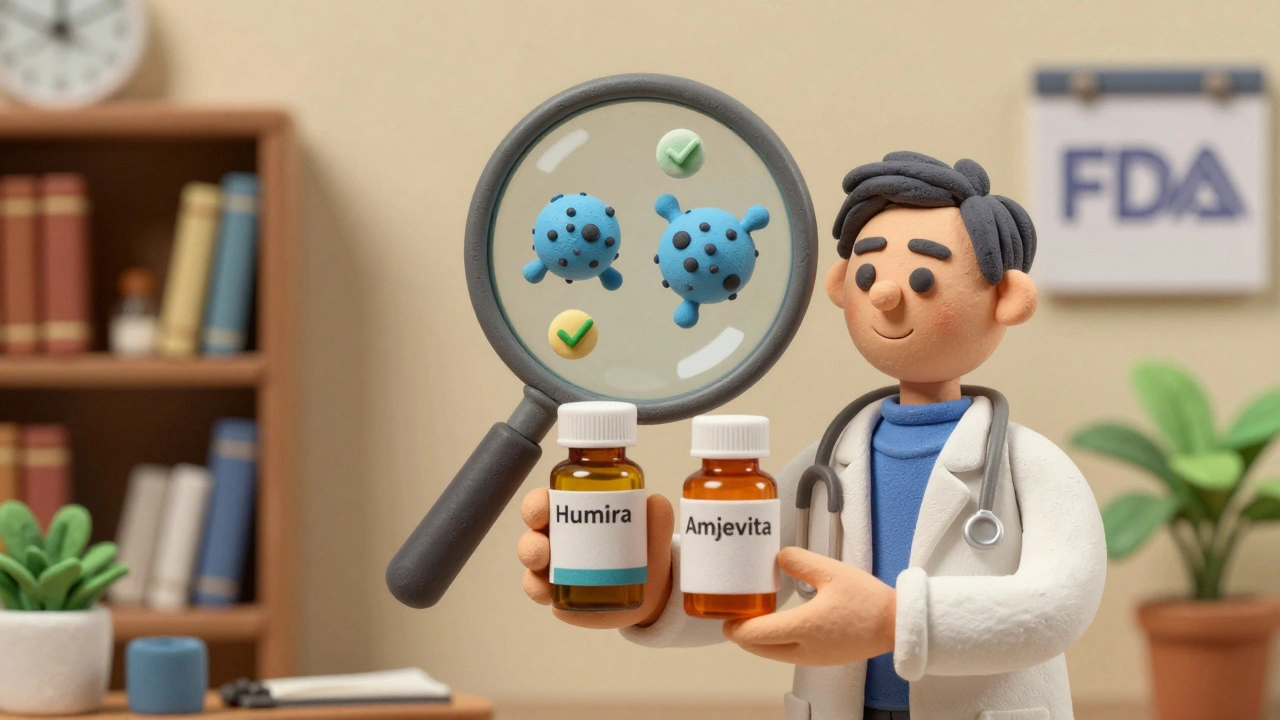
When your doctor talks about a new medicine for your arthritis, diabetes, or cancer, you might hear the word biosimilar. It sounds complicated - and it is, in a way. But you don’t need to be a scientist to understand what it means for you. Here’s the simple truth: a biosimilar is a version of a powerful biologic drug that works just like the original, but usually costs less.
What’s the difference between a biosimilar and a generic pill?
Most people know generics. They’re the cheaper versions of common pills like ibuprofen or metformin. These are made from simple chemicals, and every generic is exactly the same as the brand-name version. You can swap them back and forth without any change in how they work. Biosimilars are different. They’re not copies in the same way. Why? Because biologic drugs aren’t made in a lab with chemicals. They’re made from living cells - human or animal cells grown in special conditions. These drugs are huge, complex molecules, like tiny machines made of proteins. Think of them as a detailed sculpture, not a simple key. Because they come from living systems, no two batches of a biologic drug are ever exactly the same. Even the original maker can’t produce an identical copy every time. That’s why a biosimilar isn’t called a “copy.” It’s called “highly similar.” And that’s enough. The FDA requires every biosimilar to go through more than 100 tests. They check the shape, size, and behavior of the molecule. They test how it works in the body. They compare side effects. They even look at how long it lasts in your system. If there’s any meaningful difference - anything that could affect safety or how well it works - it doesn’t get approved.How do you know if you’re getting a biosimilar?
You’ll see a different name on the label. The original biologic might be called Humira (adalimumab). The biosimilar version? It could be Amjevita (adalimumab-atto). Notice the four extra letters at the end? That’s not random. It’s a code the FDA uses to track which exact product you’re using, even if it’s made by a different company. Your doctor or pharmacist will tell you if you’re switching to a biosimilar. But if you’re not sure, always ask. Don’t assume. Some insurance plans now push for biosimilars because they’re cheaper. That doesn’t mean they’re less safe - it just means they’re more affordable.Are biosimilars safe? What do experts say?
Yes, they’re safe. The FDA doesn’t approve them lightly. Every biosimilar must prove it works just as well as the original in real patients. For example, the biosimilar Renflexis for rheumatoid arthritis was tested in 541 people. The results? No difference in how well it worked or how many side effects people had. In Europe, biosimilars have been used for over 15 years. Millions of patients have taken them. No new or unexpected safety problems have shown up. In the U.S., since the first one - Zarxio - was approved in 2015, thousands of patients have used biosimilars for cancer, autoimmune diseases, and diabetes. The data keeps showing the same thing: they work like the originals. The American Cancer Society, the Arthritis Foundation, and the FDA all agree: if a biosimilar is approved, it’s as safe and effective as the brand-name drug. There’s no hidden risk.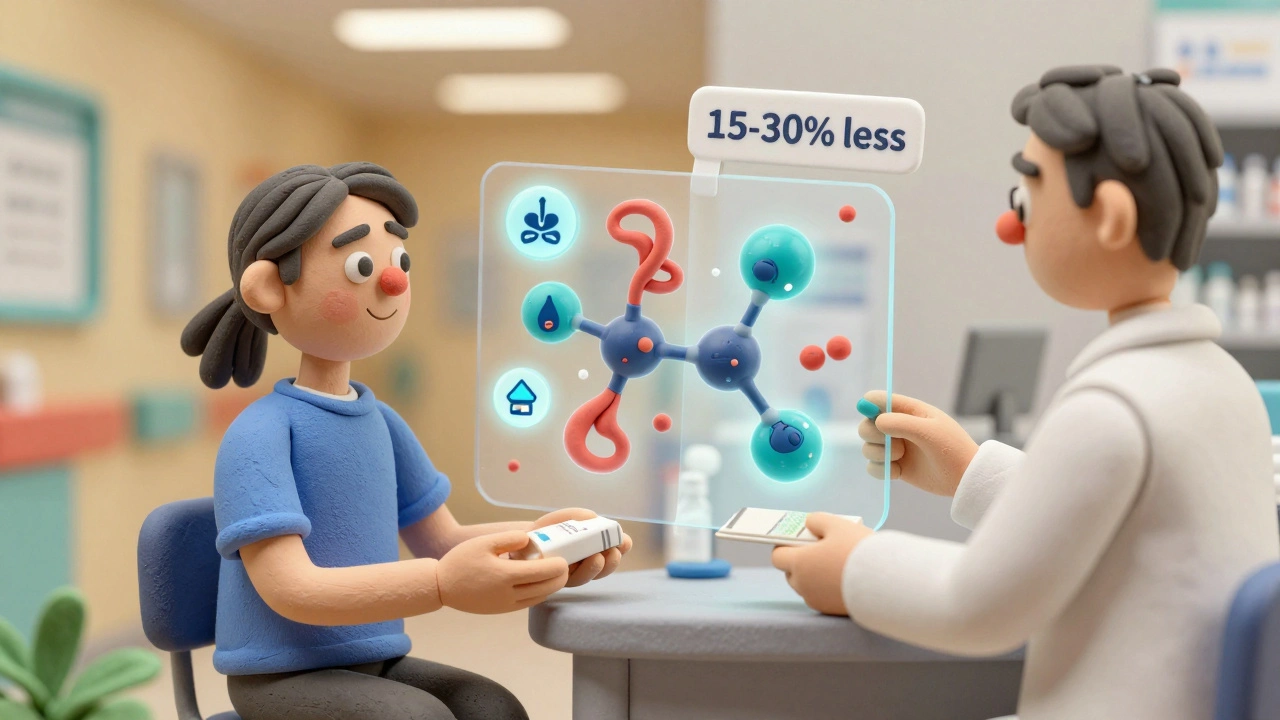
What conditions are treated with biosimilars?
Biosimilars aren’t for every illness. They’re used for serious, long-term conditions where biologics are the best treatment. That includes:- Rheumatoid arthritis and other autoimmune diseases (like Crohn’s disease or psoriasis)
- Certain types of cancer (such as breast cancer, colon cancer, and lymphoma)
- Diabetes (biosimilar insulin versions are now available)
- Chronic kidney disease
- Age-related macular degeneration (a leading cause of vision loss)
Will I save money with a biosimilar?
Usually, yes. Biosimilars typically cost 15% to 30% less than the original biologic. That’s not as big a discount as generics (which can be 80% cheaper), but it’s still meaningful. Why not more? Because making a biosimilar is expensive. It’s not like pouring a pill into a new bottle. It requires special labs, living cell cultures, strict quality controls, and years of testing. So the savings are real, but not huge. Some insurance companies now require you to try a biosimilar first before they’ll pay for the original. This isn’t a trick - it’s a way to lower costs across the system. And if the biosimilar works for you, you get the same result at a lower price.What’s the difference between biosimilar and interchangeable?
There’s a special category called “interchangeable.” That means a pharmacy can switch you from the original biologic to the biosimilar without asking your doctor. It’s like how pharmacies swap generic pills today. The first interchangeable biosimilar in the U.S. was Semglee, a version of insulin glargine, approved in 2021. More are coming. But not all biosimilars are interchangeable - yet. Your doctor will let you know if your prescription can be swapped automatically.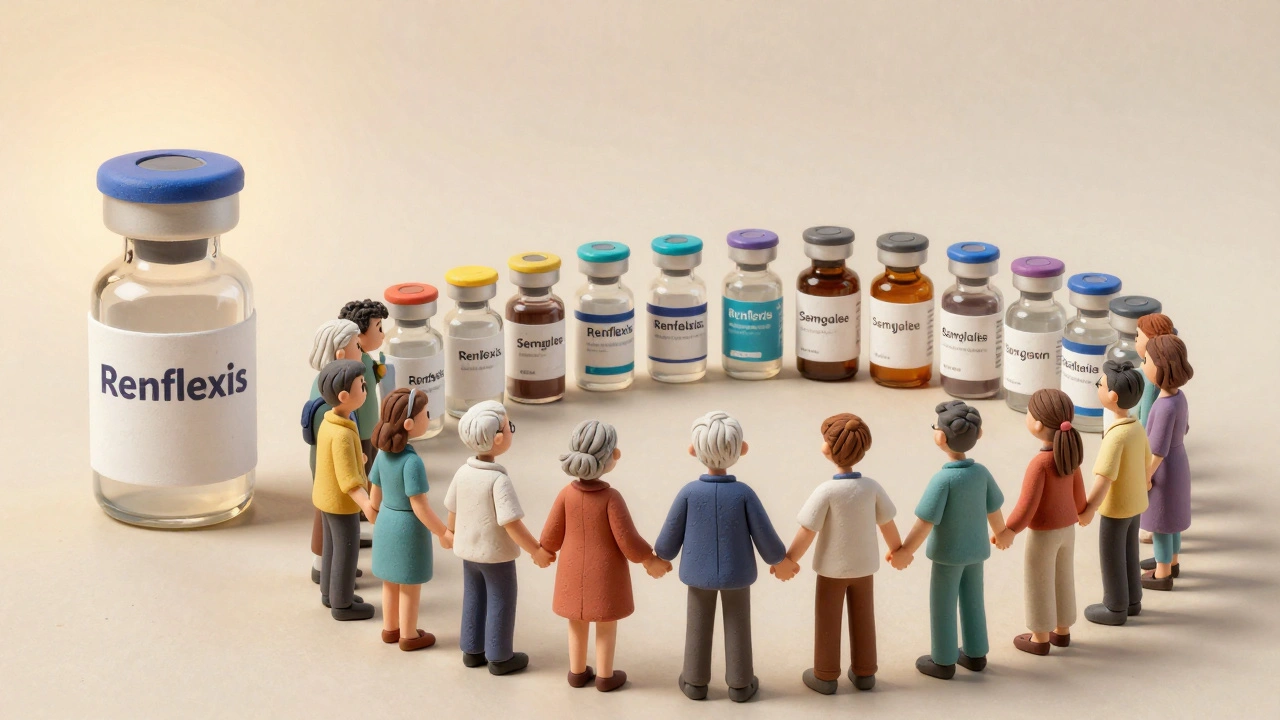
What if I’m already on a biologic? Can I switch to a biosimilar?
Yes. Studies show that switching from a brand-name biologic to a biosimilar is safe. One major study followed 1,000 patients with rheumatoid arthritis who switched to a biosimilar. After a year, their disease control didn’t change. Side effects stayed the same. No flare-ups increased. If your doctor suggests switching, ask why. If your insurance pushes it, ask what the plan is. But don’t fear it. You’re not being experimented on. You’re being offered a proven, lower-cost option that works the same way.What about side effects?
You might have the same side effects as the original drug. That’s normal. For example, if your biologic causes fatigue or mild infections, the biosimilar might too. But you won’t get new or worse side effects. The FDA keeps watching after approval. Every single biosimilar is tracked. If something unusual happens - even years later - it gets investigated. That’s why you’re protected even after you start taking it.What’s next for biosimilars?
More are coming. Right now, over 30 biosimilars are available in the U.S., and dozens more are in the approval pipeline. They’re being made for more cancers, more autoimmune diseases, and even rare conditions. Experts predict biosimilars could save the U.S. healthcare system over $50 billion over the next few years. That means more people can get the medicines they need - not just those who can afford the highest-priced options. The goal isn’t to replace biologics. It’s to make them available to more people. And if you’re taking one now, or might need one soon, a biosimilar is a safe, smart choice.Ask your doctor. Ask your pharmacist. Ask your insurance. You deserve to know your options. And with biosimilars, you’re not choosing between cost and care - you’re getting both.

nikki yamashita
Wow, this is such a clear breakdown! I’ve been on Humira for years and just found out my new prescription is Amjevita-was totally nervous, but now I feel way better about it. Biosimilars are a game changer for folks who can’t afford the original price tag. 🙌
wendy b
Actually, I’m a bit skeptical. I mean, sure, the FDA says it’s ‘highly similar,’ but ‘similar’ isn’t ‘identical.’ Living cells? Random mutations? You’re telling me that’s not going to cause immune reactions down the line? I’ve seen too many ‘safe’ drugs get pulled after 5 years. 😒
Adam Everitt
One wonders whether the commodification of biologics is merely a market correction-or a quiet erosion of medical integrity. If we reduce life-sustaining molecules to cost-per-dose metrics, are we not losing sight of the human essence behind the science? 🤔
Audrey Crothers
YES!! I switched to a biosimilar for my psoriasis last year and my skin is still clear, my bills are lower, and my doctor said it’s like swapping one blue pen for another. No drama, no side effects. Seriously, if your doc suggests it-say yes! 💚
Stacy Foster
They’re not telling you the whole truth. Biosimilars are being pushed because Big Pharma and insurance companies are in cahoots. You think they care if you live or die? They care about profit margins. Your ‘safe’ biosimilar? It’s a Trojan horse. Watch your labs. Watch your symptoms. They’re watching your data.
Reshma Sinha
From India, we’ve been using biosimilars since 2012 for TNF inhibitors. The cost reduction was massive-allowed hundreds of thousands to access treatment. The data is solid. Trust the science, not the fear. 🇮🇳
Lawrence Armstrong
Just got my insulin switched to Semglee last month. Zero issues. HbA1c same, no hypoglycemia spikes. The science is rock solid. 🤝💯
Laura Weemering
But… what about the long-term immunogenicity? The FDA’s post-marketing surveillance is underfunded. And how many patients are even tracked properly? I’ve read the studies-they’re all industry-funded. The placebo group? Often not even monitored beyond 6 months. Where’s the independent data? Where’s the transparency? It’s all… so… carefully curated.
Rob Purvis
Laura, you’re right to ask about long-term data-but let’s not ignore that Europe’s been using biosimilars for 15+ years with millions of patients, and no new safety signals emerged. The FDA requires more testing than for generics. That’s not ‘curated’-that’s rigorous. We’re not guessing. We’re measuring.
Donna Anderson
my insurance made me switch to the biosimilar and i was scared but now i’m like… why was i even worried? same results, half the cost. life’s weird sometimes 😅
Levi Cooper
Why are we letting foreign companies make our life-saving drugs? This isn’t innovation-it’s outsourcing our health to the lowest bidder. We used to make these in America. Now we’re just consumers of cheap copies. Sad.
sandeep sanigarapu
Respectfully, the cost savings enable access. In my country, without biosimilars, many patients would not survive. Science transcends borders. Safety is universal. Let us not confuse nationalism with progress.