

Every year, millions of Medicare beneficiaries miss out on hundreds - sometimes over a thousand - dollars in savings simply because they don’t review their prescription drug coverage. If you take even one medication regularly, skipping annual open enrollment isn’t just a mistake - it’s expensive. The window to change your plan is narrow: October 15 to December 7 each year. Miss it, and you’re locked into your current plan until next year, even if your insulin now costs $40 more a month or your pharmacy is no longer in-network.
Why Annual Review Isn’t Optional
Medicare plans change every single year. Not just a little - a lot. Formularies get updated. Premiums go up. Pharmacies drop out of networks. Your drug might move from Tier 2 to Tier 4, meaning your co-pay jumps from $15 to $60. In 2024, 60% of Part D plans changed at least one medication’s coverage status. That’s not rare - it’s the norm.Take insulin, for example. Thanks to the Inflation Reduction Act, it’s capped at $35 per month in 2025 - but only if your plan covers it. If your plan didn’t update its formulary to include insulin under the cap, you’re still paying full price. Same goes for GLP-1 drugs like Ozempic. One plan might cover it with a $25 co-pay. Another might require prior authorization or charge $300. You won’t know unless you check.
Medicare Advantage plans, which now cover over half of all Medicare beneficiaries, also change provider networks. In 2023-2024, 78% of these plans altered their doctor and hospital networks. If your cardiologist left the network, you might not find out until your next appointment - and by then, you’ve paid hundreds in out-of-network fees.
What You Can Do During Open Enrollment
Between October 15 and December 7, you have five choices:- Switch from Original Medicare to a Medicare Advantage plan
- Go back from Medicare Advantage to Original Medicare
- Change from one Medicare Advantage plan to another
- Join a standalone Part D drug plan
- Switch your current Part D plan to a different one
You can even drop Part D coverage - but only if you have other creditable drug coverage. Otherwise, you’ll face a late enrollment penalty for life: 1% extra per month for every month you were without coverage. That adds up to $15-$30 extra per month on your premium forever.
Here’s the catch: if you’re already in a Medicare Advantage plan, you can’t switch again after December 7 - unless it’s January through March. That’s the Medicare Advantage Open Enrollment Period (MAOEP), and you only get one switch then. So if you’re thinking about switching, don’t wait. Do it in October.
Step-by-Step Plan for 2026 Coverage
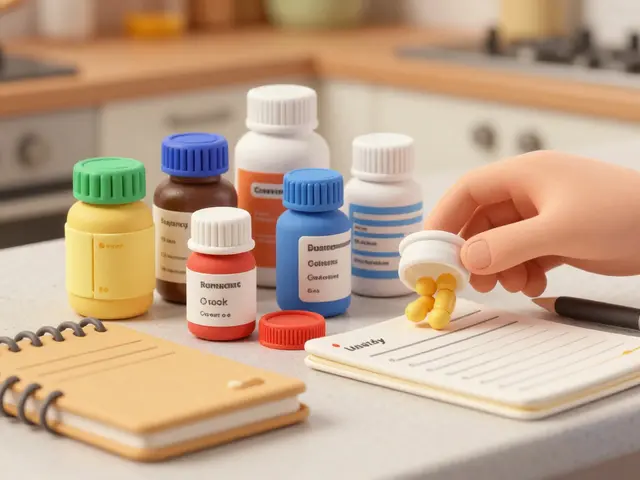
You don’t need to be an expert. You just need a system. Here’s how to do it right:- Gather your meds (October 1-10): Make a list of every prescription you take, including dosage and how often. Don’t forget over-the-counter drugs your doctor told you to take daily, like aspirin or calcium supplements. Some plans cover them.
- Get your Annual Notice of Change (ANOC) (October 10-15): Your current plan must mail you this by September 30. If you haven’t received it by October 10, call them. It shows exactly what’s changing: new premiums, new formularies, new pharmacy networks.
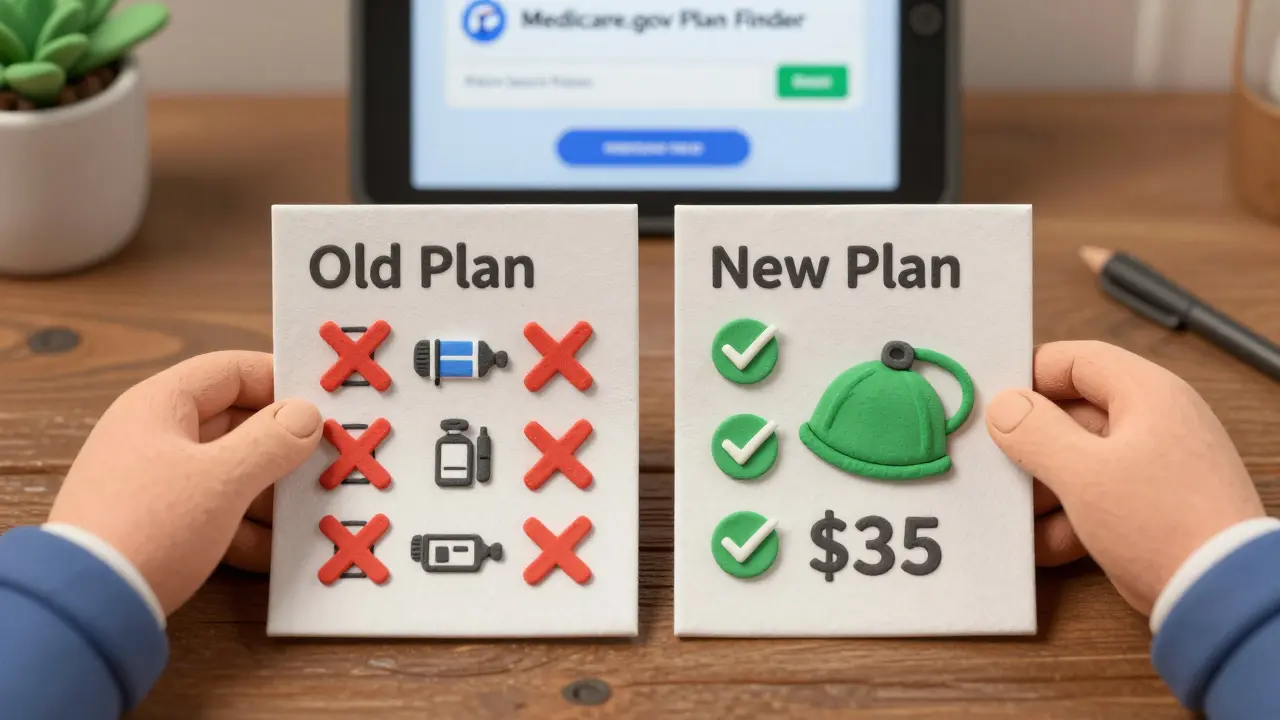
- Use the Medicare Plan Finder (October 15-20): Go to medicare.gov/plan-compare. Enter your zip code, your medications, and your preferred pharmacy. The tool now includes a “total cost” calculator that estimates your annual drug spending based on your exact list. Compare at least three plans - don’t just pick the cheapest monthly premium.
- Check your pharmacy (October 20-25): Is your local pharmacy still in-network? Many plans have “preferred” pharmacies with lower costs. If your pharmacy is now “standard,” you could pay $20 more per script. Call them - they’ll know if your plan’s network changed.
- Look for supplemental benefits (October 25-30): Some Medicare Advantage plans now offer extra benefits like dental, vision, or even meal delivery. But 31% of these benefits have hidden restrictions. Read the fine print. If you need hearing aids or transportation to appointments, make sure your plan covers it.
On average, this process takes about 3.7 hours. Most people need help - and that’s okay. Call your State Health Insurance Assistance Program (SHIP). They’re free, local, and trained to walk you through this. There are over 9,400 counselors across the U.S.
What to Watch Out For
The biggest mistake? Assuming nothing changed. People think, “I was fine last year, so I’ll be fine this year.” That’s how you end up paying $400 a month for a drug that was $75 last year.Here are the top three traps:
- Formulary tiers: A drug that was Tier 2 (low cost) might be Tier 4 (high cost) now. Tier 5 is for specialty drugs - think cancer treatments or injectables. Those can cost hundreds.
- Utilization management: Some plans require you to try a cheaper drug first (step therapy) or get approval before filling a prescription (prior authorization). If your plan suddenly requires this for your medication, you’ll be delayed - or denied.
- Network changes: Your pharmacy, doctor, or hospital might be out-of-network. Even if you’re in a Medicare Advantage plan, going out-of-network can mean 100% out-of-pocket costs.
And don’t forget: if you’re on both Medicare and Medicaid, some Medicare Advantage plans offer extra benefits - but they might not list them clearly on the Plan Finder. Ask a SHIP counselor to check for you.
Real Savings, Real Stories
One beneficiary in Ohio switched from a $98/month Part D plan to a $22/month plan after discovering her two maintenance drugs were covered at Tier 2 in the new plan - and her pharmacy was preferred. Her annual drug cost dropped from $1,400 to $260.In Texas, a man with diabetes saved $1,200 by switching to a plan that included insulin at the $35 cap. He didn’t know his old plan didn’t offer it.
On the flip side, a woman in Florida stayed with her plan and found out her GLP-1 drug was moved to a specialty tier. Her monthly cost jumped from $50 to $380. She had to appeal - and lost. She paid $4,500 extra that year.

What’s New for 2026
Starting January 1, 2026, Medicare Advantage plans must cover all Part B drugs administered in outpatient settings - like infusions or injections given at a clinic. That’s a big change. If you get weekly shots at a doctor’s office, this could mean lower costs.The Medicare Plan Finder tool is also getting smarter. It now shows estimated annual costs based on your exact medications, not just premiums. That means you can see which plan saves you the most - not just the one with the lowest monthly fee.
But be warned: average Part D premiums are projected to rise 4.2% in 2026 due to new drug pricing rules. That’s why reviewing your options isn’t just smart - it’s essential.
What If You Miss the Deadline?
If you miss December 7, you’re stuck until next year - unless you qualify for a Special Enrollment Period. These are rare. You might qualify if you move, lose other coverage, or get into a nursing home. But if you’re just forgetting? Too bad.There’s no second chance. No do-over. No grace period. The deadline is firm. And the cost of missing it? It’s not just money. It’s stress, delays, and unexpected bills.
Final Tip: Start Now
Don’t wait until December 6. That’s when everyone calls. The lines are jammed. The Plan Finder crashes. The counselors are overwhelmed.Start October 1. Make your list. Get your ANOC. Compare plans. Call your pharmacy. Talk to a SHIP counselor. Do it early. You’ll have time to think, to compare, to make the right choice - not the rushed one.
Medicare isn’t a set-it-and-forget-it system. It’s a dynamic, changing landscape. Your health needs change. Your medications change. Your budget changes. Your plan should change with it.
Take 3.7 hours this fall. Save hundreds - maybe over a thousand - next year. That’s not a tip. That’s the rule.
What happens if I don’t change my Medicare plan during open enrollment?
If you don’t make any changes, you’ll automatically stay in your current plan for the next year. But that doesn’t mean your costs stay the same. Your premiums, formulary, pharmacy network, and cost-sharing can all change - and you’ll be stuck paying the new rates unless you switch during open enrollment. Many people end up paying hundreds more because they assumed nothing changed.
Can I switch Medicare Advantage plans after December 7?
Yes - but only once, and only between January 1 and March 31. This is called the Medicare Advantage Open Enrollment Period (MAOEP). During this time, you can switch from one Medicare Advantage plan to another, or drop your Advantage plan and return to Original Medicare. You cannot join or switch Part D drug plans during MAOEP - only during the main open enrollment period (October 15-December 7).
How do I know if my medication is covered by a plan?
Use the Medicare Plan Finder tool at medicare.gov. Enter your exact medications, dosages, and pharmacy. The tool shows whether each drug is covered, what tier it’s on, and how much you’ll pay. You can also check the plan’s formulary PDF - but the Plan Finder is faster and more accurate. Don’t rely on what your pharmacist says - networks change daily.
Are there limits on how much I’ll pay for drugs in 2026?
Yes. Starting in 2025, the Part D coverage gap (donut hole) is fully closed. You’ll pay no more than 25% coinsurance for brand-name and generic drugs in the catastrophic phase. Plus, insulin costs are capped at $35 per month. For Medicare Advantage plans, your total out-of-pocket costs for medical and drug services are capped at $8,000 in 2025 - and this cap will likely rise slightly in 2026. These protections don’t apply to Original Medicare without a Part D plan.
Do I need to sign up for Part D if I have Medicare Advantage?
No - if your Medicare Advantage plan includes prescription drug coverage (which 90% of them do), you don’t need a separate Part D plan. In fact, you can’t have both. If you enroll in a standalone Part D plan while already in a Medicare Advantage plan with drug coverage, you’ll be automatically disenrolled from the Part D plan. Always check your plan’s Evidence of Coverage to confirm drug coverage before signing up for anything new.
Where can I get free help with Medicare open enrollment?
Every state has a State Health Insurance Assistance Program (SHIP). These are free, local counselors trained by Medicare to help you compare plans, understand formularies, and avoid enrollment mistakes. You can find your local SHIP by calling 1-800-MEDICARE or visiting medicare.gov. No sales pitches. No pressure. Just clear, unbiased help.
If you take medications regularly, your open enrollment decision isn’t just paperwork - it’s a financial lifeline. Don’t wait until the last minute. Don’t assume your plan hasn’t changed. Do the work now - and save big next year.





Susannah Green
Just finished comparing my plans using the Medicare site-my insulin co-pay dropped from $85 to $35. I almost missed it because I thought ‘it’s the same plan, right?’ Wrong. So. Much. Money. Saved. Don’t wait until December 6th. Do it now. Seriously.
Dawson Taylor
The structural inertia of bureaucratic systems often leads individuals to assume continuity where none exists. The annual recalibration of formularies and networks is not a feature of neglect, but of systemic evolution. To remain passive is to consent to financial erosion.
charley lopez
Per the 2025 CMS final rule, the Part D catastrophic phase threshold has been restructured, and the 2026 projected premium increase of 4.2% reflects updated drug pricing benchmarks under the Inflation Reduction Act. Utilization management protocols have also been expanded across 68% of MA-PDs. Verification via the Plan Finder is non-negotiable.
Sue Stone
I did this last year and saved $600. Honestly? It took me two hours. I just wrote down my meds, went to the website, and clicked around. No fancy skills needed. Just don’t ignore it.
Anna Pryde-Smith
MY DAD PAID $4,200 EXTRA LAST YEAR BECAUSE HE ‘THOUGHT HE WAS FINE.’ THEY DIDN’T EVEN TELL HIM HIS GLP-1 WAS MOVED TO TIER 5. THIS IS A SCAM. WHY DOESN’T MEDICARE SEND A TEXT? WHY DO WE HAVE TO BE DETECTIVES JUST TO GET OUR MEDS? I’M SO ANGRY.
Oladeji Omobolaji
I’m from Nigeria, but my sister is on Medicare. She told me this exact thing last month. Said she almost skipped it because ‘it’s boring.’ Then she saw her new plan saved her $900. Now she tells everyone. It’s not sexy, but it’s life-changing.
Janet King
Use the Plan Finder. Enter your exact medications. Compare total annual cost, not monthly premium. Call SHIP. They are free and know the system better than anyone. Do not rely on your pharmacist’s word. Networks change daily.
Stacy Thomes
YOU CAN SAVE A THOUSAND DOLLARS WITH THREE HOURS OF WORK. THAT’S LIKE GETTING A FREE VACATION. DON’T LET FEAR OR LAZINESS COST YOU YOUR HEALTH. DO IT NOW. TODAY. BEFORE YOU SCROLL ANOTHER MINUTE. YOUR FUTURE SELF WILL CRY TEARS OF JOY.