
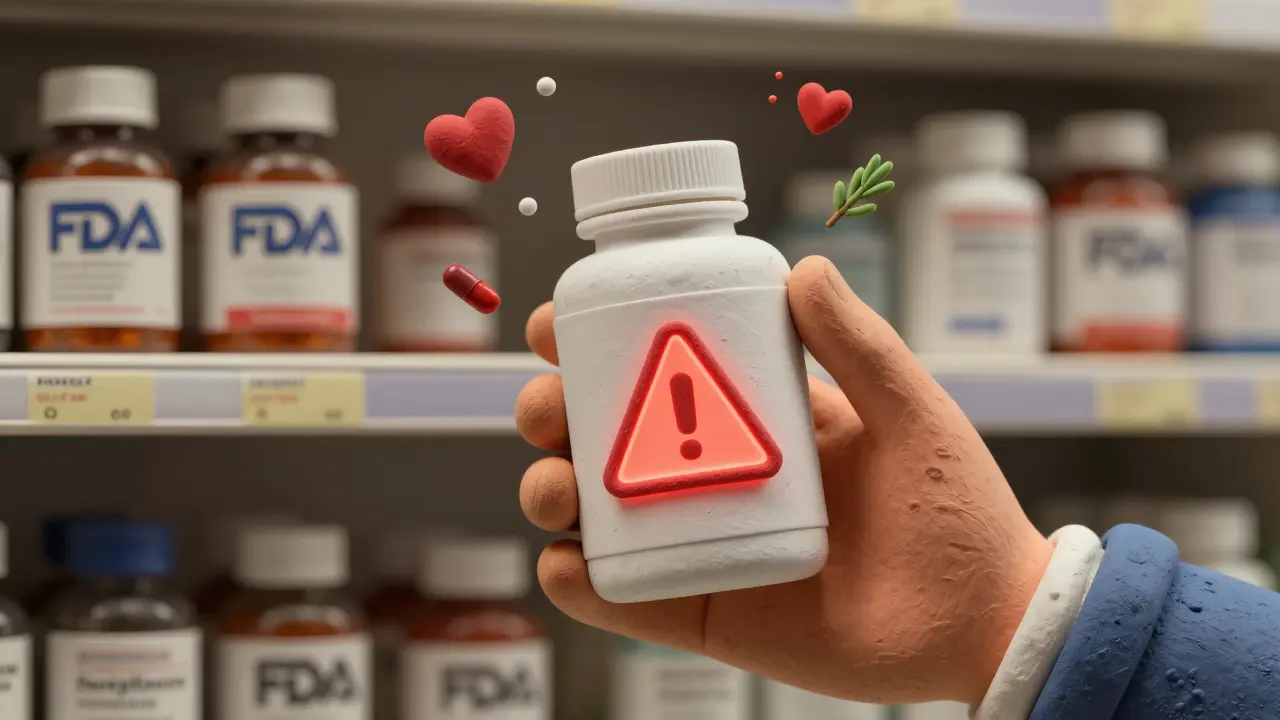
Every year, millions of people in the U.S. take supplements alongside their prescription meds-vitamins, herbs, protein powders, fish oil, magnesium, you name it. But here’s the problem: supplement labels rarely tell you if those pills could mess with your heart medicine, blood thinners, or thyroid drug. Unlike prescription bottles that scream warnings in bold red, supplement labels often stay silent. And that silence can be deadly.
What’s Actually on a Supplement Label?
Look at the back of any supplement bottle. You’ll see a box labeled Supplement Facts. That’s your starting point. It lists the serving size, how much of each ingredient is in one serving, and the % Daily Value. But here’s where it gets tricky: those percentages are based on general adult needs, not your specific health condition or meds.
Below that, there’s an ingredient list. Some brands list everything clearly: “Magnesium Citrate 200 mg.” Others hide behind something called a proprietary blend. That’s when they group multiple ingredients together and only give a total weight-like “Proprietary Energy Blend 500 mg.” No breakdown. No idea how much of each component is actually in there. That’s legal. And it’s dangerous if you’re on medication.
By law, supplement labels must also list major allergens: milk, eggs, fish, shellfish, tree nuts, peanuts, wheat, soy. That’s helpful if you’re allergic. But if you’re on warfarin, a blood thinner, and your supplement has vitamin K in it? That’s not listed as an allergen. It’s not even mentioned unless the company chooses to add it.
Drug Labels vs. Supplement Labels: A Huge Gap
Now compare that to a prescription pill bottle. It has a Drug Facts panel with a dedicated Warnings section. That section tells you exactly what drugs to avoid. For example, if you’re taking simvastatin (a cholesterol drug), the label will warn you not to take it with grapefruit juice. That’s because grapefruit changes how your body breaks down the drug-potentially causing muscle damage or kidney failure.
Prescription and over-the-counter (OTC) drug labels are required by the FDA to include interaction warnings. In fact, 97% of prescription drugs and 89% of OTC meds have them. But for supplements? Only about 13% of popular brands voluntarily include any interaction warning at all.
Why? Because the Dietary Supplement Health and Education Act (DSHEA) of 1994 lets supplement makers sell products without proving they’re safe or free from interactions. The FDA can’t step in until after someone gets hurt. And by then, it’s too late.
Real-World Interactions That Can Kill You
Let’s get specific. These aren’t theoretical risks. These are documented, life-threatening interactions:
- St. John’s wort + antidepressants or birth control: This herb can make SSRIs like sertraline dangerously strong-or cause birth control to fail. Studies show it lowers blood levels of digoxin (a heart drug) by 26%, which can lead to heart rhythm problems.
- Vitamin K + warfarin: Warfarin works by blocking vitamin K. If you start taking a green tea extract or a multivitamin with vitamin K, your INR (blood clotting time) can drop fast. That means clots form easier. The FDA has recorded cases where people had strokes after adding vitamin K supplements without telling their doctor.
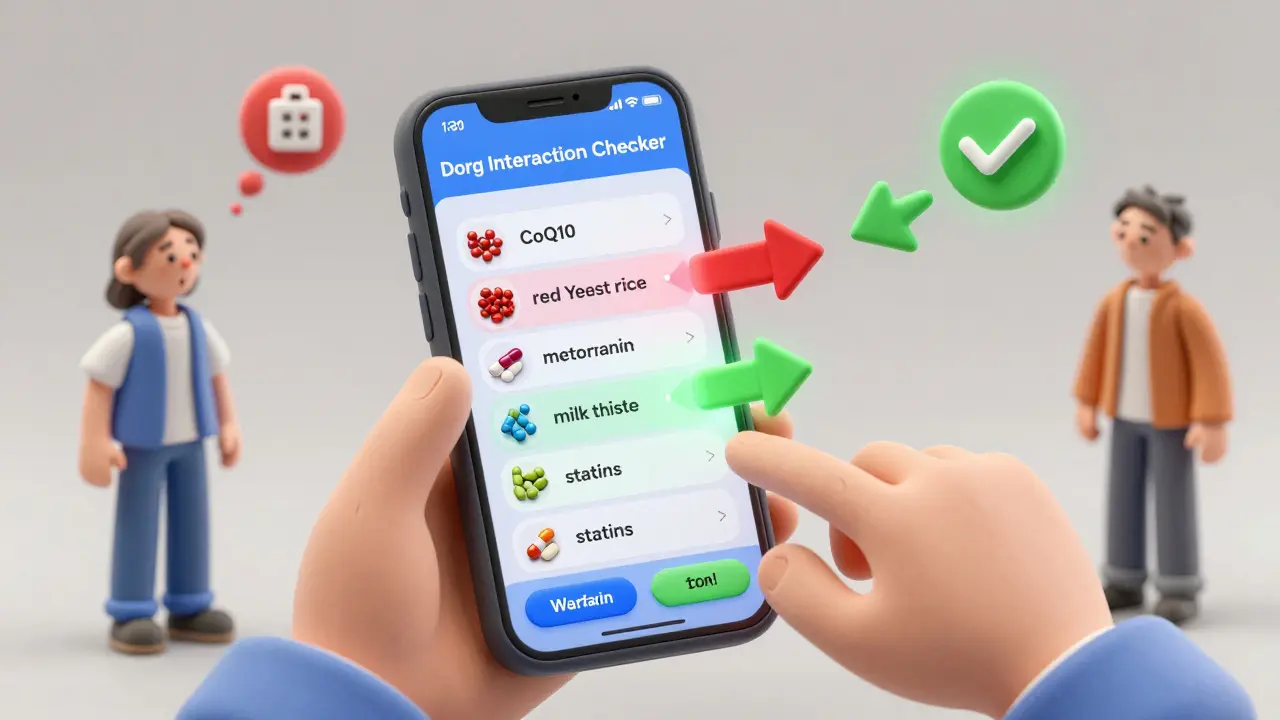
- CoQ10 + warfarin: CoQ10 is popular for energy and heart health. But it can shorten prothrombin time by 15-25%, reducing warfarin’s effect. Same risk as vitamin K: clots.
- Milk thistle + metformin: People with diabetes take metformin to lower blood sugar. Milk thistle can make it work too well. One patient’s blood sugar dropped to 42 mg/dL-dangerously low. He ended up in the ER.
- Vitamin C (over 1,000 mg/day) + HIV meds: High-dose vitamin C can change stomach pH and reduce absorption of antiretroviral drugs by 22%. That means the virus can rebound.
- Red yeast rice + statins: Red yeast rice contains monacolin K-the exact same compound as lovastatin, a prescription statin. Taking both together can cause severe muscle damage or kidney failure.
These aren’t rare. They’re common. And they’re preventable-if you know what to look for.
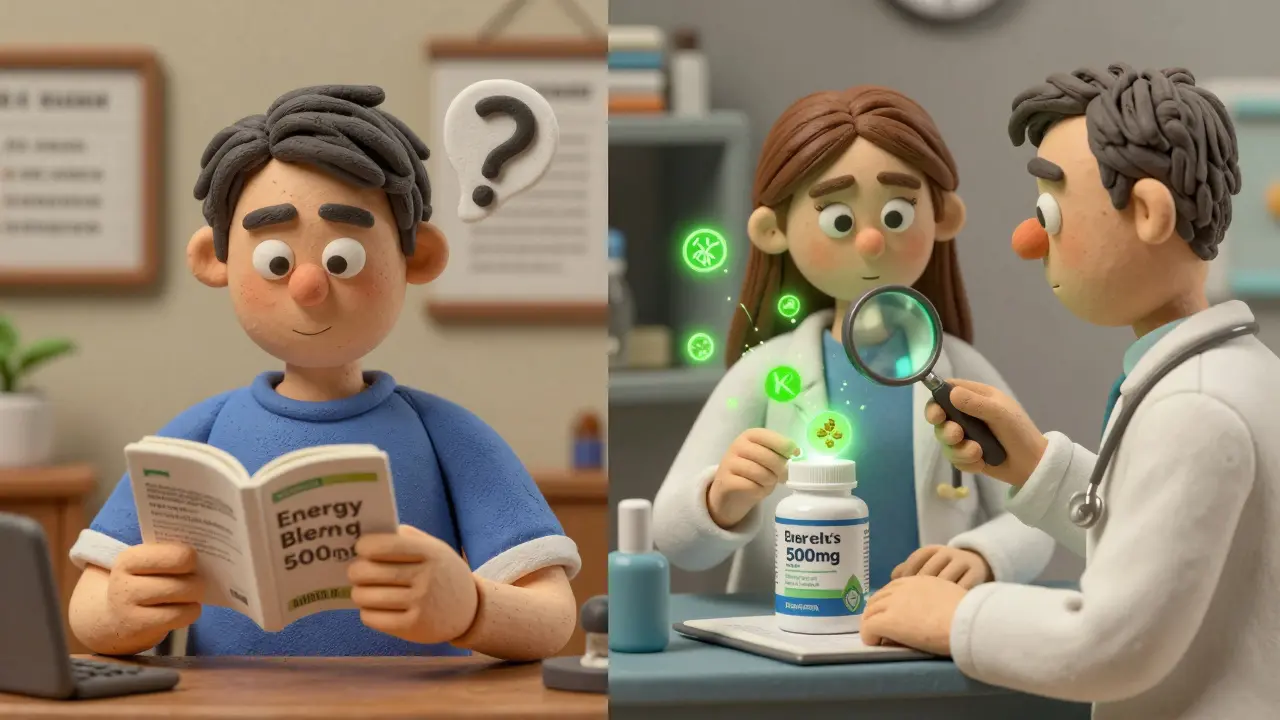
How to Actually Read a Label (Step by Step)
You don’t need a pharmacy degree. Just follow these steps every time you pick up a new supplement:
- Find the Supplement Facts panel. Check the serving size. Many people take more than one serving thinking it’s “more effective,” but that multiplies the risk.
- Write down every ingredient. Don’t trust the name. “Green tea extract” could mean 100 mg of EGCG-or 500 mg. Look for the exact compound if possible.
- Check for proprietary blends. If you see one, be extra cautious. You’re flying blind. Avoid them if you’re on meds unless your doctor says it’s safe.
- Search each ingredient. Use the free Medscape Drug Interaction Checker (or ask your pharmacist). Type in your medication and the supplement ingredient. It will tell you if there’s a known interaction, and how serious it is.
- Take a photo of the label. Show it to your doctor or pharmacist during your next visit. Don’t rely on memory. People forget names, doses, brands.
- Ask: “Is this safe with my current meds?” Don’t assume it’s fine because it’s “natural.” Natural doesn’t mean safe. Garlic supplements thin blood. Ginkgo does too. Both can be deadly with warfarin or aspirin.
One study from the University of Florida found that people who spent just 15 minutes learning how to read labels cut their risk of dangerous interactions by 63%. That’s not magic. That’s awareness.
What You Can’t Rely On
Don’t fall for these myths:
- “The FDA approves supplements.” False. The FDA doesn’t review supplements for safety or effectiveness before they hit the shelf. They only act after harm occurs.
- “If it’s sold in a pharmacy, it’s safe.” No. Pharmacies sell supplements because there’s demand. That doesn’t mean they’ve been vetted.
- “My doctor knows what I’m taking.” Most don’t. Only 38% of patients tell their doctor about supplements. And only 12% of doctors routinely ask.
- “USP Verified means it won’t interact.” USP checks for purity and correct labeling. It doesn’t test for drug interactions. Only 18% of brands carry this mark anyway.
What’s Changing? (And What’s Not)
The FDA has proposed new voluntary guidelines for supplement labels that would include standardized interaction warnings. That’s a step forward. But it’s not mandatory. Companies don’t have to follow it.
In 2024, the American Medical Association urged doctors to spend 3-5 minutes during annual checkups asking patients about supplements. That’s smart. But until laws change, the burden is still on you.
Some companies are starting to use QR codes on labels that link to up-to-date interaction data. It’s a good idea. But it’s still experimental. And not all phones can scan them reliably.
The truth? The system hasn’t caught up with the $53 billion supplement industry. And until Congress changes DSHEA, the gap will stay wide.
Your Action Plan
Here’s what to do right now:
- Grab every supplement bottle you’re taking.
- Write down the name of each ingredient.
- Go to Medscape or ask your pharmacist: “Does [ingredient] interact with [your medication]?”
- If you’re unsure-stop taking it until you get a clear answer.
- Bring your supplement list to your next doctor’s appointment. Don’t wait for them to ask.
Supplements aren’t the enemy. But pretending they’re harmless because they’re “natural” is. You wouldn’t mix alcohol with your painkillers. Don’t mix them with supplements either.
Your health isn’t a gamble. Read the label. Ask the question. Save yourself a trip to the ER.
Do supplement labels have to list drug interactions?
No. Unlike prescription and over-the-counter drugs, supplement manufacturers are not required by law to list drug interactions on their labels. Only about 13% of popular supplement brands include them voluntarily. The FDA does not require interaction testing or labeling for supplements under current regulations.
Can I trust the FDA to make sure supplements are safe?
No. The FDA does not review supplements for safety or effectiveness before they’re sold. They only step in after reports of harm, which often come too late. The agency has limited resources-its entire supplement oversight budget in 2023 was just $4.7 million, compared to over $11 billion for the whole FDA. That means most supplements never get checked.
What should I do if my supplement doesn’t list any interactions?
Don’t assume it’s safe. Treat every supplement as a potential risk if you’re on medication. Use the free Medscape Drug Interaction Checker, or take a photo of the label and ask your pharmacist or doctor. If you can’t find reliable information, hold off on taking it until you get professional advice.
Are “natural” supplements safer than drugs?
No. “Natural” doesn’t mean safe. Red yeast rice contains the same active ingredient as the prescription statin lovastatin. St. John’s wort can interfere with antidepressants and birth control. Garlic and ginkgo can thin your blood like aspirin. Many dangerous interactions come from natural ingredients-often more than from synthetic drugs.
What’s a proprietary blend, and why should I avoid it?
A proprietary blend hides the exact amount of each ingredient inside a group. For example, “Energy Blend 500 mg” could contain 5 mg of caffeine and 495 mg of sugar. You have no idea what you’re actually taking. This is legal, but dangerous if you’re on medication. Avoid supplements with proprietary blends unless your doctor confirms they’re safe for your specific situation.
Can I use a QR code on a supplement label to check for interactions?
Some newer supplements have QR codes that link to interaction databases. These can be helpful, but they’re not reliable yet. Many brands don’t use them, and not all phones can scan them easily. Don’t rely on them alone. Always cross-check with a trusted source like Medscape or your pharmacist.
Should I stop taking supplements before surgery?
Yes. Many supplements-like fish oil, garlic, ginkgo, and vitamin E-can thin your blood and increase bleeding risk during surgery. Others, like St. John’s wort, can interfere with anesthesia. Always tell your surgeon about every supplement you take, and stop them at least 1-2 weeks before surgery unless your doctor says otherwise.




Radhika M
Simple tip: if you're on blood thinners, avoid garlic, ginkgo, and fish oil. I've seen too many people end up in ER because they thought 'natural' meant safe. Always check with your pharmacist. It takes 2 minutes.
Philippa Skiadopoulou
Supplement labeling is a regulatory failure. The FDA lacks authority under DSHEA to require interaction warnings. Until Congress amends the law, consumers must assume every supplement is a potential hazard when combined with pharmaceuticals. Vigilance is not paranoia-it's survival.
Pawan Chaudhary
This is such a good reminder! I used to take turmeric with my blood pressure meds and had no idea it could mess with them. Now I always check with my pharmacist first. Small steps save lives.
Donna Packard
Thank you for writing this. I feel so much more confident now about talking to my doctor about my supplements.
Jonathan Morris
Let’s be real: the supplement industry is a pyramid scheme disguised as wellness. The FDA is underfunded, the companies are lying, and you’re the patsy paying $50 for magnesium oxide that’s 90% filler. This isn’t health-it’s exploitation dressed in hemp.
Anna Giakoumakatou
Oh, so now we’re all supposed to become pharmacists before buying a vitamin? How quaint. The real tragedy isn’t the label-it’s that we’ve outsourced our health to corporations and then blamed ourselves for not reading the fine print. The system is rigged. You’re not dumb-you’re outgunned.
CAROL MUTISO
It’s wild how we treat food as medicine but treat supplements like candy. You wouldn’t chug a bottle of insulin because it’s 'natural,' but you’ll down 1000mg of vitamin C with your HIV meds like it’s a smoothie. We’ve got the science, we’ve got the tools-we just refuse to treat our bodies like they matter.
Erik J
What’s the actual prevalence of these interactions? Are we talking hundreds of deaths a year or thousands? I’ve seen the stats on drug interactions with prescriptions, but supplement data feels anecdotal. Any peer-reviewed studies on mortality rates?
BETH VON KAUFFMANN
Proprietary blends are a regulatory loophole engineered to exploit cognitive dissonance. Consumers equate 'blend' with 'synergistic' when in reality it’s obfuscation masquerading as formulation. The FDA’s passive enforcement is a failure of bureaucratic capture-pharma lobbyists ensured DSHEA’s passage, and now we’re paying the price in ER visits.
Martin Spedding
St John’s wort + SSRIs = serotonin storm. Done. Next.
Raven C
And yet... we still trust the 'natural' label. We still believe in 'holistic healing.' We still think a $20 bottle from GNC can fix what Big Pharma 'doesn't want you to know.' The cognitive dissonance is breathtaking. You’re not just risking your health-you're validating a cult.
Sam Clark
Thank you for this comprehensive guide. As a healthcare professional, I’ve seen too many patients come in with adverse reactions from supplements they assumed were harmless. I now hand out a printed checklist to every patient who mentions supplements. It’s not a cure, but it’s a start.
amanda s
Why should I care what some lab in Switzerland says about my supplements? America makes the best vitamins-why are we listening to foreign bureaucrats? This is just another way for the government to control us under the guise of 'safety.'
Peter Ronai
Oh please. You think the FDA gives a damn? They’re funded by Big Pharma. Red yeast rice is literally lovastatin. They know. They just don’t care. And if you’re not taking it, you’re not living. The real danger is trusting the system. Wake up.