
RA Treatment Decision Helper
Choose your treatment options based on your condition, symptoms, and preferences.
Step 1: Describe your condition
Step 2: Your health considerations
When you’re living with rheumatoid arthritis (RA), every pill, injection, and doctor’s visit matters. The goal isn’t just to ease pain-it’s to stop the disease from chewing through your joints. That’s where DMARDs and biologics come in. But mixing them isn’t as simple as popping two pills together. Understanding how they work, when to use them, and how they interact can make the difference between staying active and being stuck on the couch.
What Are DMARDs, Really?
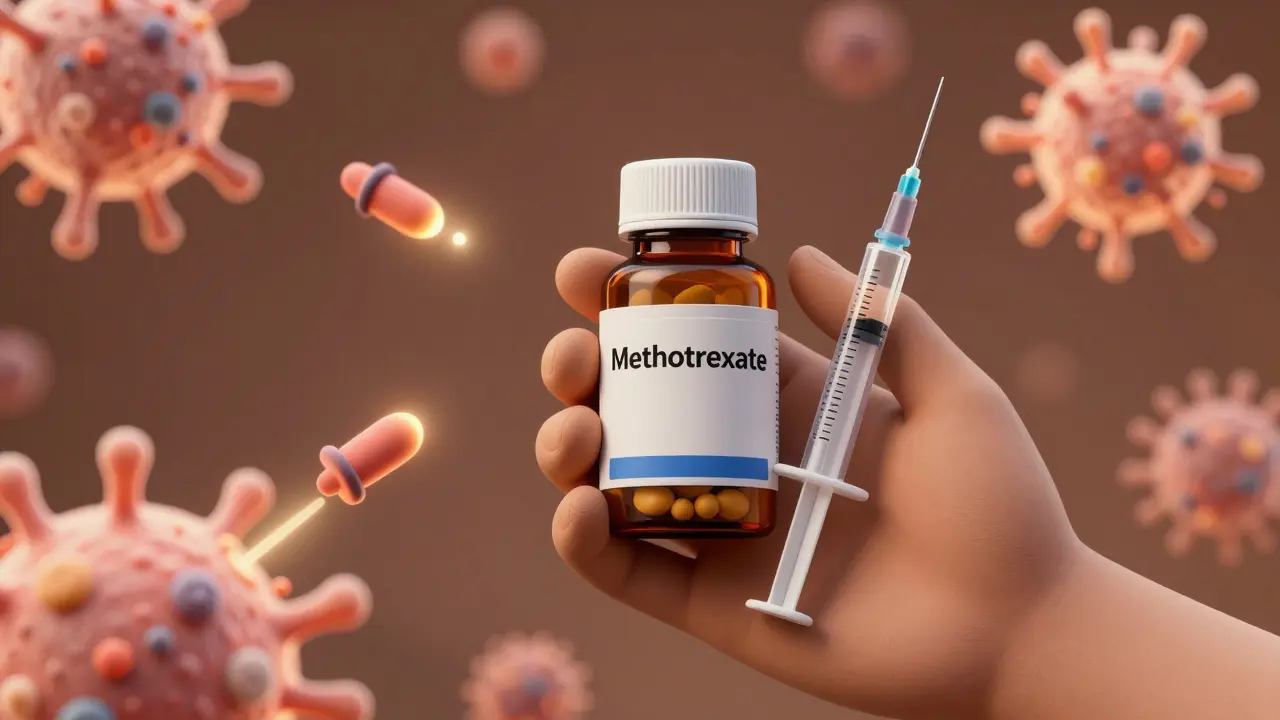
DMARD stands for disease-modifying antirheumatic drug. These aren’t painkillers. They don’t just numb the ache-they change the course of the disease. There are two main types: conventional synthetic DMARDs (csDMARDs) and biologic DMARDs (bDMARDs). The csDMARDs are the old-school workhorses: methotrexate, sulfasalazine, hydroxychloroquine, and leflunomide. Methotrexate is the most common. It’s been used since the 1980s, originally for cancer, then repurposed for RA. It works by slowing down your immune system’s overactive response, specifically by blocking folate metabolism and purine synthesis. Most people take it once a week, in pill form, at doses between 7.5 and 25 mg.Biologics: Targeted Weapons Against the Immune System
Biologics came along in the late 1990s, after scientists figured out exactly which parts of the immune system were attacking the joints. Unlike csDMARDs, which broadly suppress immunity, biologics are like precision missiles. They’re made from living cells and target specific proteins. For example:- TNF inhibitors (adalimumab, etanercept, infliximab) block tumor necrosis factor, a key driver of inflammation.
- Rituximab wipes out B cells that help trigger the autoimmune attack.
- Abatacept stops T cells from getting activated.
- Tocilizumab blocks interleukin-6, another inflammatory signal.
- Anakinra shuts down interleukin-1.
Why Methotrexate Is the Anchor Drug
You’ll hear doctors say methotrexate is the “anchor” of RA treatment. That’s not just jargon. Studies show that when you combine methotrexate with a biologic, the results are better than either one alone. In patients who didn’t respond well to methotrexate alone, adding a biologic boosted the chance of hitting ACR50 (a 50% improvement in symptoms) from 30-40% to 50-60% within six months. That’s not a small jump-it’s the difference between managing symptoms and actually getting your life back. The American College of Rheumatology (ACR) guidelines still recommend starting with methotrexate for most people. Why? It works for about 20-30% of early RA patients on its own. It’s cheap-around $20-50 a month. And it’s been studied for decades. Biologics cost 100 times more: $1,500 to $6,000 a month. That’s why many doctors try methotrexate first, then add a biologic only if the disease keeps flaring.When Biologics Are Used Alone
Not everyone can take methotrexate. Some people get terrible nausea. Others have liver issues or can’t tolerate the weekly dosing. In those cases, biologics can be used alone. About 33% of people on biologics in real-world studies are on monotherapy. But here’s the catch: biologics alone aren’t as effective as when paired with methotrexate. The response rates drop. And the cost doesn’t. That’s why most doctors still try to get patients on methotrexate-even if it means adjusting the dose, switching to injection, or adding folic acid to reduce side effects.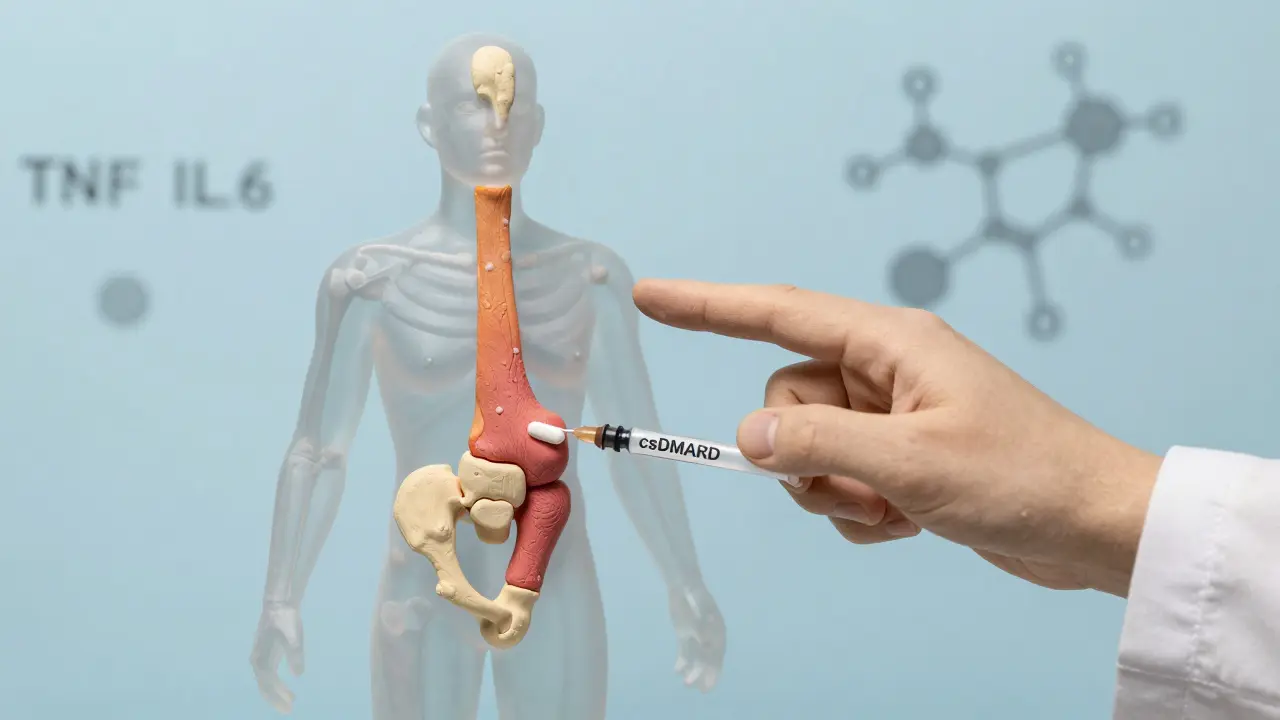
What About JAK Inhibitors?
JAK inhibitors like tofacitinib, baricitinib, and upadacitinib are a newer category called targeted synthetic DMARDs. They’re pills, like methotrexate, but they work differently. Instead of targeting proteins outside cells, they block signals inside immune cells. The 2023 FDA approval of upadacitinib as a first-line monotherapy for early RA was a big deal-it showed remission rates similar to methotrexate. That’s important for people who can’t take methotrexate but still want an oral option. But JAK inhibitors come with a black box warning: higher risk of serious infections, blood clots, and heart problems. The FDA updated their labels in 2021 after the ORAL Surveillance trial showed increased cardiovascular risks in older patients with existing heart issues.Cost and Access: The Real-World Battle
Cost isn’t just a footnote-it’s a barrier. In the U.S., biologics are expensive. In countries like India, where monthly household income might be $200, a biologic can cost 300-500% of that. That’s why global guidelines differ. In resource-limited settings, doctors stick to csDMARD combinations. In the U.S., biosimilars are changing the game. Since the first adalimumab biosimilar (Amjevita) hit the market in 2016, prices have dropped 15-30%. As of mid-2023, biosimilars made up 28% of the U.S. biologic market. That’s helping more people get access. But specialty pharmacies still handle 95% of biologic prescriptions, and patient assistance programs cover 30-50% of out-of-pocket costs for those who qualify. Still, 28% of RA patients skip doses because they can’t afford them.Side Effects: What No One Tells You
Biologics and DMARDs suppress your immune system. That means you’re more vulnerable to infections. People on these drugs report respiratory infections needing antibiotics, skin infections, and even reactivation of old TB. That’s why everyone starting a TNF inhibitor gets a TB skin test. JAK inhibitors carry additional risks-blood clots, cancer, and heart events. The Arthritis Foundation’s 2022 survey found that 78% of patients were satisfied with biologics, but 41% said cost was a major issue, and 19% had serious infections. Injection site reactions? Common. Some people switch meds just because their skin gets red and sore every week.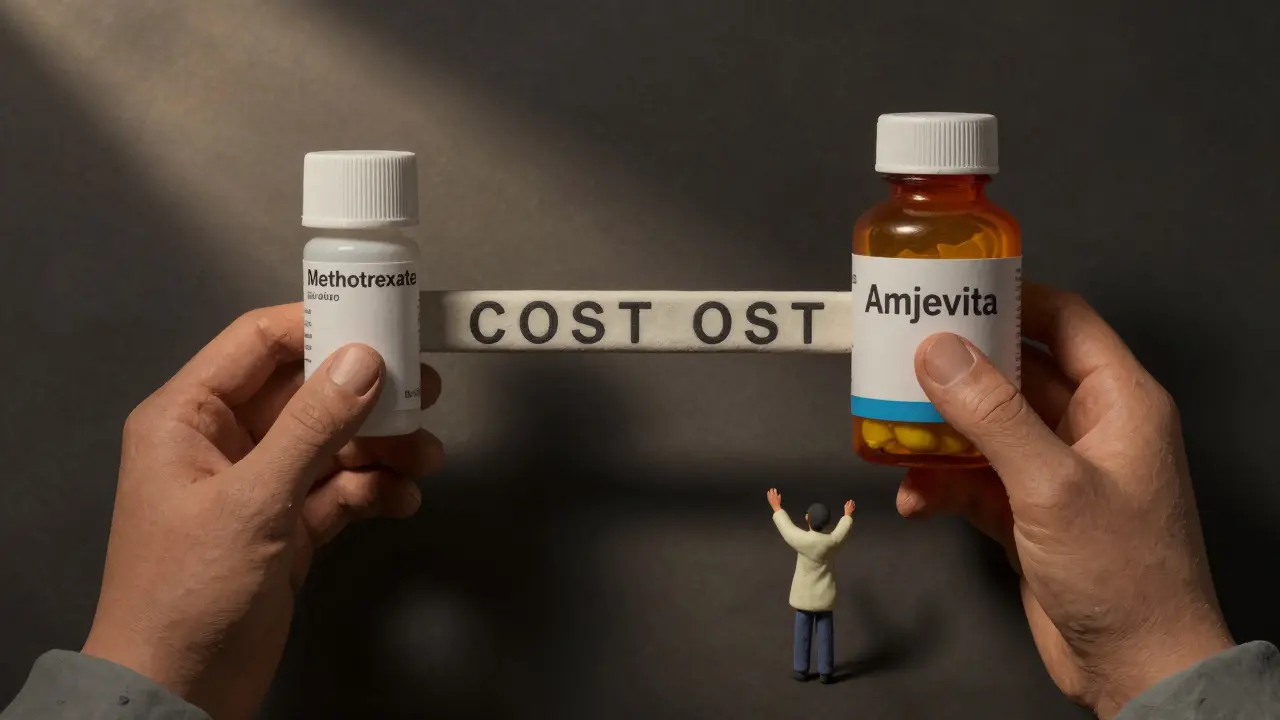
Real People, Real Choices
Reddit threads and patient forums tell the real story. One 2022 thread with 147 comments showed 63% of users preferred biologic + methotrexate, even with side effects, because their disease was under control. The other 37% chose monotherapy because methotrexate made them too tired or sick. One woman wrote: “I’d rather be nauseous than in pain every day.” Another said: “I can’t afford the biologic, so I take methotrexate and hope it’s enough.”What the Research Really Says
There’s debate in the medical community. Some studies say csDMARD combinations (like methotrexate + sulfasalazine + hydroxychloroquine) work just as well as biologics. The CAMERA-II trial in 2013 showed similar remission rates over two years. But other studies, like the 2022 TARGET trial, found JAK inhibitors plus methotrexate gave better MRI results than csDMARD combos. And the 2023 CAMERA-III trial found no difference in long-term joint damage between adalimumab + methotrexate and triple csDMARD therapy. So what’s the truth? It depends. For someone with mild RA and no joint damage, csDMARDs might be enough. For someone with high antibody levels, early erosions, or high disease activity, biologics give a better shot at remission.What You Need to Know Before Starting
If your doctor suggests a biologic:- Ask if you can start with methotrexate first.
- Find out if a biosimilar is an option-it’s often just as effective and cheaper.
- Get tested for TB and hepatitis before starting.
- Ask about the injection training. Most people need one or two sessions with a nurse to feel confident.
- Know your insurance coverage. Specialty pharmacies handle these drugs, and prior authorization can take weeks.
What’s Next?
The field is moving fast. New biologics targeting GM-CSF (like otilimab) are in trials. More selective JAK inhibitors, like deucravacitinib, promise fewer side effects. The 2024 draft ACR guidelines now include ultrasound remission as a goal-not just how you feel, but what the scan shows. That’s a big shift toward precision medicine. The bottom line? There’s no one-size-fits-all. Your treatment should match your disease, your life, and your budget. Methotrexate isn’t outdated-it’s still the foundation. Biologics aren’t magic-they’re powerful tools with real risks. And JAK inhibitors? They’re a game-changer for some, but not without trade-offs. Work with your rheumatologist. Track your symptoms. Don’t be afraid to ask about cost, alternatives, or side effects. Your joints are worth it.Can I take biologics without methotrexate?
Yes, but it’s usually less effective. Most biologics work better when combined with methotrexate. However, if you can’t tolerate methotrexate due to side effects like nausea, liver issues, or fatigue, your doctor may prescribe a biologic alone. Some patients do well on monotherapy, but response rates are typically lower than with combination therapy.
Are biosimilars as good as brand-name biologics?
Yes. Biosimilars are highly similar to the original biologic in structure, function, and effectiveness. The FDA requires them to show no clinically meaningful differences in safety or efficacy. Adalimumab biosimilars like Amjevita and Cyltezo have been used for years with the same results as Humira. Many patients switch without noticing a difference, and they cost 15-30% less.
Why do biologics cost so much?
Biologics are complex proteins made in living cells, not chemically synthesized like traditional drugs. Manufacturing them is expensive, requires strict controls, and involves years of research. A single vial can cost thousands. Even with patents expired, the high production cost keeps prices high-until biosimilars enter the market, which lowers prices by 15-30%.
Do JAK inhibitors have more risks than biologics?
Yes, they carry additional risks. The FDA added a black box warning to JAK inhibitors in 2021 after studies showed higher rates of serious infections, blood clots, heart events, and certain cancers-especially in patients over 50 with cardiovascular risk factors. Biologics mainly increase infection risk, but JAK inhibitors have broader safety concerns. That’s why they’re often reserved for patients who haven’t responded to biologics or can’t use them.
How long does it take for DMARDs and biologics to work?
Methotrexate and other csDMARDs can take 6-12 weeks to show noticeable effects. Biologics often work faster-some patients feel better in 2-4 weeks, with full effect by 12 weeks. JAK inhibitors are usually the fastest, with symptom relief in 1-2 weeks. But don’t stop them if you don’t see results right away. These drugs are designed to slow or stop joint damage over time, not just relieve pain.
Can I drink alcohol while taking methotrexate?
It’s best to avoid or strictly limit alcohol. Methotrexate can affect the liver, and alcohol adds stress to the same organ. Even moderate drinking increases the risk of liver damage. Most doctors recommend no more than 1-2 drinks per week, if any. If you have existing liver issues, alcohol is usually off-limits.
What happens if I miss a dose of my biologic?
If you miss a subcutaneous injection, take it as soon as you remember, unless it’s close to your next scheduled dose. Don’t double up. For IV infusions, contact your clinic-they’ll reschedule. Missing doses can reduce effectiveness and increase flare risk. Set phone reminders or use apps from your pharmacy to stay on track.
Do I need blood tests while on DMARDs or biologics?
Yes. Regular blood tests are essential. Methotrexate requires liver and kidney function checks every 4-8 weeks. Biologics and JAK inhibitors need complete blood counts and infection screening (like TB and hepatitis) before and during treatment. These tests catch side effects early and help your doctor adjust your plan safely.





Anthony Capunong
Let me tell you something straight - if you’re taking biologics without methotrexate in the US, you’re either rich or dumb. Methotrexate is the backbone. Period. I’ve seen people on Humira alone burn through $70k a year and still flare. That’s not treatment, that’s financial suicide. Biosimilars exist for a reason - use them. Stop being a sucker for brand names.
And don’t get me started on JAK inhibitors. Those things are basically Russian roulette with your heart. FDA black box? Yeah, that’s not a suggestion, it’s a warning label written in blood.
My cousin took tofacitinib, got a pulmonary embolism at 48. Now she’s on oxygen. Don’t be her.
Stick to methotrexate. Add a biosimilar if you need to. Save your life and your bank account.
Aparna karwande
Ohhh, so America thinks it owns the cure for RA? 🤦♀️ In India, we’ve been using turmeric, ginger, and yoga for centuries before your fancy biologics even had a lab coat.
And you talk about cost? My aunt takes methotrexate - $3 a month from a local chemist. She walks 5 km daily, drinks warm water with lemon, and her joints don’t scream like yours do. You call that medicine? You call that capitalism.
Biologics are luxury goods for the wealthy. Real healing? It’s in the soil, the sun, and silence. Not in a vial priced like a Tesla.
Stop colonizing health with your dollar signs.
Jessie Ann Lambrecht
Okay, real talk - if you’re scared of methotrexate because of side effects, talk to your rheum about folic acid. Seriously. 1mg daily cuts nausea and fatigue by like 70%. I was ready to quit after week two - then my nurse handed me a little bottle of folic acid and said ‘take this, not a panic attack.’
And if you think biologics are ‘too much’ - try living with RA without them. I went from needing a cane to hiking 10K steps in a day after adding adalimumab. Yes, I had a skin reaction. Yes, I cried the first time I injected myself. But I got my life back.
Don’t let fear or cost silence your voice. Ask for help. Ask for biosimilars. Ask for payment plans. You’re not alone. And your joints? They’re worth fighting for.
Ayodeji Williams
Brooo I tried methotrexate and my liver looked like a pizza after a frat party 🍕😭
So I went full biologic mode - adalimumab baby 🥵
Now I can’t even hug my dog without feeling like my joints are made of glass 😭
Also I got shingles from it. So yeah. Thanks, science.
Who else here feels like their body is a science experiment gone wrong? 🤡
Elen Pihlap
I just want to feel normal again. I miss walking my kids to school. I miss not crying when I open a jar. Why is this so hard?
Sai Ganesh
In India, we often combine sulfasalazine with hydroxychloroquine as a first-line triple therapy. It’s not glamorous, but it works. And it’s affordable. Many patients achieve remission without ever touching a biologic.
Western medicine focuses on precision, but we’ve learned that sometimes, the broader the net, the better the catch. Methotrexate is powerful, yes - but it’s not the only tool.
Also, liver monitoring is critical. We test every 6 weeks. No exceptions.
Health is not a competition. It’s a practice.
Paul Mason
Look, if you’re on a JAK inhibitor and you’re over 50, you’re basically playing Russian roulette with your heart. The FDA didn’t slap that black box on for fun. And yet people just shrug and say ‘I’ll take my chances.’
Meanwhile, biosimilars are cheaper, just as effective, and no one talks about them like they’re the secret weapon they are.
And why does everyone think biologics are ‘magic’? They’re not. They’re expensive immunosuppressants with a fancy name. Methotrexate’s been saving lives since Reagan was president. It’s not outdated - it’s the OG.
LALITA KUDIYA
I’ve been on methotrexate for 8 years. I take folic acid. I drink tea. I walk every day. I don’t need a biologic. My joints are quiet. My life is mine.
It’s not about the newest drug. It’s about what fits your life.
Peace 💛
Poppy Newman
Wait so if I miss a dose of my biologic… do I just skip it or try to catch up? I’m so bad at remembering 😅
Also does anyone else get that weird metallic taste after the injection? Like… why is my mouth full of pennies? 🤔
Vince Nairn
Wow. So we’re all just supposed to be grateful that methotrexate exists and not ask why biologics cost more than my car?
Meanwhile, in the real world, people are skipping doses because they can’t afford to eat AND take their medicine.
And you call this healthcare? Nah. This is a marketplace with a stethoscope.
But hey - at least your insurance covered the biologic. Lucky you 😏