
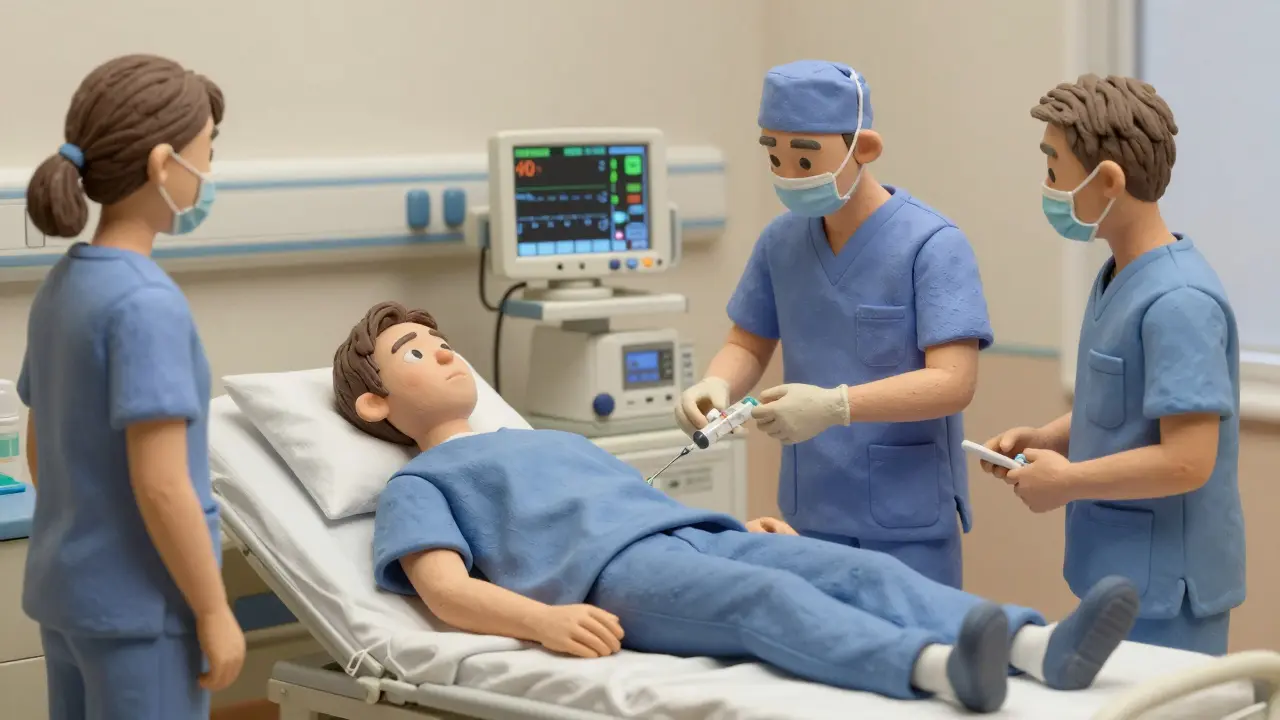
Drug allergies can feel like a dead end-your body rejects a medication you need. But there's a safe way forward. drug desensitization lets you temporarily tolerate the drug under strict medical supervision. Let's break down how this works.
What is drug desensitization?
Drug desensitization is a medically supervised procedure that enables patients with confirmed drug allergies to temporarily tolerate medications essential for their treatment by administering progressively increasing doses of the allergenic drug. Developed over decades, this technique was formally systematized in the 1990s. Today, major medical centers like Brigham and Women's Hospital use it to help patients who would otherwise have to abandon life-saving treatments.
Who qualifies for drug desensitization?
Not everyone with a drug allergy can undergo this procedure. It's reserved for patients who have no other treatment options. For example:
- Cancer patients needing chemotherapy drugs like carboplatin or paclitaxel after an allergic reaction
- People with cystic fibrosis who require antibiotics like aztreonam or gentamicin
- Those with autoimmune diseases needing monoclonal antibodies such as rituximab or infliximab
- Patients with severe infections requiring specific antibiotics like penicillin
Crucially, this is only done when there's no safe alternative medication. The American Academy of Allergy, Asthma & Immunology (AAAAI) states that desensitization is the only option for certain critical treatments.
How the procedure works step by step
Drug desensitization follows precise protocols. For intravenous drugs like antibiotics or chemotherapy, a typical 12-step process starts with a tiny dose and gradually increases. Here's what happens:
- The first dose is 1/10,000th of the full therapeutic dose
- Doses double at each step with 20-30 minutes between doses
- Monitoring includes blood pressure, pulse oximetry, and physical checks every 5 minutes
- If symptoms appear, the team may drop back to a previous dose or slow the increase
- The full therapeutic dose is reached in about 5-6 hours for most protocols
For oral drugs like aspirin or NSAIDs, the process takes longer. Doses may increase every hour or even over multiple days. Aspirin desensitization for asthma patients often requires several days of gradual dosing.
Safety measures during desensitization
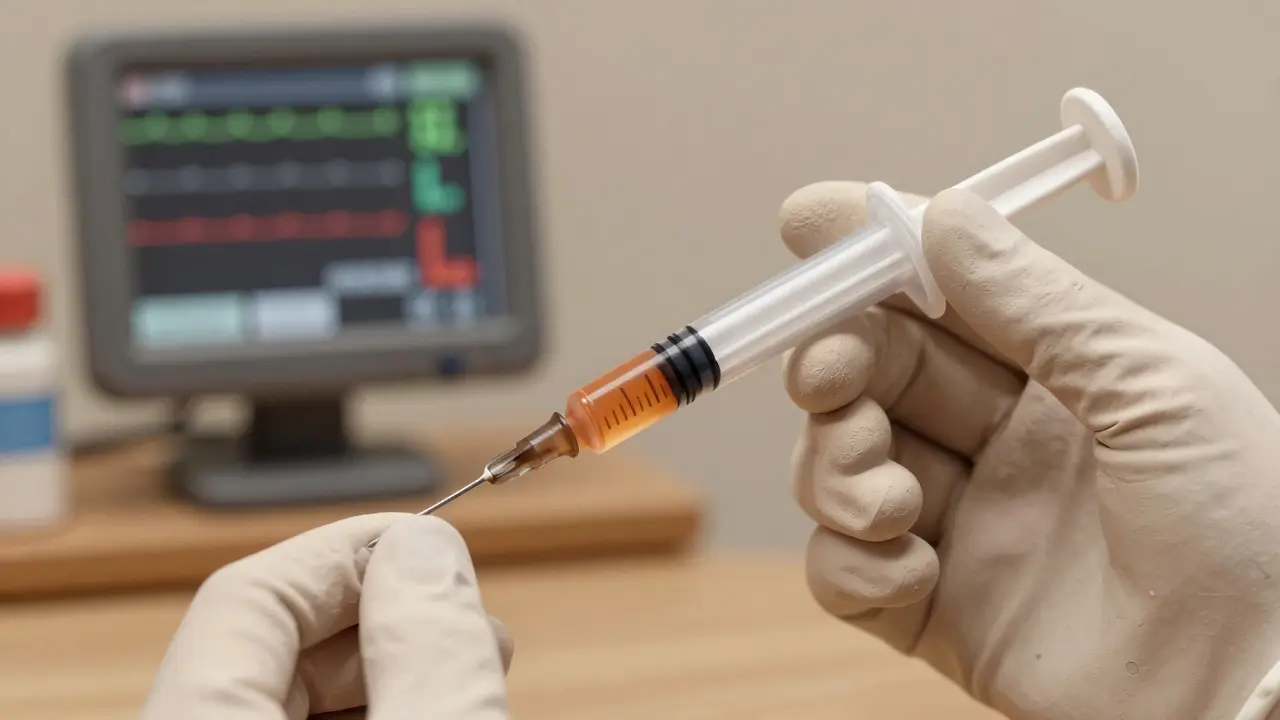
This procedure happens in a hospital setting with immediate access to emergency medications. Key safety steps include:
- Continuous monitoring of vital signs by trained nurses and allergists
- Epinephrine, antihistamines, and steroids always on hand
- Spirometry tests for patients with asthma history
- Strict adherence to written protocols specific to each patient and drug
Brigham and Women's Hospital emphasizes that "only highly trained specialists with experience in desensitization should perform the technique." If severe reactions occur-like laryngeal edema or uncontrolled hypotension-the procedure is stopped immediately.
When desensitization isn't safe
Not all allergic reactions qualify for this procedure. Experts warn against desensitization in cases like:
- Stevens-Johnson syndrome or toxic epidermal necrolysis (severe skin reactions)
- Erythema multiforme with blistering
- Organ-specific reactions like hepatitis or nephritis
- Serum sickness reactions
The GlobalRPH protocol clearly states: "Never attempt desensitization in patients with extreme allergic responses that include skin blistering or desquamation." These conditions require alternative treatment strategies entirely.

Real-world success stories
Consider Maria, a 45-year-old with ovarian cancer. Her initial chemotherapy caused a severe rash, but she couldn't switch to another drug. After a 6-hour desensitization procedure at Brigham and Women's Hospital, she completed her full treatment cycle. Her oncologist reported "complete remission with no further reactions." Similarly, James, a cystic fibrosis patient allergic to aztreonam, underwent antibiotic desensitization. His lung function improved significantly as he resumed essential treatments. The Asthma Center documented this case as "a life-saving intervention for patients with limited antibiotic options." For autoimmune patients, desensitization to monoclonal antibodies like rituximab has allowed those with rheumatoid arthritis to continue therapy without disease progression. Dr. Mariana C. Castells, Director of the Drug Hypersensitivity and Desensitization Center, notes these procedures "enable patients to complete their treatment plans and actually increase life spans."
Important considerations after desensitization
Remember: desensitization provides only temporary tolerance. The Asthma Center stresses: "REMEMBER that a desensitization procedure brings about a TEMPORARY tolerance. Interruptions in therapy or after discontinuation of therapy, the patient's hypersensitivity may return QUICKLY." This means:
- Consistent dosing is critical-missing doses can restart allergic reactions
- Emergency plans must be in place for any future reactions
- Long-term monitoring is required for patients on chronic medications
For chemotherapy or antibiotics, the procedure must be repeated if therapy stops for more than 48 hours. Always work with your allergist to maintain the desensitized state safely.
Is drug desensitization safe for all types of drug allergies?
No. Desensitization is only for specific reactions like IgE-mediated allergies or certain non-IgE reactions. It's never used for severe skin conditions like Stevens-Johnson syndrome or toxic epidermal necrolysis. Your allergist will determine if your reaction type qualifies based on detailed testing.
How long does the desensitization process take?
For intravenous drugs like antibiotics or chemotherapy, it typically takes 5-6 hours. Oral drugs like aspirin may require multiple days of gradual dosing. The exact timeline depends on the medication, your reaction history, and the protocol used by your medical team.
Can I do drug desensitization at home?
Absolutely not. This procedure requires constant monitoring by specialists in a hospital setting with immediate access to emergency medications like epinephrine. Attempting this outside a medical facility is extremely dangerous and could be fatal.
What happens if I have a reaction during the procedure?
Your medical team is prepared for this. They'll immediately stop the dose increase, treat symptoms with medications like antihistamines or epinephrine, and may reduce the dose or slow the escalation rate. Most reactions are manageable without stopping the entire procedure.
Does drug desensitization work for all medications?
It works for many drugs, including antibiotics, chemotherapy agents, NSAIDs, and monoclonal antibodies. However, it's not effective for every medication. Your allergist will review your specific case and medication history to determine if desensitization is a viable option.


one hamzah
This procedure is a game-changer for patients needing critical meds! 🌟
Rene Krikhaar
This is really important info for people who have drug allergies but need treatment like chemo or antibiotics
The procedure is carefully monitored with small doses increasing over time
It's crucial that it's done in a hospital setting with emergency meds on hand
Some people might not qualify if they have severe skin reactions
But for those who do it can be life-saving
I've seen cases where patients were able to continue their treatment safely
Katharine Meiler
Drug desensitization protocols are strictly evidence-based and require meticulous planning
Only specific reaction types qualify, such as IgE-mediated allergies or certain non-IgE reactions
Stevens-Johnson syndrome and toxic epidermal necrolysis are absolute contraindications due to the risk of severe complications
For intravenous drugs like chemotherapy agents, the procedure typically follows a 12-step process starting at 1/10,000th of the therapeutic dose
Each subsequent dose doubles with 20-30 minute intervals between administrations
Continuous monitoring of vital signs including blood pressure, pulse oximetry, and physical assessment every 5 minutes is mandatory
Emergency medications like epinephrine, antihistamines, and steroids must be readily available throughout the process
For oral medications such as aspirin, the desensitization may take several days with gradual dose increments
The procedure is never attempted outside a hospital setting with specialized allergists present
Failure to adhere to the protocol can lead to life-threatening reactions
It's crucial to maintain consistent dosing to preserve temporary tolerance
Interruptions in therapy beyond 48 hours may require restarting the entire desensitization process
The American Academy of Allergy, Asthma & Immunology emphasizes this as the only viable option for certain critical treatments
Proper patient selection and expert supervision are non-negotiable components of safe desensitization
This procedure has enabled countless patients to continue life-saving treatments they would otherwise have to abandon due to allergies
Lana Younis
Yeah, the protocols are solid but gotta watch for contraindications like SJS
For chemo patients, the 12-step IV process works but only under strict supervision
Missed doses can trigger reactions, so consistency is key
Brigham's docs do this all the time for critical cases
Not for every drug though, like some antibiotics might not be suitable
Always check with your allergist before proceeding
Albert Lua
This is such a cool procedure! I've read about it in different countries. In the US, they do it for chemo patients. In India, maybe for TB meds? Not sure. But it's great that doctors have this option. Always good to have alternatives when allergies hit. Thanks for sharing!
Samantha Beye
This is really helpful. I know someone who needed this for their chemo. It's scary but knowing there's a safe way is reassuring. Important to have specialists involved. Hope this helps others in similar situations.
anjar maike
Drug desensitization is amazing 🌟 For cancer patients needing chemo but allergic. They start with tiny doses and build up. But only in hospital with experts. No home attempts! 😅
Bella Cullen
Not sure if this is worth the risk. Seems complicated. Hospitals probably do it right but I'd skip it if possible. Just my opinion.