
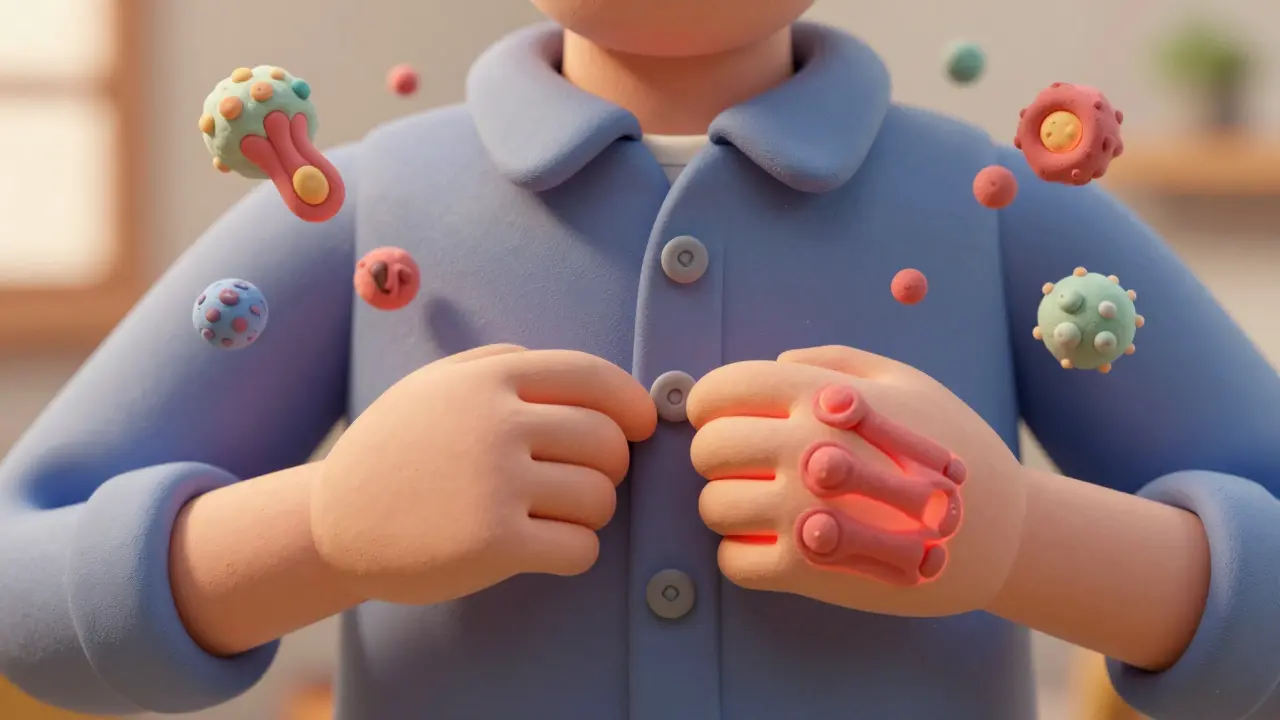
When your immune system turns against your own joints, everyday tasks become battles. Buttoning a shirt, opening a jar, or even walking to the kitchen can feel impossible. This isn’t just aging or overuse-it’s rheumatoid arthritis, a chronic autoimmune disease where your body attacks the lining of your joints, causing pain, swelling, and permanent damage if left unchecked.
What Makes Rheumatoid Arthritis Different?
Unlike osteoarthritis, which comes from wear and tear on joints over time, rheumatoid arthritis (RA) is an autoimmune condition. Your immune system, designed to fight off viruses and bacteria, mistakenly targets the synovium-the soft tissue lining your joints. This triggers inflammation, fluid buildup, and eventually erosion of bone and cartilage. The result? Joints that ache, swell, and stiffen, especially in the morning. RA doesn’t just hit one joint. It usually strikes symmetrically: both wrists, both knees, both hands. Early signs often show up in the small joints of fingers and toes. Morning stiffness lasting longer than 30 minutes-sometimes over an hour-is a red flag. Many people describe it as feeling like their joints are glued shut. Doctors diagnose RA using a mix of symptoms, blood tests (like rheumatoid factor and anti-CCP antibodies), and imaging. X-rays might show early signs like soft tissue swelling, then later, bone erosion and narrowing of joint spaces. About 1.3 million Americans live with RA, and women are two to three times more likely to be affected than men. It typically starts between ages 30 and 60, but it can appear at any age.The Hidden Costs Beyond Joints
RA isn’t just a joint disease. It’s systemic. That means it can affect your whole body. About 10-15% of people with RA also develop Sjögren’s syndrome, which causes dry eyes and dry mouth. Others experience rheumatoid nodules-firm lumps under the skin near elbows or fingers. Lung inflammation can lead to shortness of breath. Blood vessels may become inflamed. Anemia is common. And perhaps most dangerous: RA doubles your risk of heart disease. The same inflammation damaging your joints also harms your arteries. This isn’t just physical. A 2023 survey by the Arthritis Foundation found that nearly half of RA patients report depression or anxiety linked to chronic pain and loss of independence. People describe giving up hobbies-playing piano, gardening, even holding their grandchildren-because their hands won’t cooperate anymore.How Treatment Has Changed Since 1998
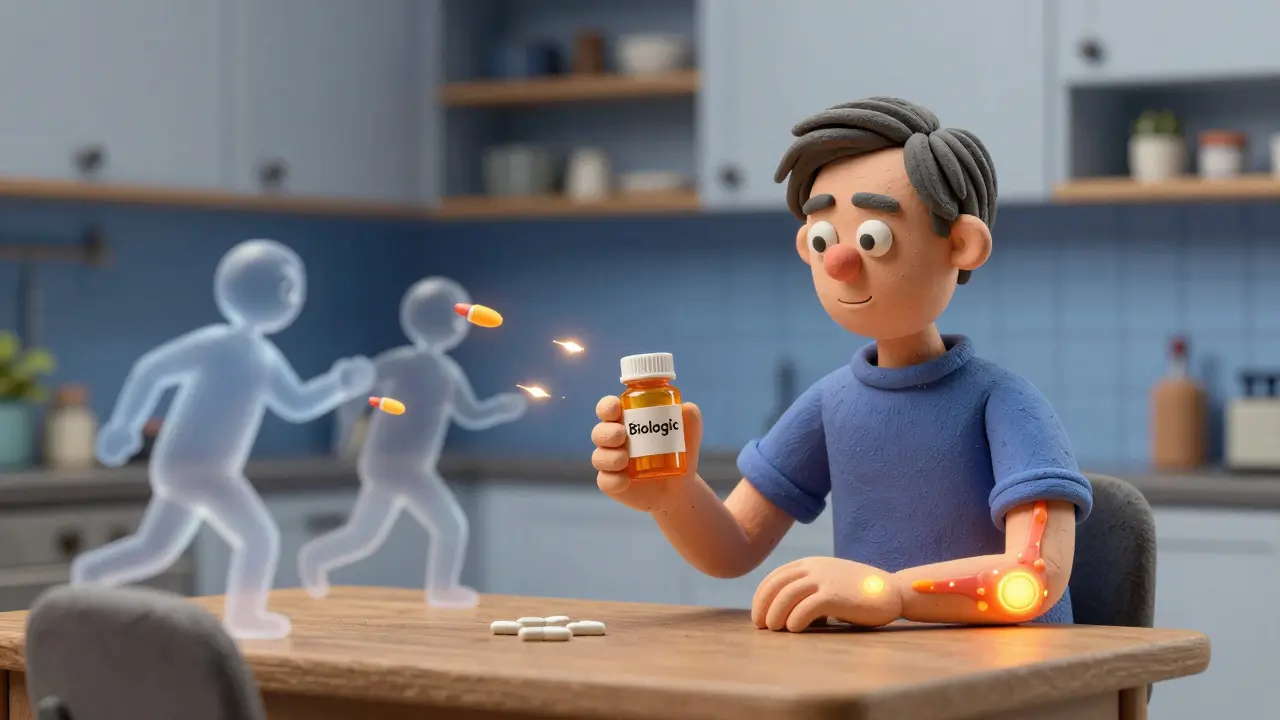
Before the late 1990s, treatment for RA was limited. Doctors relied on painkillers and steroids to manage symptoms, but they couldn’t stop the disease from destroying joints. Then came the first biologic: etanercept, approved by the FDA in 1998. It was a game-changer. Biologics are a type of disease-modifying antirheumatic drug (DMARD). Unlike older DMARDs like methotrexate (which work broadly on the immune system), biologics are designed to block specific parts of the immune response driving inflammation. Think of them as precision missiles instead of carpet bombing. There are several classes:- TNF inhibitors (adalimumab, etanercept, infliximab): Block tumor necrosis factor, a key inflammation signal.
- IL-6 inhibitors (tocilizumab): Interrupt interleukin-6, another major player in joint damage.
- B-cell inhibitors (rituximab): Deplete B-cells that produce harmful antibodies.
- T-cell blockers (abatacept): Prevent T-cells from activating the immune attack.
Real People, Real Results
Sarah K., 42, stopped playing piano in 2017 because her fingers had fused into stiff, painful claws. By 2022, after starting tocilizumab, she could play again-slowly, but fully. She told the Arthritis Foundation: “I didn’t think I’d ever feel my hands again.” On patient forums like Reddit’s r/rheumatoidarthritis, stories like Sarah’s are common. Of the 28,500 members, 78% say morning stiffness lasts over an hour. But those on biologics report better mobility, less pain, and the ability to return to work or care for family. Still, it’s not perfect. On Drugs.com, Humira (adalimumab) has a 6.5/10 average rating. Nearly one-third of users report injection site reactions-redness, itching, swelling. Others deal with fatigue, headaches, or nausea.The Downside: Risk, Cost, and Access
Biologics are powerful-but they come with serious trade-offs. Because they suppress parts of the immune system, your risk of serious infections goes up. Studies show a 1.5 to 2 times higher chance of pneumonia, tuberculosis, or skin infections. That’s why doctors screen for TB before starting treatment. You also need to stay up to date on vaccines-no live vaccines once you’re on biologics. Then there’s the cost. Annual treatment can run from $15,000 to $60,000. Even with insurance, out-of-pocket costs can hit $5,000 a year. A 2023 Arthritis Foundation survey found that 41% of patients skip doses or delay refills because they can’t afford it. That’s not just a financial burden-it’s a health crisis. Stopping treatment means flare-ups return, and joint damage accelerates. Access is another issue. Rural patients are 30% less likely to get biologics than urban ones, according to CDC data. Fewer rheumatologists, longer travel times, and limited pharmacy options create real barriers.
What Comes Next? Biosimilars and New Hope
There’s good news on the horizon. In September 2023, the FDA approved the first biosimilar to adalimumab-adalimumab-adaz. Biosimilars are nearly identical copies of biologics, but they cost 15-20% less. More are coming. By 2027, they could make biologics accessible to millions who can’t afford them now. New drugs are also in the pipeline. Deucravacitinib, a TYK2 inhibitor, showed strong results in phase 3 trials and could be approved by 2026. JAK inhibitors like upadacitinib (Rinvoq) are already gaining ground, especially for patients who don’t respond to TNF blockers. Research is also getting smarter. Scientists have identified genetic markers that predict who will respond to methotrexate with 85% accuracy. In the next five years, we may see blood tests that tell your doctor exactly which drug will work best for you-before you even start.What You Can Do Right Now
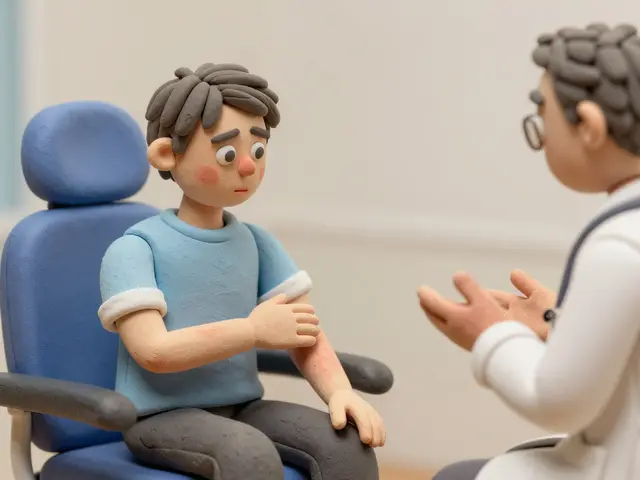
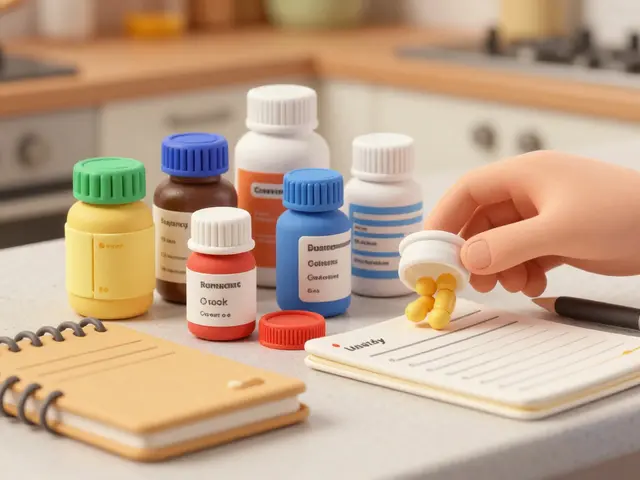
If you suspect you have RA, don’t wait. The first 3-6 months after symptoms start are critical. That’s the window when treatment can prevent irreversible joint damage. Dr. Laura Robbins of the Hospital for Special Surgery says: “If you’re catching it early, you’re giving yourself the best shot at staying active for life.” Start with your primary care doctor. Ask for blood tests for RF and anti-CCP. Get an X-ray or ultrasound. If RA is suspected, see a rheumatologist immediately. Once you’re on treatment:- Take your meds exactly as prescribed-even if you feel fine.
- Move your body. Aim for 150 minutes of walking, swimming, or cycling a week. Exercise reduces inflammation.
- Manage your weight. Losing just 5-10% of body weight can cut disease activity by 20-30%.
- Use support tools. Apps like MyRA help track symptoms and medication schedules. The Arthritis Foundation’s Live Yes! Network offers free workshops and peer coaching.




Lisa Davies
I was diagnosed with RA at 34 and thought my piano days were over... then I started tocilizumab. Now I play for my niece every Sunday. 🎹❤️ You’re not broken-you’re just waiting for the right treatment.
Benjamin Glover
Biologics? More like bioweapons. The UK NHS doesn’t hand these out like candy. Americans think medicine is a buffet.
Sai Nguyen
In India, we don’t have access to these drugs. We pray and use turmeric. Your privilege shows.
Jake Sinatra
Early intervention is statistically proven to reduce joint erosion by up to 70%. Delaying diagnosis due to cost or stigma is medically indefensible.
RONALD Randolph
You say 'biologics'-but do you know what they're derived from? Monoclonal antibodies, synthesized in CHO cells, purified via chromatography, and tested for endotoxins. This isn't 'alternative medicine.' It's precision immunology.
Raj Kumar
bro i got on adalimumab last year and my hands dont feel like concrete anymore. also i use a jar opener now lol. if you’re scared of shots, talk to your doc. they got tips.
John Brown
I used to think RA was just ‘old people stuff.’ Then my mom got diagnosed. Now I help her with her meds and remind her to stretch. It’s not just a disease-it’s a family journey.
Christina Bischof
I used to cry every morning from the stiffness. Now I just put on my slippers and breathe. Progress isn't loud. It's quiet.
Jocelyn Lachapelle
My sister went from needing help to button her shirt to hiking last summer. Biologics didn’t fix her-but they gave her back the chance to try.
Mike Nordby
The data on biosimilars is robust. A 2023 JAMA study showed non-inferiority in disease control with 85% patient satisfaction. Cost savings are real and shouldn't be ignored.
John Samuel
The miracle isn’t the drug-it’s the fact that we’ve moved from watching joints dissolve to mapping immune pathways with surgical precision. We’re not just treating RA anymore-we’re rewriting its story.
Michelle M
Sometimes I wonder if the real disease isn’t the inflammation... but the silence around it. We don’t talk about the grief of losing small things. The joy of turning a doorknob. The dignity of holding your own coffee.