
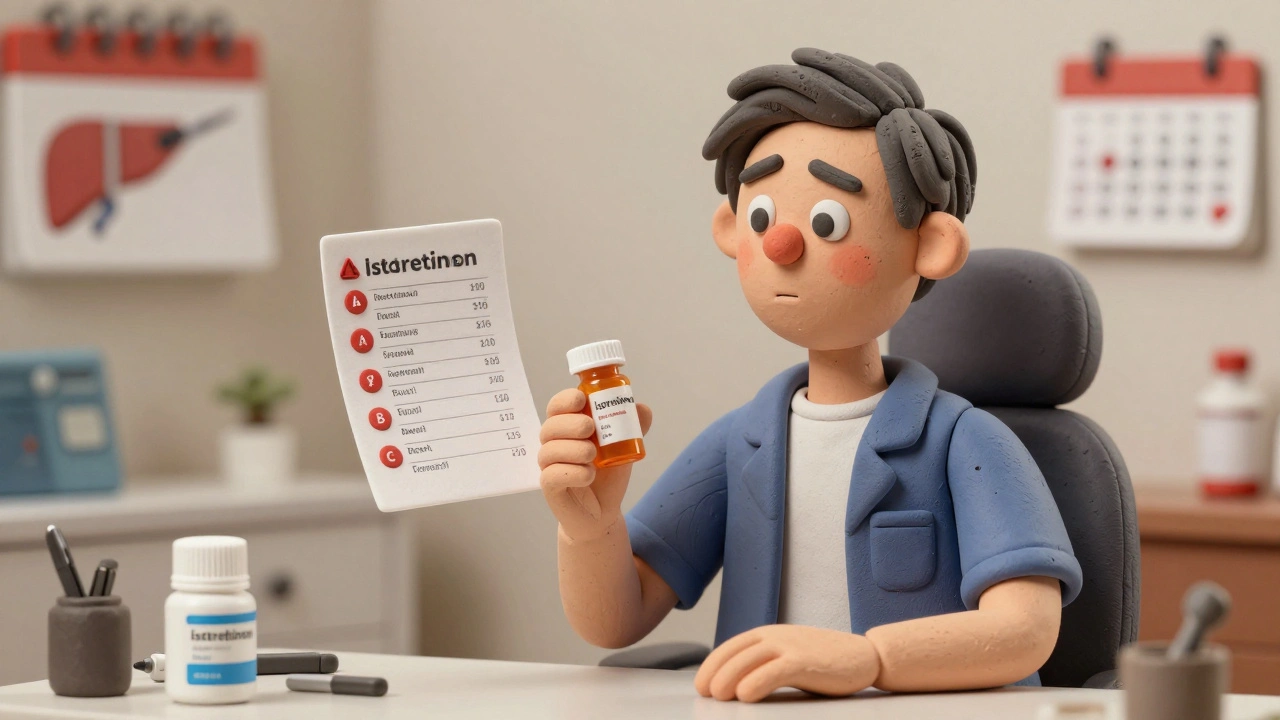
Isotretinoin isn't just another acne pill. For people with stubborn, painful cystic acne that won’t quit no matter how many creams or antibiotics they try, it’s often the only thing that works. And when it does, the results can be life-changing. But it’s not simple. This drug comes with serious rules, mandatory blood tests, and side effects that can’t be ignored. If you’re considering isotretinoin, you need to know what you’re signing up for - not just the promise of clear skin, but the full picture of what it takes to get there.
How Isotretinoin Actually Works
Isotretinoin doesn’t just treat acne - it rewires the system that causes it. Unlike topical treatments that sit on the surface, this oral retinoid attacks acne at its source. It shrinks your oil glands by up to 90%, which means way less sebum to clog pores. It stops skin cells from clumping together inside pores, so blackheads and whiteheads don’t form. It reduces inflammation, calming angry cysts and nodules. And because it cuts off the oily environment, the bacteria that feed on sebum - Cutibacterium acnes - can’t survive in large numbers.
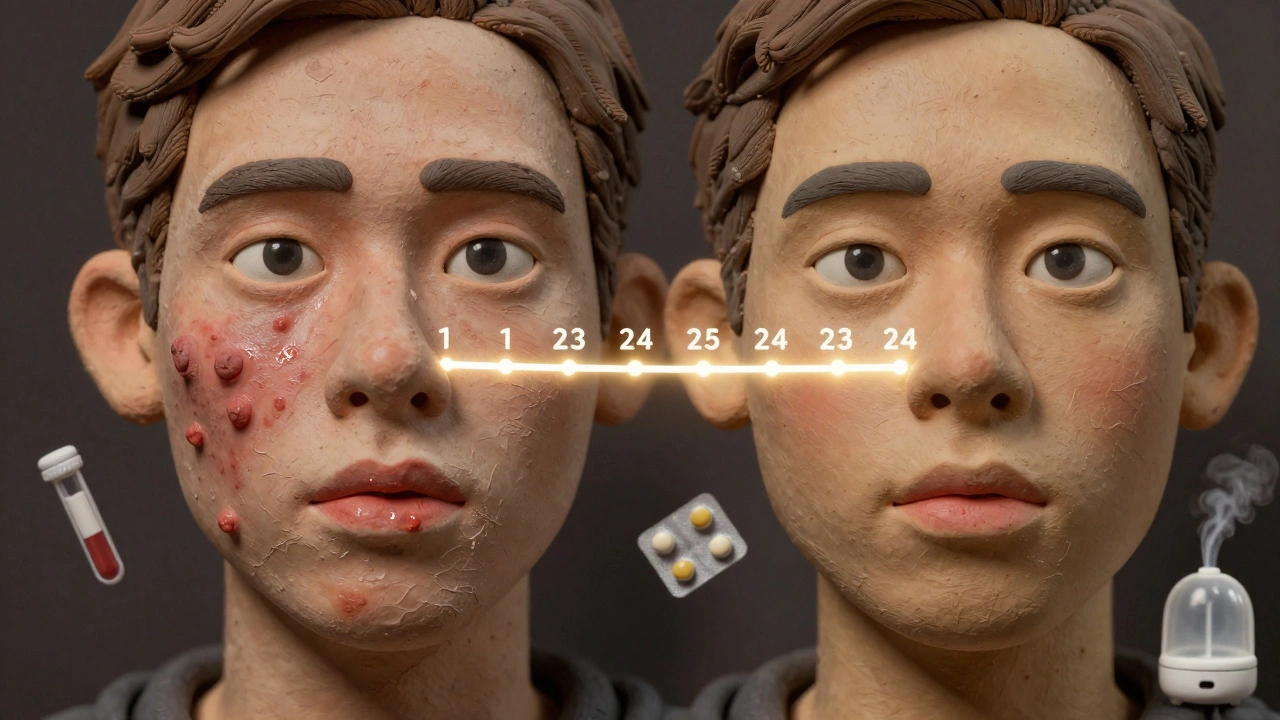
It’s not a quick fix. Most people see a flare-up in the first few weeks. That’s normal. The skin is reacting to the sudden change. But by week 6 to 8, many start noticing their cysts shrinking. By month 4, the majority see dramatic improvement. And after a full course - usually 5 to 8 months - about 80% of patients don’t need to touch acne meds again. Some stay clear for good.
Who Should Take It - and Who Shouldn’t
Isotretinoin isn’t for mild acne. If you’re dealing with a few pimples or occasional blackheads, you don’t need it. It’s reserved for severe, scarring acne: deep, painful cysts, nodules, or widespread inflammatory lesions that haven’t responded to antibiotics, benzoyl peroxide, or topical retinoids. Dermatologists use it when other options have failed - and they won’t start you on it without trying less risky treatments first.
There are absolute no-go zones. If you’re pregnant, planning to get pregnant, or not using two forms of birth control, you cannot take it. Isotretinoin causes severe birth defects. Even a single dose during early pregnancy can lead to facial, brain, or heart abnormalities in the baby. That’s why the FDA requires the iPLEDGE program - a strict system that tracks every prescription, requires monthly pregnancy tests for women of childbearing age, and demands two forms of contraception during treatment and for one month after.
People with a history of inflammatory bowel disease, severe depression, or liver disease need extra caution. While the link between isotretinoin and depression is debated, it’s taken seriously. If you’ve ever felt overwhelmed by sadness, lost interest in things you used to enjoy, or had thoughts of self-harm, tell your doctor before starting.
Lab Tests: What Gets Checked and Why
Before you get your first prescription, your doctor will order a full set of blood tests. These aren’t just paperwork - they’re your safety net.
- Liver enzymes (ALT, AST): Isotretinoin is processed by the liver. Elevated levels can signal stress or damage. If numbers creep up, your dose may be lowered or paused.
- Lipid panel (cholesterol and triglycerides): About 15-20% of patients see a spike in triglycerides. High levels raise the risk of pancreatitis, a dangerous inflammation. If your triglycerides go above 500 mg/dL, your doctor will likely stop the medication.
- Complete blood count (CBC): Checks for any unusual changes in white or red blood cells. Rarely, isotretinoin can affect bone marrow, so this baseline helps catch problems early.
- Pregnancy test: Mandatory for anyone who can become pregnant. Two negative tests are required before the first prescription.
You’ll repeat these tests every 4 to 8 weeks during treatment. No exceptions. Skipping a lab test means your pharmacy won’t refill your prescription. The iPLEDGE system locks down access until labs are complete. It’s frustrating - but it’s there to protect you.
Dosing: High vs. Low - What Works Best
For years, the standard was 0.5 to 1.0 mg per kilogram of body weight per day. For a 70 kg person, that’s 35 to 70 mg daily. But newer research is changing that.
A 2023 review of 32 studies found that a lower dose - 0.5 mg/kg/day - given in a pulsed schedule (one week on, three weeks off) over six months still gave an 88% success rate. Another study from the NIH used just 20 mg daily for three months in moderate to severe cases. Results? 90% improvement with only a 4% relapse rate after six months.
Why consider low-dose? Fewer side effects. Less dry skin. Lower risk of high cholesterol. Fewer trips to the bathroom because your lips are cracked. But there’s a trade-off: relapse rates may be slightly higher if the total cumulative dose (the sum of all pills taken over the course) is under 120 mg/kg. Most dermatologists aim for 120-150 mg/kg total. For a 60 kg person, that’s about 7,200-9,000 mg total - which means taking 20 mg daily for 6 to 9 months.
The bottom line: There’s no one-size-fits-all dose. Your doctor will pick based on your weight, acne severity, and how your body responds. Don’t assume more is better. More pills don’t always mean faster results - and they definitely mean more side effects.
Side Effects: What to Expect (and How to Handle Them)
Almost everyone on isotretinoin gets dry skin. It’s not a bug - it’s a feature. Your oil glands are being turned down, and that affects everything.
- Dry lips (90%): Use plain petroleum jelly (Vaseline) every few hours. Avoid flavored or scented balms - they make it worse.
- Dry eyes (25-30%): Switch to preservative-free artificial tears. Avoid contacts if possible - your eyes get too dry.
- Nosebleeds (15-20%): Use saline spray and a humidifier. Don’t pick your nose.
- Skin peeling, itching: Use gentle, fragrance-free cleansers. Skip scrubs and alcohol-based toners.
- Joint or muscle pain: Rare, but real. If you feel new aches or stiffness, tell your doctor. It could be a sign of something more serious.
- Initial acne flare (30-40%): Expect your skin to get worse before it gets better. It usually peaks around weeks 4-8. Stick with it. This isn’t a sign the drug isn’t working - it’s part of the process.
Some side effects are rare but serious. Watch for:
- Severe headache with vomiting (could mean pseudotumor cerebri - increased pressure in the brain)
- Yellowing of skin or eyes, dark urine (signs of liver trouble)
- Severe stomach pain, nausea, vomiting (possible pancreatitis from high triglycerides)
If you experience any of these, stop the medication and call your doctor immediately.
Results: Is It Worth It?
Ask someone who’s been through it. Most say yes. The psychological relief of clear skin is huge. People report feeling more confident, less anxious, and more willing to go out in public. Studies show 85-90% satisfaction rates among those who complete treatment successfully.
But success isn’t guaranteed. About 10-20% of people have some acne return after stopping. It’s usually mild - not the same as before. A few may need a second course. That’s not failure. It’s just how the body works.
And while the drug is powerful, it doesn’t erase scars. If you have deep pitting or discoloration from old acne, you’ll need separate treatments - lasers, chemical peels, microneedling - after your isotretinoin course ends.

What Comes After Treatment
When you finish your last pill, you’re not done. You still need to avoid pregnancy for one full month. Your liver and lipid levels will be checked one final time, usually 4 weeks after stopping.
Keep moisturizing. Your skin may stay drier than it was before. Use sunscreen daily - isotretinoin can make you more sensitive to sunburn, even months after stopping.
Don’t rush into laser treatments or aggressive peels for at least 6 months. Your skin is still healing. Give it time.
And if acne comes back? Talk to your dermatologist. It’s not the end. You might need a maintenance plan - maybe a low-dose topical retinoid, or occasional antibiotics. But you’ve already done the hardest part.
The Bottom Line
Isotretinoin is the most effective treatment we have for severe acne. It’s not perfect. It’s not easy. It demands responsibility - from you and your doctor. But for those with cystic acne that’s ruined their confidence, it’s often the only path back to normal life.
If you’re considering it, go in with your eyes open. Do the labs. Follow the rules. Use the lip balm. Don’t skip appointments. And don’t let fear stop you from asking the right questions. Clear skin isn’t just about looks - it’s about feeling like yourself again.
Can isotretinoin cause permanent dry skin?
No, isotretinoin doesn’t cause permanent dry skin. Most people notice their skin returning to normal within a few months after stopping treatment. However, some may find their skin stays slightly drier than before, especially in dry climates or with aging. Ongoing use of gentle moisturizers and sunscreen helps manage this. Permanent dryness is rare and usually linked to other factors like over-cleansing or underlying skin conditions.
How long does it take for isotretinoin to start working?
Most people start seeing improvement between weeks 6 and 10. But it’s common to experience a flare-up in the first 1-2 months. This is a temporary reaction as the skin adjusts. Don’t assume it’s not working - stick with the treatment. By month 4, 70-80% of patients report clear or nearly clear skin.
Is isotretinoin safe for men?
Yes, isotretinoin is safe for men when used under medical supervision. Men don’t need pregnancy prevention, so they skip the iPLEDGE pregnancy requirements. But they still need the same lab monitoring - liver tests, lipid panels - because the drug affects everyone the same way. Side effects like dry skin, nosebleeds, and joint pain affect men and women equally.
Can I drink alcohol while taking isotretinoin?
It’s best to avoid alcohol. Both isotretinoin and alcohol are processed by the liver. Drinking increases the risk of liver stress and elevated triglycerides. Even moderate drinking can raise your chance of liver enzyme spikes or pancreatitis. If you choose to drink, keep it minimal - one drink occasionally - and always check with your doctor.
Do I need to stop isotretinoin before surgery?
Yes. If you’re planning any surgery - especially facial or skin procedures - stop isotretinoin at least 6 months before. The drug can impair wound healing and increase scarring risk. Even minor procedures like mole removal or laser treatments should be delayed until your skin has fully recovered from the medication’s effects.
Is generic isotretinoin as effective as Accutane?
Yes. Accutane was the original brand, but it was discontinued in 2009. Today, all isotretinoin sold in the U.S. is generic, made by companies like Amneal, Mylan, and Teva. These generics contain the exact same active ingredient, in the same strengths, and follow the same FDA standards. There’s no difference in effectiveness. The only variation is in the inactive ingredients, which rarely affect how the drug works.
What to Do Next
If you’re considering isotretinoin, start with a dermatologist. Don’t try to get it from a general practitioner unless they’ve been trained in its use. Bring a list of all your current medications, including supplements. Be honest about your mental health history. Ask about dosing options - low-dose regimens are becoming more common and may suit you better.
Be ready for the iPLEDGE process. It’s bureaucratic, but it’s necessary. Sign up early - it can take 7-10 days to get approved. Schedule your baseline labs before your first appointment. And remember: this isn’t a quick fix. It’s a commitment. But for many, it’s the best investment they’ve ever made in their skin - and their confidence.


Olivia Hand
So let me get this straight - you’re telling me this drug shrinks my oil glands like someone turned down a faucet in my face? I’m not mad, I’m just impressed. My face used to look like a battlefield after a Taco Bell binge. Now? I’m basically a porcelain doll. Still dry as a desert, but hey - I can finally take selfies without feeling like a horror movie extra.
Helen Maples
For anyone considering isotretinoin: DO NOT SKIP LABS. I missed one appointment because I was ‘too busy’ - guess what? My triglycerides hit 620. Pancreatitis scare. Hospital. Two weeks off work. The iPLEDGE system isn’t bureaucracy - it’s your lifeline. Don’t be that person.
Desmond Khoo
Bro. I took this for 7 months. Lips cracked like the Grand Canyon. Eyes felt like sandpaper. But when I saw my reflection without a single cyst? I cried. Like, ugly-sobbing. Worth every second. 🥹💖
Ted Rosenwasser
Low-dose regimens? Pathetic. You’re not treating acne - you’re negotiating with it. Real treatment requires the full 120-150 mg/kg cumulative dose. Anything less is just wishful thinking disguised as ‘personalized medicine.’ If you’re not going all-in, why even start? You’re wasting your time and your doctor’s patience.
Kurt Russell
Listen. I was 19. My face looked like a crime scene. I got on isotretinoin. Six months later, I walked into a job interview without a single zit. Got the job. Got the girl. Got my confidence back. This isn’t just medicine - it’s a second chance at life. Don’t let fear rob you of that.
Kyle Flores
my lips were so dry i forgot what kissing felt like. then one day i woke up and my skin was just... normal? like i never had acne. i still use vaseline like its my job tho. and yeah i drank wine once. my liver cried. dont be me.
Nancy Carlsen
As a mom of a teen on isotretinoin - I want to say thank you for this post. I was terrified. But seeing how detailed this is? I actually feel prepared. We’ve got the lip balm, the tears, the labs - and yes, the awkward conversations about birth control. You made this less scary. 💪❤️
Sam Mathew Cheriyan
you know isotretinoin was created by big pharma to make people buy more moisturizer right? and the iPLEDGE thing? that’s just to keep you dependent. they dont want you cured - they want you buying Vaseline for life. also my cousin took it and his dog got sick. coincidence? i think not.
Ryan Sullivan
The assertion that isotretinoin achieves an 80% remission rate is statistically misleading. The cohort studies referenced suffer from selection bias - they exclude non-compliant patients, those with comorbid psychiatric conditions, and those who discontinued due to side effects. A true intention-to-treat analysis would likely reduce efficacy to 58%. This is not a panacea - it is a high-risk intervention masquerading as a miracle.
Ashley Farmer
I just want to say - if you’re scared to start this, you’re not alone. I cried before my first pill. I thought I’d be broken forever. But you don’t have to be perfect. You just have to show up. Go to your labs. Use the lip balm. Breathe. You’re not failing if you’re struggling - you’re human. And you’re going to be okay.
Wesley Phillips
Low dose? Please. I took 80mg a day and still had to use a humidifier in my bedroom. My nose bled during a Zoom call. My girlfriend thought I was dying. But my skin? Crystal. No scars. No shame. If you’re not going full nuclear, why bother? Also - no alcohol. Ever. Your liver will thank you. Or at least not sue you.
Kyle Oksten
There’s a quiet dignity in choosing to endure discomfort for a future self you believe in. Isotretinoin doesn’t just clear skin - it forces you to confront your relationship with your body. You’re not just taking a pill. You’re choosing to stop hiding. That’s the real treatment.
Ernie Blevins
everyone who takes this is just a walking side effect. dry lips? fine. depression? oh you’re just weak. liver damage? you should’ve known better. this drug is just a fancy way of saying ‘you’re not good enough as you are.’
Stacy here
Did you know the FDA only approved isotretinoin because of a secret 1980s meeting with Big Pharma and the Illuminati? The real reason they require iPLEDGE is to track who’s cured - so they can target them for future mind-control experiments. Also, your skin will never be the same. They don’t tell you that. But I’m here to tell you. You’ve been warned.
David Brooks
I was on isotretinoin for 8 months. I went from hiding in hoodies to wearing tank tops in public. I danced at my cousin’s wedding. I kissed someone without covering my face. This drug didn’t just change my skin - it changed my soul. Don’t wait. Don’t overthink. Just do it. Your future self is begging you.