
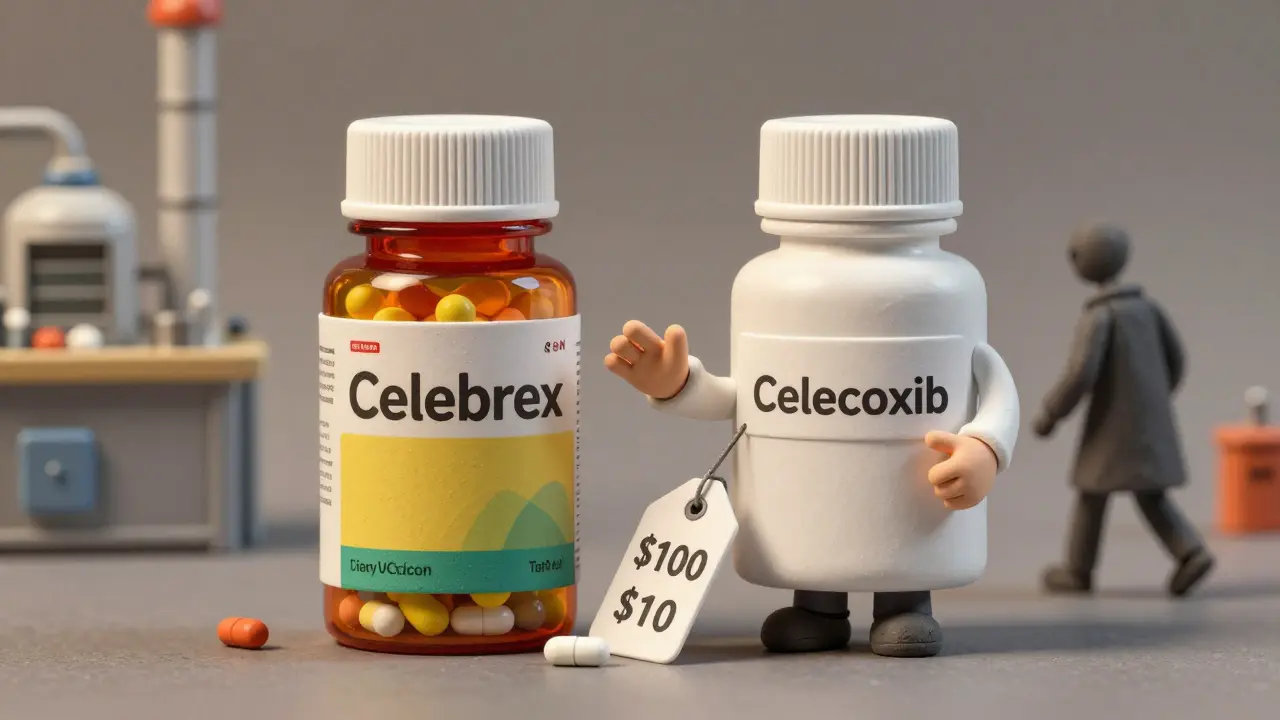
When a blockbuster drug loses its patent, the brand company doesn’t just sit back and watch its sales collapse. Instead, many of them launch something surprising: a version of their own drug - identical in every way - but sold under a generic label at a fraction of the price. This isn’t a mistake. It’s not charity. It’s a calculated business move called an authorized generic.
What Exactly Is an Authorized Generic?
An authorized generic is the exact same drug as the brand-name version. Same active ingredient. Same inactive ingredients. Same pills, same capsules, same manufacturing process. The only differences? The packaging is simpler, the name is different, and the price is lower. It’s made by the original brand company - or a subsidiary - and sold without the brand name on it. For example, Pfizer makes Celebrex, a popular painkiller. When the patent neared expiration, Pfizer launched Greenstone’s celecoxib - the exact same pill, just without the Celebrex logo. Same factory. Same quality control. Same doctor prescriptions. But now it’s priced like a generic. Unlike regular generics, which go through a separate FDA approval process called an ANDA, authorized generics operate under the original brand’s New Drug Application (NDA). That means no new testing, no 18-24 month wait. The brand company can launch it overnight once the patent expires - or even before.Why Do Brands Do This? It’s Not About Helping Patients
At first glance, this seems generous. But the real reason is simple: to keep control of the market. When a patent expires, the brand loses its monopoly. Generic competitors flood the market. Prices drop fast. Within a year, the brand’s sales often plummet by 80-90%. That’s a billion-dollar drug turning into a $100 million one overnight. If the brand just lets that happen, they lose everything. But if they launch their own authorized generic, they get to keep a piece of the action. Instead of losing 100% of the market to competitors, they might hold onto 15-20% - still a massive chunk of revenue. Take a drug with $1 billion in annual sales. Even keeping 15% of the post-patent market means preserving $100-150 million in revenue. That’s not a loss. That’s damage control.The Hatch-Waxman Act and the 180-Day Power Play
The U.S. has a law called the Hatch-Waxman Act. It gives the first generic company to challenge a patent a special 180-day exclusivity period. During that time, no other generic can enter the market. That’s a golden window - the first generic can charge nearly brand prices and rake in huge profits. Brand companies don’t want that. So they launch their own authorized generic right at the start of that 180-day window. Now, instead of one generic company enjoying a monopoly, there are two: the original brand’s version and the challenger’s version. The result? Prices drop fast. The first generic can’t charge premium prices anymore. Their profit potential shrinks. Some even walk away from the market entirely. The Federal Trade Commission found this in 2011: when authorized generics entered during the exclusivity period, prices were significantly lower than when they didn’t. Consumers won. The first generic lost. The brand company kept its market share.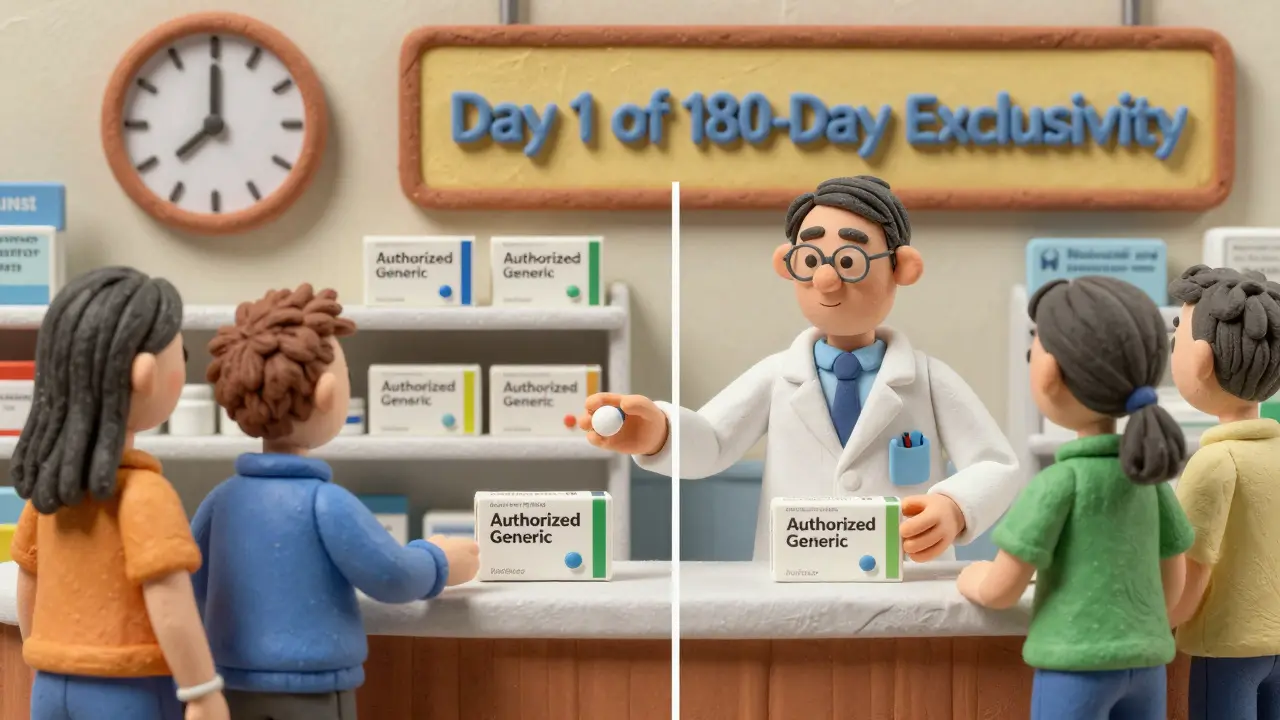
Segmenting the Market Like a Pro
This isn’t just about price wars. It’s about customer segmentation. Some patients - and insurers - are willing to pay more for the brand name. Maybe they trust it. Maybe they’ve been on it for years. Maybe their doctor prefers it. The brand keeps selling the original at full price to that group. Meanwhile, the authorized generic targets the price-sensitive crowd: people on Medicaid, Medicare Part D, or high-deductible plans. They don’t care about the brand. They just want the same medicine at a lower cost. So the brand captures both sides. Premium customers stay loyal. Budget customers stay with the same drug - just under a different label. No one switches to a competitor’s generic. No one gets a different formulation that might not work as well. Studies show over 80% of Americans prefer the option of an authorized generic because they know it’s identical to the brand. That’s not just convenience - it’s trust. And the brand company uses that trust to keep customers from leaving.Stopping Generic Competition Before It Starts
In the past, most authorized generics launched after a generic competitor entered the market. But that’s changing. From 2020 to 2023, brand companies started launching authorized generics earlier - sometimes even before any generic has filed for approval. This is a preemptive strike. It’s a signal: “We’re coming for your profit. Don’t bother.” It’s psychological warfare. Generic manufacturers spend millions developing a drug, filing paperwork, and preparing for launch. If they find out the brand is already planning to flood the market with its own version, they might decide it’s not worth the risk. Why spend $50 million to enter a market where you’ll be undercut by the original maker? Some brands even use distribution tricks. They sell the authorized generic only through mail-order pharmacies or specific retail chains. That keeps it from appearing side-by-side with the brand on a pharmacy shelf. No direct price comparison. No customer confusion. Just quiet market capture.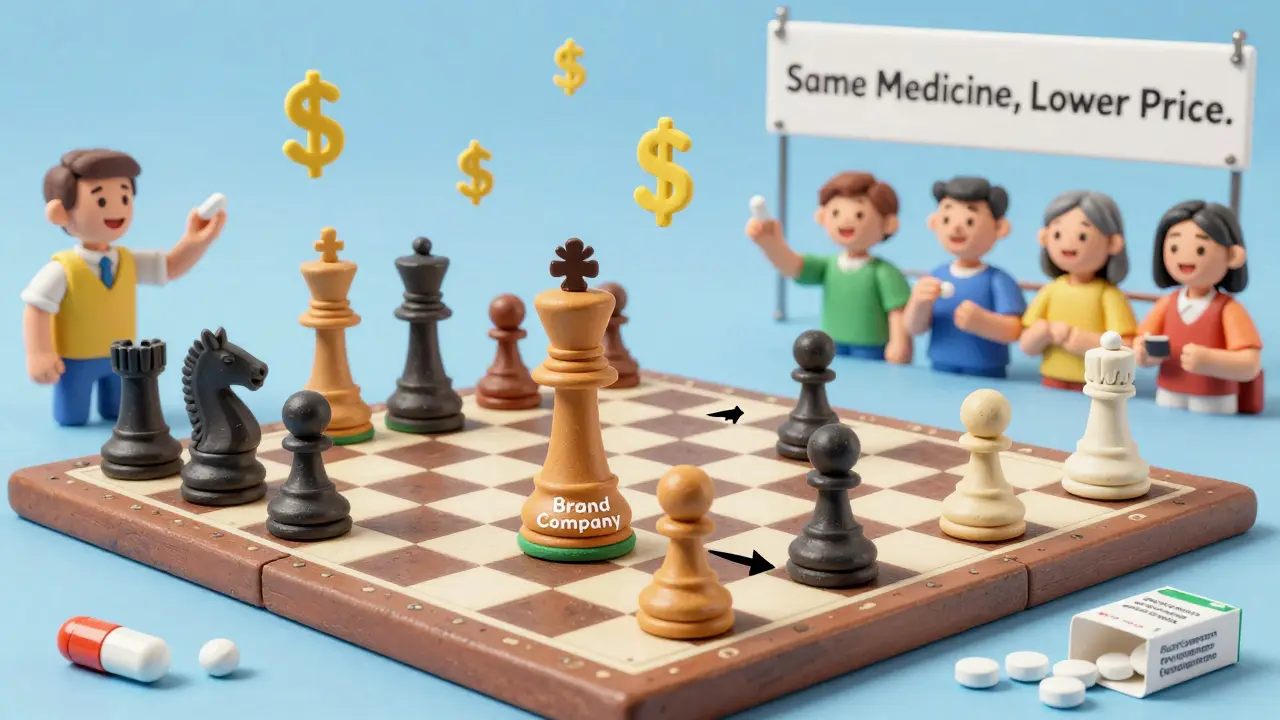
What About Safety? Are Authorized Generics Really the Same?
Yes. And that’s the point. Regular generics only need to prove they’re bioequivalent - meaning the active ingredient behaves the same way in the body. But they can use different fillers, dyes, or coatings. For most drugs, that’s fine. But for drugs with a narrow therapeutic index - like warfarin, lithium, or thyroid meds - even small changes can cause problems. An authorized generic eliminates that risk. It’s the exact same pill. Same chemistry. Same manufacturing. No guesswork. That’s why doctors often prefer it for sensitive cases. Pharmacists know this too. Many will automatically substitute a brand for its authorized generic without asking - because they know it’s identical.The Bigger Picture: What’s Next?
This strategy isn’t slowing down. As more expensive specialty drugs - like biologics for cancer or autoimmune diseases - lose patent protection, brands are preparing to do the same thing. Biologics are complex. They’re not pills. They’re made from living cells. So far, the FDA hasn’t created a clear path for “authorized biosimilars.” But companies are watching closely. When the rules open up, expect the same playbook: the brand will launch its own version of the biosimilar at a lower price - and keep control of the market. The FTC still watches this space. Some critics argue it’s anti-competitive. But the data shows something else: lower prices, more choices, and patients getting the same drug they trust - just cheaper. For brand companies, it’s not about being evil. It’s about survival. For patients, it’s about access. For the system, it’s about cost control.Bottom Line
Authorized generics aren’t a loophole. They’re a business strategy built into the rules of the pharmaceutical game. Brand companies use them to protect revenue, block competitors, and keep customers loyal - all while offering a better deal to price-sensitive buyers. It’s not charity. It’s capitalism. And it’s working - for everyone except the generic companies hoping to cash in on a monopoly.Are authorized generics the same as regular generics?
Yes and no. Authorized generics are made by the original brand company and are identical in every way - same active and inactive ingredients, same manufacturing process. Regular generics only need to match the active ingredient and prove bioequivalence. They can use different fillers or coatings, which sometimes affects how the drug works in sensitive cases.
Why are authorized generics cheaper than the brand name?
They’re cheaper because they don’t carry the marketing, advertising, and brand-building costs that the original drug does. The brand company saves money by dropping the fancy packaging and name recognition. But since they’re made in the same factory, the production cost is nearly identical.
Can I ask my pharmacist for an authorized generic?
Yes. You can ask your pharmacist if an authorized generic is available for your prescription. Many pharmacies stock them because they’re identical to the brand and cost less. Some insurance plans even prefer them because they save money without compromising quality.
Do authorized generics affect how my insurance works?
Usually, they work the same way as regular generics. Many insurance plans have lower copays for generics, including authorized ones. Some plans even list them separately on their formulary. Always check your plan’s drug list - but in most cases, switching to an authorized generic will lower your out-of-pocket cost.
Is it safe to switch from a brand to an authorized generic?
Yes. Because authorized generics are identical to the brand name in every way - including inactive ingredients - switching is safe for nearly all patients. For drugs with narrow therapeutic windows (like seizure meds or blood thinners), authorized generics are often the safest generic option because they eliminate formulation variability.
Why don’t all brand companies launch authorized generics?
Not every brand has the infrastructure or incentive. Some companies don’t have their own manufacturing facilities. Others may not expect enough market share to make it worth the effort. Also, if the drug’s patent expires in a market with many generic competitors, launching an authorized generic might not make financial sense. It’s a strategic choice, not a universal one.

Kunal Kaushik
So basically big pharma is like, 'Hey, we made this drug, now we're gonna sell it cheaper so you don't go to some random generic company?' 😅 Smart. Not evil. Just capitalism with a smile. I get it. My grandma takes celecoxib and doesn't care if it says 'Greenstone' on the bottle - she just wants it to work. 🙌
Sherman Lee
They're not just launching generics - they're buying the whole damn market before anyone else can breathe. This isn't business. It's a monopoly sandwich. The FTC? They're asleep at the wheel. You think this is about patients? Nah. It's about keeping the cash cow alive. They're not helping you - they're just making sure you don't have a choice. 🤫
Daz Leonheart
Man, I never thought about it like this. I always assumed generics were just cheaper knockoffs. But if it's the exact same pill from the same factory? That’s actually kinda cool. I’d take it. No need to pay extra for a logo. Just give me the medicine. 🙏
Coy Huffman
It’s wild how the system is designed to let the original company play both sides. They own the recipe, they own the factory, they own the distribution. The 'generic' isn't a competitor - it's a sibling. And the real losers? The little generic startups who spend years trying to break in, only to get drowned by the original maker's shadow. Kinda sad, really.
Amit Jain
Authorized generic = same pill, less money. Simple. No magic. No tricks. Just good sense. If your insurance covers it, take it. No need to pay extra for the brand name. Save your cash for food or rent.
Keith Harris
Oh, so now they're playing 4D chess with our prescriptions? Of course they are. They’ve been doing this since the 80s. The 'authorized' part? That’s just PR fluff. They’re not helping you - they’re silencing competition with their own weaponized version of your medicine. This isn’t capitalism. It’s corporate feudalism.
Mandy Vodak-Marotta
Okay, but let’s be real - I used to be terrified of switching from brand to generic. Like, what if my anxiety meds stopped working? What if my thyroid went haywire? Then I found out my brand was just an authorized generic in disguise - same factory, same batch code, same everything. I switched and saved $120 a month. My therapist didn’t even notice. I think the real villain here is the fear of change, not the pill itself. 🤷♀️
Alec Stewart Stewart
Just wanted to say - if you’re on a high-deductible plan or Medicaid, ask for the authorized generic every time. Pharmacists know about it. Insurance loves it. And you get the same exact drug. No risk. Just savings. It’s a win-win. Don’t let the brand name fool you - your health doesn’t care about logos.
Geri Rogers
Y’all are acting like this is some new scam. Newsflash: Big Pharma has been doing this since the 90s. The FTC’s been warning them for decades. They don’t care. They’ve got lawyers, lobbyists, and a whole damn industry built on this loophole. You think your 'cheap' generic is cheap? It’s only cheap because the brand already took 80% of the pie. And they’re still smiling. 😈
Samuel Bradway
I never knew this was a thing until my pharmacist mentioned it last month. I was like, 'Wait, so this is the same pill I’ve been paying $200 for?' She nodded. I switched. Saved $150. No side effects. No drama. Just… cheaper medicine. Honestly? I’m kinda mad I didn’t ask sooner.
Caleb Sutton
They’re lying. The FDA doesn’t inspect these 'authorized' factories the same way. It’s all smoke and mirrors. You think they’d let you know if it was safe? Nah. They want you hooked. This is how they control you. Wake up.
pradnya paramita
From a regulatory standpoint, the NDA-based authorization bypasses the ANDA pathway entirely, thereby eliminating the 18-month bioequivalence testing window. This grants the originator a first-mover advantage under the Hatch-Waxman framework, effectively neutralizing the 180-day exclusivity incentive for the first generic filer. The strategic deployment of authorized generics constitutes a form of 'evergreening lite' - not through patent extension, but through market preemption via identical product substitution.
Jamillah Rodriguez
So… they’re just copying themselves? 😴 Like, I get it’s smart business, but it’s also kinda… lazy? Why not just lower the price on the brand instead of making a whole new label? Feels like they’re just playing dress-up with pills.
Janice Williams
This is a textbook example of regulatory capture. The FDA, the FTC, Congress - all complicit. The pharmaceutical industry doesn't just play the game; they wrote the rulebook. And now they're using it to monopolize the very market they claim to be 'helping.' This isn't capitalism. It's institutionalized theft dressed in white coats.