
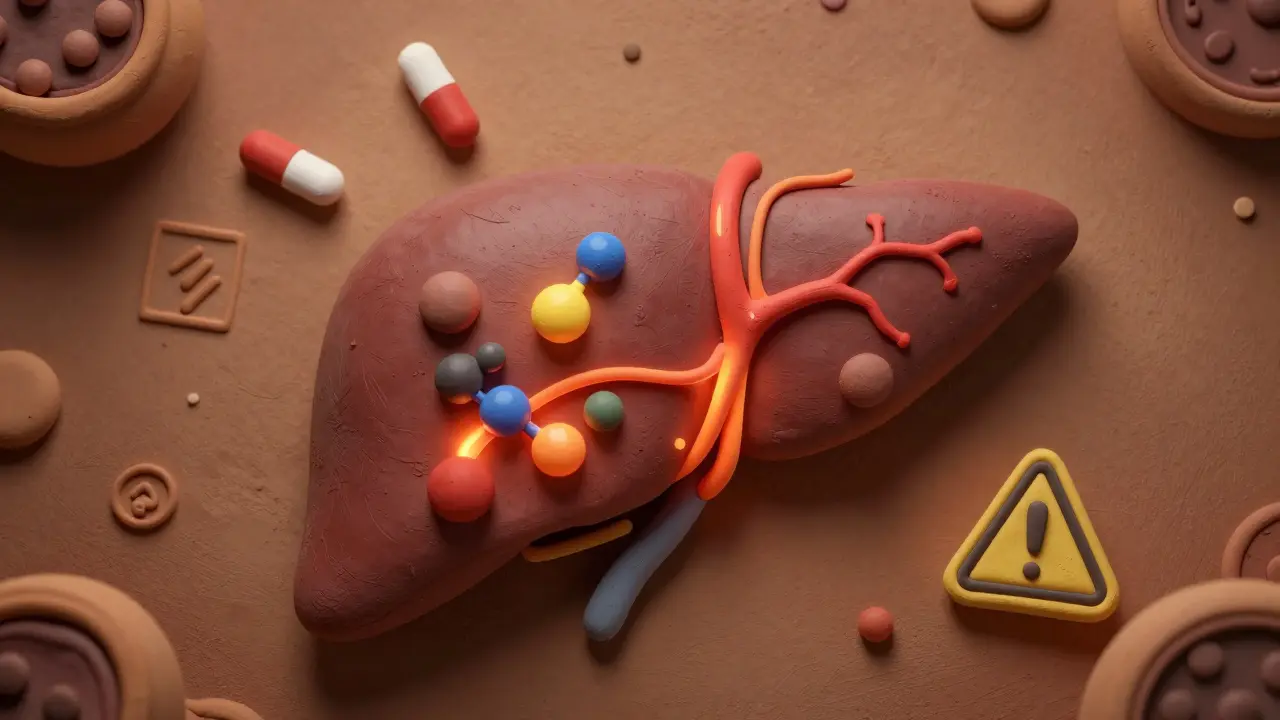
When you’re using cannabis-whether it’s CBD oil, THC gummies, or smoked flower-your body doesn’t treat it like a harmless supplement. It’s a powerful chemical that talks directly to your liver, your brain, and the medications you’re already taking. For many people, this is a blind spot. They think, "It’s natural, so it’s safe," but the truth is far more complicated. In fact, cannabis can interfere with over half of the most commonly prescribed drugs, sometimes with life-threatening results.
How Cannabis Changes How Your Medications Work
Cannabis doesn’t just add to your meds-it changes how your body processes them. The main culprit is a group of liver enzymes called cytochrome P450, or CYP450. These enzymes break down about 60% of all prescription drugs, from blood thinners to antidepressants. CBD and THC, the two main compounds in cannabis, shut down these enzymes like turning off a faucet. When that happens, your medications build up in your bloodstream instead of being cleared out.
For example, if you’re on warfarin (a blood thinner), adding CBD can cause your INR levels to jump by nearly 50% in just a few days. That means your blood takes much longer to clot. One study tracked 17 patients who started CBD while on warfarin. Nearly half ended up in the ER with unexplained bruising or internal bleeding. That’s not a theory-it’s real, documented danger.
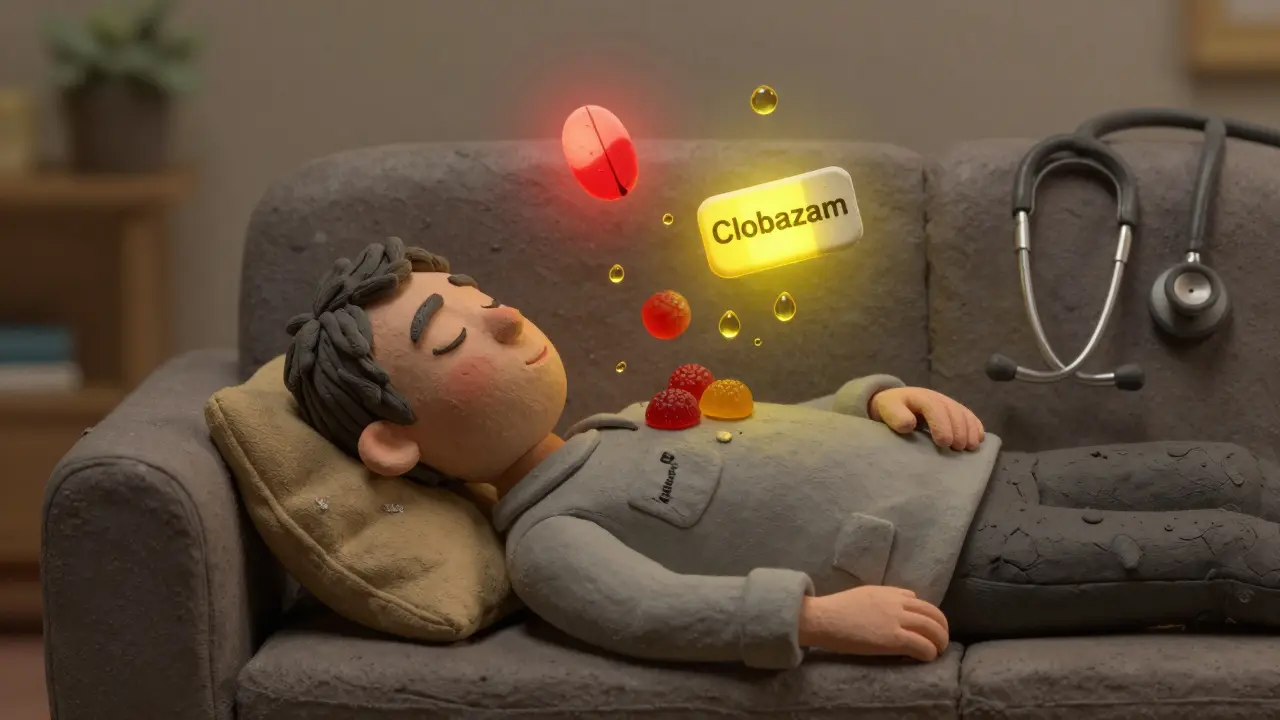
Same goes for clobazam, a drug used to treat severe epilepsy. When patients add CBD oil, their clobazam levels can spike by up to 500%. That’s why many neurologists now reduce the clobazam dose by 25-40% as soon as someone starts CBD. One patient on Reddit wrote: "I couldn’t walk straight. My neurologist cut my dose immediately. I was practically asleep all day."
High-Risk Medications You Should Avoid With Cannabis
Some drugs are just too dangerous to mix with cannabis. These aren’t "maybe" risks-they’re clear red flags.
- Warfarin: Even a small amount of CBD can push INR levels into dangerous territory. The American College of Clinical Pharmacy recommends avoiding cannabis entirely if you’re on warfarin. If you can’t stop, your INR must be checked every 3-5 days-not weekly.
- Tacrolimus: Used after organ transplants to prevent rejection. Cannabis can cause tacrolimus levels to triple or quadruple. That means kidney failure, nerve damage, or even death. Transplant centers now screen all patients for cannabis use.
- Calcineurin inhibitors (like cyclosporine): Same story. These drugs have a tiny window between working and poisoning you. Cannabis pushes you right over the edge.
If you’re taking any of these, don’t guess. Talk to your doctor before even trying a drop of CBD oil.
Moderate-Risk Interactions: Watch for Warning Signs
These combinations won’t always cause disaster-but they can make you feel awful or put you at risk.
- Benzodiazepines (alprazolam, lorazepam): Both cannabis and these drugs calm your nervous system. Together, they can make you so sleepy you can’t stand up. In elderly patients, this increases fall risk by 47%. One user on Reddit said: "I took my Xanax and a gummy. I woke up on the floor. Didn’t remember how I got there."
- Opioids (oxycodone, hydrocodone): Cannabis can slow how fast your body clears these drugs. That means more sedation, slower breathing, and higher overdose risk-even if you’ve been on the same dose for years.
- Calcium channel blockers (amlodipine, diltiazem): These lower blood pressure. Cannabis can boost their effect, causing dizziness, fainting, or dangerously low BP. One study found 25% of patients on amlodipine + CBD had symptoms severe enough to need a dose change.
If you notice new drowsiness, confusion, or unexplained bruising after starting cannabis, stop it and call your doctor. Don’t wait.
Low-Risk, But Not Risk-Free
Some interactions are mild and rarely cause problems-but they’re not zero.
- SSRIs (sertraline, fluoxetine): CBD might raise serotonin levels a little, but in most cases, it doesn’t cause serotonin syndrome. One survey found 41% of users on SSRIs felt no change at all. Still, if you’re prone to anxiety or mood swings, monitor yourself closely.
- Statins (atorvastatin): CBD can slightly raise statin levels, but no cases of muscle damage (rhabdomyolysis) have been linked to this combo. Still, if you start feeling unexplained muscle pain, get it checked.
Just because it’s "low risk" doesn’t mean you can ignore it. Everyone’s body reacts differently.
How You Take Cannabis Changes the Risk
It’s not just what you take-it’s how.
If you smoke or vape cannabis, THC hits your brain in under 10 minutes. That’s why mixing it with alcohol or benzodiazepines can make you pass out fast. Inhalation is sharp, fast, and dangerous if you’re not careful.
Oral products-oils, gummies, capsules-are slower. They take 2-4 hours to peak and last 6-8 hours. That means the interaction window is longer. If you take CBD oil at night with your blood pressure pill, you might not notice the dip until the next morning.
Also, full-spectrum CBD (with a little THC) is more likely to cause interactions than CBD isolate. The THC and other plant compounds boost the effect on liver enzymes. One study showed full-spectrum products inhibited CYP3A4 by 37% more than pure CBD at the same dose.
What to Do If You’re Using Cannabis and Medications
Here’s a simple 5-step plan based on guidelines from DC Health and the American Pharmacists Association:
- Be honest. Tell your doctor or pharmacist exactly what you’re using: CBD oil? THC gummies? How much? How often? Don’t say "just a little." Say "25 mg of full-spectrum CBD every night."
- Check your meds. Use the University of Washington’s free Cannabis Drug Interactions tool. It’s updated quarterly and tells you exactly which of your drugs are risky.
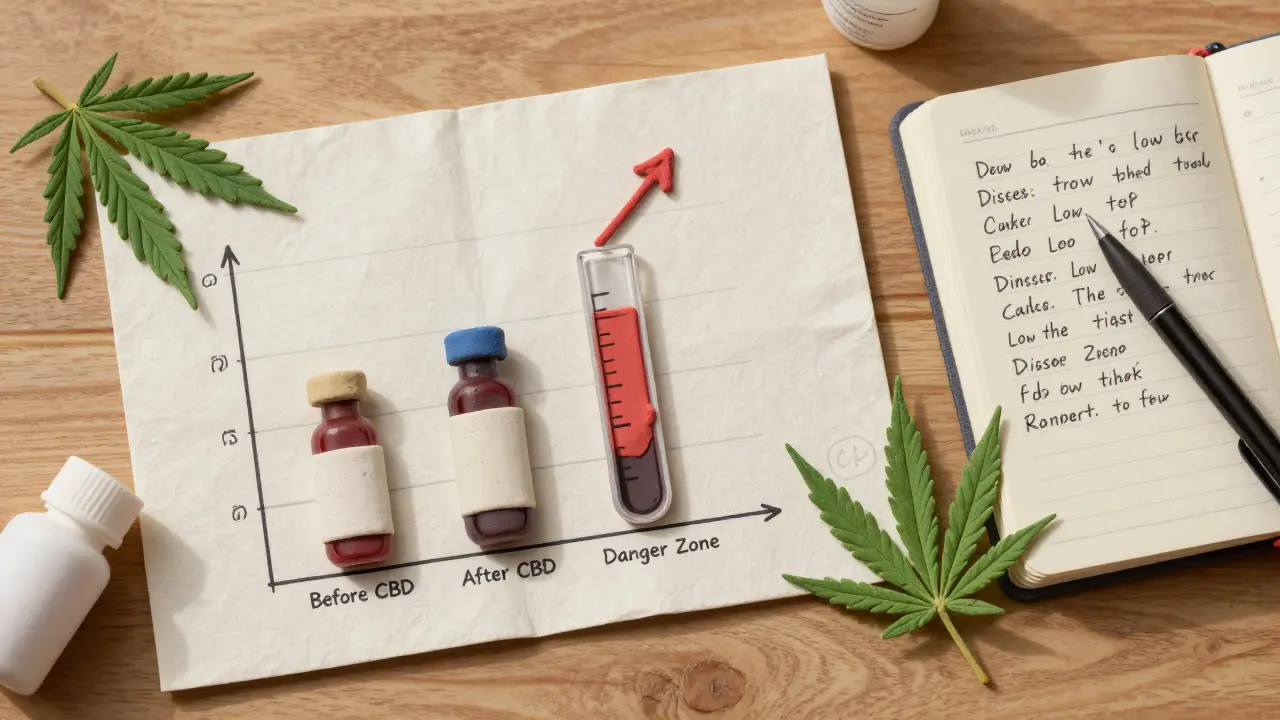
- Get baseline tests. If you’re on warfarin, tacrolimus, or clobazam, get a blood test before starting cannabis. That way, you know what "normal" looks like for you.
- Monitor closely. After starting cannabis, check your INR, drug levels, or symptoms within 48-72 hours. That’s when most interactions kick in.
- Adjust slowly. If your levels go too high, your doctor might lower your medication dose by 10-25%. Don’t try to adjust it yourself.
And if you’re using cannabis for sleep or pain? Consider spacing it out. The Mayo Clinic suggests taking CBD at least 2 hours before or after your meds. It’s not proven, but it might help.
The Bigger Picture: Why This Matters Now
More people are using cannabis than ever. In 2022, over 58 million Americans used it-and 42% of them were also on prescription drugs. Yet only 12 states require pharmacists to warn patients about interactions. Most don’t even ask.
And the problem is getting worse. New products flood the market every month: CBD gummies with melatonin, THC-infused protein shakes, vape pens labeled "100% natural." No one tests them for drug interactions. No one regulates the doses. You have no way of knowing what’s really inside.
Meanwhile, the FDA has received over 1,300 reports of possible cannabis-drug interactions since 2018. That’s just what people reported. The real number is probably 10 times higher.
Research is catching up. The NIH is funding a $2.3 million study on CBD and warfarin. The FDA just launched a national clinical trials network to study these interactions systematically. But until then, you’re on your own.
Final Advice: Don’t Guess. Test.
Cannabis isn’t the enemy. But treating it like a harmless tea is dangerous. If you’re on any medication-especially blood thinners, seizure drugs, or transplant meds-assume there’s a risk until proven otherwise.
Don’t rely on Reddit stories. Don’t trust a dispensary clerk. Don’t assume "natural" means safe. Talk to your doctor. Get your levels checked. Track your symptoms. Keep a journal: "Took 20 mg CBD. Felt dizzy after 3 hours. My BP was 90/60." That’s how you stay safe.
The science is clear: cannabis changes how your body handles medicine. Ignoring that isn’t brave-it’s reckless. You deserve to feel better. But not at the cost of your health.



Wesley Pereira
So let me get this straight - you’re telling me my nightly CBD gummy is basically a silent saboteur for my warfarin? Cool. Cool cool cool. I’ve been taking 25mg for six months and my INR’s been ‘stable’ according to my nurse. Guess I’ll be scheduling a stat blood draw tomorrow. Thanks for the heads-up, I guess. Also, my dispensary clerk said CBD is ‘like vitamins but better.’ I now regret trusting a guy who sells gummies shaped like mushrooms.
Rachel Wermager
Actually, it’s not just CYP450 - CBD is a potent inhibitor of CYP2C19 and CYP2D6 too, which metabolize SSRIs, beta-blockers, and even some anticonvulsants. The pharmacokinetic data from the 2021 JAMA Neurology meta-analysis shows non-linear dose-response curves above 10mg/kg, meaning your ‘small dose’ of 20mg might be functionally equivalent to 80mg in slow metabolizers. And don’t even get me started on the genetic polymorphisms in CYP2C9 that affect warfarin sensitivity - if you’re a poor metabolizer and on CBD, you’re basically playing Russian roulette with your INR.
Leonard Shit
Man. I took CBD for my back pain last winter and started blacking out after my blood pressure med. Thought I was just getting old. Turns out I was almost a statistic. My doc didn’t even ask if I was using weed. Just wrote me a new script for lisinopril. I’m lucky I didn’t fall down the stairs. Now I keep a journal - time, dose, symptoms. Like, ‘Took 15mg oil @ 8pm. Felt floaty @ 11pm. BP 88/56.’ No one else does this. But I do. Because I don’t wanna end up in a ER with a ‘mystery bleed’ on my chart.
Gabrielle Panchev
Wait - so you’re saying that because cannabis inhibits liver enzymes, it can cause toxic accumulation of tacrolimus - which, by the way, has a therapeutic index narrower than a high-wire act - and yet, somehow, the FDA hasn’t mandated labeling on CBD products? And dispensaries are still selling ‘full-spectrum’ oils with unverified THC content? And no one’s suing anyone? And we’re still treating this like it’s a yoga trend? This isn’t just negligence - it’s a systemic failure of pharmacovigilance, regulatory capture, and capitalist greed wrapped in a hemp hoodie. Someone needs to write a class-action lawsuit. Or at least a very angry Medium post.
Dana Termini
I’ve been on sertraline for 8 years and started CBD for anxiety. No changes. No dizziness. No weird mood swings. My doctor said it’s fine. I don’t know why people are so scared. Maybe it’s just not for everyone. But for me? It helped me sleep. And I didn’t need to change anything. I think the fear is bigger than the risk.
Matt Beck
Life is a paradox 🌱⚖️
We want natural healing, but we fear what nature gives us.
We trust pills made in labs with 17-step chemical processes, but we distrust a plant that’s been used for 5,000 years.
And yet - the same liver that metabolizes your statin also metabolizes CBD.
So maybe the problem isn’t cannabis.
Maybe it’s that we’ve outsourced our biology to Big Pharma and forgotten how to listen to our own bodies.
Or maybe I’m just high. 🤔
Molly McLane
My mom’s on tacrolimus after her kidney transplant. She started CBD for neuropathy pain last year. I freaked out, made her stop, and dragged her to her transplant team. They did a drug level test - tacrolimus was at 21 ng/mL (normal is 5-15). She was one week away from kidney failure. They cut her dose by 30%, she’s fine now. But no one told her it could happen. She’s 72. She didn’t know what a CYP enzyme was. We need better education. Like, immediately. Not just for ‘high-risk’ people - for everyone.
Katie Schoen
My therapist told me to try CBD for panic attacks. I did. Took it with my amlodipine. Next day I passed out in the grocery store. Got up, bought bananas, kept walking. Didn’t tell anyone. Then I read this post. Oh. Ohhhhh. So that’s why I felt like I was underwater. I stopped the CBD. My BP’s back to normal. Lesson learned: just because it’s ‘natural’ doesn’t mean it’s gentle. Sometimes it’s just sneaky.
Beth Templeton
Don’t mix. Period. Your doctor doesn’t care. The dispensary doesn’t care. So you better care.