

Every year, millions of people buy sunscreen without really knowing what they’re getting. You see SPF 50 on the bottle, think you’re covered, and head out for a day at the park. But if you’re not using it right-or if the product doesn’t actually do what it claims-your skin is still at risk. OTC sunscreens are the most accessible form of skin protection, but they’re also the most misunderstood. The truth? Not all sunscreens are created equal. Some barely block UV rays. Others leave a white cast you can’t ignore. And most people apply way too little.
What SPF Really Means (And Why Higher Isn’t Always Better)
SPF stands for Sun Protection Factor. It’s a number that tells you how much longer it takes for your skin to burn compared to no protection. SPF 30 means it would take 30 times longer to get a sunburn than if you wore nothing. But here’s the catch: SPF only measures UVB protection-the rays that cause sunburn. It says nothing about UVA rays, which penetrate deeper and cause aging and skin cancer. SPF 30 blocks about 97% of UVB rays. SPF 50 blocks 98%. SPF 100? Just 99%. That’s it. The jump from 30 to 50 gives you barely more protection, but the price can double. The American Academy of Dermatology says SPF 30+ is enough for daily use. Anything above SPF 50 is mostly marketing. The FDA is cracking down on this-by 2025, sunscreens labeled SPF 60+ will need to prove they’re actually more effective than SPF 50, not just use bigger numbers to scare you into buying.Broad Spectrum Isn’t Just a Buzzword
If your sunscreen doesn’t say “broad spectrum,” it’s not protecting you from UVA rays. That’s a problem. UVA rays are the silent killers. They’re present all day, even through clouds and windows. They break down collagen, cause dark spots, and contribute to melanoma. The FDA requires sunscreens to pass a Critical Wavelength test to earn the “broad spectrum” label. That means they must block UV rays up to at least 370 nanometers. Anything less doesn’t qualify. But here’s where things get messy. Not all broad-spectrum sunscreens are equal. Consumer Reports tested over 100 products in 2025. Top performers like La Roche-Posay Anthelios Melt-in Milk SPF 60 blocked nearly all UVA and UVB. But some mineral sunscreens-especially cheaper ones-only blocked 40% of UVA. One product labeled SPF 30 actually delivered SPF 4. That’s not a typo. That’s a real product sold in stores. If you’re relying on sunscreen to prevent skin cancer, you need to know which ones actually work.Mineral vs Chemical: Which One Should You Use?
There are two main types of sunscreen: mineral and chemical. Mineral sunscreens use zinc oxide or titanium dioxide. They sit on top of your skin and physically block UV rays. They start working right away. They’re gentle on sensitive skin, ideal for eczema or rosacea, and don’t sting your eyes. But they often leave a white cast, especially on darker skin tones. That’s why brands like Black Girl Sunscreen and Caravee are gaining popularity-they’ve cracked the code on sheer mineral formulas. Chemical sunscreens use ingredients like avobenzone, octinoxate, and oxybenzone. They absorb UV rays and convert them into heat. They’re usually lighter, invisible on skin, and blend better under makeup. But they take about 15 minutes to activate. And some ingredients are under fire. Oxybenzone is banned in Hawaii and Key West because it damages coral reefs. The FDA is also reviewing whether oxybenzone and other chemical filters are absorbed into the bloodstream. While there’s no proven harm yet, many people choose to avoid them. If you have melasma, dermatologists like Dr. Michele Green recommend mineral sunscreens because zinc oxide has anti-inflammatory properties. If you’re swimming or sweating, chemical sunscreens often hold up better-unless they’re water-resistant. But even then, you still need to reapply.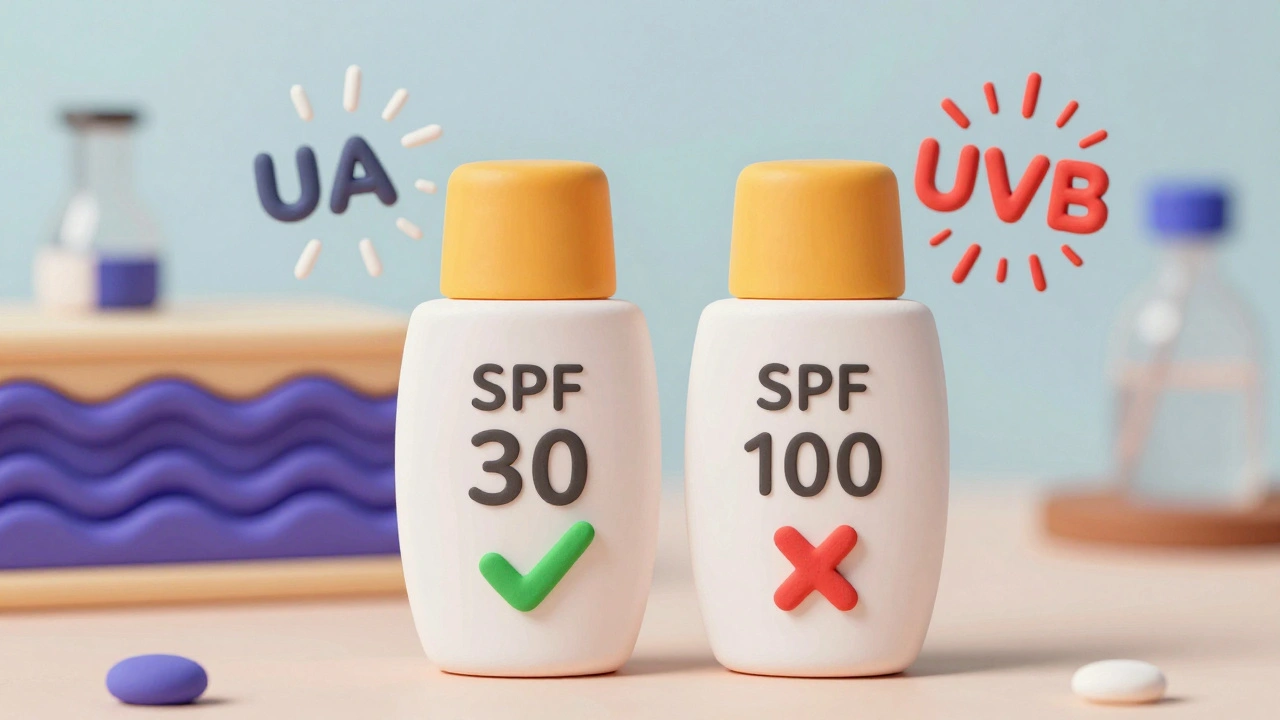
How Much Should You Actually Use?
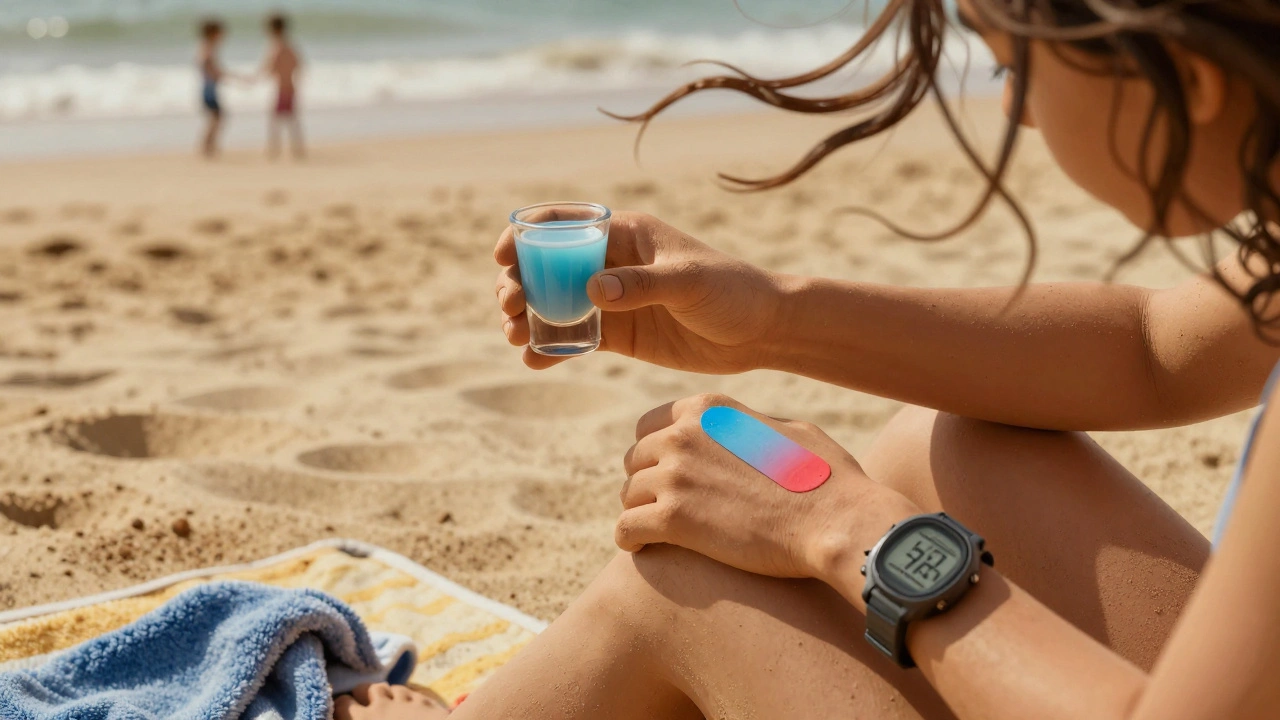
Most people apply only 25-50% of the recommended amount. That cuts your protection in half. The FDA says you need 2 milligrams of sunscreen per square centimeter of skin. For your face? That’s about a quarter teaspoon. For your whole body? That’s a shot glass full-around 1 ounce. Think of it like this: if you’re using a pea-sized amount for your face, you’re not protected. Use five pea-sized dots-one for each cheek, forehead, nose, and chin-and spread them out. Don’t rub it in like moisturizer. Let it sit. Wait 15 minutes before applying makeup. If you’re using a tinted sunscreen, don’t rely on the color to cover gaps. UV cameras show most people miss spots behind the ears, around the eyelids, and on the neck.Reapplication: The Most Ignored Rule
Sunscreen doesn’t last all day. Even “water-resistant” formulas only last 40 or 80 minutes in water. And if you towel off? You lose most of it. Sweat, friction from clothing, and UV exposure break down the active ingredients. The American Academy of Dermatology says reapply every two hours. No exceptions. But here’s the hard truth: only 14% of people at the beach reapply on time. Most think SPF 50 means they can stay out longer. It doesn’t. SPF 100 doesn’t mean you can skip reapplication. It just means you’re slightly more protected-if you applied enough. If you’re wearing makeup, use a sunscreen spray or powder. But don’t just spray it on. Hold it close, spray generously, then rub it in. A quick mist won’t cut it. Some brands now make UV-monitoring stickers or apps that change color when your sunscreen degrades. They’re not perfect, but they’re better than guessing.What to Look For (And What to Avoid)
Here’s what works, based on real testing and dermatologist recommendations:- Look for: SPF 30-50, broad spectrum, water-resistant (40 or 80 minutes), zinc oxide or avobenzone as key ingredients.
- Avoid: Products without broad spectrum labeling, SPF over 50 without proof, sprays without clear application instructions, and anything with PABA or trolamine salicylate (both being phased out by FDA by 2026).
- La Roche-Posay Anthelios Melt-in Milk SPF 60 (chemical, best overall protection)
- EltaMD UV Clear SPF 46 (mineral, best for sensitive and acne-prone skin)
- Supergoop! Unseen Sunscreen SPF 40 (chemical, invisible finish, great under makeup)
- Caravee Hydrating Sheer Sunscreen SPF 30 (mineral, no white cast, niacinamide for skin repair)
Real-World Problems and Fixes
People complain about white cast, pilling under makeup, and stinging eyes. Here’s how to fix them:- White cast: Try tinted mineral sunscreens or newer zinc formulas with micronized particles. Brands like Beauty of Joseon and Black Girl Sunscreen have made huge strides.
- Pilling: Wait 15 minutes after applying sunscreen before putting on moisturizer or foundation. Use water-based products over oil-based ones.
- Stinging eyes: Switch to mineral sunscreens. Chemical filters like octinoxate and oxybenzone are common irritants. Look for “ophthalmologist-tested” on the label.
- Oxidation: Some tinted sunscreens turn orange on skin after a few hours. Avoid those with iron oxides unless they’re specifically formulated for your skin tone.
What’s Changing in 2025?
The FDA is expected to finalize new sunscreen rules by the end of 2025. Here’s what’s coming:- All sunscreens must prove UVA protection matches European standards.
- SPF 60+ labels will need extra testing to justify the number.
- 12 chemical filters, including oxybenzone and octinoxate, may be banned unless proven safe for absorption.
- Water resistance claims will be stricter-no more “80 minutes” if the product washes off in 40.
Final Takeaway: Sunscreen Is Medicine, Not Makeup
This isn’t about looking good. It’s about preventing skin cancer. The American Academy of Dermatology says daily sunscreen use cuts melanoma risk by 50%. It also prevents 90% of visible aging. That’s not hype. That’s science. You don’t need the most expensive bottle. You don’t need SPF 100. You just need:- SPF 30-50, broad spectrum
- Enough to cover every exposed inch
- Reapplication every two hours-or after swimming, sweating, or towel drying
Your skin doesn’t care about your budget. It only cares if you protected it today.




Gerald Nauschnegg
I used to think SPF 100 was magic until I saw a guy with a sunburn at the lake wearing it. He didn't reapply after swimming and thought the bottle was a force field. Sunscreen isn't armor, it's a tool. And if you're not using a shot glass full, you're wasting your money.
Also, that Neutrogena spray I bought? Total scam. My face looked fine until I checked under UV light-barely any coverage. Don't trust the label, test it.
Palanivelu Sivanathan
SPF 30 vs SPF 100??!!?? It's like buying a Ferrari and calling it 'just a car with more horsepower'-the marketing is designed to make you feel stupid if you don't pay more!!
And don't get me started on 'mineral' sunscreens-they look like you dipped your face in chalk dust!!
But here's the TRUTH: UVA is the silent assassin, yes, yes, yes-but have you ever seen what happens to your skin after 20 years of 'daily use'? It's not just wrinkles, it's a slow-motion betrayal by your own cells!!
And don't even mention oxybenzone-I heard it's in your blood now, like a ghost in the machine!!
Also, why is everyone so obsessed with white cast? Is your skin a canvas or a surveillance camera? I just want to live, not be a walking sunscreen billboard!!
Adrianna Alfano
I’m a dermatology nurse and I see people come in with sun damage so bad they need surgery-just because they thought ‘SPF 50’ meant they could stay out all day. No.
And the white cast thing? I get it. I’m Black. I used to avoid sunscreen because I looked like a ghost. Then I found Caravee. It’s not perfect, but it’s the first one that didn’t make me feel like I was wearing a mask.
Also, reapplying? I keep a tiny bottle in my purse. I reapply every time I go to the bathroom. It’s not glamorous, but my skin is still intact at 42. That’s worth the effort.
And if you think sprays are easy? Try spraying on a windy beach. You’re not protecting your skin-you’re just polluting the air and giving yourself a false sense of security.
Also, the FDA’s new rules? Long overdue. I’m so tired of companies treating our skin like a marketing experiment.
Casey Lyn Keller
I read this whole thing and still don’t trust any of it. How do we know the FDA isn’t in bed with Big Sunscreen? They banned PABA but let oxybenzone slide for 20 years. And now they’re cracking down on SPF 60+? Maybe they just want us to buy more of the same stuff.
Also, I’ve used the same cheap sunscreen for 10 years. No burns. No cancer. Maybe the whole thing is overblown.
And why do people care so much about white cast? If you’re worried about how you look, maybe you’re not thinking about the real problem: skin cancer doesn’t care if you look pretty.
Just sayin’.
Jessica Ainscough
I used to skip sunscreen because I hated how it felt. Then I got a weird spot on my neck that turned out to be pre-cancerous. Changed everything.
Now I use EltaMD UV Clear. It doesn’t pill, it doesn’t sting, and I don’t look like a ghost. I keep it by my coffee maker so I remember to apply every morning.
Reapplying is a pain, but I just set a 2-hour alarm on my phone. It’s not perfect, but it’s better than nothing.
Also, if you’re using makeup with SPF? Don’t. It’s not enough. Just slap on real sunscreen first. Your future self will thank you.
May .
SPF 30 works if you use enough
reapply
avoid sprays
mineral is better for sensitive skin
that’s it
Sara Larson
YAS QUEEN 💪✨ I just found Black Girl Sunscreen and my skin has never been happier!! No white cast, no greasy feel, just pure glowy protection!!
And I reapply every 2 hours like a boss-spray, rub, repeat. I even got my whole family on it!!
Also, UV stickers? GAME CHANGER. I put one on my wrist and now I know when to run for cover 🏃♀️☀️
Stop letting marketing fool you. Your skin deserves better!!
PS: Caravee is my new BFF 😘
dan koz
Back home in Nigeria, we don’t even use sunscreen. We use shea butter and hat. Sunburn? We just stay in shade. Why are Americans so obsessed with chemical creams?
Also, SPF 100? That’s not protection, that’s fear selling.
My cousin used SPF 50 every day for 15 years and still got melanoma. Maybe the problem isn’t the sunscreen-it’s the sun.
Just sayin’.
Kevin Estrada
Let’s be real-this whole sunscreen industry is a corporate scam. The FDA? They’re owned by Big Pharma. Oxybenzone isn’t dangerous? Sure, and I’m the Queen of England.
And why do all the ‘top performers’ cost $40? Because they know you’ll pay anything to feel safe.
Meanwhile, my grandpa used to rub coconut oil on his face and lived to 92. No sunscreen. No dermatologist. Just sunshine and grit.
Maybe the real enemy isn’t UV rays-it’s the fear they sell you.
Also, ‘broad spectrum’? That’s just a fancy word for ‘we added a chemical that doesn’t dissolve in water’.
Don’t be a sheep. Use what works for YOU.
Katey Korzenietz
SPF 100 is a lie. Full stop.
You’re not protected. You’re delusional.
And if you think a spray is enough? You’re not just lazy-you’re dangerous.
Also, ‘no white cast’? That’s not a feature, it’s a compromise. If it doesn’t leave a trace, it’s not working.
And why is everyone ignoring the fact that most sunscreens are toxic to oceans? You want protection? Stop polluting the planet while you ‘protect’ yourself.
Wake up.
Ethan McIvor
I’ve spent years thinking sunscreen was just for the beach. Then I realized I get sun damage just walking to my car. UVA is everywhere.
Now I use a tinted mineral one every day-even in winter. It’s not about avoiding the sun, it’s about respecting it.
And reapplying? I keep a small tube in my car. I use it after lunch. It’s become a ritual. Like brushing my teeth.
It’s not about perfection. It’s about consistency.
And if you’re worried about white cast? Try zinc oxide with iron oxide tint. It’s not magic, but it’s close.
Michael Bene
Let’s cut through the BS. The entire sunscreen industry is built on fear, confusion, and overpriced plastic bottles.
SPF 50? That’s a marketing stunt. The difference between SPF 30 and 50 is 1%. One percent. You’re paying double for a fraction of protection.
And don’t even get me started on ‘chemical vs mineral’. It’s not a war-it’s a spectrum. Use what doesn’t make you look like a ghost or feel like you’re wearing glue.
Also, the FDA’s new rules? They’re coming too late. We’ve been getting scammed since the 90s.
And why do people think makeup with SPF counts? It’s like saying a paper umbrella protects you from a hurricane.
Bottom line: Use SPF 30, apply like you mean it, reapply like your skin depends on it-because it does.
And stop buying the hype. Your wallet and your skin will thank you.
dylan dowsett
You’re all missing the point. The real issue isn’t SPF or UVA or white cast-it’s that people think sunscreen is optional.
It’s not. It’s medical-grade protection. If you’re not using it daily, you’re not just being lazy-you’re ignoring a proven cancer prevention tool.
And if you’re using a spray because it’s ‘convenient’? You’re not protecting yourself-you’re endangering others who breathe in those chemicals.
Also, ‘mineral’ doesn’t mean ‘safe’. Zinc oxide can be nanoparticle-laced and still be harmful if inhaled.
Stop treating this like a beauty routine. It’s a public health crisis.
And if you don’t believe me? Look up the melanoma rates in millennials. They’re rising. Not because of the sun-because of ignorance.