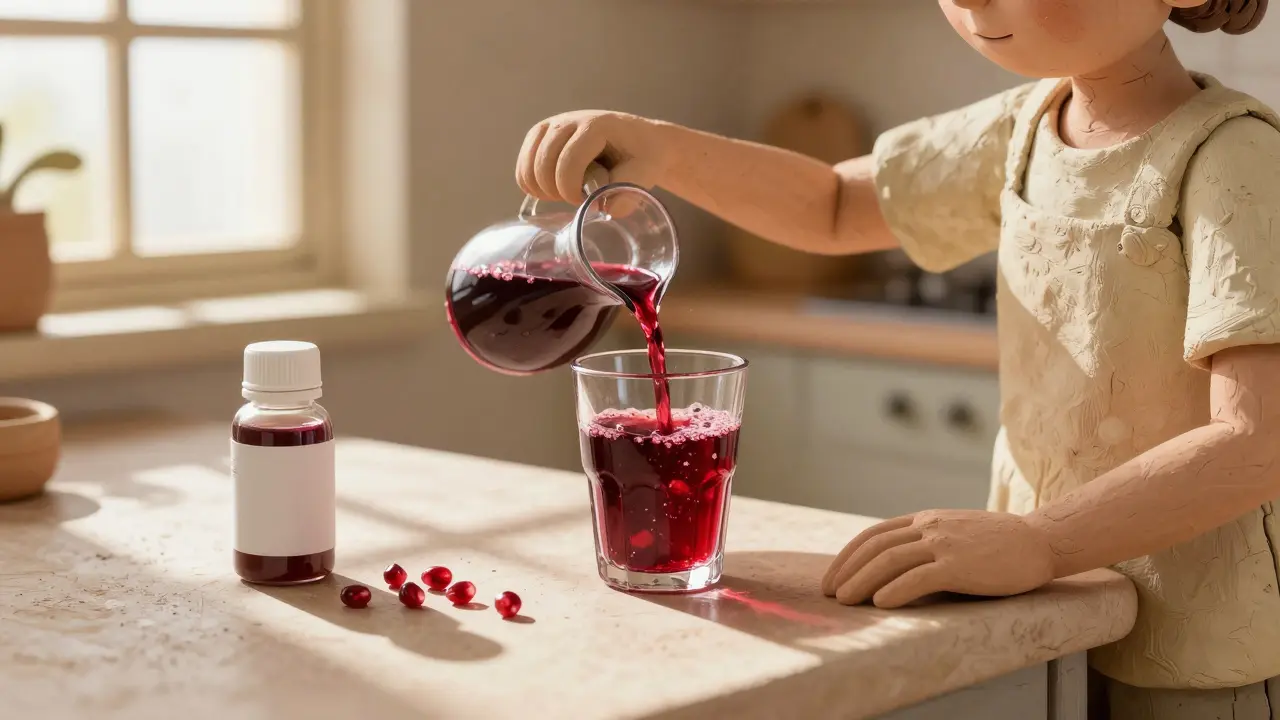
Many people drink pomegranate juice for its antioxidants and sweet-tart flavor. But if you’re on medication, you’ve probably heard warnings about grapefruit juice - and now you’re wondering: pomegranate juice is the new grapefruit, right? The answer isn’t what you think.
Why Everyone Thought Pomegranate Juice Was Dangerous
Back in 2005, a lab study made headlines. Researchers found that pomegranate juice could block a key enzyme in the liver called CYP3A4 - the same enzyme grapefruit juice shuts down. This enzyme breaks down more than half of all prescription drugs, from statins to blood pressure meds. When it’s inhibited, drug levels in your blood can spike. That’s dangerous. The results looked alarming. In test tubes, pomegranate juice blocked CYP3A4 almost as strongly as grapefruit juice. Animal studies showed higher drug levels after drinking the juice. It seemed like a clear red flag. Pharmacies started adding pomegranate juice to their interaction lists. Patients were told to avoid it. But here’s the problem: none of that mattered in real life.What Actually Happens in Humans
Between 2007 and 2013, scientists ran real human trials. They gave people pomegranate juice daily - sometimes for weeks - while measuring drug levels. The drugs? Midazolam (a sedative), flurbiprofen (an anti-inflammatory), and warfarin (a blood thinner). All are broken down by CYP enzymes that pomegranate juice was supposed to block. The results? Nothing. Absolute nothing. One study found that after drinking a full glass of pomegranate juice every day for a week, midazolam levels stayed exactly the same. Another showed no change in flurbiprofen absorption. Even in patients on warfarin - where even small changes can cause bleeding - INR levels stayed stable after months of daily pomegranate juice. That’s not a fluke. These weren’t small studies. They were controlled, peer-reviewed, and replicated. The data says: pomegranate juice doesn’t raise drug levels in people the way grapefruit juice does.Grapefruit Juice vs. Pomegranate Juice: The Real Difference
Grapefruit juice doesn’t just inhibit enzymes - it destroys them. The furanocoumarins in grapefruit permanently disable CYP3A4 in your gut. That means even if you take your pill hours after drinking grapefruit juice, the enzyme is still gone. Your body can’t break down the drug. Levels build up. Dangerous side effects follow. Pomegranate juice? It doesn’t do that. The compounds in pomegranate might bind to the enzyme in a test tube, but they don’t survive digestion or reach the gut wall in high enough concentrations to matter. Your liver and intestines process it differently. The lab results were misleading because they used pure extracts - not the juice you actually drink. The FDA lists 85 medications with clear warnings against grapefruit juice. It doesn’t mention pomegranate juice. The University of Washington’s Drug Interaction Database rates pomegranate juice as “B” - meaning evidence shows no significant interaction. Grapefruit? Rated “A” - strong, proven, dangerous.
Why the Confusion Still Exists
Many doctors and pharmacists still warn patients about pomegranate juice. Why? Because the old lab studies never got updated in their minds. A 2016 survey found 68% of physicians thought pomegranate juice needed the same warnings as grapefruit. That’s outdated information - but it’s still being passed on. Patients get confused, too. Pomegranate extract pills? Those are different. They’re concentrated. One case report linked a pomegranate extract supplement to a spike in INR for someone on warfarin. But juice? Not the same thing. Most people don’t know the difference. They see “pomegranate” on a label and assume it’s all the same.What You Should Do Right Now
If you’re taking medication and drink pomegranate juice regularly - keep drinking it. There’s no evidence you need to stop. You don’t need to time it around your pills. You don’t need to switch to apple juice. But here’s what you should do:- Don’t confuse juice with supplements. Pomegranate extract pills are not the same. Talk to your doctor before taking them if you’re on blood thinners or heart meds.
- Don’t assume all fruit juices are safe. Grapefruit, Seville oranges, and pomelos are still dangerous with many drugs. Stick to orange, apple, or cranberry if you’re unsure.
- Monitor your response. If you start a new medication and drink pomegranate juice daily, watch for side effects. It’s rare, but individual reactions can happen.

What Experts Say Now
Dr. Stephen M. Stahl, a leading psychopharmacologist, put it simply: “The risk of a pharmacokinetic interaction is negligible if pomegranate juice is consumed by patients receiving CYP2C9 substrates.” The American Society for Clinical Pharmacology and Therapeutics issued a formal statement in 2015: “Pomegranate juice does not require avoidance with CYP3A4 or CYP2C9 substrate drugs based on current clinical evidence.” Even the most cautious experts agree. Dr. Paul Watkins, a drug metabolism specialist, says the theoretical risk can’t be completely ruled out - but the evidence says it’s not worth worrying about. That’s the standard now.Bottom Line: Drink It Without Fear
Pomegranate juice is safe with most medications. The lab studies that scared us were wrong in real life. The human data is clear. You don’t need to give it up. The real danger isn’t the juice. It’s misinformation. People avoid healthy foods because of outdated warnings. They stress over things that don’t matter - while ignoring real risks like skipping pills or mixing alcohol with sedatives. So go ahead. Pour yourself a glass. Enjoy the flavor. Your heart, your liver, and your blood pressure meds will thank you.Can I drink pomegranate juice while taking statins like atorvastatin?
Yes. Unlike grapefruit juice, pomegranate juice does not increase blood levels of statins like atorvastatin, simvastatin, or rosuvastatin in human studies. Clinical trials show no significant change in drug concentration, even with daily consumption. You can safely drink pomegranate juice while taking these medications.
Is pomegranate juice safe with warfarin (Coumadin)?
Yes. Multiple human studies, including one published in Clinical Pharmacology & Therapeutics, found no effect on INR levels in patients taking warfarin who drank pomegranate juice daily for months. While one case report linked a pomegranate extract supplement to an elevated INR, juice itself has not been shown to interfere with warfarin metabolism in real-world use.
What about pomegranate extract supplements?
Supplements are different. They contain concentrated compounds that may affect drug metabolism. There’s limited evidence suggesting possible interactions with blood thinners or blood pressure meds. If you take supplements, talk to your doctor. Juice is safe. Extracts are not the same thing.
Why do some pharmacies still warn about pomegranate juice?
Many pharmacy systems still use outdated databases that list pomegranate juice as a potential risk, based on early lab studies from 2005. These haven’t been updated to reflect modern clinical evidence. It’s a case of lagging technology, not current science. Always ask your pharmacist for the latest human data - not just what the computer says.
Should I avoid pomegranate juice if I’m on multiple medications?
No. There’s no evidence that pomegranate juice causes harmful interactions with any combination of medications, even complex regimens. The key is distinguishing between juice and concentrated extracts. As long as you’re drinking the juice and not taking pills or powders labeled as “pomegranate extract,” you’re fine.