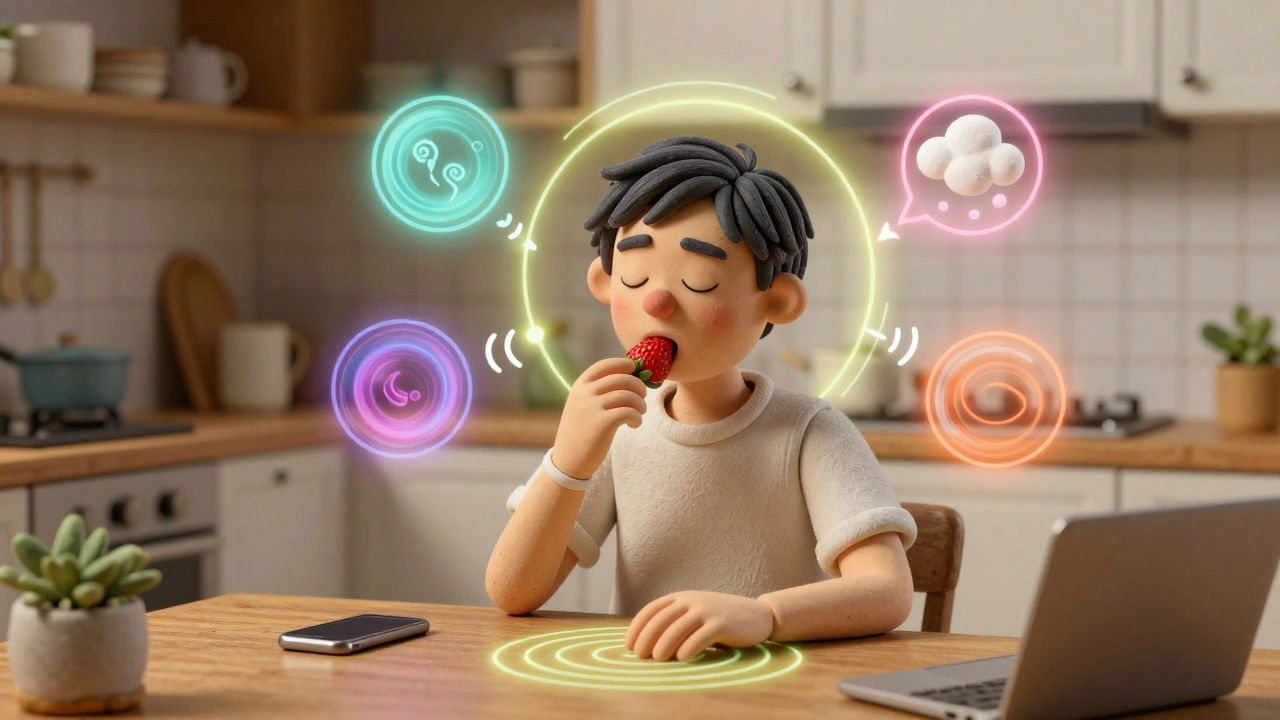
Mindful eating helps stop emotional and binge eating by teaching you to pay attention to hunger cues and food sensations-no diets, no restrictions. Proven by science, it works better than traditional approaches for long-term change.
Emotional Eating: Understanding Triggers, Patterns, and How to Break the Cycle
When you reach for a bag of chips after a bad day, or finish a pint of ice cream because you’re lonely, you’re not hungry—you’re responding to emotion. This is emotional eating, the practice of using food to manage feelings like stress, sadness, boredom, or anxiety rather than to satisfy physical hunger. It’s not about willpower. It’s about how your brain links comfort with food, often from years of conditioning. Unlike regular hunger, emotional hunger hits suddenly, craves specific high-sugar or high-fat foods, and doesn’t go away after eating. It leaves you feeling guilty, not satisfied.
Emotional eating often ties into stress, a major driver of food cravings that triggers cortisol release and increases appetite, especially for calorie-dense foods. Studies show people under chronic stress are more likely to overeat, especially late at night. It also connects to food cravings, intense urges for specific foods that feel uncontrollable and are often tied to mood states rather than nutritional need. These aren’t just preferences—they’re neural pathways built over time. When you eat sugar after a fight, your brain learns: sugar = relief. Next time you feel upset, it automatically sends the same signal. And then there’s binge eating, a pattern where emotional eating escalates into consuming large amounts of food rapidly, often with a sense of loss of control. It’s not occasional overeating—it’s a cycle that repeats, sometimes daily.
What makes emotional eating hard to fix isn’t the food. It’s the lack of other tools to handle tough feelings. You don’t need a strict diet. You need better coping mechanisms. That could mean journaling before you eat, taking a walk when anxiety hits, or even just pausing to ask: "Am I actually hungry, or am I just lonely, tired, or overwhelmed?" The posts below show real strategies people use to break free—from tracking triggers to replacing food with movement, from understanding hormonal links to finding non-food comfort. No magic pills. No fads. Just practical steps that work in real life.