
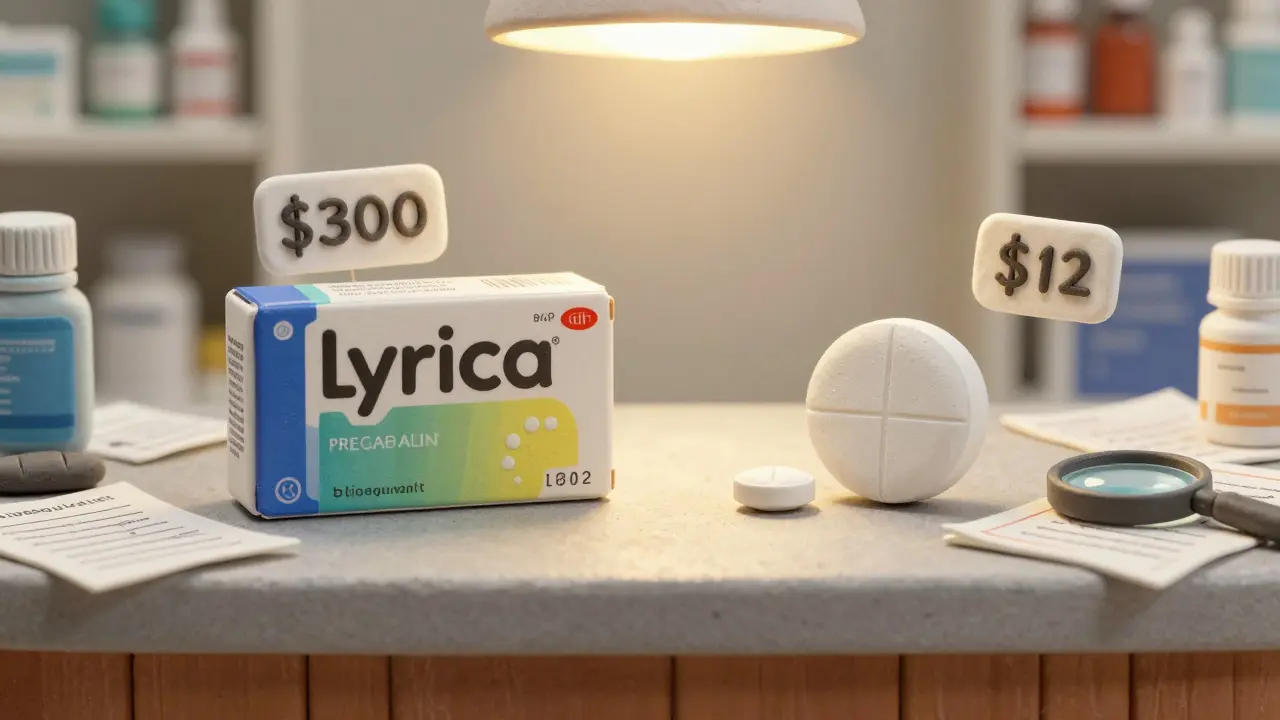
When you pick up a prescription, you might see two names on the label: one you recognize, like Lyrica, and another that looks like a random string of letters and numbers, like pregabalin. One costs $300. The other costs $12. If you’ve ever wondered why - and whether the cheaper version is just as good - you’re not alone.
They’re the same medicine, just cheaper
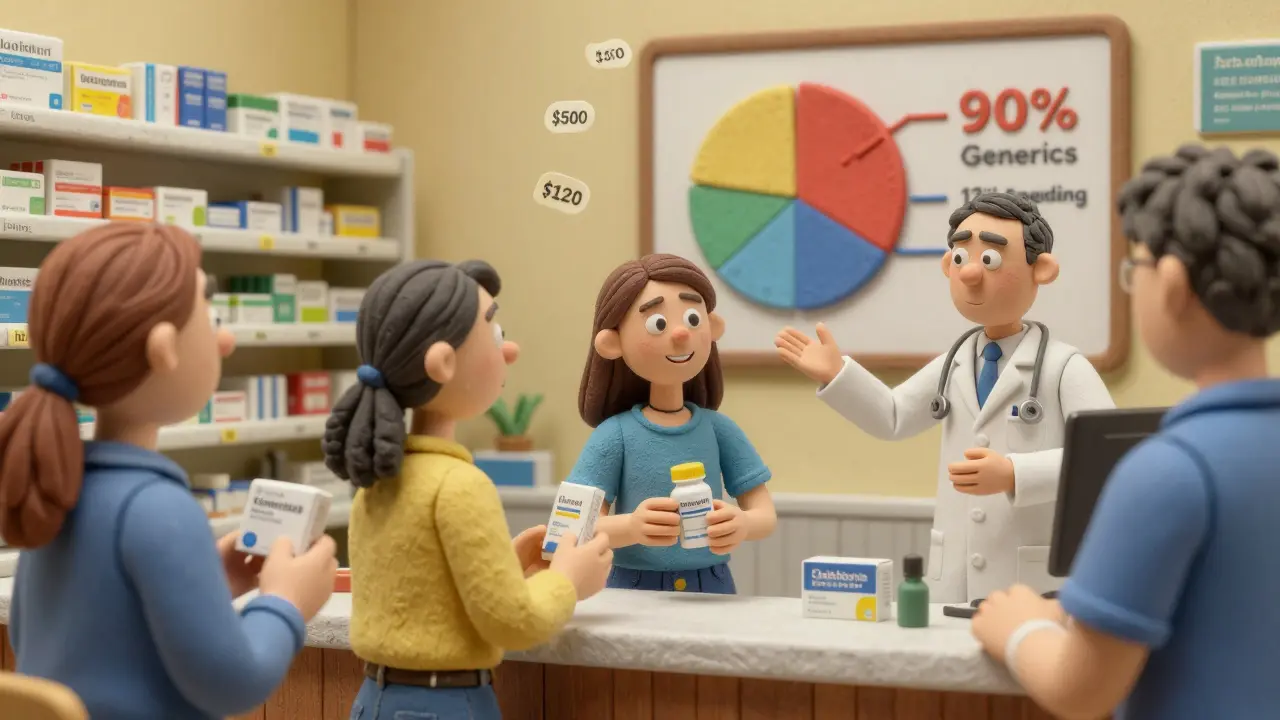
Generic drugs aren’t knockoffs. They’re not watered down. They’re not second-rate. They’re the exact same active ingredient as the brand-name version, made to the same strict standards by the same regulators. The FDA requires generics to deliver the same amount of medicine into your bloodstream at the same speed as the brand. That’s called bioequivalence - and it’s not a suggestion. It’s a legal requirement. The difference? The generic version doesn’t have to pay for the original research, marketing, or flashy packaging. That’s why it costs 79% to 85% less, according to the FDA.Take atorvastatin, the generic for Lipitor. Both lower cholesterol the same way. Both have the same side effects. Both are made in the same kind of factories, under the same rules. The only real difference? Price. In 2024, Americans filled nearly 4 billion generic prescriptions. They spent $98 billion doing it. Meanwhile, brand-name drugs - only 435 million prescriptions - cost $700 billion. That’s not a typo. Generics made up 90% of all prescriptions but just 12% of the total spending.
How did we get here?
Before 1984, if a brand-name drug’s patent expired, no one else could make it. That meant the original company had a monopoly - and kept prices high for years. The Hatch-Waxman Act changed that. It created a shortcut: instead of running new clinical trials, generic manufacturers could prove their version worked just as well by comparing it directly to the brand. This opened the door for competition. And competition drives prices down.Once a generic enters the market, prices start falling fast. With one competitor, prices drop to about 90% of the original. With three or four, they fall to 60-70%. With five or more, they often drop below half the original price. That’s not theory - it’s data from the U.S. Department of Health and Human Services. And it’s why the price of Nexavar dropped 50% in 2025 after its first generic launched in 2022. Bayer didn’t wait for the market to force the cut. They did it themselves.
Brand names aren’t always expensive - but they’re getting cheaper
You might think brand-name drug prices just keep rising. But that’s not the full story. In 2025, brand-name drug prices fell for the seventh year in a row. Why? Because manufacturers know generics are coming - or already here. Merck cut the price of Januvia and its combo versions by 42.4% in 2025. That wasn’t charity. It was strategy. They’re trying to stay ahead of the Inflation Reduction Act, which will force Medicare to negotiate prices starting in 2026. If they don’t lower prices now, they’ll be forced to cut even deeper later.There’s another twist: list price vs. net price. The sticker price on a drug box? That’s the list price. What insurers and pharmacies actually pay after discounts and rebates? That’s the net price. In 2024, list prices rose slightly, but net prices barely moved. Why? Because manufacturers are giving bigger discounts to keep their drugs on insurance formularies. That’s why you might see a $500 drug at the pharmacy counter - but your insurance pays $120 after rebates. The real cost isn’t always what you see.
Why do people still trust brand names?
Even though 84% of Americans believe generics are just as effective, 62% still say they trust brand-name drugs more. Why? It’s psychology. You’ve seen the ads. You’ve heard the names. You know what the brand looks like. The generic? It’s just a pill with no logo. It feels riskier - even when it’s not.That’s why 63% of people choose generics - not because they believe they’re better, but because they can’t afford the brand. In a Tebra survey from January 2025, 60% said they’d prefer the brand if cost wasn’t an issue. That’s not ignorance. It’s economic pressure. People aren’t choosing generics because they’re convinced they’re equal. They’re choosing them because they have to.
What about those rare cases where generics don’t work?
Some people swear their generic doesn’t work like the brand. Sometimes, it’s placebo. Sometimes, it’s a real issue - but it’s rare. The FDA allows a small variation in how fast the drug is absorbed: 80-125% of the brand’s performance. For most drugs, that’s fine. But for a few - like warfarin, levothyroxine, or phenytoin - even tiny differences can matter. That’s why doctors sometimes stick with brand for these. But even then, switching between generics is usually safe. If you notice a change in how you feel after switching, tell your doctor. Don’t assume it’s the drug. It could be something else.
How to save money without risking your health
Here’s how to make smart choices:- Ask your pharmacist: “Is there a generic for this?”
- Ask your doctor: “Is a generic appropriate here?”
- Check your insurance formulary - sometimes the generic isn’t the cheapest option. A different brand or a higher-dose generic might cost less if you split it.
- Use mail-order pharmacies or discount programs like GoodRx. Sometimes, a 30-day supply of a generic costs less than your copay at a local pharmacy.
- Don’t assume older drugs are cheaper. Some newer generics (like semaglutide for weight loss) are still expensive because they’re brand-new and competition hasn’t kicked in yet.
What’s changing in 2025 and beyond?
The Inflation Reduction Act is changing the game. Starting in 2026, Medicare will negotiate prices for 10 high-cost drugs - mostly brand-name ones. That’s going to push more people toward generics. At the same time, Medicare Part D is capping out-of-pocket costs at $2,000 a year. That means even if you’re on a brand-name drug, your maximum yearly cost is locked in. But if you switch to a generic, you’ll likely pay far less - and you’ll get there faster.Pharmaceutical companies are responding. Some are releasing their own generic versions of their drugs - called “authorized generics.” These are made by the original company but sold under a different label. They’re not cheaper than third-party generics, but they’re often cheaper than the brand. And they’re still covered under the same patents.
Bottom line: Choose generic unless there’s a clear medical reason not to
The evidence is clear. Generics work the same. They’re made to the same standards. They’re tested just as hard. And they save billions every year. In 2024 alone, Americans saved $6.4 billion on generics compared to what they would’ve spent if those same drugs were still brand-name. That’s money that went back into people’s pockets, not drug company profits.There’s no reason to pay more unless your doctor tells you to. If you’re taking a generic and feeling fine - don’t switch back. If you’re on a brand and wondering if you could save money - ask. Your body won’t know the difference. Your wallet will.
Are generic drugs as safe as brand-name drugs?
Yes. The FDA requires generic drugs to meet the same safety, strength, quality, and performance standards as brand-name drugs. They’re made in the same type of facilities, inspected the same way, and monitored for the same side effects. The only difference is the price.
Why do generic drugs look different?
By law, generic drugs can’t look exactly like the brand-name version - that’s to avoid confusion. So they may have different colors, shapes, or markings. But the active ingredient, dosage, and effectiveness are identical. The differences are only in inactive ingredients like dyes or fillers, which don’t affect how the drug works.
Can I switch from a brand to a generic without my doctor’s approval?
In most cases, yes - pharmacists can substitute a generic unless your doctor writes “dispense as written” on the prescription. But if you’ve had issues with a previous generic or are on a drug where small changes matter (like thyroid or seizure meds), talk to your doctor first. They can help you decide what’s safest.
Why are some generics more expensive than others?
Price differences between generics happen because of competition. If only one company makes a generic, it may charge more. Once more manufacturers enter the market, prices drop. Also, some generics are made by the original brand company (called authorized generics) and may cost slightly more than third-party generics.
Do generics take longer to work?
No. The FDA requires generics to be bioequivalent - meaning they release the active ingredient into your bloodstream at the same rate and to the same extent as the brand. If a brand works in 30 minutes, the generic will too. Any perceived delay is usually psychological or due to other factors like food intake or metabolism.
Are all generic drugs made in the U.S.?
No. Many generic drugs are manufactured in India, China, and other countries. But every facility - no matter where it’s located - must pass the same FDA inspections as U.S.-based plants. The FDA inspects over 3,000 foreign facilities each year. If a facility fails inspection, the FDA blocks its products from entering the U.S.
What should I do if I think my generic isn’t working?
Don’t stop taking it. Contact your doctor or pharmacist. They can check if you switched between different generic manufacturers, which can sometimes cause minor changes in how your body responds. In rare cases, a different formulation may be needed. But in most cases, the issue isn’t the drug - it’s something else, like stress, diet, or another medication.

Aliza Efraimov
Let me tell you something - I was on Lipitor for years, paying $450 a month. Then my pharmacist switched me to atorvastatin. Same pill, same results. My cholesterol dropped just as fast. I saved $4,000 a year. No joke. I almost cried when I saw the receipt. Why are people still scared of generics? It’s not magic - it’s math.
David Chase
GENERIC DRUGS ARE A SCAM!!! 🤬
China makes these pills in basements with no oversight!!
My cousin’s dog took a generic and got sick!!
WHO EVEN REGULATES THIS?!?!?!
WE NEED TO BAN FOREIGN MANUFACTURING NOW!!!
🇺🇸 MAKE AMERICA PILL AGAIN!!!
Manan Pandya
The FDA’s bioequivalence standards are robust - 80–125% AUC and Cmax range is scientifically sound for 95% of medications. For drugs with narrow therapeutic windows - like warfarin or levothyroxine - therapeutic drug monitoring is standard practice regardless of brand or generic. The key is consistency: once you’re stabilized on a formulation, don’t switch unless clinically necessary. Pharmacists should document substitutions, and patients should be counseled on potential variability in inactive ingredients.
Emma Duquemin
OMG I just realized I’ve been paying $300 for a generic that costs $12?!
I feel like I’ve been robbed by Big Pharma for a decade.
My doctor never told me about this.
My pharmacist didn’t say a word.
And now I’m mad. Like, SERIOUSLY mad.
Why didn’t anyone warn me?!
Tamar Dunlop
It is of considerable interest to note that the structural and regulatory equivalency between branded and generic pharmaceuticals is not merely a matter of pharmacological equivalence, but also one of public health economics. The savings generated by generic substitution in the United States alone exceed $300 billion annually, according to the Congressional Budget Office. This represents a profound redistribution of financial resources from corporate shareholders to individual households - particularly those on fixed incomes. One must consider the ethical imperative of equitable access to essential medicines, especially in a nation where pharmaceutical costs remain a leading cause of medical bankruptcy.
Joe Kwon
Great post. I’ve been switching to generics for years. My thyroid med? Generic levothyroxine. My blood pressure? Generic lisinopril. I even switched my anxiety med to generic sertraline - no issues. The only time I stuck with brand was for my dad’s seizure meds - and even then, we switched to a different generic after a month with no problems. Bottom line: trust the science, not the branding.
Also, GoodRx saved me $200 last month. Use it.
Henriette Barrows
I used to be scared of generics too. Then my mom got sick and we couldn’t afford the brand. We tried the generic… and she felt better than ever. Turns out, the brand was making her dizzy. The generic? Clean. No side effects. I’m not saying it’s always perfect - but don’t let fear stop you from asking. Talk to your pharmacist. They know more than your doctor sometimes.
Kevin Lopez
Generic bioequivalence is a myth for CNS drugs. End of story. Your brain notices the difference. Stop lying to yourself.
Joe Kwon
Bro, I’ve been on 150mg sertraline generic for 7 years. Same dose. Same manufacturer. Same results. My anxiety didn’t spike. My sleep didn’t tank. My therapist didn’t notice a change. You’re projecting your anxiety onto the pill. The science says you’re wrong. Read the FDA’s guidelines. Not Reddit.
Nisha Marwaha
From a pharmacoeconomic standpoint, the Hatch-Waxman Act catalyzed a paradigm shift in market dynamics, enabling ANDA filers to leverage the innovator’s NDA data, thereby obviating redundant clinical trials. The resultant price elasticity has been profound - particularly in high-volume, low-margin therapeutic classes. However, the emergence of authorized generics introduces a strategic oligopoly, wherein originators maintain margin control while circumventing generic disruption. This is not market competition - it’s regulatory arbitrage.
Samar Khan
LOL you people think generics are safe? 😂
My friend’s mom died because her generic blood thinner didn’t work.
It’s not placebo. It’s murder by pill.
And you’re all just sitting here like it’s a budget hack?
💀
Russell Thomas
Wow, so you’re telling me the reason your insurance didn’t cover your $300 pill is because you’re too lazy to ask for the $12 version? That’s not a drug problem - that’s a brain problem. You’re literally paying for a logo. You’re not a patient. You’re a walking ad for Pfizer.
Nicole K.
This is why America is going to hell. People care more about saving $10 than about their health. You think a pill made in India is the same as one made in the USA? You’re a fool. Your body will pay for it later.
Teresa Rodriguez leon
I switched to generic metformin last year. Felt weird for a week. Thought I was dying. Turned out I was just stressed. Now I take it without thinking. It’s just a pill. Stop overthinking it.
Duncan Careless
Just a quick note - I’m from the UK, and here generics are the default. No one even thinks twice. We don’t have the same crazy pricing drama. If your doctor prescribes it, you get the cheapest version. Saves the NHS billions. Maybe we’re just… sensible?