
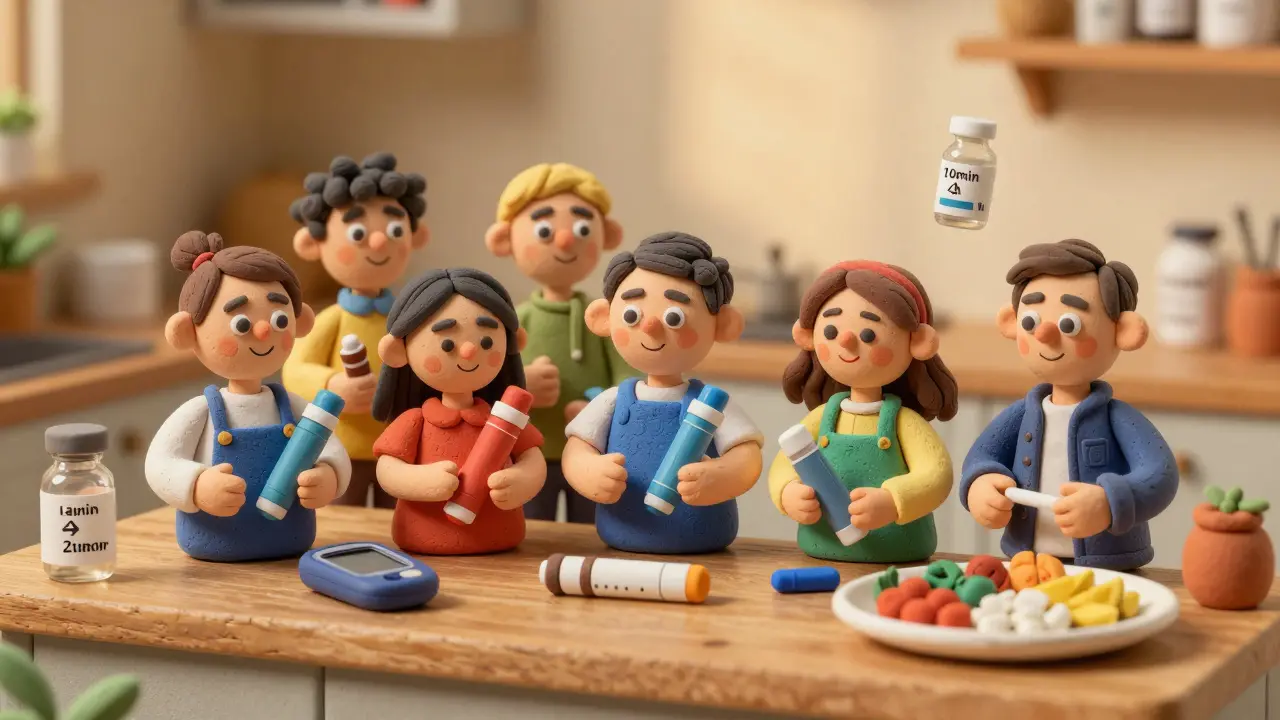
Choosing the right insulin isn’t about picking the most advanced or expensive option-it’s about matching your life, your body, and your goals. Whether you’re newly diagnosed with type 1 diabetes or your type 2 diabetes has progressed beyond pills, insulin can be life-saving. But with so many types, delivery methods, and dosing schedules, it’s easy to feel overwhelmed. The truth? There’s no one-size-fits-all. What works for your neighbor might not work for you. And that’s okay.
Understanding the Four Main Types of Insulin
Insulin comes in four main categories, each with a different job. Think of them as a team: some act fast to handle meals, others work slowly to keep your blood sugar steady between meals and overnight.
- Rapid-acting insulins (like Humalog, NovoLog, Apidra) start working in 10-15 minutes, peak around 1 hour, and wear off in 3-5 hours. These are your mealtime insulins. They’re designed to mimic how your pancreas would respond to food. If you eat a burger, this insulin steps in quickly to prevent your blood sugar from spiking.
- Regular (short-acting) insulin (Humulin R, Novolin R) kicks in 30 minutes after injection, peaks at 2-3 hours, and lasts 5-8 hours. It’s cheaper than rapid-acting versions but less flexible. You have to plan meals ahead-no last-minute snacks without risking low blood sugar.
- Intermediate-acting insulin (NPH, like Humulin N) begins working after 1-2 hours, peaks between 4-12 hours, and lasts up to 18 hours. It’s often used twice daily to cover basal needs. But its peak can cause unpredictable lows, especially at night. Many people switch away from NPH because of this.
- Long- and ultra-long-acting insulins (Lantus, Levemir, Toujeo, Tresiba) provide steady background coverage without a strong peak. Tresiba (insulin degludec) lasts over 42 hours. That means less fluctuation, fewer nighttime lows, and more stable blood sugar. These are now the go-to for basal insulin in most guidelines.
There’s also inhaled insulin (Afrezza), which works like rapid-acting insulin but is breathed in instead of injected. It’s fast, convenient for needle-phobic patients, and disappears from the body quickly. But it’s not for smokers, and it’s expensive-over $1,000 a month without insurance.
Common Insulin Regimens: How They Fit Your Life
It’s not just about the type-it’s how you use it. Here are the most common regimens:
- Basal-bolus therapy (MDI): This is the gold standard for type 1 diabetes and many with advanced type 2. You take a long-acting insulin once or twice daily for background coverage, plus rapid-acting insulin before each meal. It’s flexible-you can skip a meal or eat more carbs without throwing off your whole day. But it requires frequent blood sugar checks and carb counting.
- Premixed insulins: These combine intermediate- and rapid-acting insulin in one shot (like Humalog Mix 75/25). You get two doses a day-usually before breakfast and dinner. They’re simpler, but less precise. If your lunchtime carbs vary, your blood sugar might swing. They’re often used in older adults or those who struggle with multiple daily injections.
- Insulin pumps: These small devices deliver rapid-acting insulin continuously through a tiny tube under your skin. You can adjust doses for meals and corrections with a button. Pumps give tighter control-studies show a 0.5-1.0% drop in A1C compared to injections. But they come with risks: site infections, pump failures, and the constant presence of a device. About 78% of users report satisfaction, but 62% deal with site issues.
- Once-weekly insulin: A new option approved in 2024 (insulin icodec). It’s a long-acting insulin you inject just once a week. Early trials show it’s as effective as daily degludec, with slightly better A1C control. This could be a game-changer for people who forget doses or hate injections.
Cost and Access: The Real Barrier
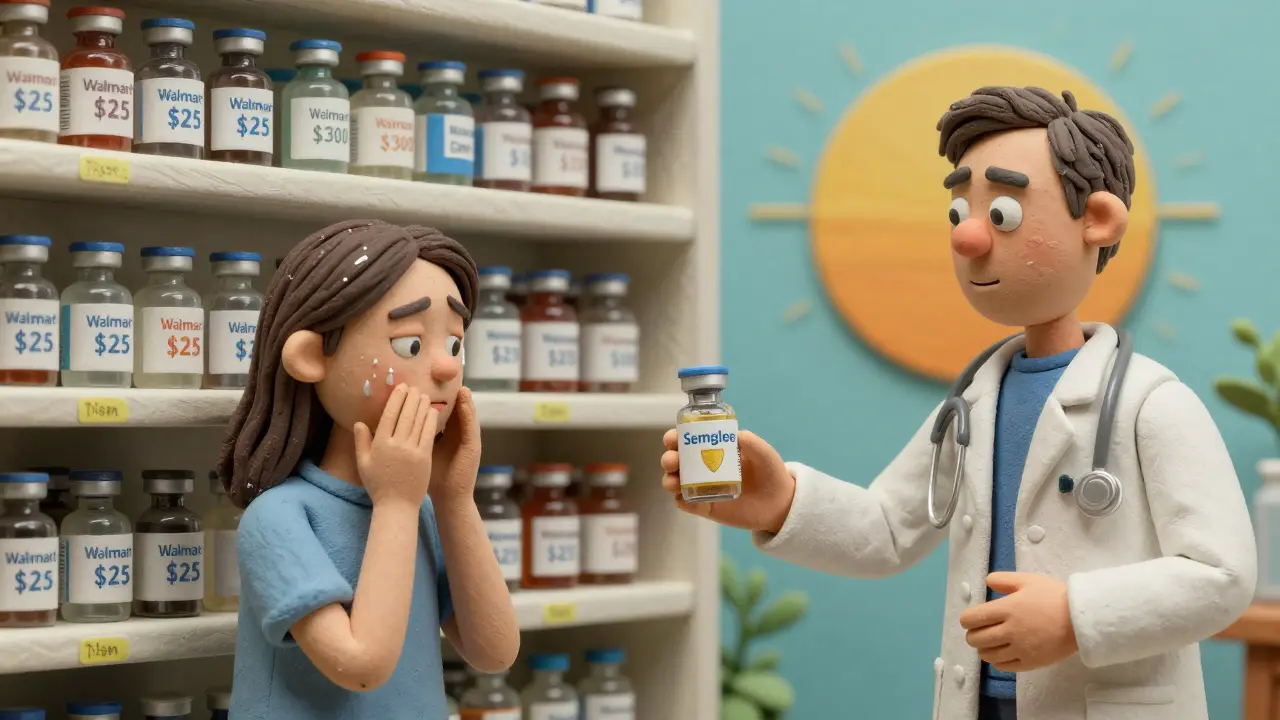
Insulin isn’t just a medical choice-it’s a financial one. In the U.S., human insulin (like Humulin R) costs $25-$35 at Walmart’s ReliOn brand. That’s a lifesaver for people without insurance. But analog insulins? They’re $250-$350 per vial. That’s why 1 in 4 insulin users still ration their doses, even after the Inflation Reduction Act capped Medicare costs at $35/month.
Even with the cap, commercial insurance doesn’t always follow. Many people still pay full price. That’s why biosimilars like Semglee (a copycat of Lantus) are important-they’re 30-50% cheaper and just as effective. If you’re paying more than $50 per vial for analog insulin, ask your doctor about biosimilars. You’re not sacrificing safety-you’re saving money.
Who Gets What? Guidelines Based on Diabetes Type
Not everyone needs the same insulin. Your diagnosis matters.
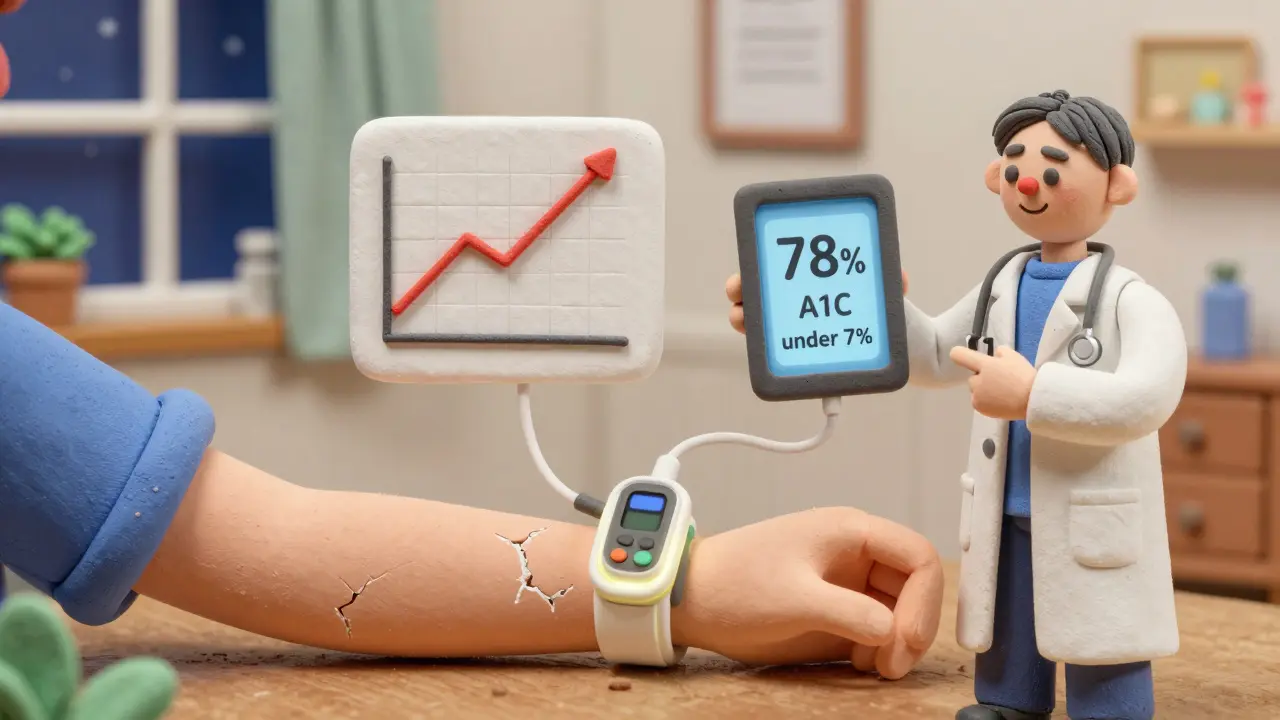
- Type 1 diabetes: You must take insulin. Basal-bolus or pump therapy is standard. Starting with rapid-acting and long-acting analogs reduces hypoglycemia risk. If you’re active, tech-savvy, or want the tightest control, a hybrid closed-loop system (like MiniMed 780G or Omnipod 5) can automatically adjust your insulin based on your CGM readings. In 2023 trials, 78% of users hit A1C under 7%.
- Type 2 diabetes: You don’t start with insulin right away. Guidelines now say to use GLP-1 agonists (like semaglutide) or SGLT2 inhibitors first-especially if you have heart or kidney disease. These drugs lower A1C, help you lose weight, and protect your organs. Insulin comes in when those aren’t enough or when your A1C is above 9.5%. If you’re on insulin, start with once-daily long-acting analog. Avoid NPH unless cost is a barrier-it causes more nighttime lows.
What Experts Say: Real-World Advice
Dr. Richard Bergenstal, former ADA president, says analog insulins are preferred because they’re more like your body’s natural insulin. Less peak = fewer lows. Dr. Silvio Inzucchi reminds us: for type 2, insulin isn’t the first-line injectable anymore. GLP-1s should be tried before insulin unless your blood sugar is dangerously high.
Dr. Jane Reusch points out that inhaled insulin (Afrezza) is great for people afraid of needles-but only if you don’t smoke and can afford it. And Dr. Peter Butler warns: ultra-long insulins like Tresiba can delay dose adjustments. If your blood sugar stays high for days, you might not realize it’s time to increase your dose because the insulin’s effects linger.
Practical tip: Most people need about 0.2-0.4 units of insulin per kilogram of body weight daily as a starting point. For meals, start with 4-6 units of rapid-acting insulin per meal. Adjust based on your carb intake-1 unit for every 10-15 grams of carbs is a common rule. But everyone’s sensitivity is different. Test often. Keep a log. Work with a certified diabetes educator.
Common Mistakes and How to Avoid Them
- Skipping meals after taking rapid-acting insulin: That’s a fast track to low blood sugar. Always have fast-acting carbs (glucose tabs, juice) on hand.
- Using NPH at night: Its peak can cause dangerous lows between 2-4 a.m. Switch to a long-acting analog if you’re waking up sweaty or with headaches.
- Not checking blood sugar often enough: Four times a day is the minimum if you’re on multiple injections. CGMs (continuous glucose monitors) are now recommended for all insulin users-they show trends, not just numbers.
- Assuming insulin causes weight gain: It does, but that’s because your body finally starts using glucose properly. Combine insulin with movement and balanced meals to manage weight.
- Waiting too long to start insulin in type 2: Delaying insulin for years increases damage to your eyes, kidneys, and nerves. If your A1C stays above 8% despite other meds, it’s time to talk about insulin.
What’s Next? The Future of Insulin Therapy
The future is moving fast. Glucose-responsive "smart insulins" are in trials-they automatically turn on when blood sugar rises and turn off when it’s normal. Oral insulin (like Oramed’s ORMD-0801) is showing promise in phase 3 trials, reducing A1C by 0.8% without injections.
Smart pens and closed-loop systems are growing too. In 2023, smart pen use jumped 72%. By 2030, nearly half of type 1 patients may use fully automated systems. These aren’t sci-fi-they’re here, and they’re improving lives.
But the biggest challenge remains cost. Even with the $35 cap for Medicare, millions still struggle. Biosimilars will help, but only if they’re widely available and covered by insurers. Until then, knowing your options-and advocating for yourself-is key.
What’s the difference between human insulin and analog insulin?
Human insulin is made to match the insulin your body naturally produces. It’s older, cheaper, and works well-but it has a more unpredictable peak, which increases the risk of low blood sugar. Analog insulin is lab-engineered to act more like your body’s insulin. It starts faster, peaks less, and lasts longer. This means fewer lows, more stable blood sugar, and more flexibility with meals. The trade-off? Cost. Analogs are 10-15 times more expensive.
Can I switch from NPH insulin to a long-acting analog?
Yes, and many people should. NPH causes more nighttime lows and requires two daily injections with strict timing. Long-acting analogs like Lantus or Tresiba offer smoother, more predictable coverage with once-daily dosing. Switching can cut your risk of severe hypoglycemia by up to 50%. Talk to your doctor about the switch-many insurance plans cover analogs now, especially after the Inflation Reduction Act.
Is insulin the only option for type 2 diabetes?
No. For type 2 diabetes, guidelines now recommend starting with GLP-1 receptor agonists (like semaglutide or tirzepatide) or SGLT2 inhibitors (like empagliflozin) before insulin-especially if you have heart or kidney disease. These drugs lower A1C, help you lose weight, and protect your organs. Insulin is still needed when those aren’t enough, or if your blood sugar is dangerously high (A1C >9.5%).
How do I know if my insulin dose is right?
Check your blood sugar before meals and 2 hours after. If your fasting sugar is consistently above 130 mg/dL, your basal insulin may be too low. If your post-meal sugar is above 180 mg/dL often, your bolus dose might need adjusting. Use your insulin-to-carb ratio and correction factor (usually 1 unit per 30-50 mg/dL above target). Keep a log for 3-5 days and bring it to your provider. A certified diabetes educator can help fine-tune your doses.
Can I use insulin if I’m afraid of needles?
Yes. Inhaled insulin (Afrezza) is an option for mealtime coverage and doesn’t require injections. Insulin pens are much easier than syringes-they’re quiet, discreet, and use tiny needles. Pumps deliver insulin through a small catheter that stays in place for days. And soon, oral insulin may be available. If needles are a barrier, talk to your care team-you have options.
What should I do if I miss a dose of insulin?
If you miss a basal insulin dose, take it as soon as you remember-but don’t double up. If it’s been more than 2-3 hours since your usual time, check your blood sugar. If it’s high, you may need a small correction dose of rapid-acting insulin. If you miss a mealtime insulin, check your blood sugar. If it’s high, take a correction dose based on your insulin sensitivity. Never skip insulin for more than one meal unless directed by your provider. Missing doses raises your risk of DKA and long-term damage.
Next Steps: What to Do Now
If you’re on insulin, ask yourself: Is my regimen working? Am I having too many highs or lows? Do I understand why I’m taking each dose? If you’re unsure, schedule a session with a certified diabetes care and education specialist (CDCES). They’re trained to teach carb counting, dose adjustment, and hypoglycemia management. Studies show working with a CDCES improves A1C by 0.5-1.0%.
Check your insurance for biosimilar insulin options. If you’re paying over $50 per vial for analog insulin, you’re likely overpaying. Ask your pharmacist if Semglee (biosimilar to Lantus) or Basaglar is available.
And if you’re not on insulin yet but your A1C is above 8% despite other medications, don’t wait. Insulin isn’t a failure-it’s the next step. And it’s one of the most effective tools we have to protect your kidneys, eyes, heart, and nerves.


Alex Lopez
So let me get this straight: we’ve got a $35 insulin cap for Medicare, but private insurers still charge $300? That’s not a policy-it’s a punchline. 🤦♂️
I’ve seen patients ration insulin because their deductible is higher than their monthly rent. And we’re still debating whether analogs are "worth it"? The real question is: why are we letting pharmaceutical companies treat life-saving medication like a luxury good?
Liz Tanner
I work with a lot of folks who are newly diagnosed and terrified of needles. The fact that inhaled insulin exists-and works-is a game changer. Not everyone can afford a pump, but Afrezza? It’s quiet, it’s fast, and it doesn’t require a PhD in pharmacology to use.
Just make sure they’re not smoking. And maybe don’t tell them it’s $1,000/month unless they’ve got a trust fund.
dean du plessis
Man i been on insulin 12 years now and still dont know if im doing it right
just check sugar when i feel off and adjust a bit
no fancy math no carb counting just live
Babe Addict
You say NPH causes nighttime lows but you’re ignoring the fact that long-acting analogs cause insulin stacking and hidden hyperglycemia. No one talks about that. Tresiba lingers for 42 hours? That’s not stability-that’s a pharmacological ghost haunting your pancreas.
And don’t get me started on "smart insulins"-we’re one step away from insulin AI that reports you to your insurance company for "non-compliance".
Satyakki Bhattacharjee
This whole system is wrong. Why do we need insulin at all? God gave us food to eat, not chemicals to fix our sins. If you eat too much sugar, you deserve the diabetes. Stop asking for miracles. Just eat less.
Kishor Raibole
Ah yes, the grand narrative of insulin advancement-engineered peptides, smart pens, weekly injections… all while the average American dies because they can’t afford a vial of human insulin from Walmart. This isn’t science. This is capitalism dressed in a lab coat.
We’ve turned a biological necessity into a profit matrix. The real breakthrough? When insulin becomes a public good-not a corporate asset.
And don’t mistake biosimilars for compassion. They’re just cheaper versions of the same exploitation.
John Barron
I’ve been on Tresiba for 3 years and my A1C is 5.8 😎
But here’s the thing-my pump also syncs to my Apple Watch and sends my glucose data to my therapist. She says I’m "too controlled." Like, is that a thing? Am I emotionally repressing my carbs?
Also my CGM beeped at 3am last week and I cried because I felt "seen."
Does anyone else feel like their diabetes is now a personality trait?
Anna Weitz
They say GLP-1s are first line but what they dont tell you is Big Pharma paid the ADA to rewrite the guidelines
Semaglutide costs 10x more than insulin and its just another appetite suppressant
You think you’re saving your kidneys but you’re just funding a billion dollar trend
And the people who need insulin the most? They’re still choosing between rent and doses
Jane Lucas
i just take my insulin when i eat and if i feel shaky i eat something
no one ever told me how to count carbs so i just wing it
my sugar is kinda high but i dont wanna stress about it
Elizabeth Alvarez
You know what they’re not telling you? Insulin isn’t a treatment-it’s a trap. The pharmaceutical industry needs you dependent. That’s why they pushed analogs over human insulin. Why do you think NPH got phased out? Because it’s cheap and hard to patent.
And those "biosimilars"? They’re not cheaper because of competition-they’re cheaper because the original makers own them too. Semglee? Made by Mylan, which is owned by Viatris, which is backed by… you guessed it, the same people who made Lantus.
The $35 cap? A distraction. They want you to think the system fixed itself. It didn’t. They just made the cage a little prettier.
Miriam Piro
I’ve been researching this for 8 months and I’ve pieced together something terrifying.
Insulin isn’t just a hormone-it’s a bio-weapon. The reason analogs are so long-lasting? They’re engineered with synthetic amino acids that bind to your cells like a virus. Your body doesn’t recognize it as insulin-it thinks it’s a foreign invader.
That’s why people get "insulin resistance"-your immune system is fighting the very thing you’re injecting.
And the closed-loop systems? They’re collecting your biometric data for the surveillance state. Every glucose spike, every correction dose, every meal logged-it’s all going into a database that insurance companies will use to raise your premiums.
They call it innovation. I call it control.
Chris Garcia
In Nigeria, we do not have access to analogs. We use NPH, and sometimes, we share vials because one lasts three people for a week. We do not have pumps. We do not have CGMs. We do not have Afrezza. We have prayer, and we have a blood glucose meter that runs on batteries we buy one at a time.
Yet we live. We manage. We wake up. We eat what we can. We count not carbs, but coins.
You speak of guidelines, of A1C targets, of biosimilars. We speak of survival. The world has built a cathedral of insulin science-and left the poorest to kneel in the dust outside.
This is not a medical discussion. It is a moral one.
And if you are reading this and you have insurance, a fridge full of vials, and the ability to choose-do not call it a choice. Call it privilege. And then, use it.
Gerald Tardif
Just wanted to say-this post was really well done. Clear, practical, no fluff. I’ve been a diabetes educator for 15 years and I still learned a few things about the new weekly insulin.
For anyone feeling overwhelmed: start small. One change at a time. Maybe swap NPH for a long-acting analog. Maybe check your sugar before bed. Maybe ask your pharmacist about Semglee.
You don’t have to do everything at once. You just have to keep showing up.
And if you’re reading this and you’re scared? You’re not alone. We’ve all been there.